God's Bridge
Romania's largest natural bridge and the only one in the world carrying a public road: a 30 m limestone arch left standing after a cave roof collapsed, in the village of Ponoarele on the Mehedinți Plateau.
Mehedinți is the county of the Danube: here the river cuts through the Carpathians in the Iron Gates gorge, and Drobeta-Turnu Severin, the county seat, preserves the piers of Trajan's Bridge and the ruins of the Roman fort. The north is mountainous, with the Mehedinți and Cerna mountains, the middle is a limestone plateau of caves and sinkholes, and the south descends to the Danube floodplain; Orșova sits on the shore of the reservoir. What you can visit in Mehedinți is mostly about water and stone: the Danube Clisura, Mraconia Monastery, the Mehedinți Plateau with its natural bridges.
The Danube Cauldrons are the climax of the gorge: the Great and the Small Cauldrons, with limestone walls rising straight out of the water, are best seen from a boat. On the Romanian bank, the Rock Sculpture of Decebalus is carved into the cliff above the river, while the Danube Clisura Road follows the shore from Orșova to Moldova Nouă. Inland, God's Bridge at Ponoarele is a natural stone bridge that the road itself passes over.

18 results

Romania's largest natural bridge and the only one in the world carrying a public road: a 30 m limestone arch left standing after a cave roof collapsed, in the village of Ponoarele on the Mehedinți Plateau.

The face of the Dacian king Decebalus, carved between 1994 and 2004 into a 55 m rock at the mouth of the Mraconia, on the Romanian bank of the Danube: the tallest rock sculpture in Europe.

The narrowest stretch of the Danube Gorge, between Dubova and Ogradena: the river squeezes between limestone walls, with Serbia on the far bank, seen by boat or from Ciucaru Mare.

The DN57 runs about 100 km along the Danube from Orșova to Moldova Nouă, through the Great and Small Cauldrons, past the rock face of Decebalus, with Serbia on the far bank.

The fort that guarded the northern end of Trajan's Bridge over the Danube: restored walls and foundations in the courtyard of the Iron Gates Region Museum in Drobeta-Turnu Severin.

The ruins of the fortress on the Danube bank, centre of the Banate of Severin in the 13th century: consolidated walls and moat, the surviving north-east tower and a medieval festival each autumn.

The ruin of the northern end of the bridge over the Danube built in 103–105 by Apollodorus of Damascus for Trajan, in the archaeological park of the museum in Drobeta-Turnu Severin.

A small 19th-century wooden church with a shingle roof and whitewashed walls, tucked among trees in Isverna, with a painted iconostasis and folk murals inside.

The county museum of Drobeta-Turnu Severin, with a 1:50 model of Trajan's Bridge, an aquarium of Danube fish and sections on archaeology, natural sciences and ethnography.

A fortified manor house in Cerneți, near Drobeta Turnu Severin, built around 1812 and rebuilt after 1821 by the pandur captain Nistor, with a veranda on carved posts.

The largest cave in the Danube Gorge, with more than 1.6 km of passages running through Ciucaru Mare; entered from the Ponicova Gorge, off the DN 57, or from the Danube by boat.
One of the longest caves in Romania, with more than 20 km of passages on four levels, on the Mehedinți Plateau; the interior is a protected area with no tourist route, but the Gura Prosacului portal can be seen from a short trail.

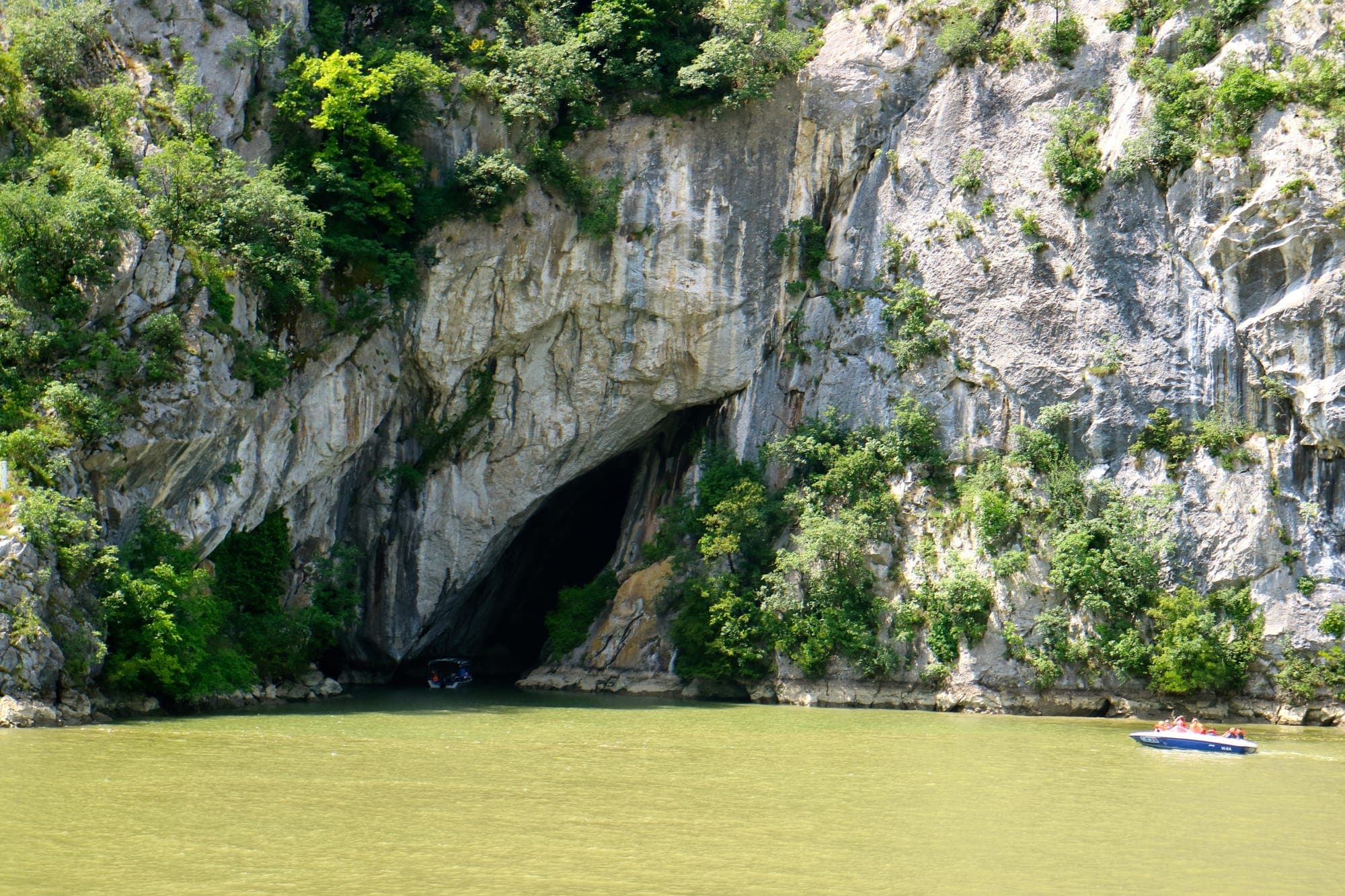
A broad grotto just above the Danube in the Great Cauldrons, with fortification walls from the Romans to the Austrians; reached only by boat, from Dubova or Eșelnița.

A small wooden church of 1820–1822, plastered and painted in 1835, standing in the cemetery of a scattered village on the Mehedinți Plateau and currently under restoration.

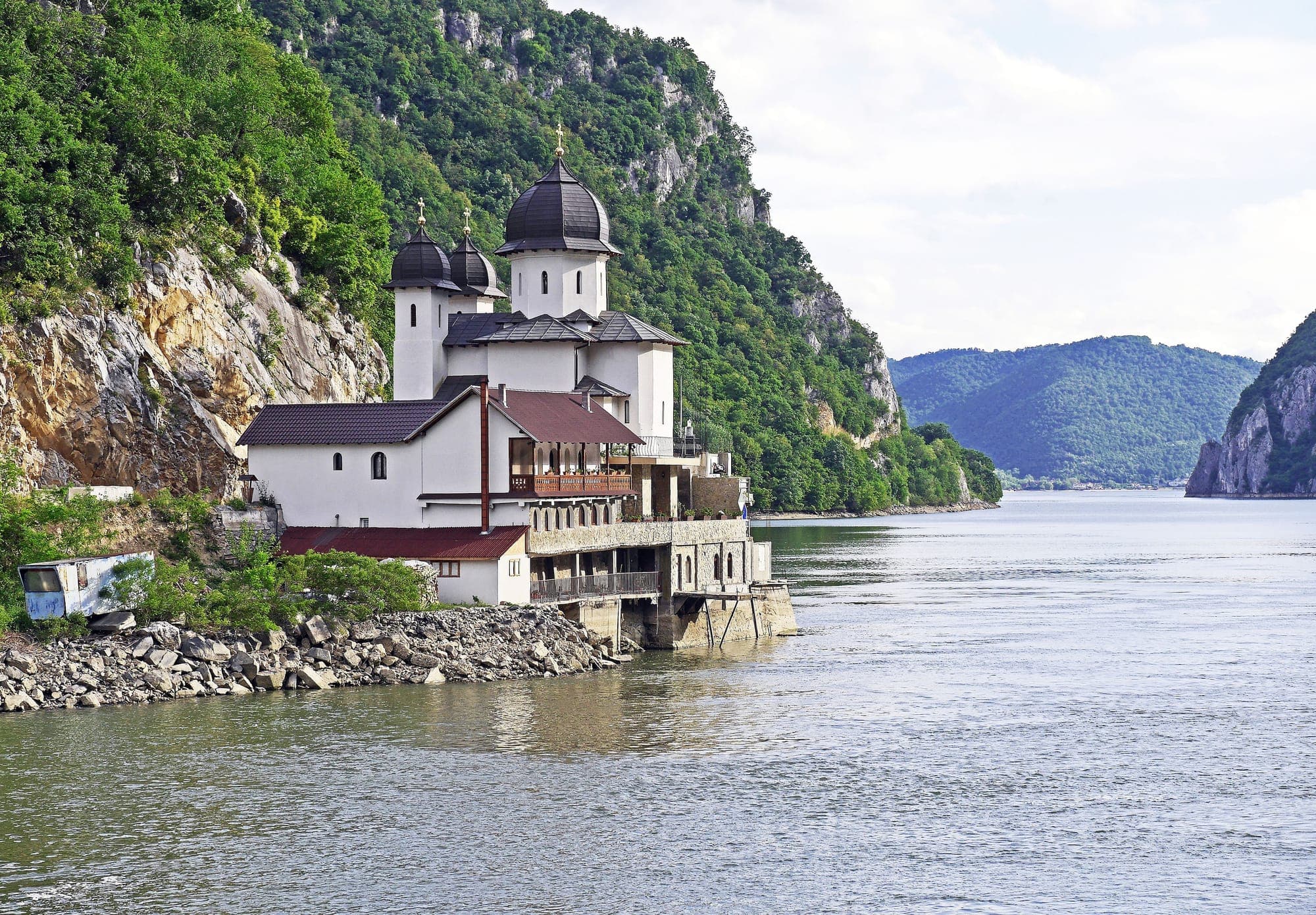
A monastery perched on a headland right above the Danube, in the Danube Gorges, on the site of the old monastery demolished in 1967 for the Iron Gates hydroelectric dam.