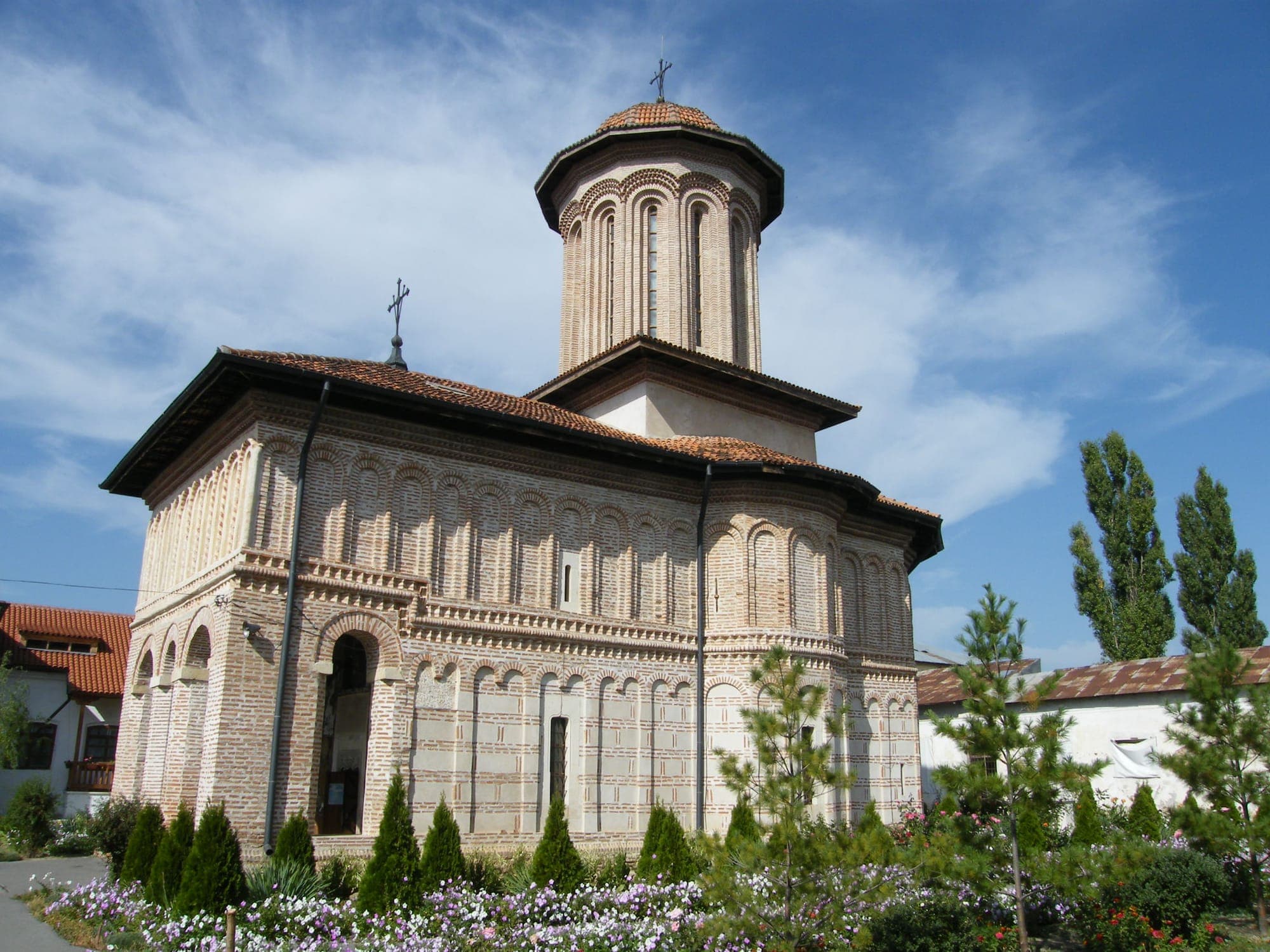
A sixteenth-century foundation of the Buzești boyars, tucked into a valley in Olt County: a church with the votive painting of Michael the Brave, the Buzești tombs and a brick enclosure wall.
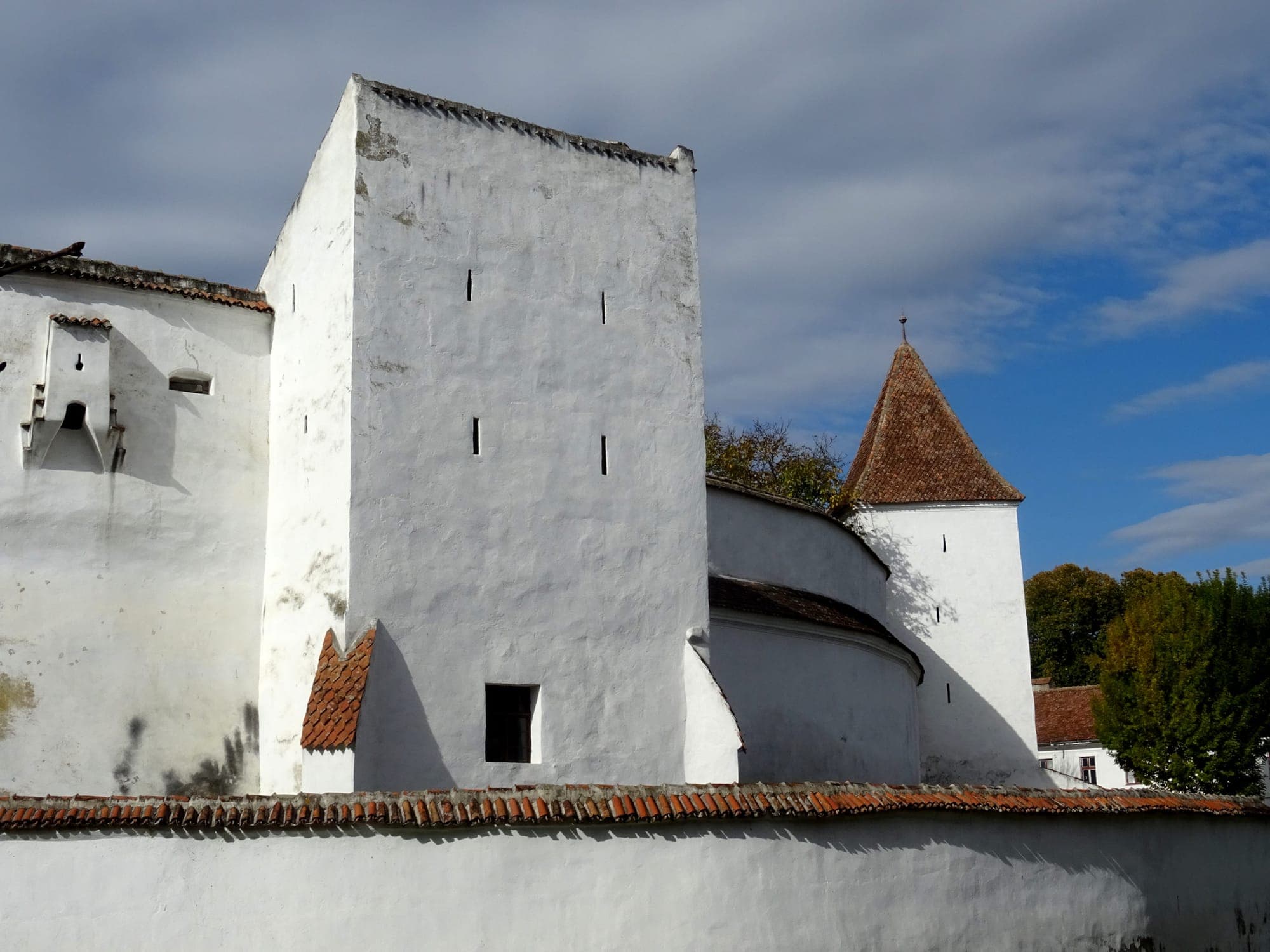
A Gothic Saxon church from 1421, enclosed by walls, four defensive towers and a second ring of fortifications, in the middle of a village by the Olt with the Făgăraș Mountains behind it.
Monasteries and churchesFortresses and fortifications
A Saxon church fortified around 1510, with a tall choir under a star vault, a bell tower with a timber gallery and a winegrowers' village around it, in the Wine Country.
Monasteries and churchesFortresses and fortifications
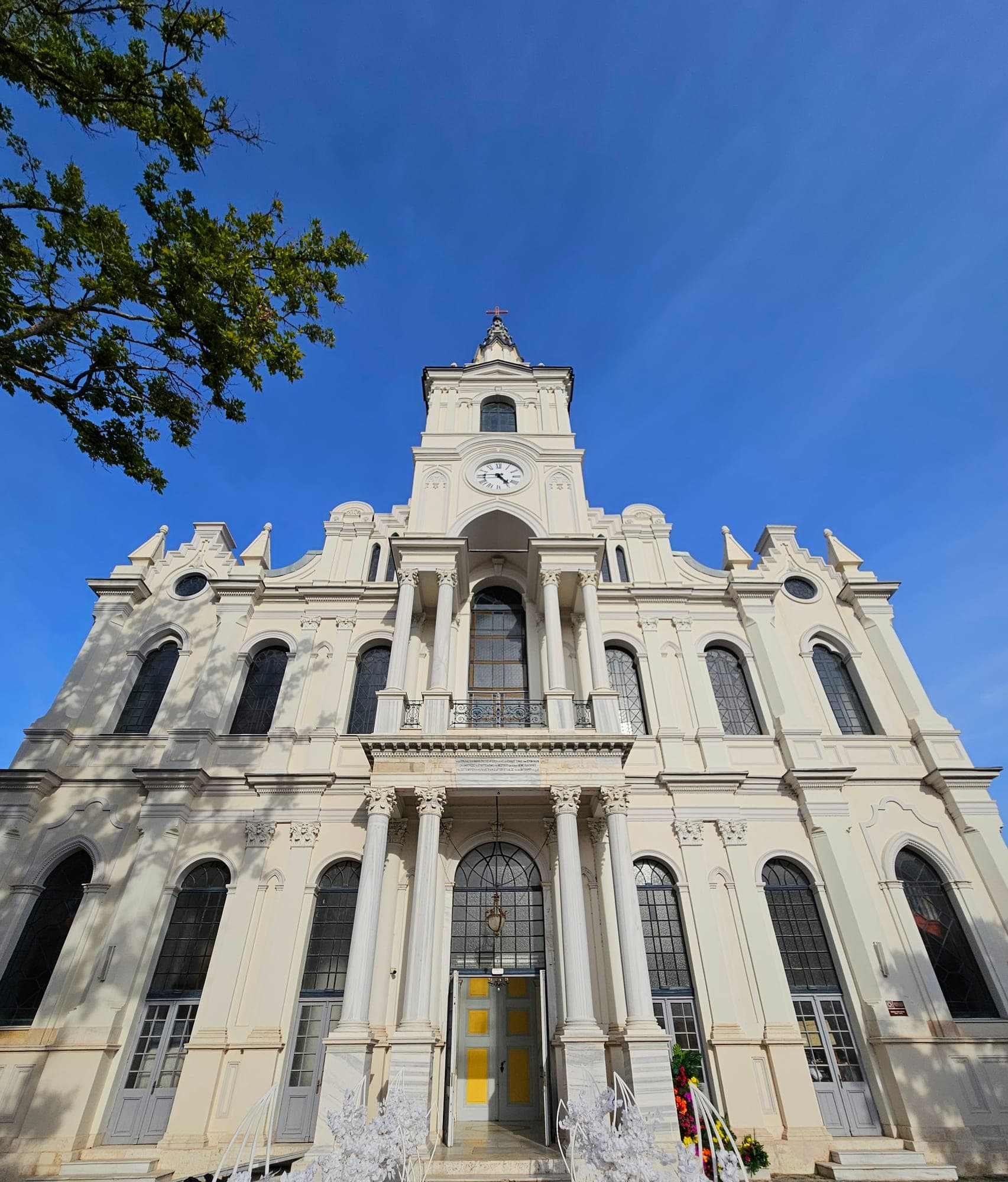
The church raised between 1863 and 1872 by Brăila’s Greek community to plans by the architect Avraam Ioanidis: a Byzantine-style building with a clock tower, paintings by Tattarescu and Liochis, and the famous Healing Spring.
A 13th-century Romanesque basilica enclosed by 12 m walls with seven towers, with the tallest bell tower in the Burzenland and a chapel of 15th-century Gothic frescoes.
Monasteries and churchesFortresses and fortifications
A 13th-century Romanesque hall church with an eight-storey keep above the old choir, two rings of walls and fragments of medieval wall paintings, a few kilometres from Rupea.
Monasteries and churchesFortresses and fortifications
The Orthodox cathedral of the Banat, built between 1936 and 1946 in the Neo-Moldavian style, with a main tower of over 80 m, glazed-tile roofs and a museum of old church art in the basement.
Monasteries and churchesMonuments and historic sites
The Orthodox church of the Dormition of the Mother of God in Piața Unirii, built in 1784–1790 and known for the globe in its tower that shows the phases of the Moon, in a mechanism of 1793.
Monasteries and churchesMonuments and historic sites
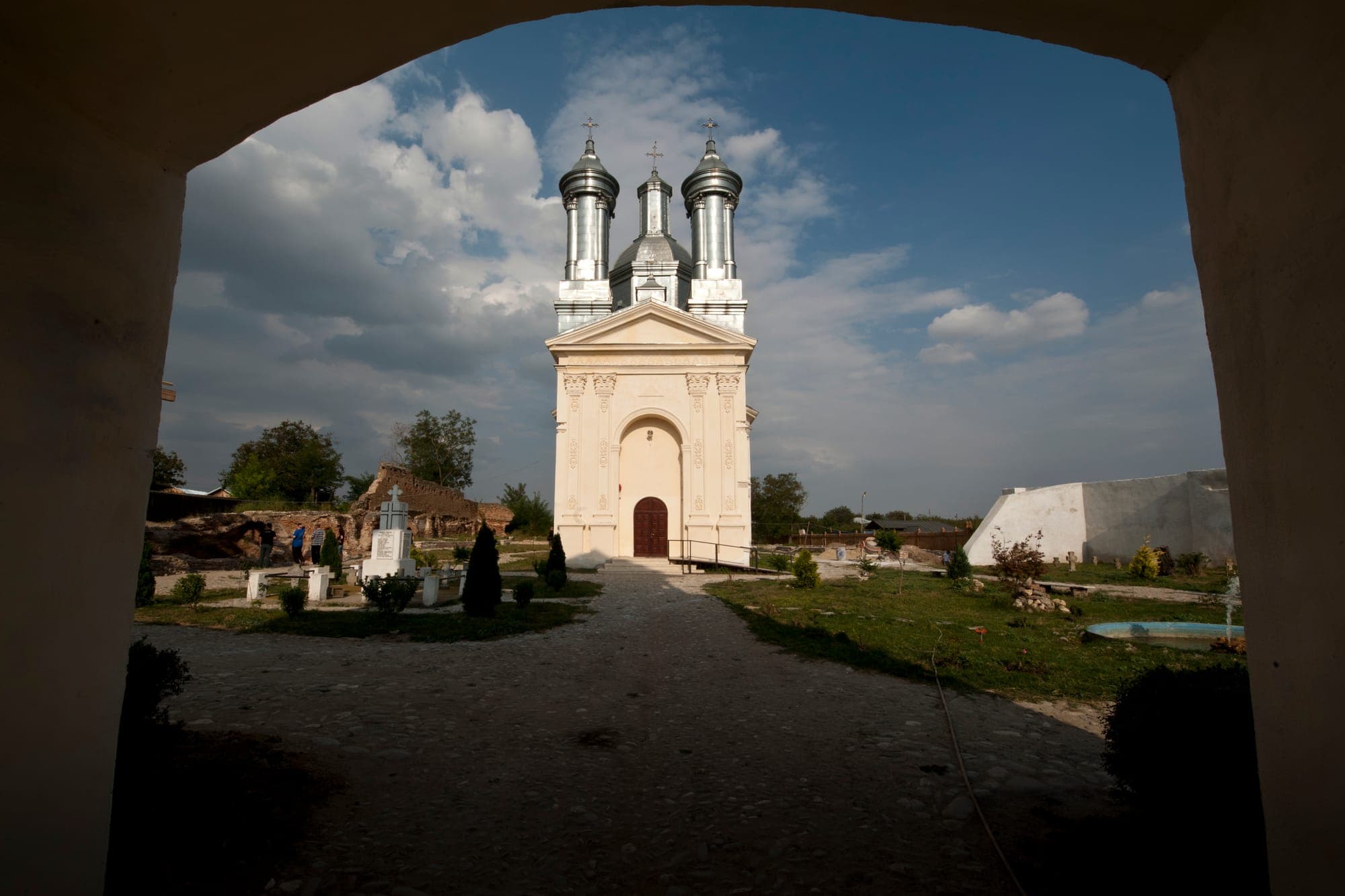
A foundation of 1648–1649 by Matei Basarab and Lady Elina on the bank of the Argeș: a three-towered church with 19th-century frescoes, restored with EU funds and reconsecrated in 2016.
A foundation of Prince Matei Basarab, 20 km from Bucharest: a brick church built in 1642–1646, with original frescoes from 1649 in the narthex, preserved only here and at Arnota.
The Cathedral of the Assumption, built between 1752 and 1780: the largest Baroque church in Romania, with an organ given by Maria Theresa and an interior of marble, frescoes and gilding.
Monasteries and churchesMonuments and historic sites
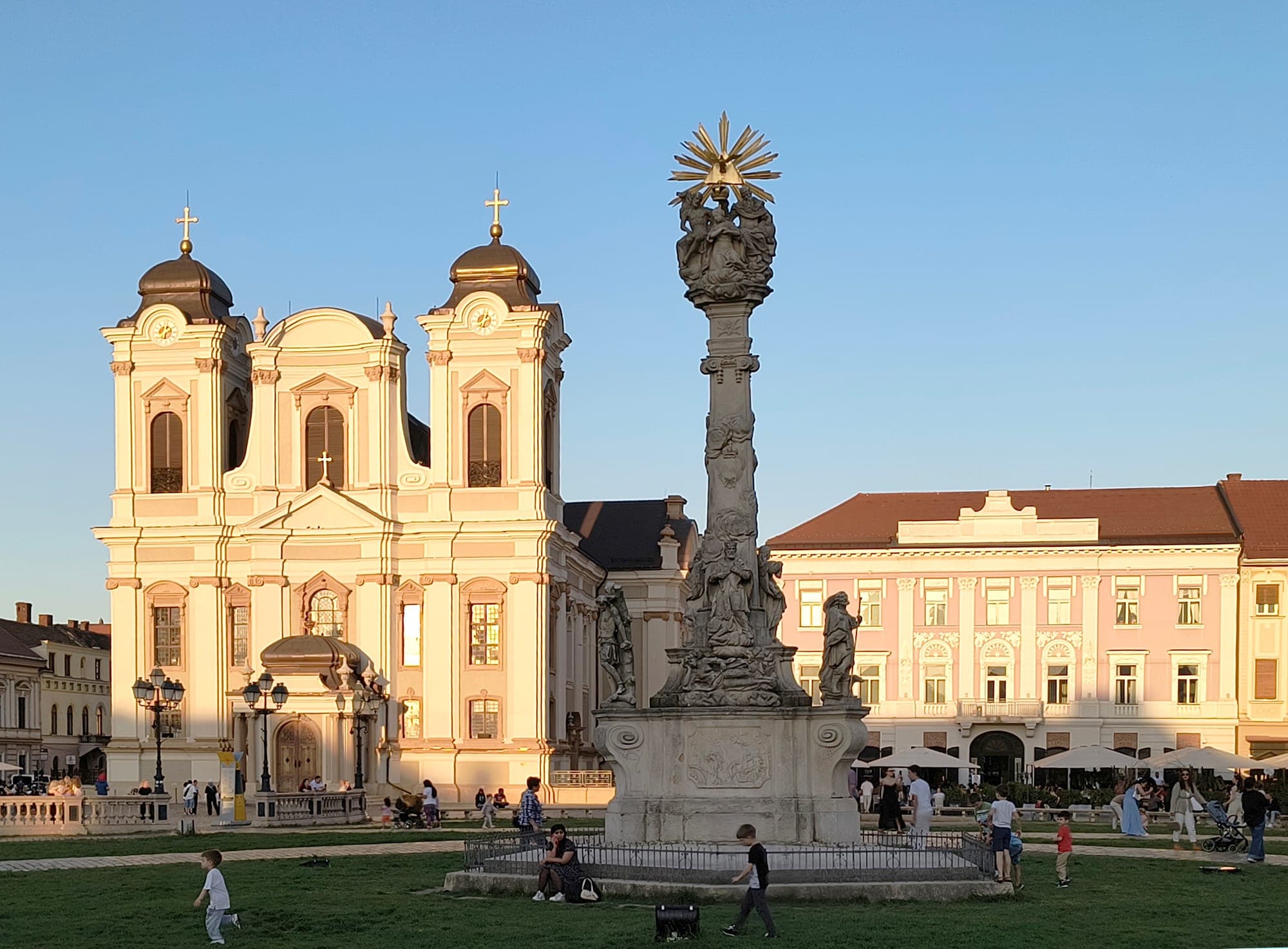
The Baroque cathedral of the Catholic bishopric of Timișoara, built between 1736 and 1774 on Union Square; restored with EU funds and reopened in April 2023, with the bishops' crypt under the altar.
Monasteries and churchesMonuments and historic sites
The oldest building in Galați, a merchants' church consecrated in 1647, with walls up to 1.8 m thick, a bell tower and a fortified loft with 28 loopholes, on the bank of the Danube.
Monasteries and churchesFortresses and fortifications
The Lutheran church in the centre of Mediaș, late Gothic and enclosed in a fortress with walls and towers; its leaning tower, with a five-pointed spire, is the town's emblem.
Monasteries and churchesFortresses and fortifications
A small convent in the Old Town with a Brâncoveanu-style church from 1724, façades painted with saints in medallions, an arcaded courtyard and a lapidary of stones from vanished Bucharest churches.
Monasteries and churchesMonuments and historic sites