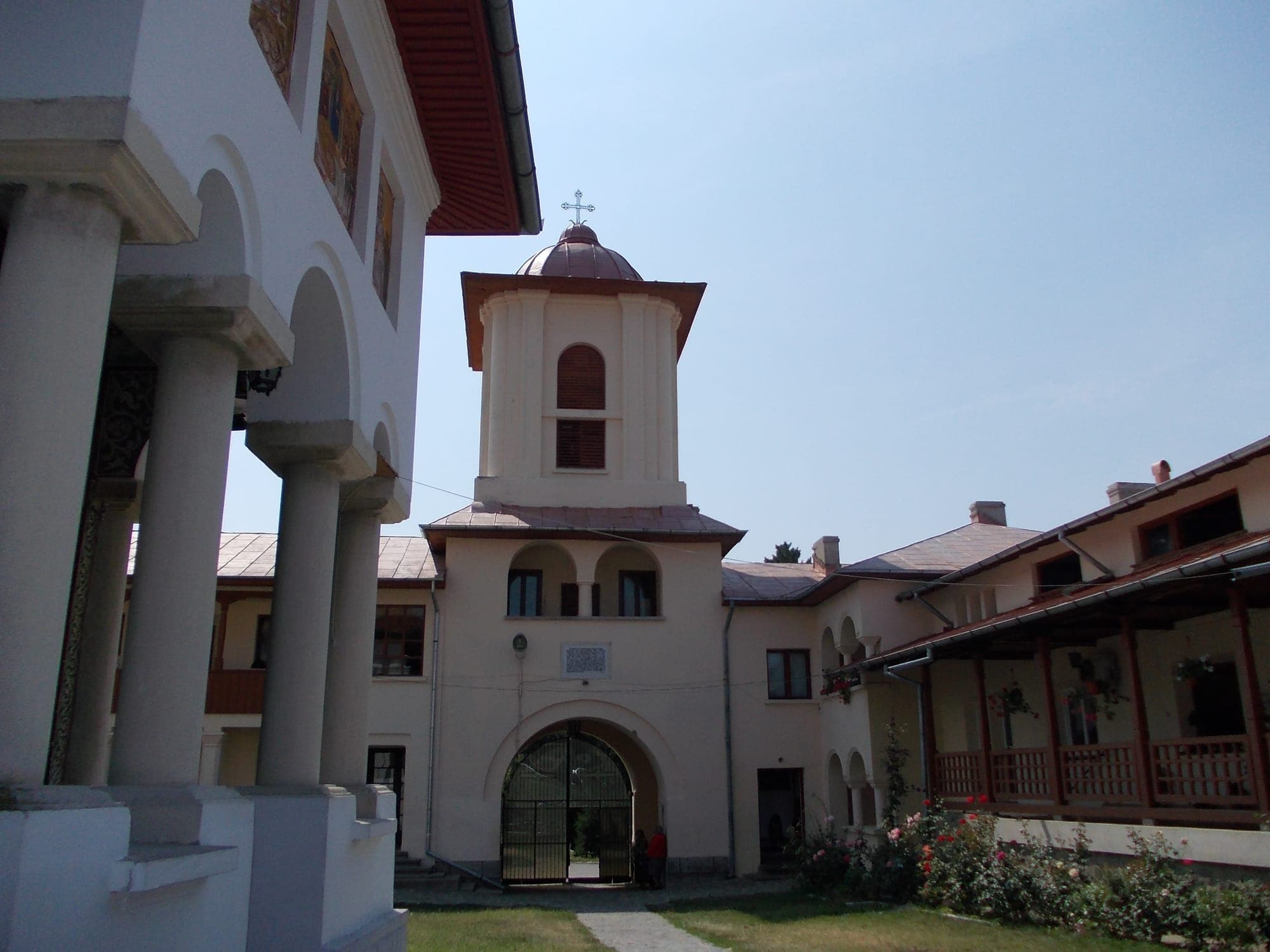
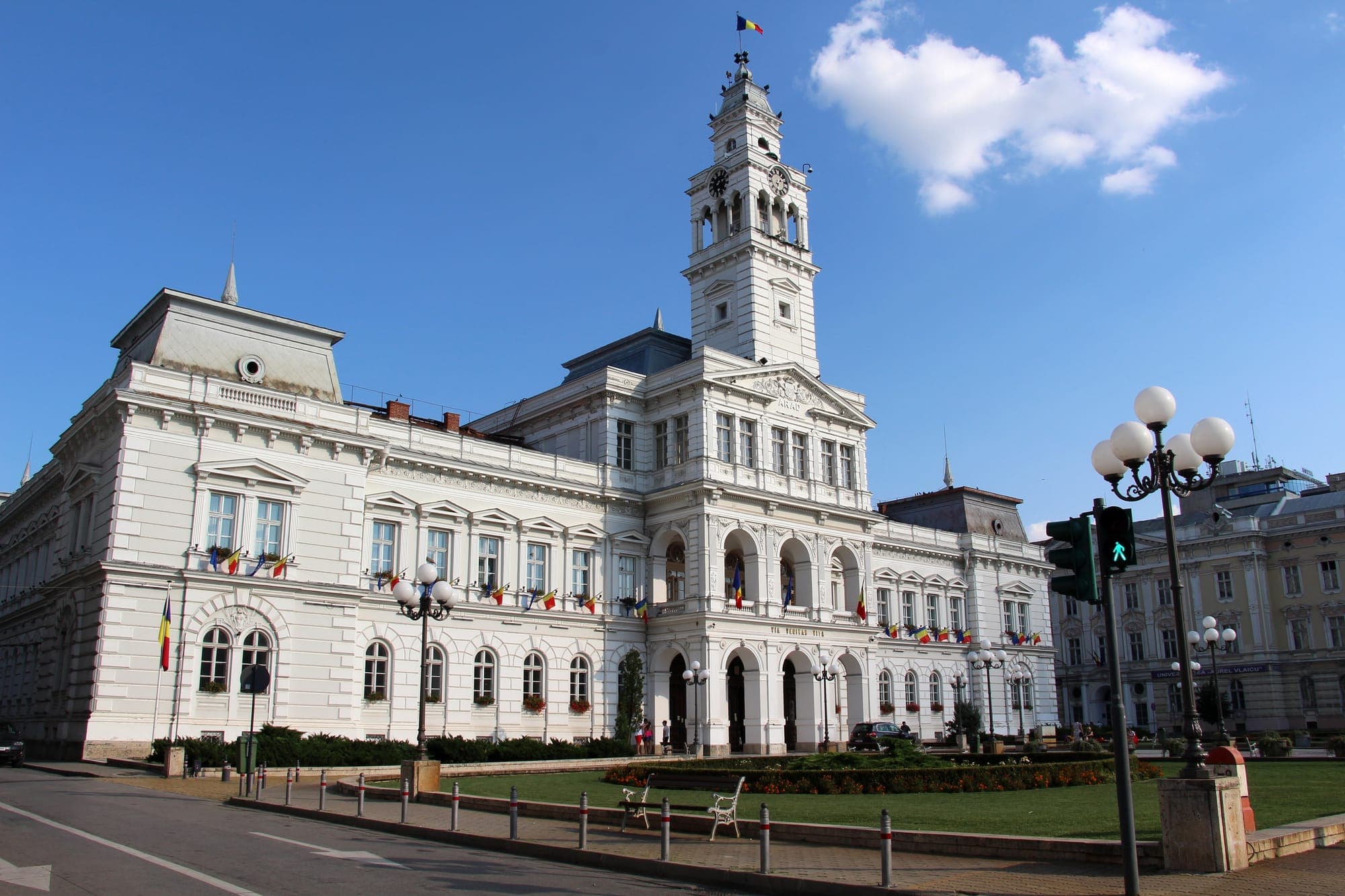
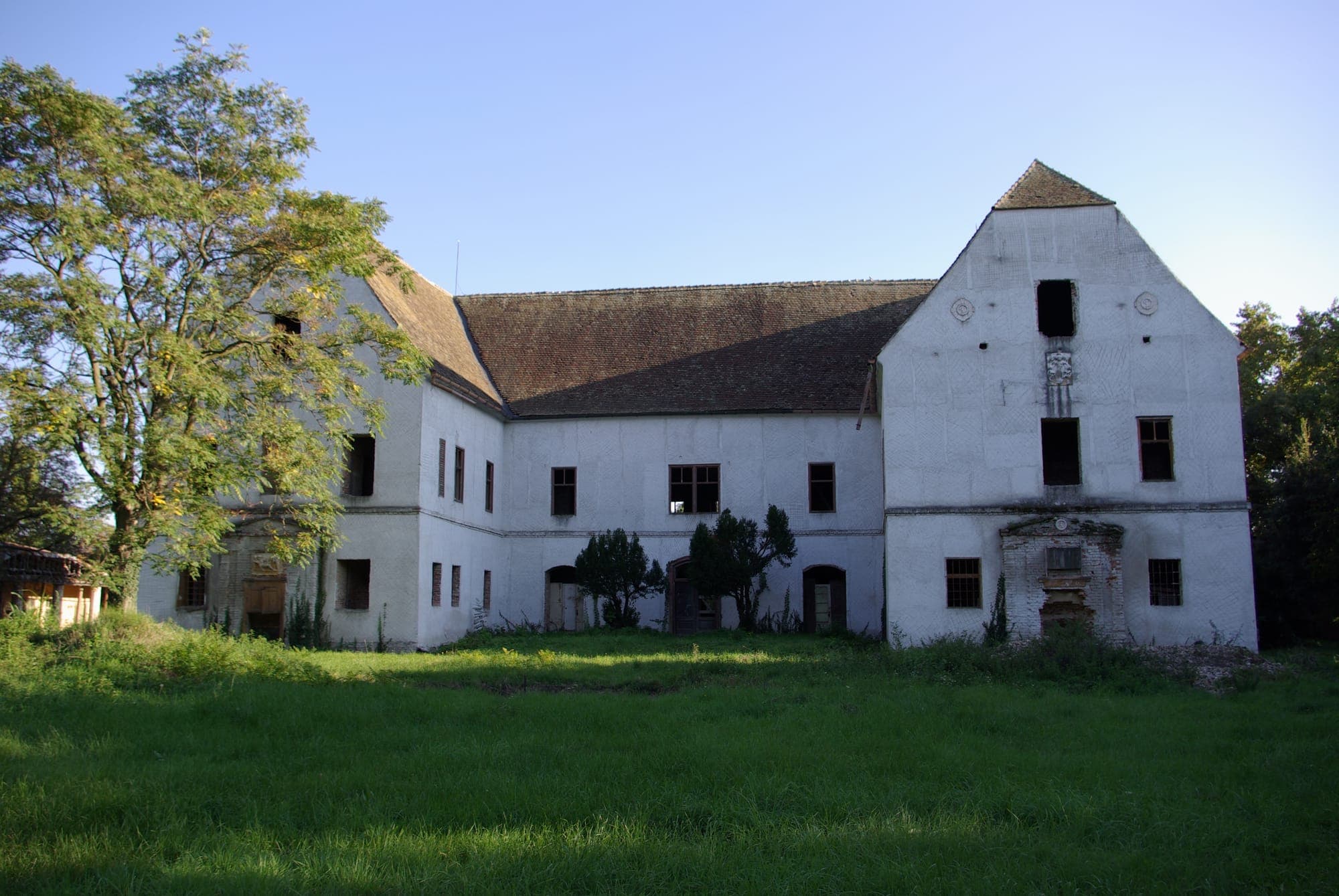
A convent first recorded in 1530, founded by Vlad the Drowned, a few kilometres from Târgoviște: a church with a porch painted with scenes from the Apocalypse, Brâncoveanu votive portraits and cells with wooden verandas.
An eclectic Orthodox church of 1898–1901 near Amzei Square, with three towers, façades of alternating brick and plaster, and the interior painting of the Italian artist Umberto Marchetti.
The fortress of the 13th Legion Gemina beneath the citadel of Alba Iulia: the partly rebuilt south gate, the legion's headquarters preserved in the Principia Museum and a stretch of Roman road.
Monuments and historic sitesFortresses and fortificationsMuseums and memorial housesUNESCO
The church built in 1502 by Hetman Luca Arbore, with no tower and exterior frescoes from 1541 dominated by green; a UNESCO site, today the church of Arbore Monastery.
The ruins of a Dacian fortress on the rocky summit of Piatra Cetății, above the DN66, which guarded the southern approach to Sarmizegetusa Regia; a UNESCO site, reached only on foot by a steep climb.
Fortresses and fortificationsMonuments and historic sitesUNESCO
A manor of the Karátsonyi family from the 18th century, bought in 1935 by Princess Elisabeth; today a decayed building under stabilisation works, in a park of over 8 hectares.
Bucharest's largest cemetery, covering 28 hectares, with the first burials in 1859: a necropolis and open-air museum with a monumental gate, a domed chapel and listed funerary monuments.
A Renaissance castle with four round towers, built by the Bethlen family on a hill above the Târnava Mică; today it is the emblem of Jidvei wines and is visited on hourly guided tours.
The ruins of a medieval royal fortress on a hill above the Crișul Repede, with a surviving round tower and walls consolidated in 2018–2020, a short distance from the Roman fort of Resculum.
Fortresses and fortificationsMonuments and historic sites
A bastioned fortress on Citadel Hill, north of the old town, built to stop enemies firing on Brașov from the heights; the interior is closed for works, but the walls and the view can be enjoyed from the paths on the hill.
Fortresses and fortificationsMonuments and historic sites
The ruins of the Greek city from which Mangalia grew: the circuit wall with its towers and the Syrian-type basilica on the clifftop promenade, steps from the beach, plus the town's archaeology museum.
Fortresses and fortificationsMonuments and historic sitesSeaside
The ruins of a Dacian fortress on a wooded hill above the Sebeș valley: limestone walls in the murus dacicus technique and the base of a tower house, the only Dacian UNESCO site in Alba County.
Fortresses and fortificationsMonuments and historic sitesUNESCO
A Roman fortress on the bank of the Danube, built under Trajan in the early 2nd century and inhabited for almost a millennium, with massive walls and towers above the river.
Fortresses and fortificationsMonuments and historic sites
The former Carol I University Foundation, built in 1891–1895 to plans by Paul Gottereau on Revolution Square: a Beaux-Arts façade with a pediment and domes, an Aula that survived the 1989 fire, and visits by guided tour only.