A waterfall of about 30 m in Cozia National Park, where the stream bursts out of a tunnel cut through the rock; reached on foot along a gentle forest road through the Lotrișor Gorge.
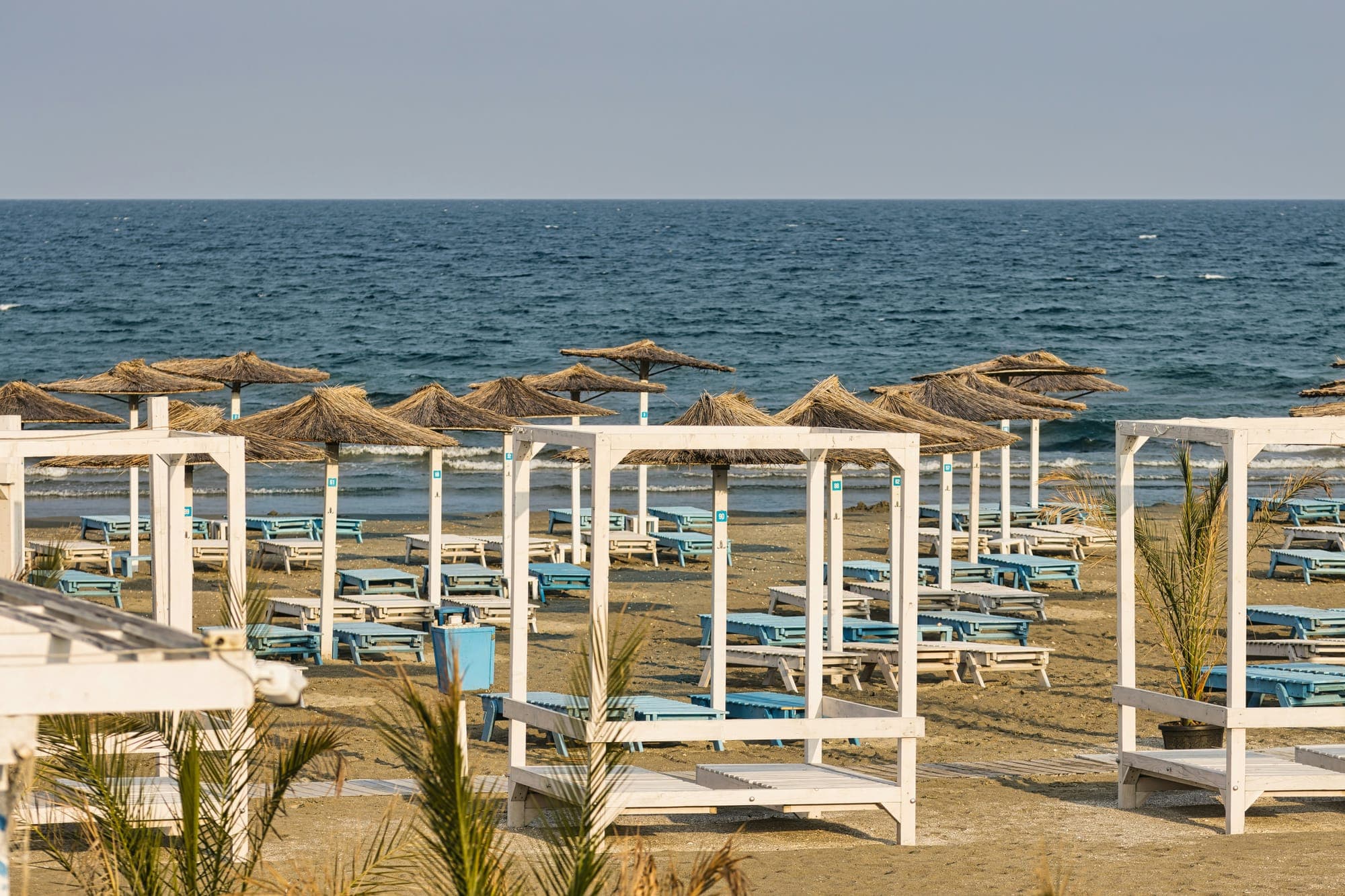
The town's own beach, running from the marina breakwater towards Saturn below the promenade rebuilt in 2022; since autumn 2026 it is being widened with sand, behind four new breakwaters.
Six kilometres of wide sand north of Mamaia, split between the beach clubs of Mamaia Nord and the roomy, quieter town beach of Năvodari, with shallow water for hundreds of metres.
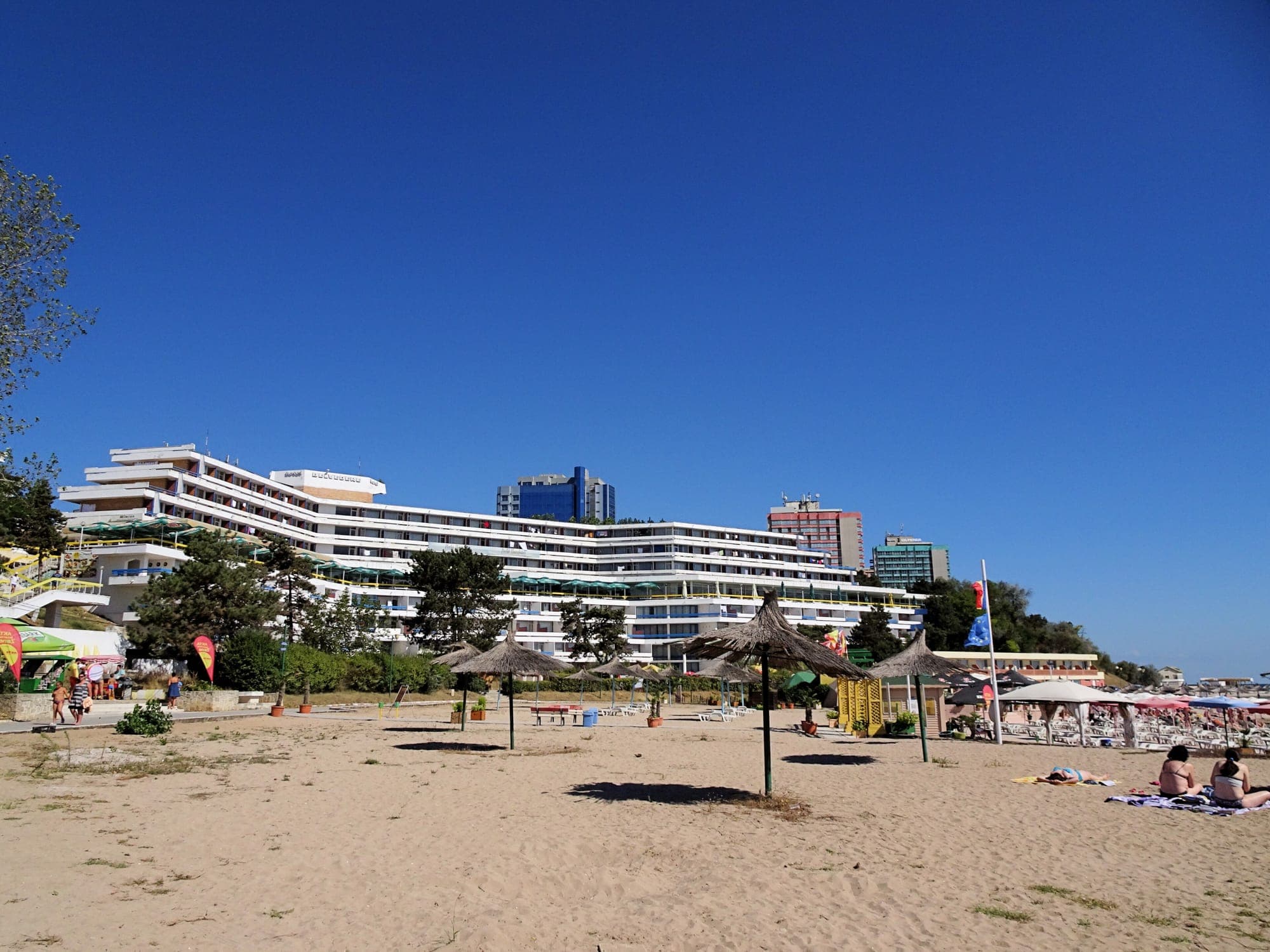
Two resorts built side by side north of Mangalia, between the sea and the Comorova forest: a beach widened to a hundred metres, two lakes right behind the sand and 1970s architecture.
Romania's best-known ski resort, above 1,000 m beneath Postăvaru: 12 slopes, cable cars almost to the summit and, in summer, forest trails and views over Brașov.
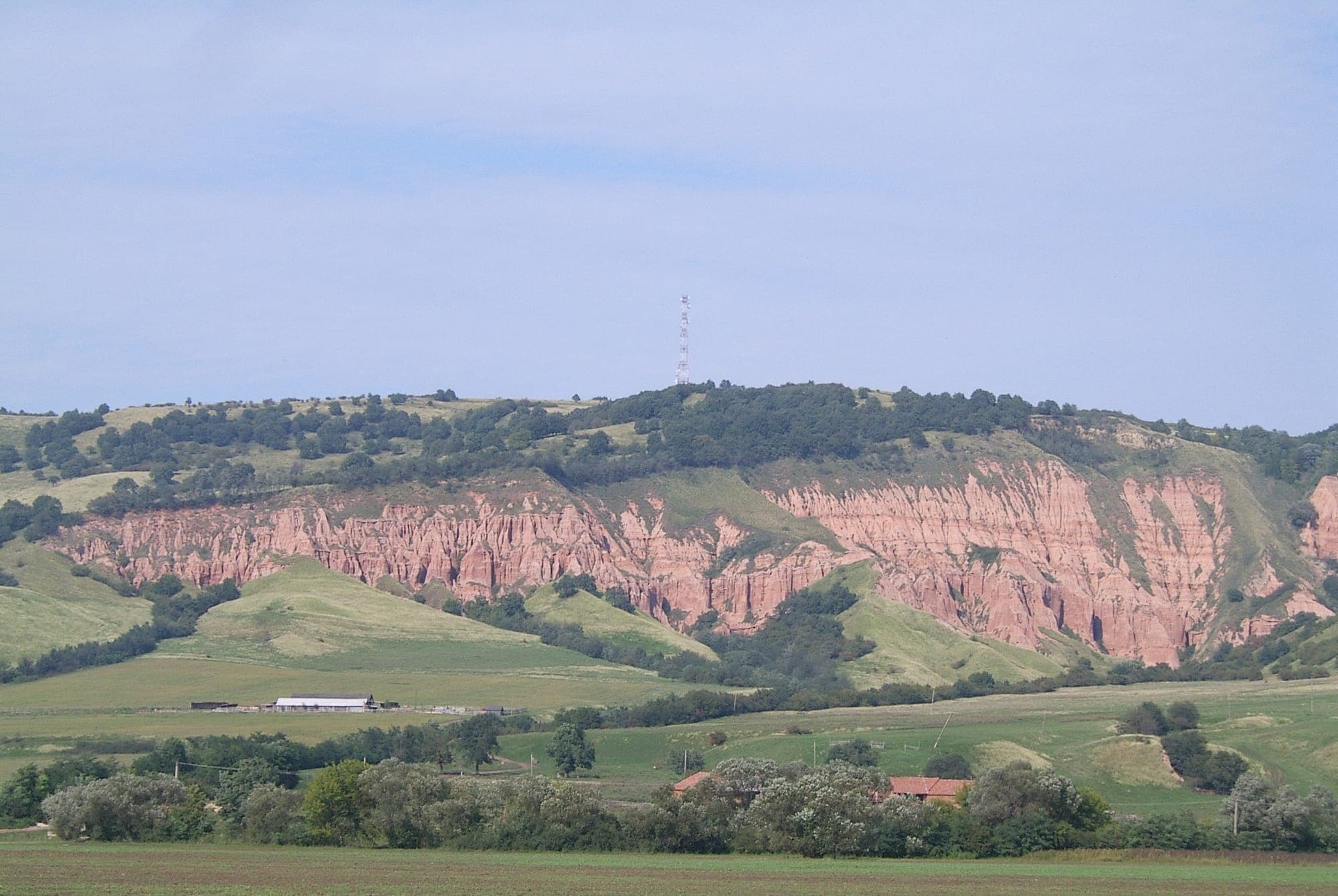
An 800 m wall of red clay and sandstone on the edge of Sebeș, carved by rain into columns, towers and earth pyramids, a badlands landscape rare in Romania.
The pass between Piatra Craiului and the Bucegi: the DN73 climbs from Rucăr onto the Fundata plateau, over the Giuvala Pass at about 1,260 m, and descends to Bran past hamlets scattered on the ridges.
A wild waterfall on the Ieduțul stream, hidden among ferns and fir trees above the Iad Valley, a quarter of an hour's walk through the forest from the road between Stâna de Vale and Lake Leșu.
A chain of travertine cascades on the Șipote stream, below the Bedeleu cliffs in the Trascău Mountains: the last one drops straight into the Arieș by the DN75, the upper ones are reached on a nature trail from Sălciua.
The Lutheran church in the centre of Mediaș, late Gothic and enclosed in a fortress with walls and towers; its leaning tower, with a five-pointed spire, is the town's emblem.
Monasteries and churchesFortresses and fortifications
The pass where the DN17 crosses from Transylvania into Bukovina at 1,201 m, between Bistrița and Vatra Dornei: spruce-dotted pastures, a 31 m cross and a hotel inspired by the Borgo Pass of “Dracula”.
The DJ713 climbs from the DN71 near Sinaia over 16 km of tarmac to 1,925 m at Piatra Arsă: the only road that takes you by car onto the Bucegi plateau.
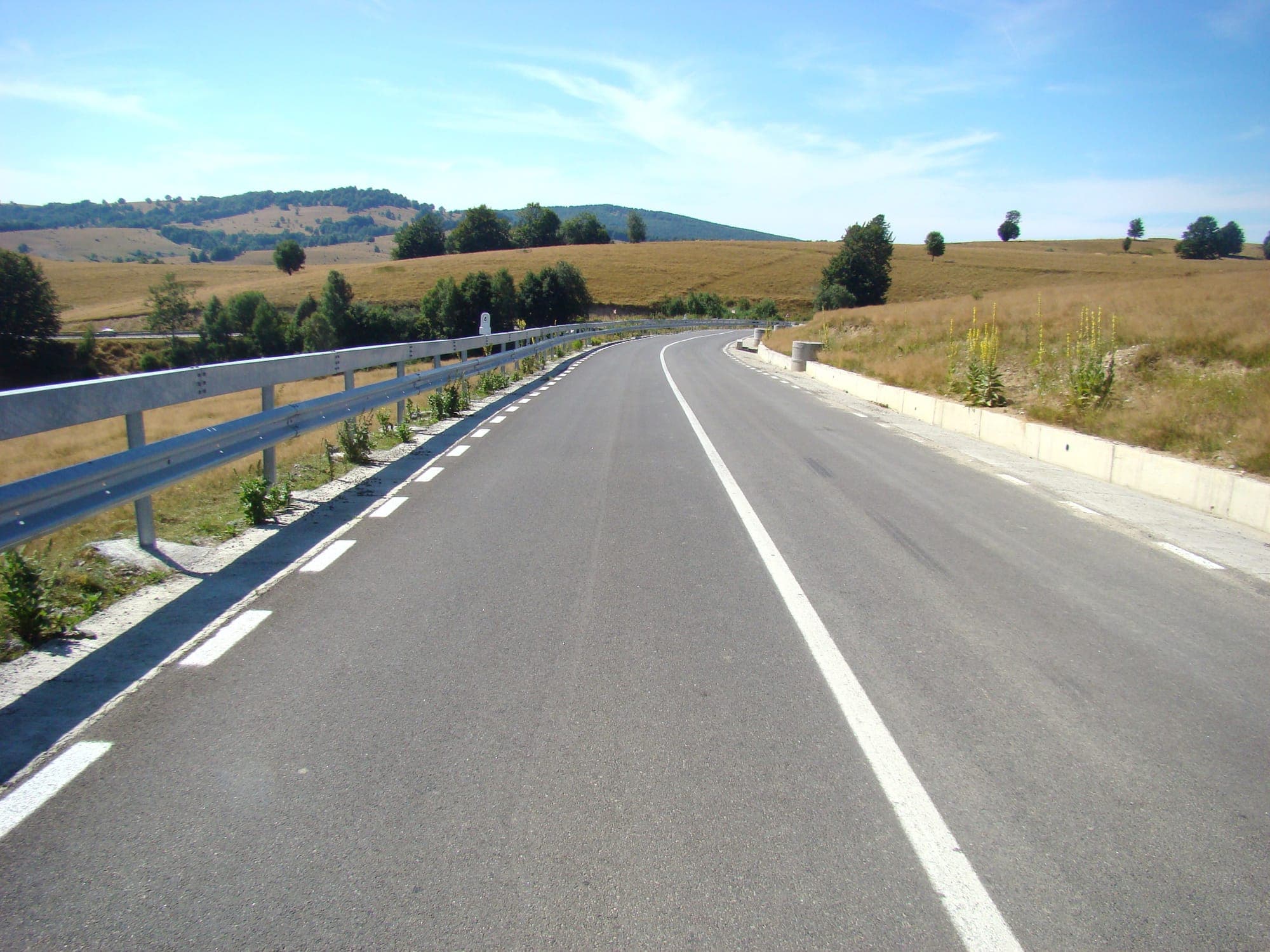
County road DJ582 crosses the Semenic Mountains for 58 km, from Reșița through Văliug and the Prislop Pass to Slatina-Timiș, past mountain lakes, pastures and the villages of Gărâna and Brebu Nou.
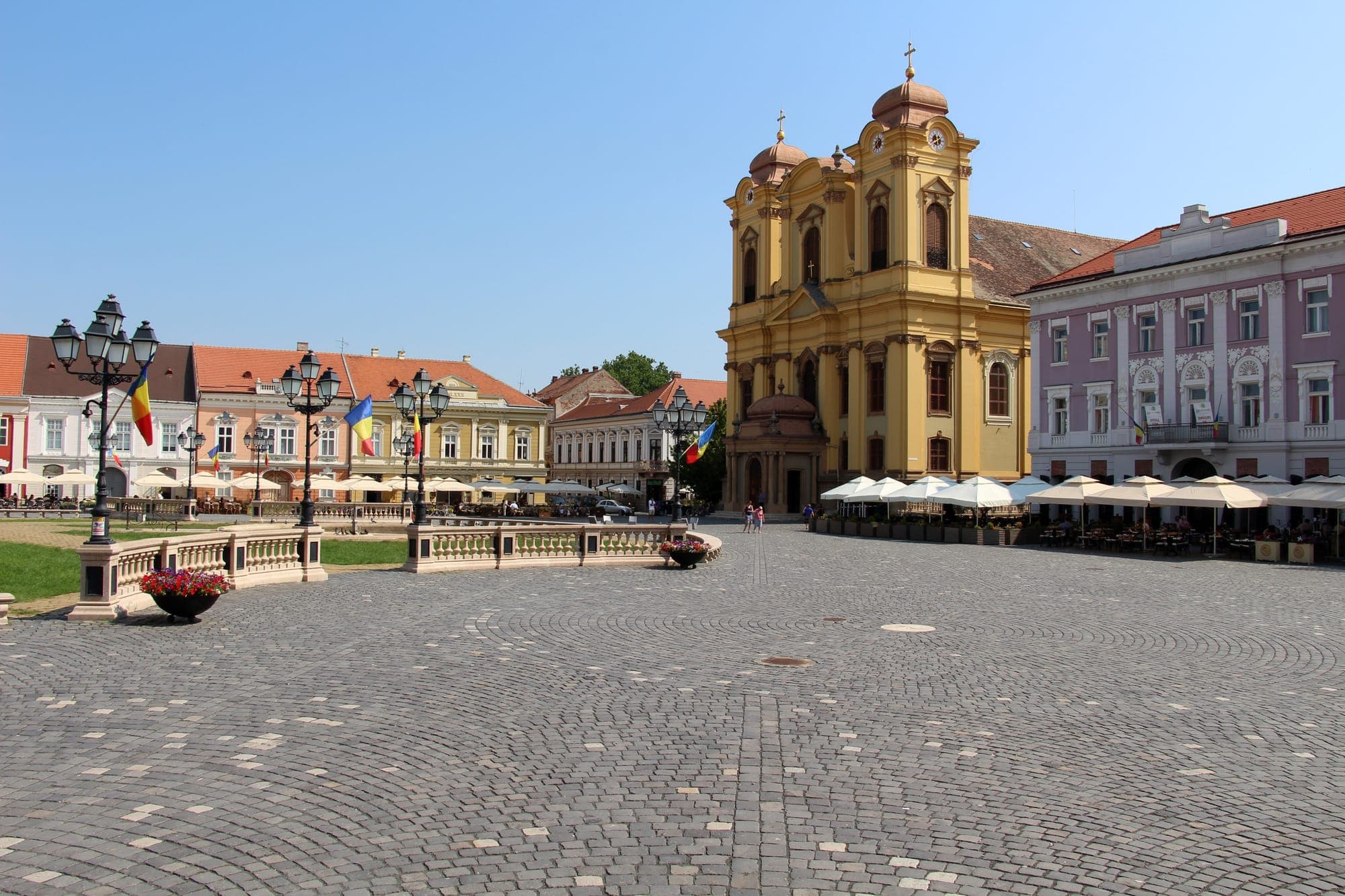
Timișoara's oldest square, about 150 by 110 metres, laid out in the Baroque style around the Roman Catholic Cathedral, the Serbian Cathedral and the Plague Column, among colourful houses from the 18th to the 20th centuries.
A two-tier waterfall of about 50 m in the Cerna Mountains, with Romania's longest free drop (~40 m), above Lake Prisaca; reached by a steep 1.5 km path from the Cerna valley road, 13 km from Băile Herculane.