The pass between Piatra Craiului and the Bucegi: the DN73 climbs from Rucăr onto the Fundata plateau, over the Giuvala Pass at about 1,260 m, and descends to Bran past hamlets scattered on the ridges.
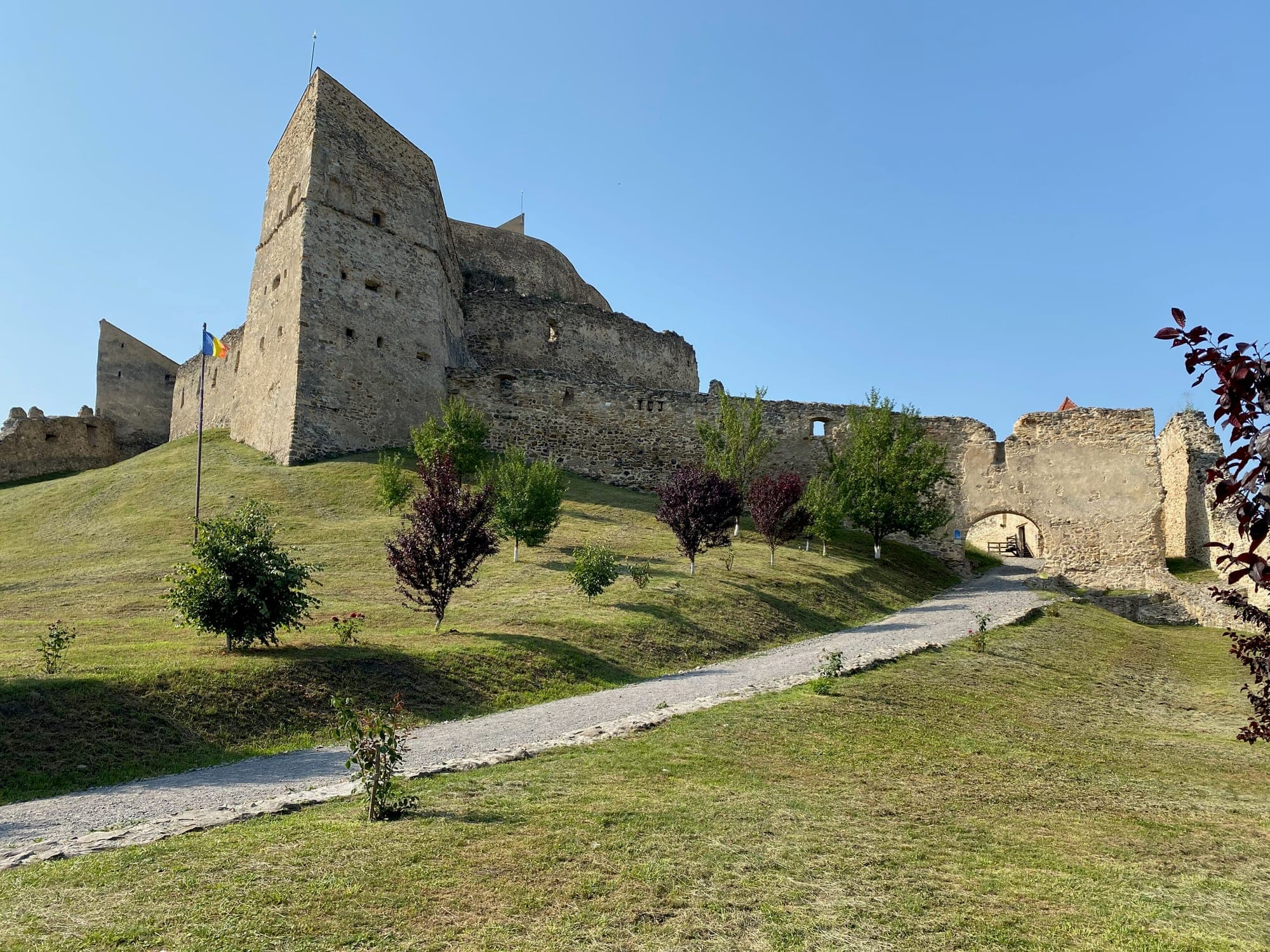
A Saxon peasant fortress climbing in tiers up a basalt hill above the town of Rupea, first recorded in 1324 and restored in 2010–2013, with wide views over the Transylvanian hills.
The capital of the Dacian kingdom, hidden in the beech forests of the Orăștie Mountains: the walls of Decebalus's fortress, the paved road and the sacred area with andesite and limestone sanctuaries, a UNESCO site.
Fortresses and fortificationsMonuments and historic sitesUNESCO
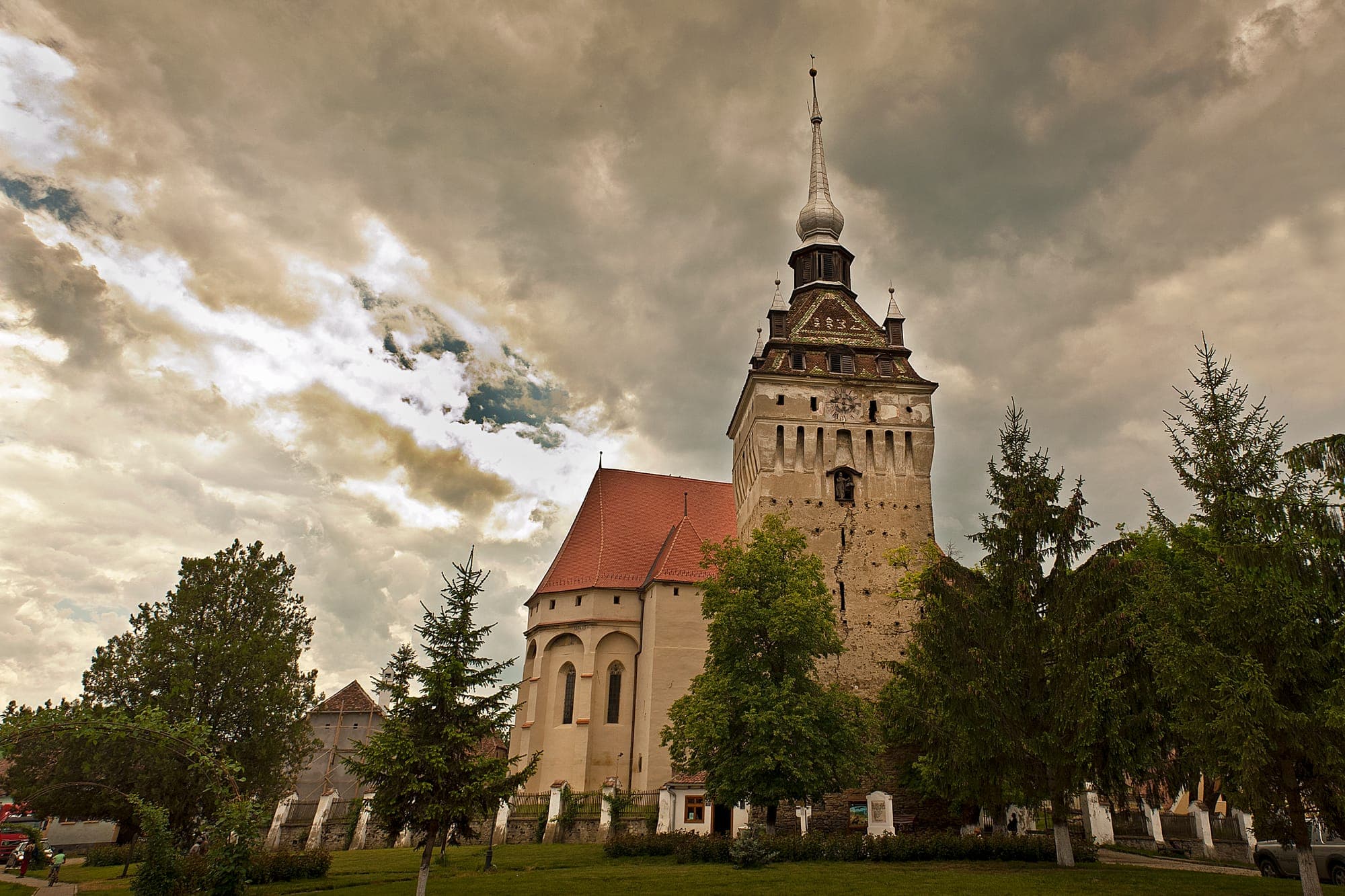
A Late Gothic Saxon church beside the DN13, with a bell tower modelled on Sighișoara's Clock Tower; on the hill above the village stand the walls of a 14th-century peasant fortress.
Monasteries and churchesFortresses and fortificationsUNESCO
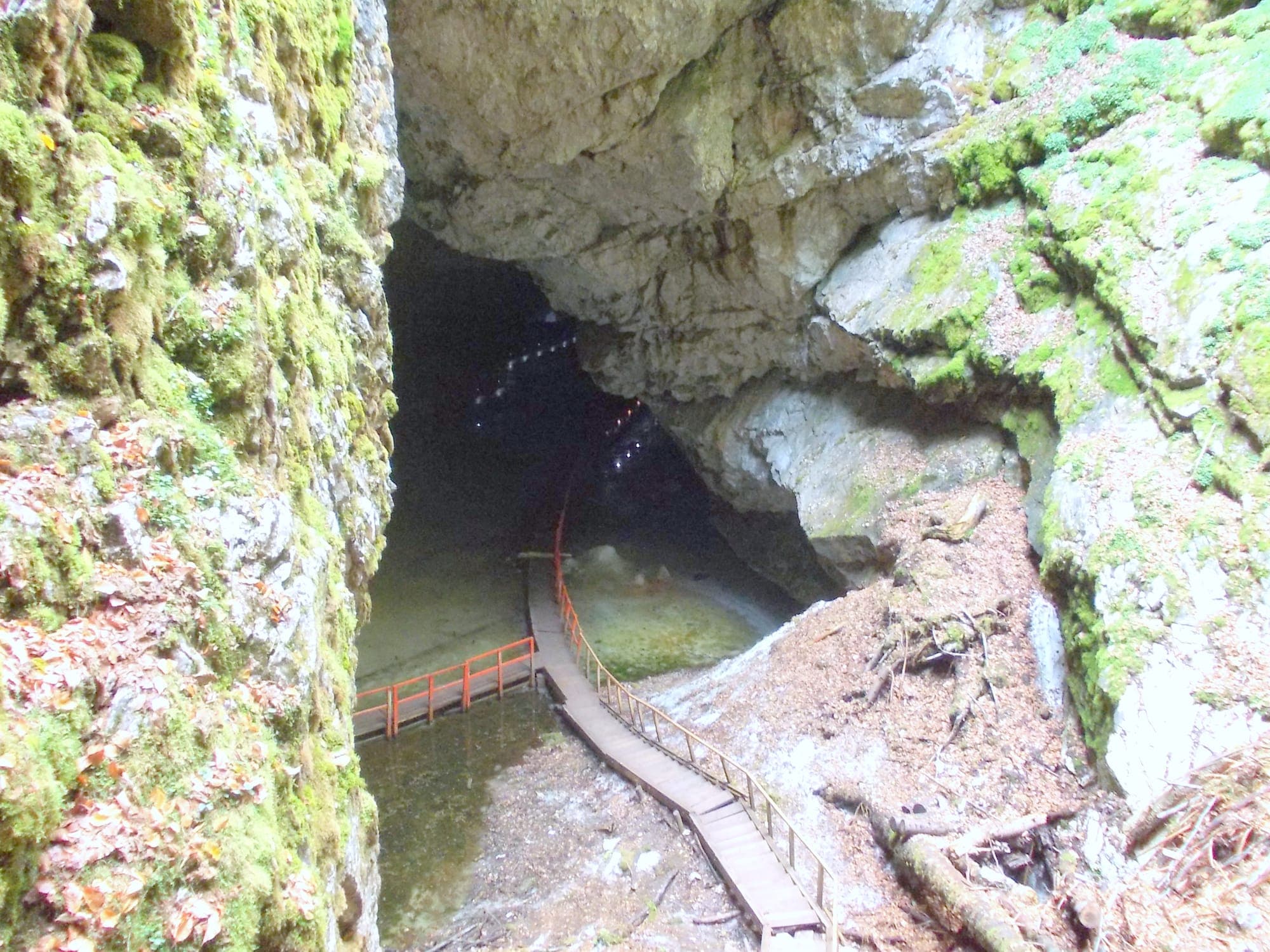
A cave in the Apuseni Mountains that holds one of the largest underground glaciers in the world: a block of ice over 10,000 years old, reached by stairs down a shaft 60 m across.
A narrow limestone gorge in the Piatra Mare Mountains near Brașov, with seven rock steps climbed on metal ladders and walkways; at the top you can ride a zip line back down.
The former metropolitan cathedral of Moldavia, built in 1514–1522 in the centre of Suceava and home to the relics of St John the New; its church of St George is a UNESCO site.
Monasteries and churchesMonuments and historic sitesUNESCO
The Lutheran church in the centre of Mediaș, late Gothic and enclosed in a fortress with walls and towers; its leaning tower, with a five-pointed spire, is the town's emblem.
Monasteries and churchesFortresses and fortifications
A small stone church in the Hațeg Country, built largely from Roman blocks brought from Ulpia Traiana Sarmizegetusa, with a tower over the nave, stone lions on the roof and paintings from 1443.
Monasteries and churchesMonuments and historic sites
The Orthodox church of the Romanians of Șcheii Brașovului, built from 1495 on the site of a wooden one, with Gothic-Baroque towers, painted façades and Nicolae Titulescu's grave in the churchyard.
Monasteries and churchesMonuments and historic sites
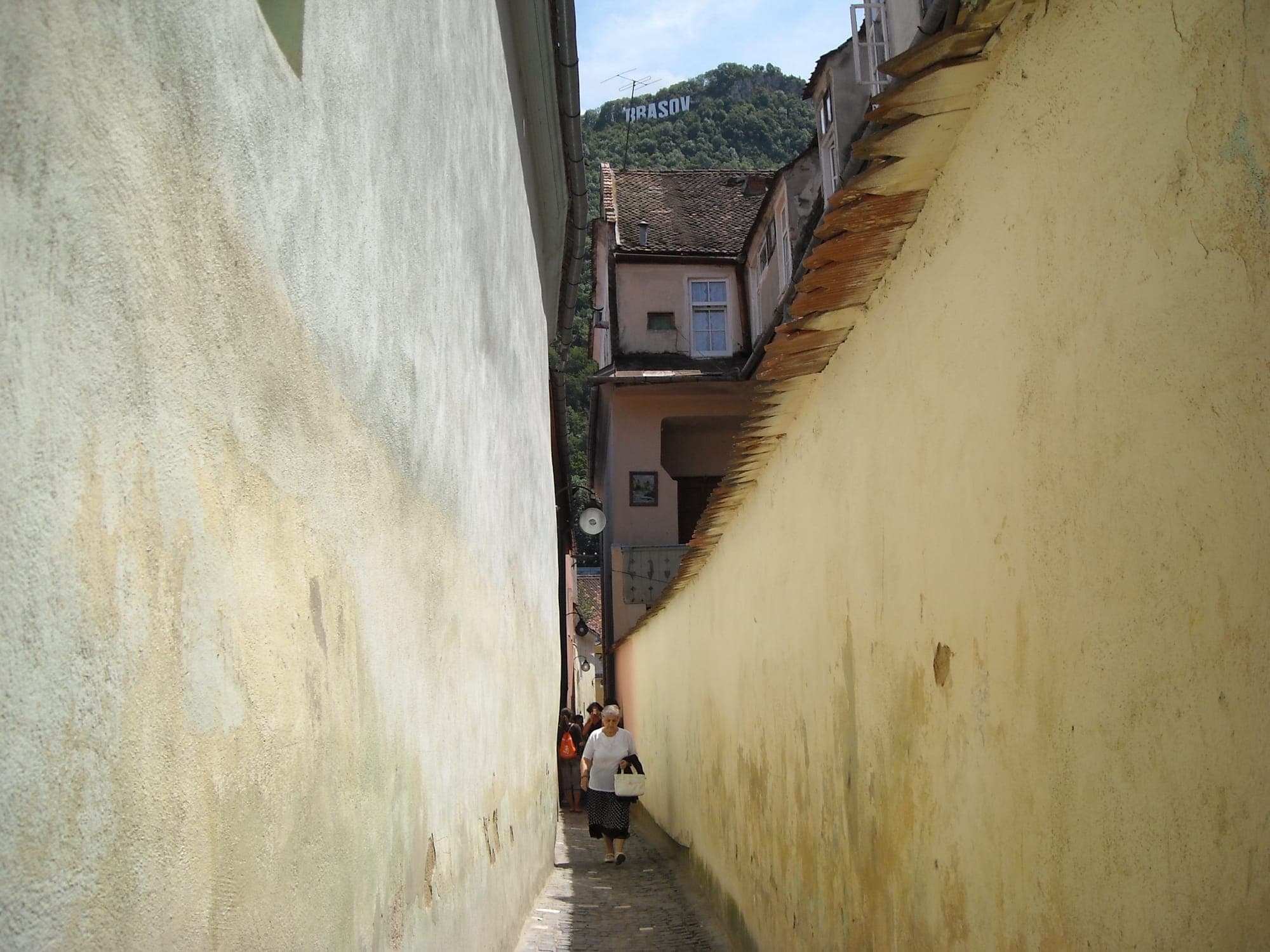
A passage 1.1–1.35 m wide in Brașov's old town, recorded in the 17th century and counted among the narrowest streets in Europe; closed for repairs since November 2025.
The oldest museum in Székely Land, in a building designed by Kós Károly in 1911–1912: history, ethnography, natural sciences and a garden with Székely gates.
Bihor's county museum, housed since its move in the former Royal Cadet School of 1898: archaeology, history, art, ethnography, natural sciences and a vivarium under one roof.
Constantin Brâncuși's round stone table with 12 hourglass seats, in the park on the banks of the Jiu: the western end of the Heroes' Way ensemble, a UNESCO World Heritage Site.
The DJ713 climbs from the DN71 near Sinaia over 16 km of tarmac to 1,925 m at Piatra Arsă: the only road that takes you by car onto the Bucegi plateau.