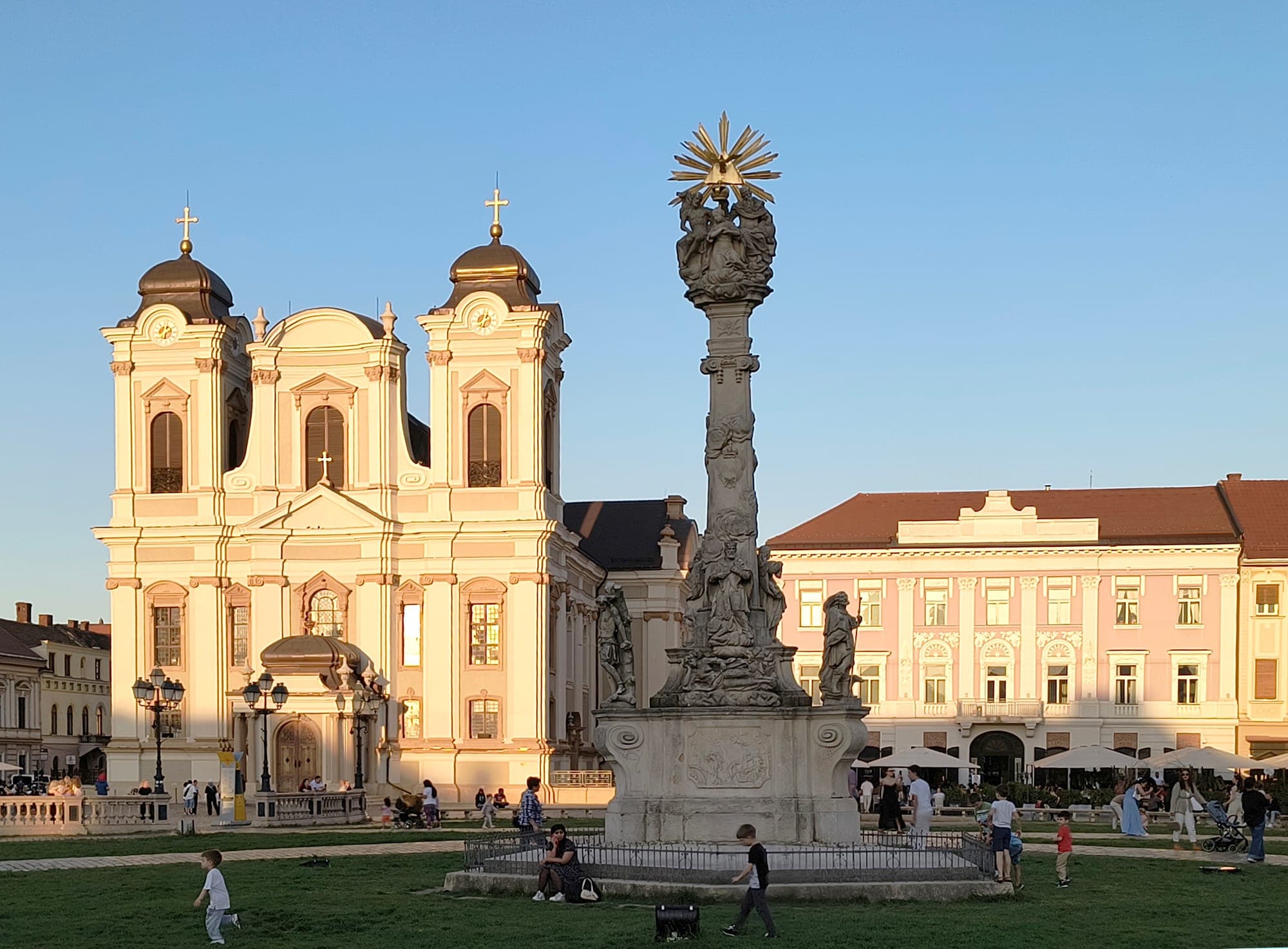
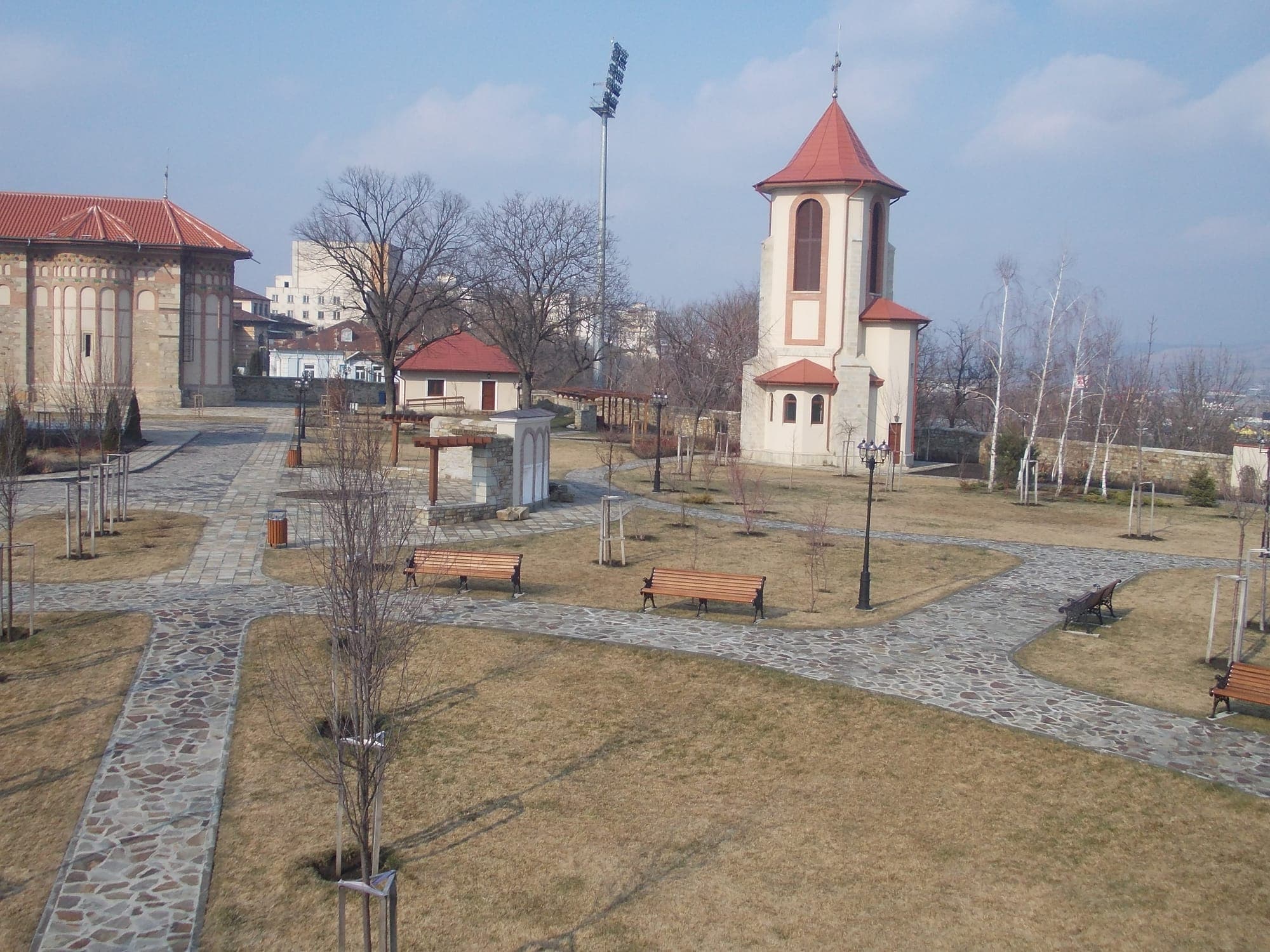
The Baroque cathedral of the Catholic bishopric of Timișoara, built between 1736 and 1774 on Union Square; restored with EU funds and reopened in April 2023, with the bishops' crypt under the altar.
Monasteries and churchesMonuments and historic sites
The oldest building in Galați, a merchants' church consecrated in 1647, with walls up to 1.8 m thick, a bell tower and a fortified loft with 28 loopholes, on the bank of the Danube.
Monasteries and churchesFortresses and fortifications
The oldest monastery in the Bărăgan, founded by the Grand Postelnic Ianache Caragea and rebuilt by Matei Basarab, with a 17th-century brick enclosure wall and a bell tower you enter through.
Monasteries and churchesMonuments and historic sites
The former metropolitan cathedral of Moldavia, built in 1514–1522 in the centre of Suceava and home to the relics of St John the New; its church of St George is a UNESCO site.
Monasteries and churchesMonuments and historic sitesUNESCO
The Lutheran church in the centre of Mediaș, late Gothic and enclosed in a fortress with walls and towers; its leaning tower, with a five-pointed spire, is the town's emblem.
Monasteries and churchesFortresses and fortifications
A small stone church in the Hațeg Country, built largely from Roman blocks brought from Ulpia Traiana Sarmizegetusa, with a tower over the nave, stone lions on the roof and paintings from 1443.
Monasteries and churchesMonuments and historic sites
The Orthodox church of the Romanians of Șcheii Brașovului, built from 1495 on the site of a wooden one, with Gothic-Baroque towers, painted façades and Nicolae Titulescu's grave in the churchyard.
Monasteries and churchesMonuments and historic sites
A small convent in the Old Town with a Brâncoveanu-style church from 1724, façades painted with saints in medallions, an arcaded courtyard and a lapidary of stones from vanished Bucharest churches.
Monasteries and churchesMonuments and historic sites
An archaeological park laid out on the site of Moldavia's princely court in Vaslui, with the Church of the Beheading of St John the Baptist, a foundation of Stephen the Great from 1490, in the town centre.
Monuments and historic sitesMonasteries and churches
An oak church built by the village's 49 families at the end of the 18th century, with a slender tower of almost 47 m and a trefoil vault unique among wooden churches, part of a UNESCO World Heritage site.
An early 17th-century wooden church in the village cemetery, with the best-known depiction of Hell in Maramureș: devils, torments and village sins, painted in 1793–1794.
The oak-built Greek Catholic church of Șurdești village, with a 54-metre tower and a total height of 72 metres, one of the tallest old timber buildings in Europe and a UNESCO World Heritage monument.