A fortified monastery in the centre of Iași, with Vasile Lupu's church, unique in Moldavia for its classical facades and seven towers, and a tower almost 30 m high with views over the city.
MonasteriesMonuments and historic sites
The oldest and largest monastic settlement in Moldavia, recorded since 1407, with the Church of the Ascension built by Stephen the Great and consecrated in 1497.
MonasteriesMuseums and memorial houses
The hilltop monastery near Gherla that keeps the icon of the Virgin painted in 1681, which wept in 1699; home to the largest pilgrimage in Transylvania, on the Feast of the Dormition.
MonasteriesMuseums and memorial houses
A 16th–17th-century monastery in Colentina, with a church rebuilt by Matei Basarab in 1647, a gatehouse bell tower and an arcaded princely house.
MonasteriesMonuments and historic sites
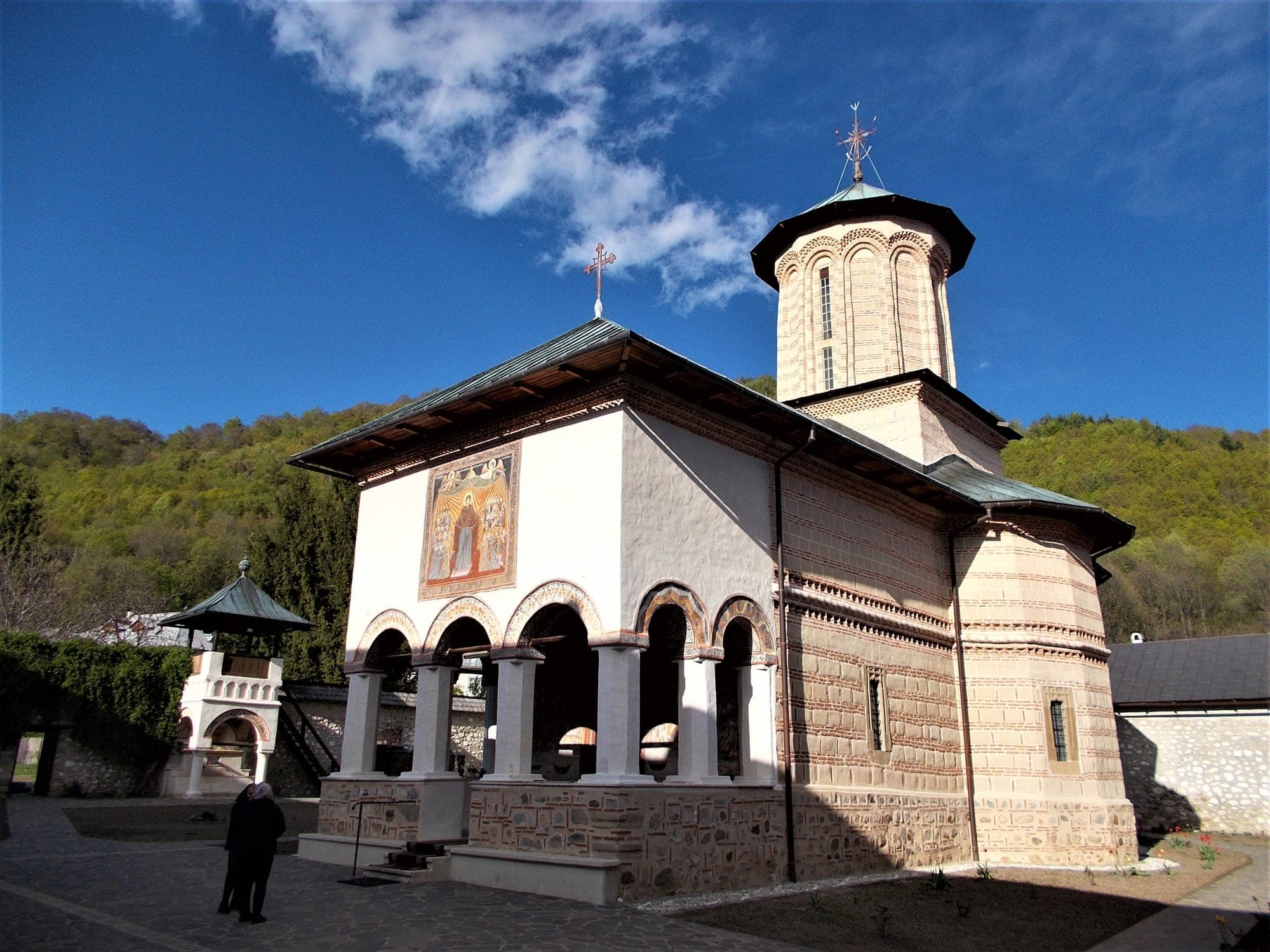
A convent at the foot of Piatra Polovragilor, with a church built in the 1640s by the logothete Danciu Pârâianu, a porch and bell tower from the time of Brâncoveanu, and a carved wooden gate.
Monasteries
A convent in the Hațeg Country, with a stone church rebuilt in 1564 and the grave of St Arsenie of Prislop (Father Arsenie Boca), one of the largest pilgrimage sites in Romania.
Monasteries
Peter Rareș's 1530 foundation and his family's burial place, with the fresco-painted church of St Nicholas inside fortress-like walls; a UNESCO site near Dolhasca.
MonasteriesMonuments and historic sitesUNESCO
A convent in Săpânța, built from 1997 in memory of the old Peri Monastery across the Tisza, with an oak church ~75 m high, regarded as the tallest wooden church.
Monasteries
The oldest monastery in the Bărăgan, founded by the Grand Postelnic Ianache Caragea and rebuilt by Matei Basarab, with a 17th-century brick enclosure wall and a bell tower you enter through.
MonasteriesMonuments and historic sites
The Church of Saints Peter and Paul, founded by Ștefan Tomșa II in 1612–1622, one of the tallest in northern Moldavia, surrounded by enclosure walls with towers.
MonasteriesFortresses and fortifications
A small cave in the woods near Ion Corvin, fitted out as a church, where tradition says the Apostle Andrew lived; a monastery has grown up around it and draws pilgrims on 30 November.
MonasteriesCaves
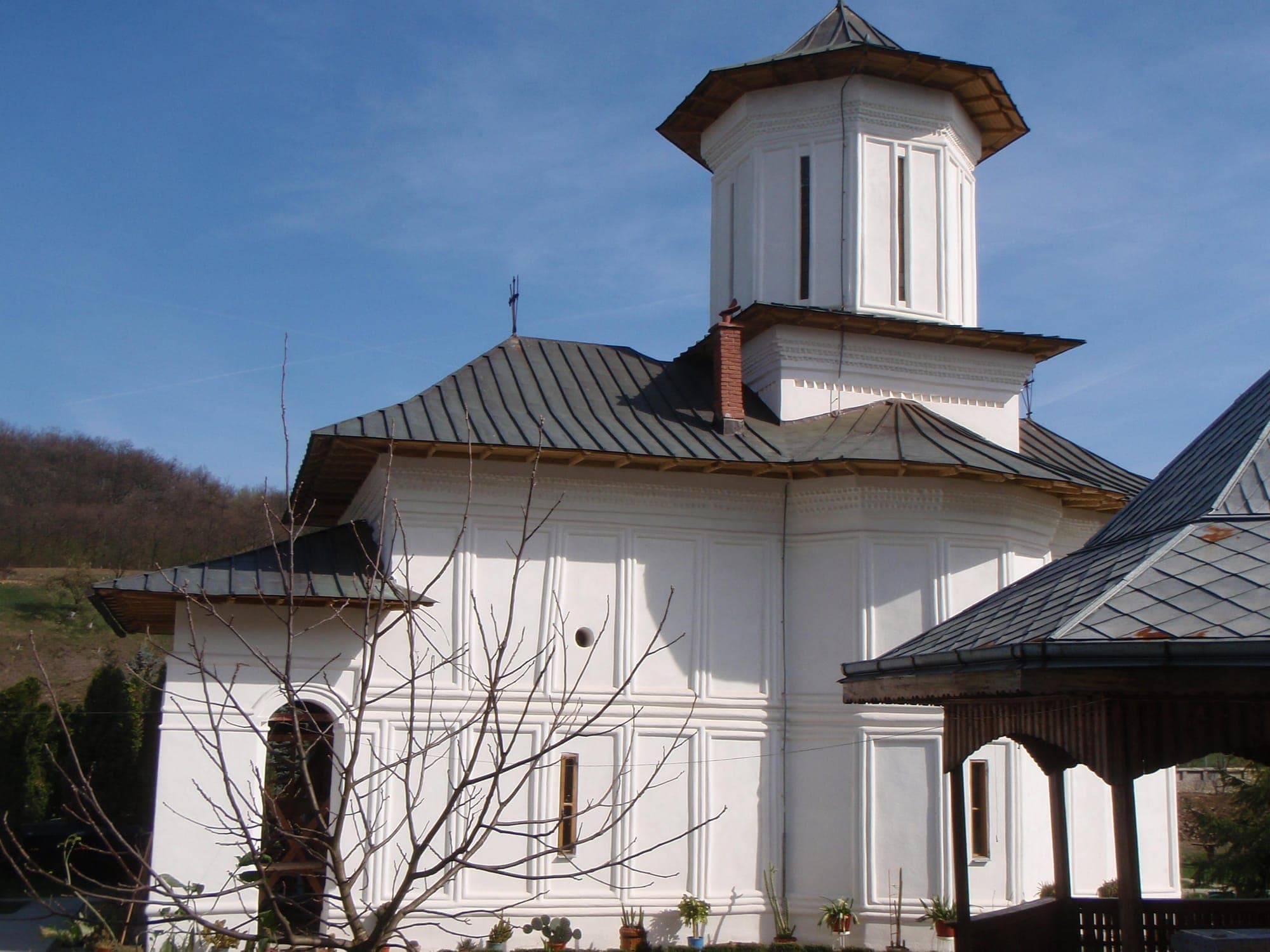
A convent in Strâmba-Jiu with the Holy Trinity church of the early 17th century, built on the site of a hermitage recorded in 1519, in a quiet courtyard beneath wooded hills.
Monasteries
Vasile Lupu's foundation of 1639 in the centre of Iași, its facades covered in lace-like stone carving; the tombs of Cuza and Cantemir are here.
Monasteries
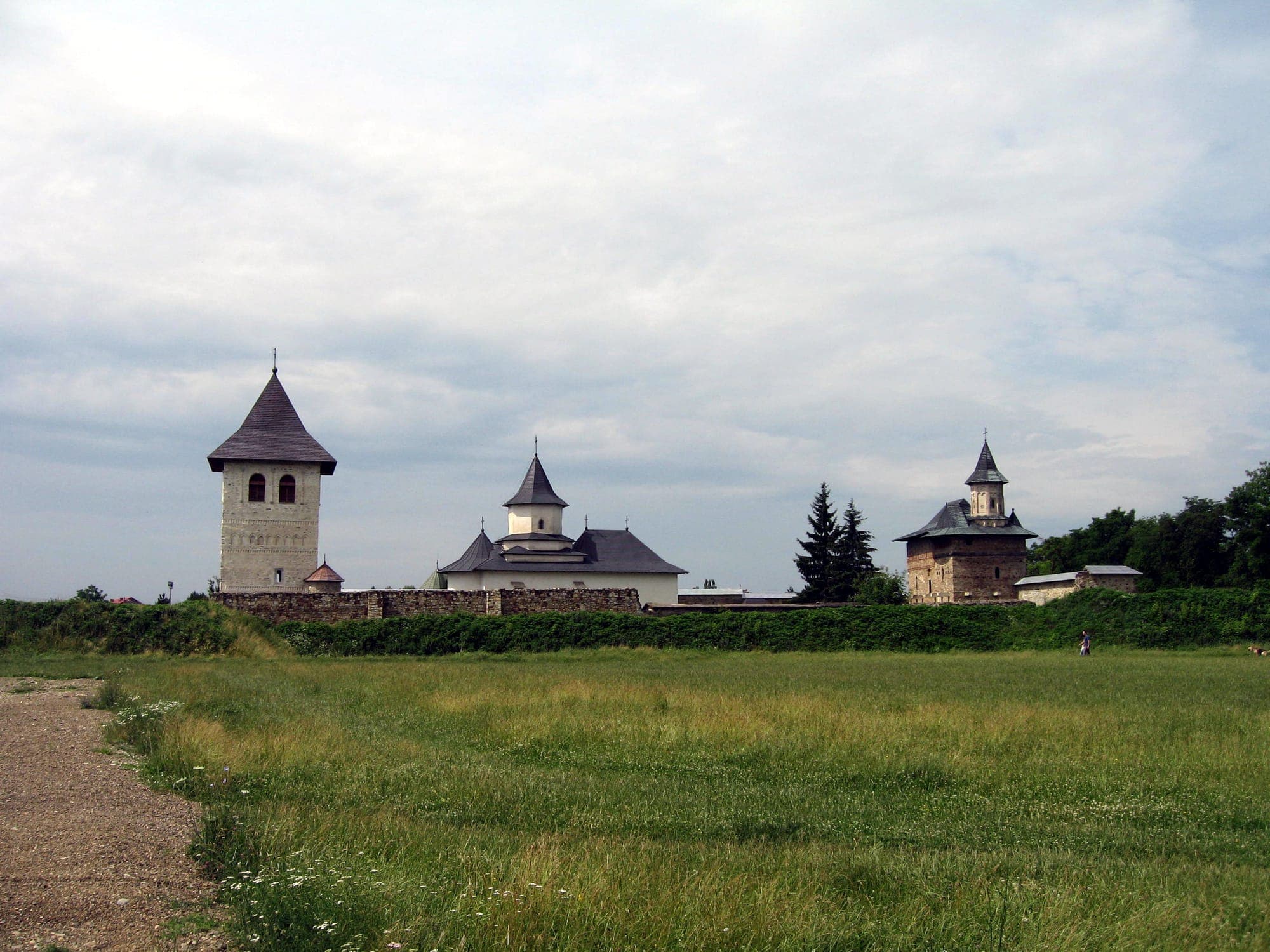
A fortified Armenian complex of the 17th century on the western edge of Suceava: stone walls, the church of St Auxentius, a 26-metre bell tower and a chapel above the gate.
MonasteriesFortresses and fortifications
A monastery in the centre of Bucharest, founded in 1713–1715 by Saint Anthim the Iberian, with a trefoil-plan church, carved stone window frames and a courtyard with a bell tower and abbots' houses.
MonasteriesMonuments and historic sites