

Războieni Monastery
Războieni, NT
A small stone church built by Stephen the Great in 1496, twenty years after the Battle of Valea Albă, where the fallen Moldavian soldiers lie; today a convent.
908 results
A small stone church built by Stephen the Great in 1496, twenty years after the Battle of Valea Albă, where the fallen Moldavian soldiers lie; today a convent.

A hall church from the second half of the 13th century, with a tympanum relief of a dragon hunt, considered one of the most important early Gothic sculptures in Transylvania.

The Gothic hall church begun in 1486 for the Franciscans, with a 17th-century star vault, the 1646 pulpit, the 1913 Angster organ and the Apafi tombs.

The Oradea State Theatre building, designed by the Viennese firm Fellner & Helmer and opened in 1900: an Ionic portico on Piața Ferdinand and an auditorium with boxes and a balcony, still in use every week.
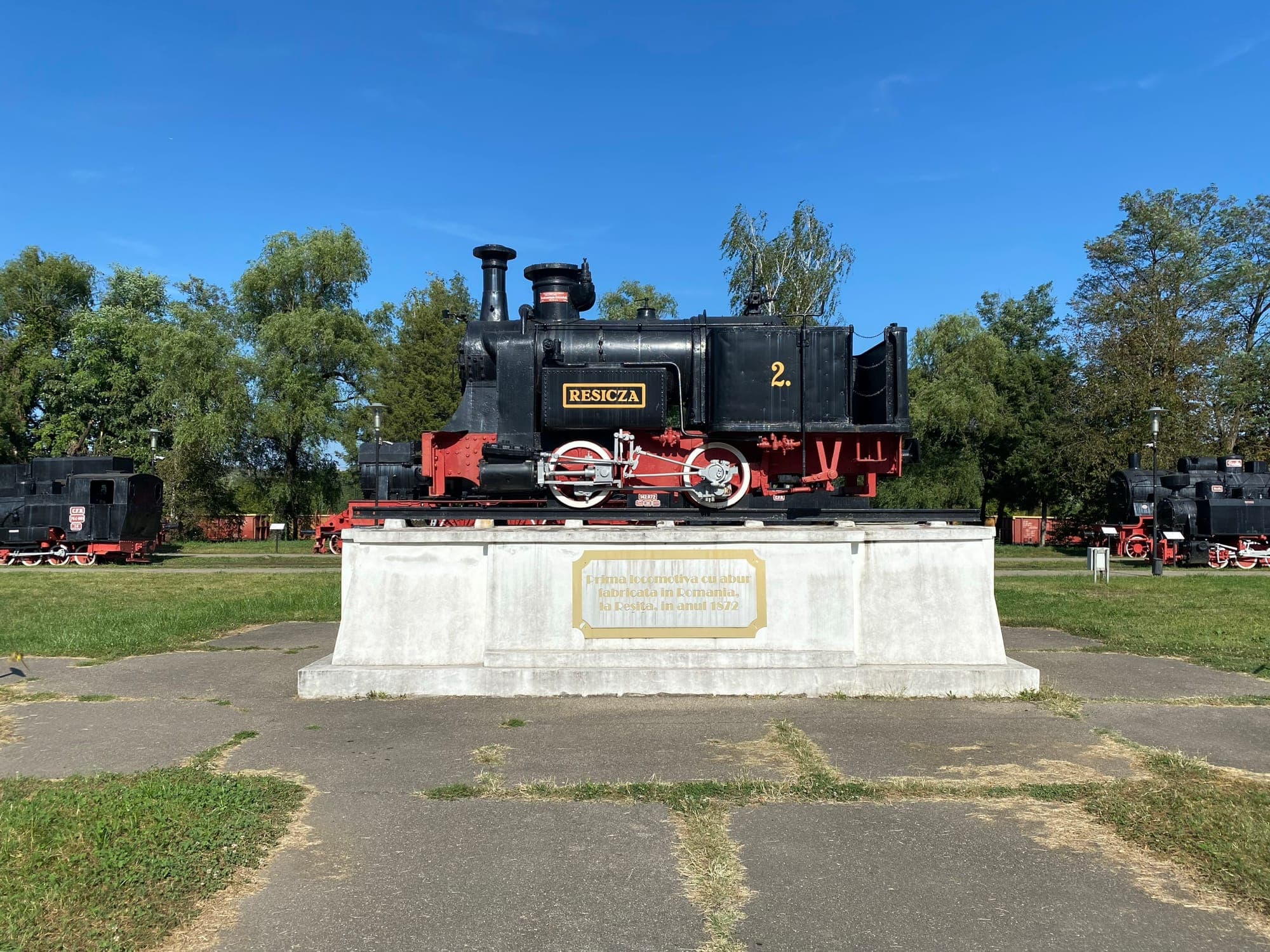
An open-air museum opened in 1972 in Triaj Park, Reșița: 16 steam locomotives, most of them built in the town's works, led by the “Resicza” of 1872.

A Gothic basilica from the second half of the 14th century, with a gate tower and enclosure walls, known for the Green Man and the other faces carved in stone inside.

The Baroque cathedral of the Catholic bishopric of Timișoara, built between 1736 and 1774 on Union Square; restored with EU funds and reopened in April 2023, with the bishops' crypt under the altar.

The auxiliary fort of Resculum, the westernmost Roman fortification on the frontier of Dacia Porolissensis, on the bank of the Crișul Repede, beside the medieval fortress of Bologa.

The auxiliary fort of the ala Siliana, one of the largest on the western frontier of Dacia, in the park of Rákóczi-Bánffy Castle, with information panels and graphic reconstructions.
A small 2nd-century Roman stone fort on Cazanului hill near the village of Titești in Țara Loviștei, part of the defensive line of the Limes Alutanus along the Olt valley.
A Roman fort in the Teleajen Valley, built during the Dacian Wars, with stone walls and a building with hypocaust heating; currently being developed as an archaeological park.

A 2nd–3rd-century Roman fort, garrisoned by a cohort of a thousand men, over which the village of Orheiu Bistriței was built; no walls remain visible above ground.
The most important Roman fort in the Jiu valley, beside Răcari railway station in Brădești commune, once home to a unit of Moorish horsemen; excavations go on, and the granary foundation was found in 2025.

Romania's first open-air museum, on Hoia hill: farmsteads, workshops, peasant installations and three wooden churches gathered over ~16 hectares into a scattered village.

A mining village in the Apuseni Mountains and a UNESCO site since 2021: the Roman galleries of Alburnus Maior in the Mining Museum, the old centre with stone houses, the mining ponds and Piatra Despicată.



