A Saxon church fortress in the Burzenland, near Brașov: a 19th-century Neoclassical church ringed by a double medieval wall with eight surviving defensive towers.
Monasteries and churchesFortresses and fortifications
A 13th-century Romanesque hall church with an eight-storey keep above the old choir, two rings of walls and fragments of medieval wall paintings, a few kilometres from Rupea.
Monasteries and churchesFortresses and fortifications
A 13th-century Romanesque church with a richly carved portal, enclosed by a double ring of walls in the Hârtibaciu valley, with the Făgăraș Mountains behind.
Monasteries and churchesFortresses and fortifications
The largest surviving piece of Timișoara's bastioned fortress, built by the Austrians in the 1730s and restored with EU funds, now home to the National Museum of Banat.
Fortresses and fortificationsMuseums and memorial houses
The northernmost bastion of Roman Dacia: the fort with its reconstructed gates, the paved imperial road, the civil town and the amphitheatre, on the hills at Moigrad in Sălaj.
Monuments and historic sitesFortresses and fortificationsUNESCO
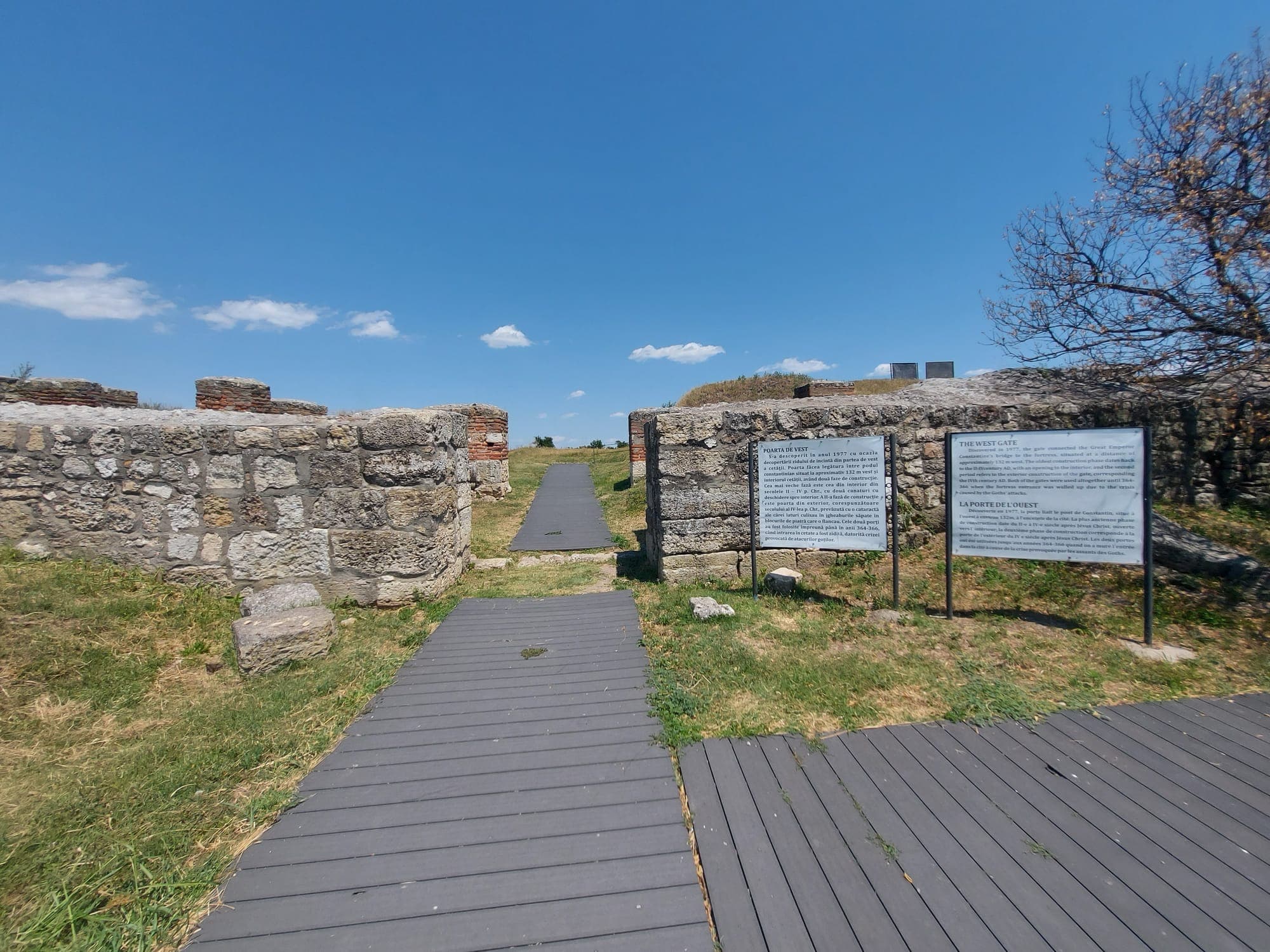
The Daco-Roman and Roman-Byzantine fortress in Corabia, with its excavated walls and towers, a 6th-century basilica, the "secret well" and the northern pier of Constantine the Great's bridge over the Danube.
Fortresses and fortificationsMonuments and historic sites
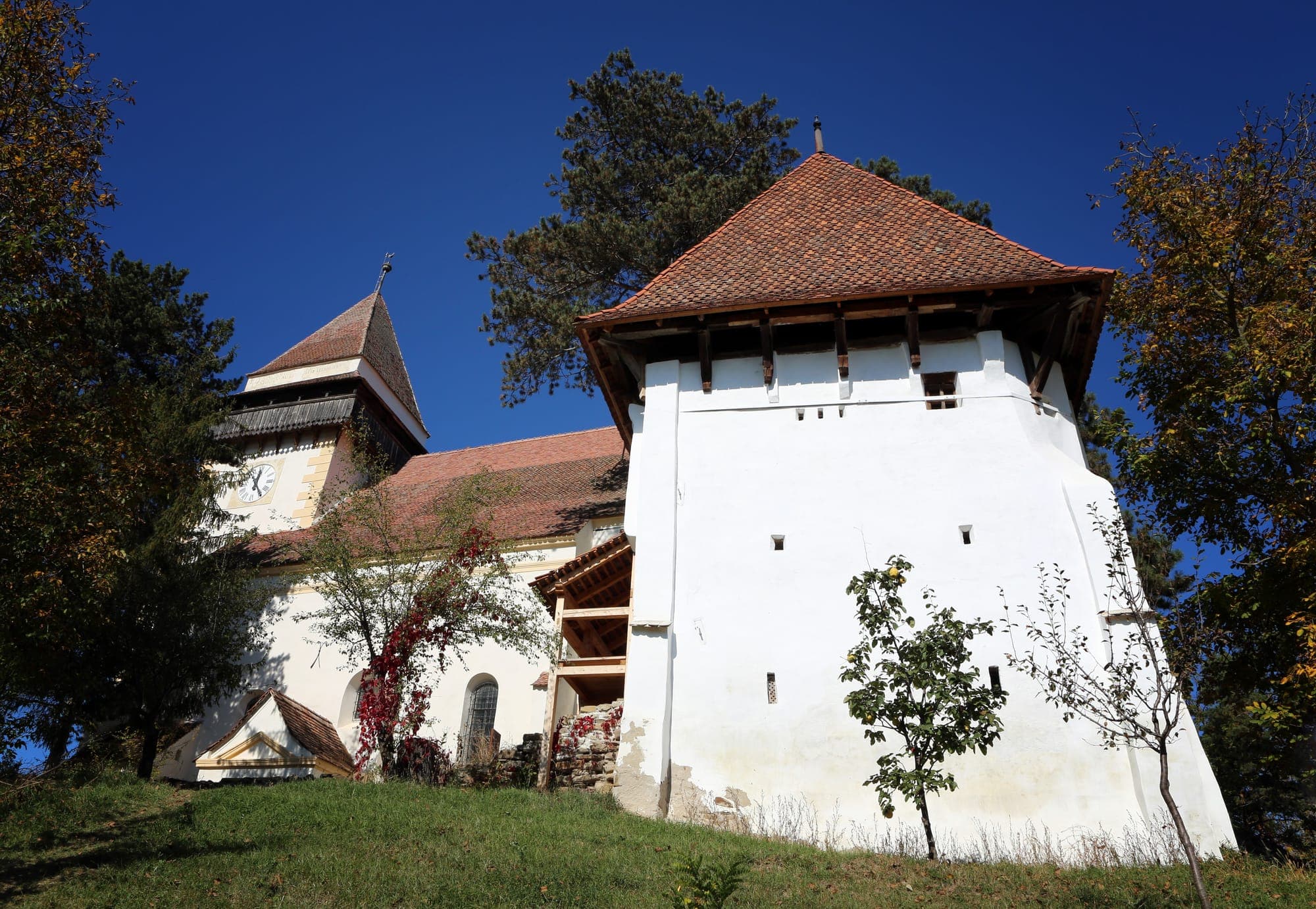
A Saxon church on a hill in Apold, surrounded by walls and defensive towers that survive almost complete, with Gothic frescoes on the triumphal arch and contemporary art exhibition spaces.
Monasteries and churchesFortresses and fortifications
One of the largest Gothic hall churches in the Târnava valley, with a massive bell tower and a walled enclosure with towers; part of the wall collapsed in June 2026.
Monasteries and churchesFortresses and fortifications
A Roman fort on the Tirighina promontory where the Siret meets the Danube, in the Barboși district of Galați, with a site museum built inside the grounds and remains almost 1,900 years old.
Monuments and historic sitesFortresses and fortifications
The oldest building in Galați, a merchants' church consecrated in 1647, with walls up to 1.8 m thick, a bell tower and a fortified loft with 28 loopholes, on the bank of the Danube.
Monasteries and churchesFortresses and fortifications
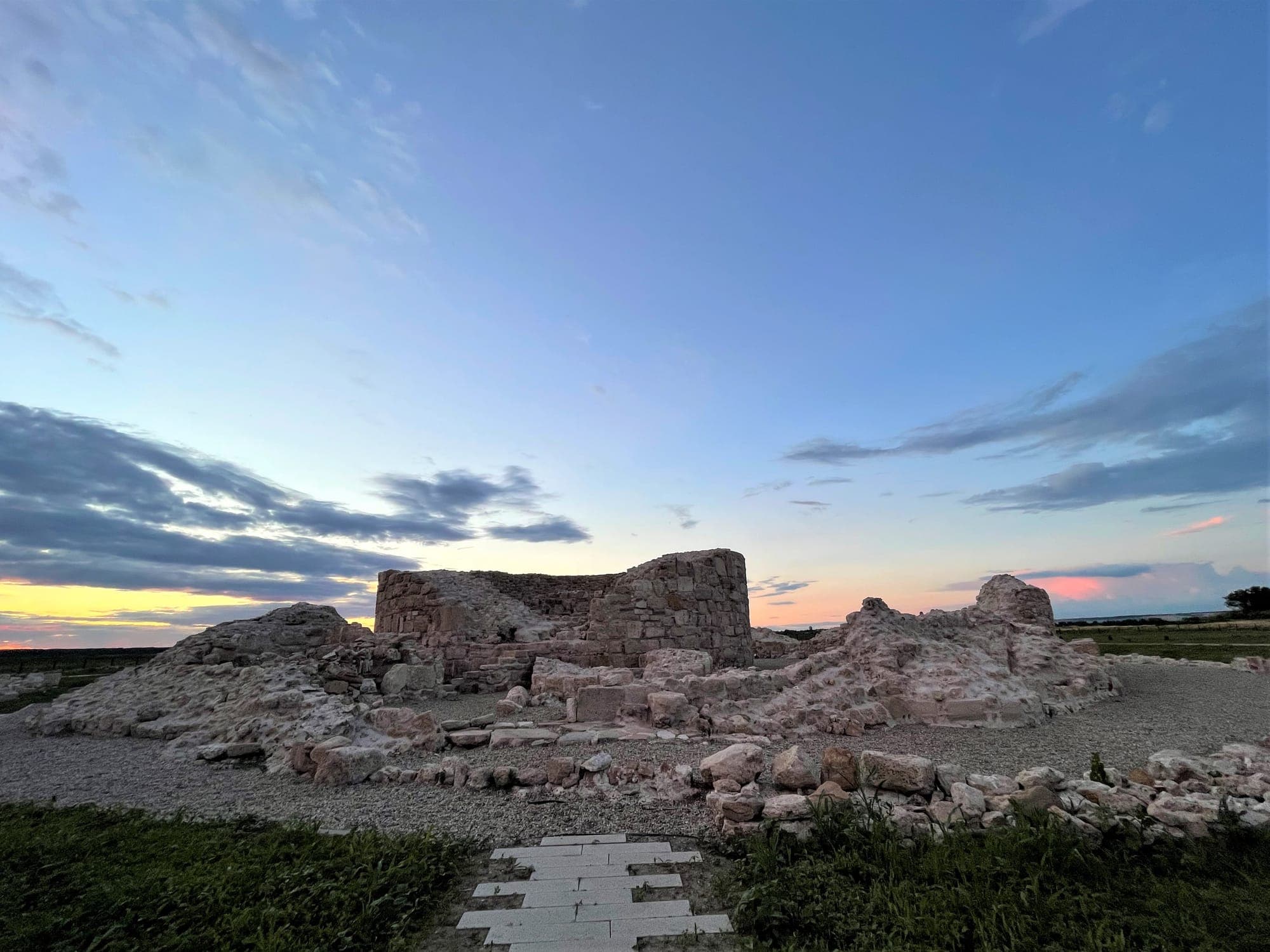
The ruins of a medieval fortress on the Danube bank, documented in the time of Mircea the Elder and held by the Ottomans until 1829, with a consolidated round central tower.
Fortresses and fortificationsMonuments and historic sites
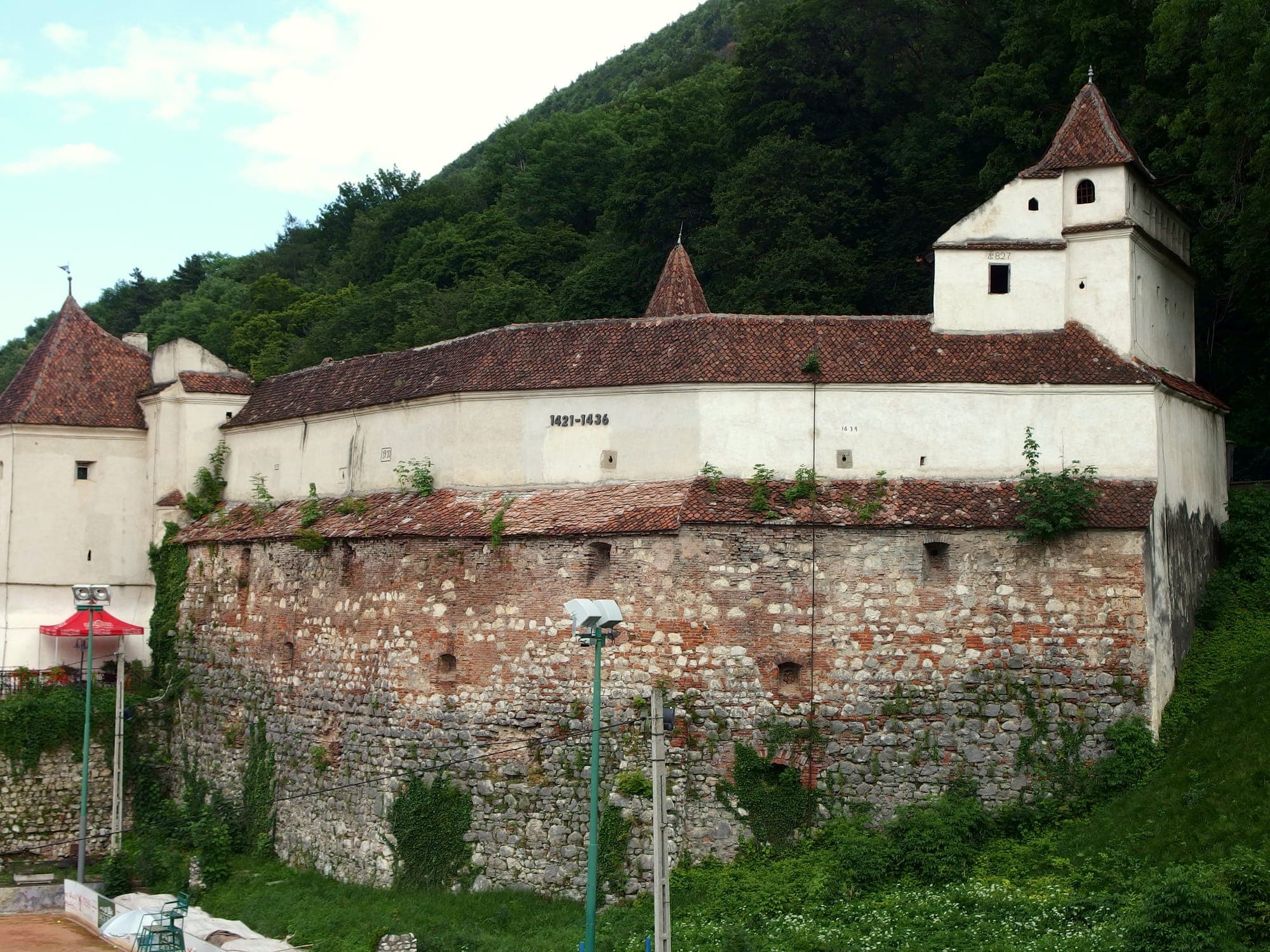
The best-preserved bastion of Brașov's city walls, built by the weavers' guild in the 15th and 16th centuries, with timber galleries on four levels and a model of the medieval town.
Fortresses and fortificationsMuseums and memorial houses