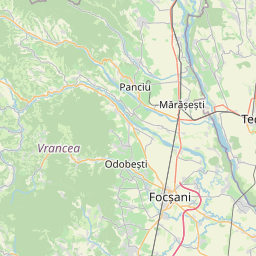
Vrancea County sits at the bend of the Carpathians, where the mountain chain turns south and the sub-Carpathian hills run down towards the Siret. Focșani, the county seat, was a border town between Moldavia and Wallachia until the Union of 1859, hence its name of "the city of the Union", and it is the centre of a broad wine region, with Panciu, Odobești and Cotești. In the mountains, the villages of the Vrancea country, Lepșa and Soveja, have kept a distinctive pastoral life, while in the north the Mărășești Mausoleum recalls the battles of 1917. The places to visit in Vrancea County are about mountains, wine and history.
The Putna Waterfall, a few kilometres from Lepșa in the Putna-Vrancea Natural Park, is the best-known spot in the county's mountains and a starting point for hikes in the Vrancea Mountains. On the way, Lepșa Monastery and Tulnici are worth a stop. Beyond that, Vrancea is a region to discover slowly, along the valleys of the Putna, the Zăbala and the Milcov.