Angustia Roman Fort
The Roman fort at Brețcu, which guarded the entrance from the Oituz Pass into Roman Dacia, with the earth banks of its enclosure still clearly visible in the fields; part of the UNESCO site of the Dacian limes.
Covasna is one of the smallest counties in the country, set in the bend of the Eastern Carpathians, in the Brașov and Târgu Secuiesc basins, between the Baraolt, Bodoc and Vrancea Mountains. The county seat is Sfântu Gheorghe, and Târgu Secuiesc and Covasna are the other towns; the population is largely Székely, and the villages keep carved gates, manor houses and old churches. What there is to see in Covasna county is mostly about mineral water: the area has hundreds of springs and mofettes, used in spa treatment for more than a century.
Covasna, the resort "of a thousand springs", is known for its mofettes, for walks in the Zânelor valley and for the former forest railway that climbed to Comandău. At Micloșoara, Kálnoky Castle is a restored manor house turned into a guesthouse by the family that built it, a good base for the surrounding villages. Near Sfântu Gheorghe you can also see the Ika fortress at Cernat and the mineral-water baths of Vâlcele or Malnaș-Băi.

15 results

The Roman fort at Brețcu, which guarded the entrance from the Oituz Pass into Roman Dacia, with the earth banks of its enclosure still clearly visible in the fields; part of the UNESCO site of the Dacian limes.

A spa and mountain-air resort in Covasna county, at 840–950 m in the forests of the Bodoc Mountains: naturally sparkling mineral springs, volcanic gas mofettes, sulphur caves and trails up to Bálványos Castle.

A small spa village on the Olt, 21 km from Sfântu Gheorghe, with carbonated mineral springs, 19th-century villas, a treatment centre with pools and trails into the Baraolt and Bodoc mountains.
A Classicist castle of 1827 with 19th-century wall paintings, restored with European funds and reopened in September 2026 as the Székely Equestrian Museum.

A medieval church on the edge of Sfântu Gheorghe, with 13th-century origins and 14th–15th-century wall paintings: the legend of King Ladislaus, the Passion and the Last Judgement.

The ruins of a medieval fortress on Cetății Hill, above 1,000 m, over the spa resort of Băile Bálványos: stone walls and a surviving tower, an hour's climb through the forest.

The spa resort in the town of Covasna, Romania's "resort of the heart": carbon dioxide mofettes, sparkling mineral springs on every corner and the Devil's Pond, a mud volcano in the central park.
A Renaissance hunting manor of the Counts Kálnoky, begun in 1648, with bastions and rare stucco work, restored and opened in 2017 as the Museum of Transylvanian Life, with guided tours.
A noble manor house in the centre of Ozun village, with a tall double mansard roof, linked to Major Pünkösti Gergely, who announced the end of serfdom in the Three Seats in 1848.

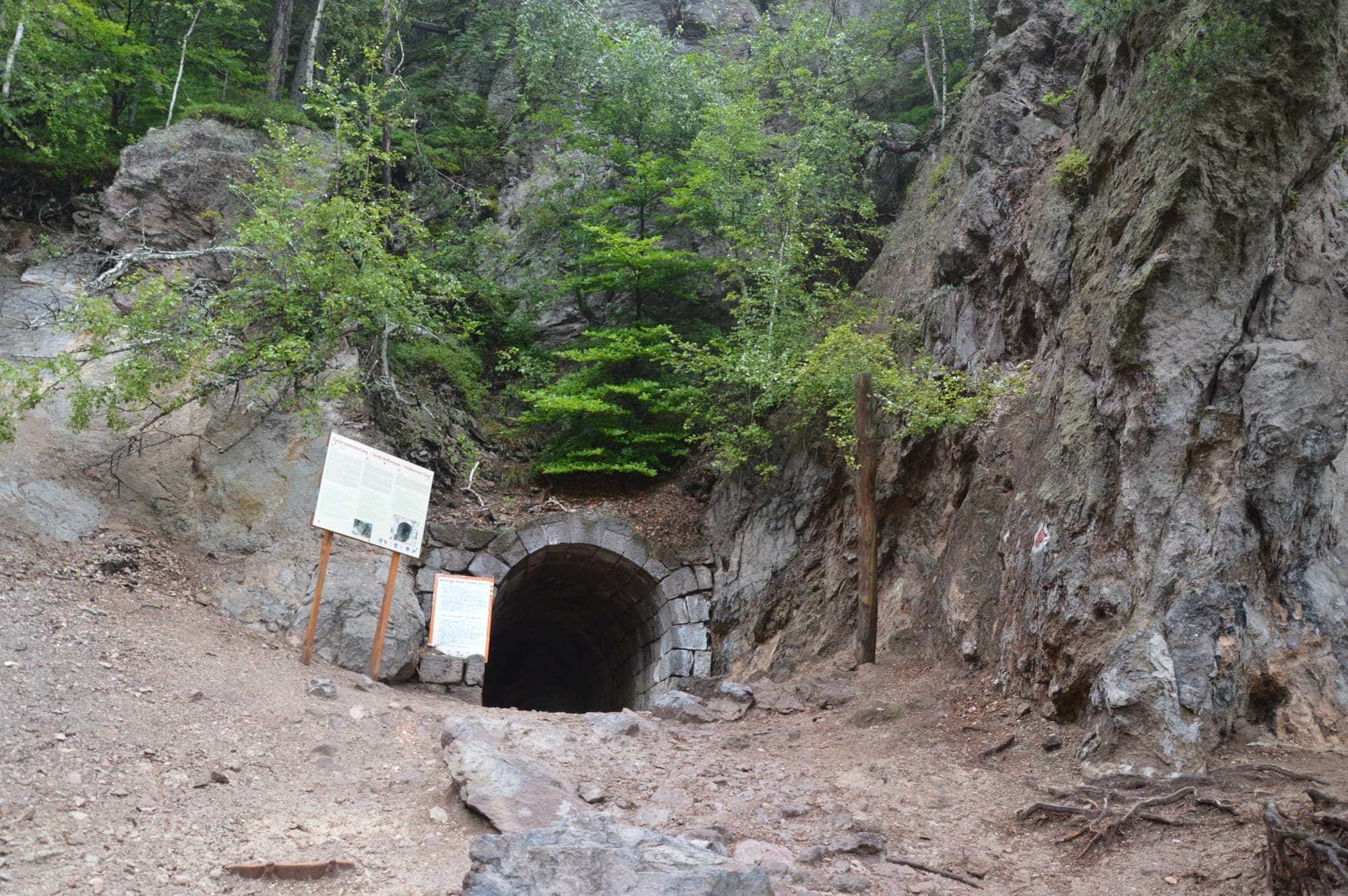
The former gallery of a sulphur mine on Mount Puturosu, 14 m long, with post-volcanic gas rising from it: the walls are coated in yellow sulphur and the vault has been lined with stone since 1892.

A medieval church with a Romanesque nave and a Gothic sanctuary, enclosed by a wall with a gate tower on the terrace above the Olt. It keeps fragments of medieval frescoes.

A small Roman fort with an unusual pentagonal plan, on a terrace above the Râul Negru at the edge of the village of Reci; its banks and ditches are clearly visible next to the DN11. Part of the UNESCO site of the Dacian limes.

A 17th-century manor given its present look in 1903, set in a park and home to the Mikes Kelemen museum: four memorial rooms for notable people born in Zagon.

The oldest museum in Székely Land, in a building designed by Kós Károly in 1911–1912: history, ethnography, natural sciences and a garden with Székely gates.
A forest resort 8 km from Sfântu Gheorghe, with two ski runs served by drag lifts and floodlit at night, an adventure park, a spa, carbonated springs and hiking trails.