Biertan Fortified Church
Biertan, SB · 63 km from Sibiu
5.0
The Saxon church on the hill in the middle of the village, guarded by three rings of walls and towers; inside, Romania's largest polyptych altarpiece and a door with a lock from 1515.
Sibiu county stretches from the Târnava valleys, over hills of vineyards and Saxon villages, to the ridge of the Făgăraș and Cindrel Mountains, with the Mărginimea Sibiului, the land of the shepherds' villages, at their foot. Sibiu, the county seat, was European Capital of Culture in 2007 and has one of the best-preserved historic centres in the country, with its large squares; Mediaș is the county's second town. The things to see in Sibiu county range from museums and fortified churches to glacial lakes and mountain roads.
The Brukenthal Palace, with its gallery of European art, and the ASTRA Museum, the open-air museum in the Dumbrava Sibiului forest, with hundreds of peasant houses, together call for a full day. To the north, the fortified churches of Biertan and Valea Viilor, both on the UNESCO list, are an hour's drive away. To the south, Lake Bâlea, in its glacial cirque on the Transfăgărășan, is the classic summer destination, and at Ocna Sibiului the salt lakes in the former mines are for hot days.
62 results
The Saxon church on the hill in the middle of the village, guarded by three rings of walls and towers; inside, Romania's largest polyptych altarpiece and a door with a lock from 1515.

Romania's largest open-air museum, in the Dumbrava forest outside Sibiu: over 300 houses, mills, workshops and wooden churches brought from across the country, along ~10 km of paths.

A glacial lake at 2,034 m in the Bâlea cirque of the Făgăraș Mountains, at the top of the Transfăgărășan; reachable by car in summer and by cable car all year round.

The Baroque palace of Governor Samuel von Brukenthal on Sibiu's Great Square has housed Romania's oldest museum since 1817: a gallery of European painting with van Eyck, Titian and Bruegel.
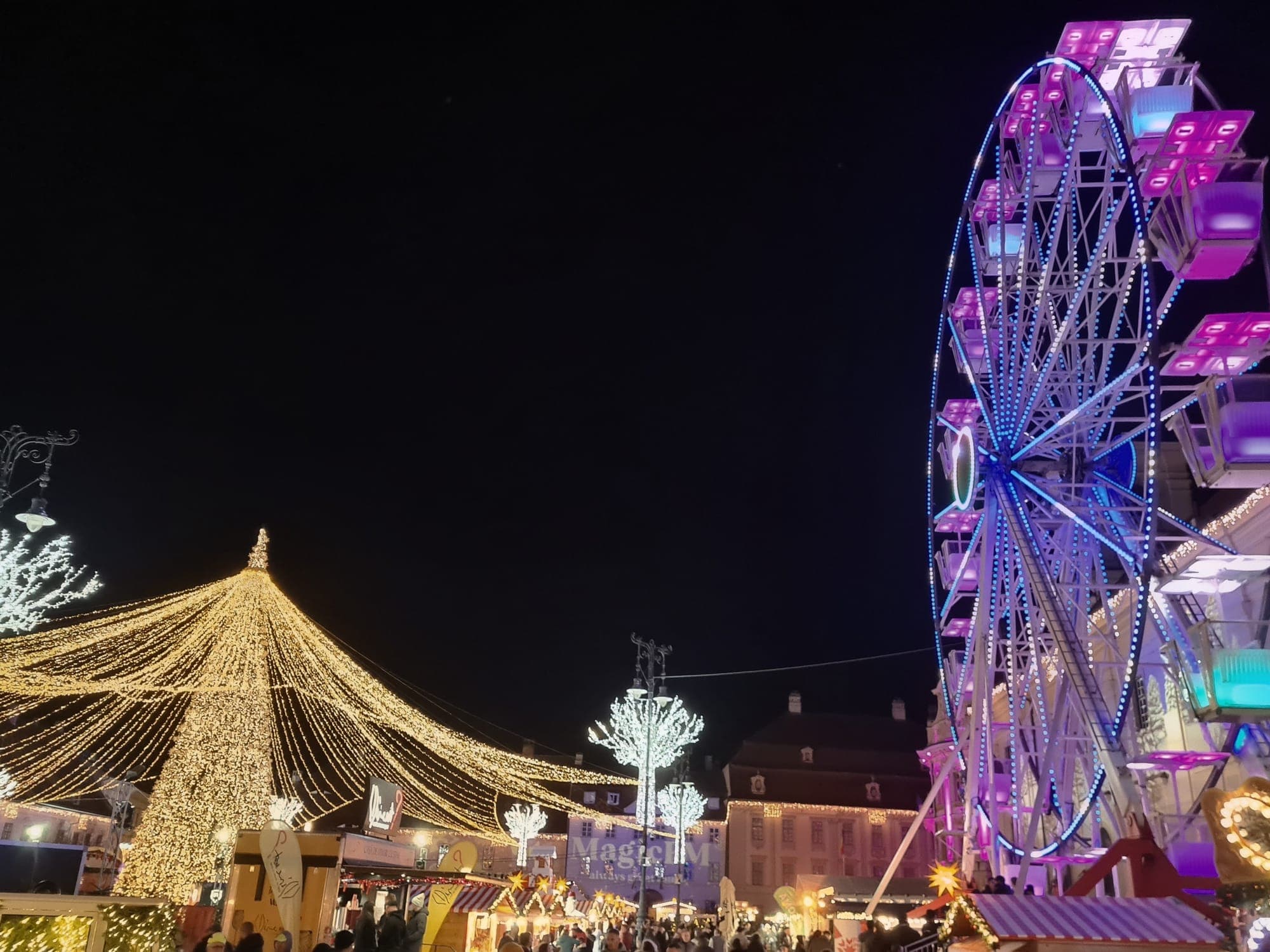
The main square of old Sibiu, about 140 by 90 metres, enclosed by merchants' houses with "eyes" in their roofs, by the Brukenthal Palace, the Jesuit church and the Council Tower.

A spa resort 15 km from Sibiu with salt lakes formed where old salt mines caved in: in summer you swim in water that keeps you afloat, between white banks of salt.

Romania's biggest tiered waterfall, dropping about 60 m over the lower step of the Bâlea cirque in the Făgăraș Mountains; an hour's walk up from the Bâlea Cascadă chalet on the Transfăgărășan.

The Saxon church in a vineyard valley near Mediaș, with its choir turned into a defence tower, an almost intact oval wall and a wood-and-iron portcullis that has survived for centuries.

A fairy-tale building of clay, sand, straw, wood and river stone, raised between 2014 and 2017 at the foot of the Făgăraș Mountains. Today it is a restaurant and guesthouse: you enter with a reservation, not a sightseeing ticket.
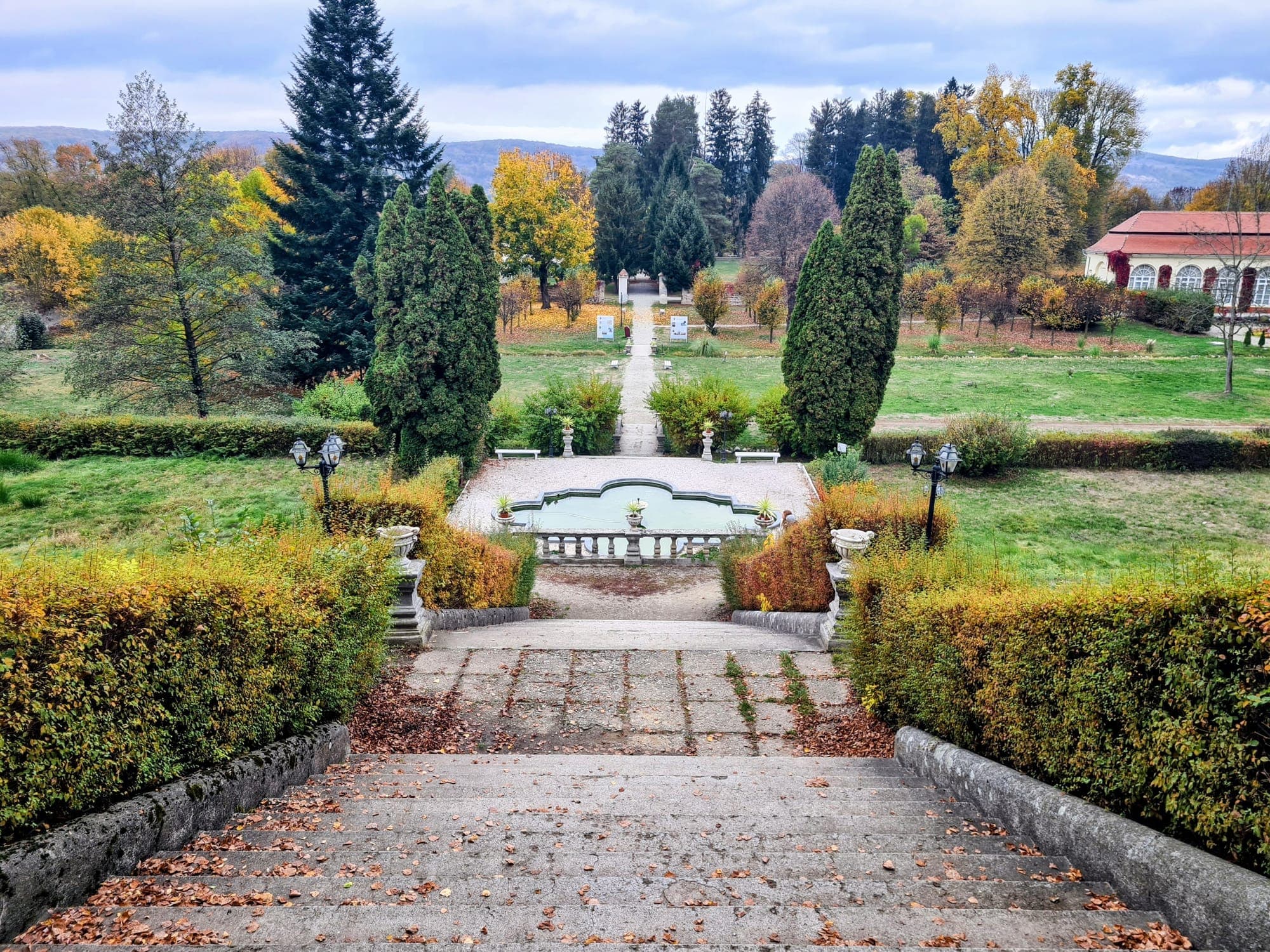
The summer residence of Baron Samuel von Brukenthal, governor of Transylvania, built in the Baroque style on a terrace above the Olt, with its Baroque garden, orangery and a small exhibition in the palace rooms.
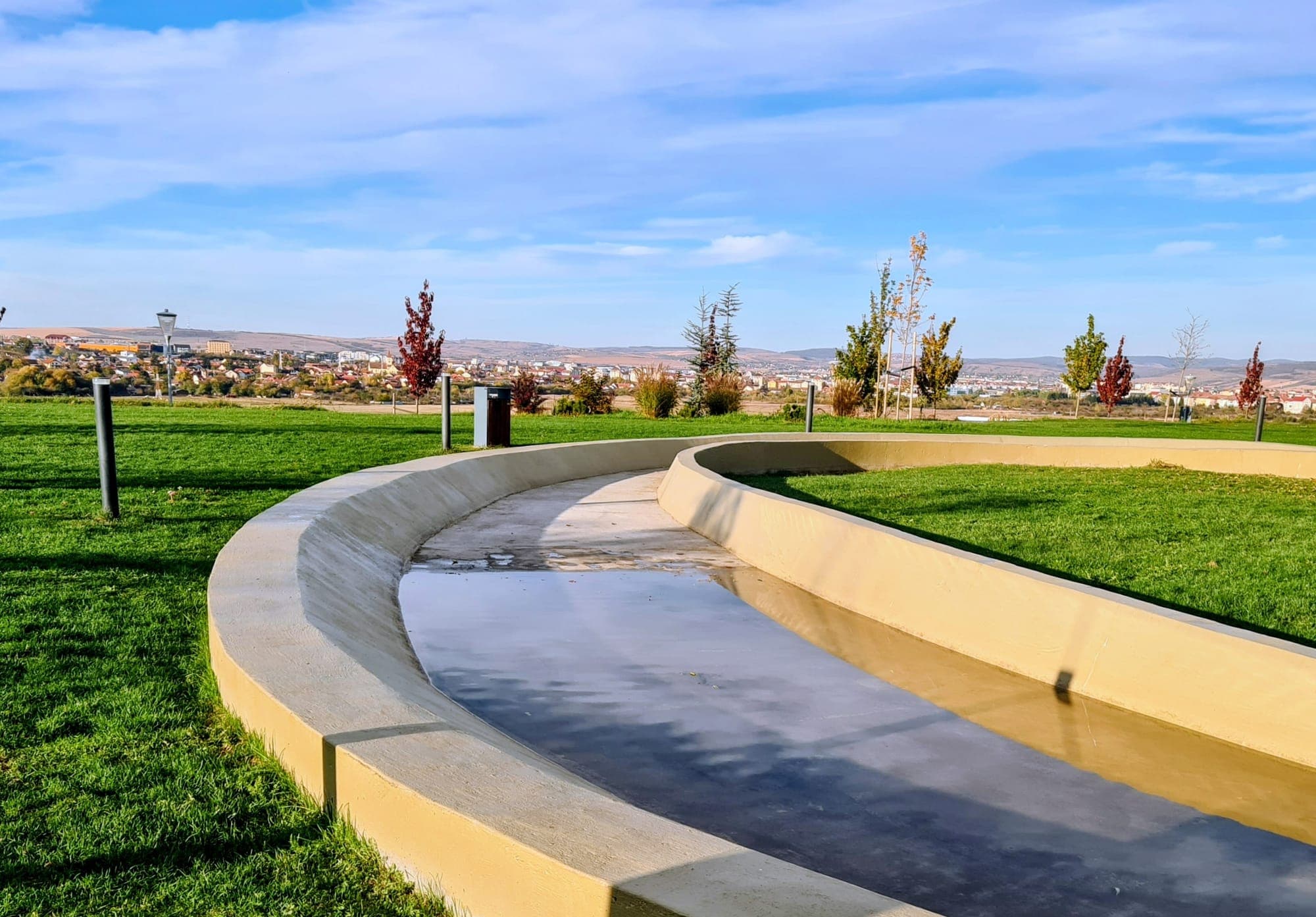
Sibiu's newest park, opened in 2023 on 6.4 hectares in Tilișca on a former rubble dump: terraces with views of the Cindrel Mountains, minigolf, a pump track, playgrounds and sports courts.

Considered Romania's oldest mountain resort, from 1894, in the Cindrel Mountains: a chairlift towards Oncești Peak, the Oncești and Dăneasa slopes, Arena Platoș and Noica's grave.

A Romanesque basilica from the turn of the 12th and 13th centuries, left almost unaltered, on the rocky top of St Michael's Hill, ringed by a defensive wall and looking out to the Făgăraș Mountains.

The ruins of the only surviving Cistercian abbey in Romania, built around 1200 in the Early Gothic style, with its choir now serving as an Evangelical church.

The 13th-century gate tower linking the Grand Square and the Small Square, Sibiu's symbol, with an onion-shaped spire; closed for restoration since January 2026, for about two years.