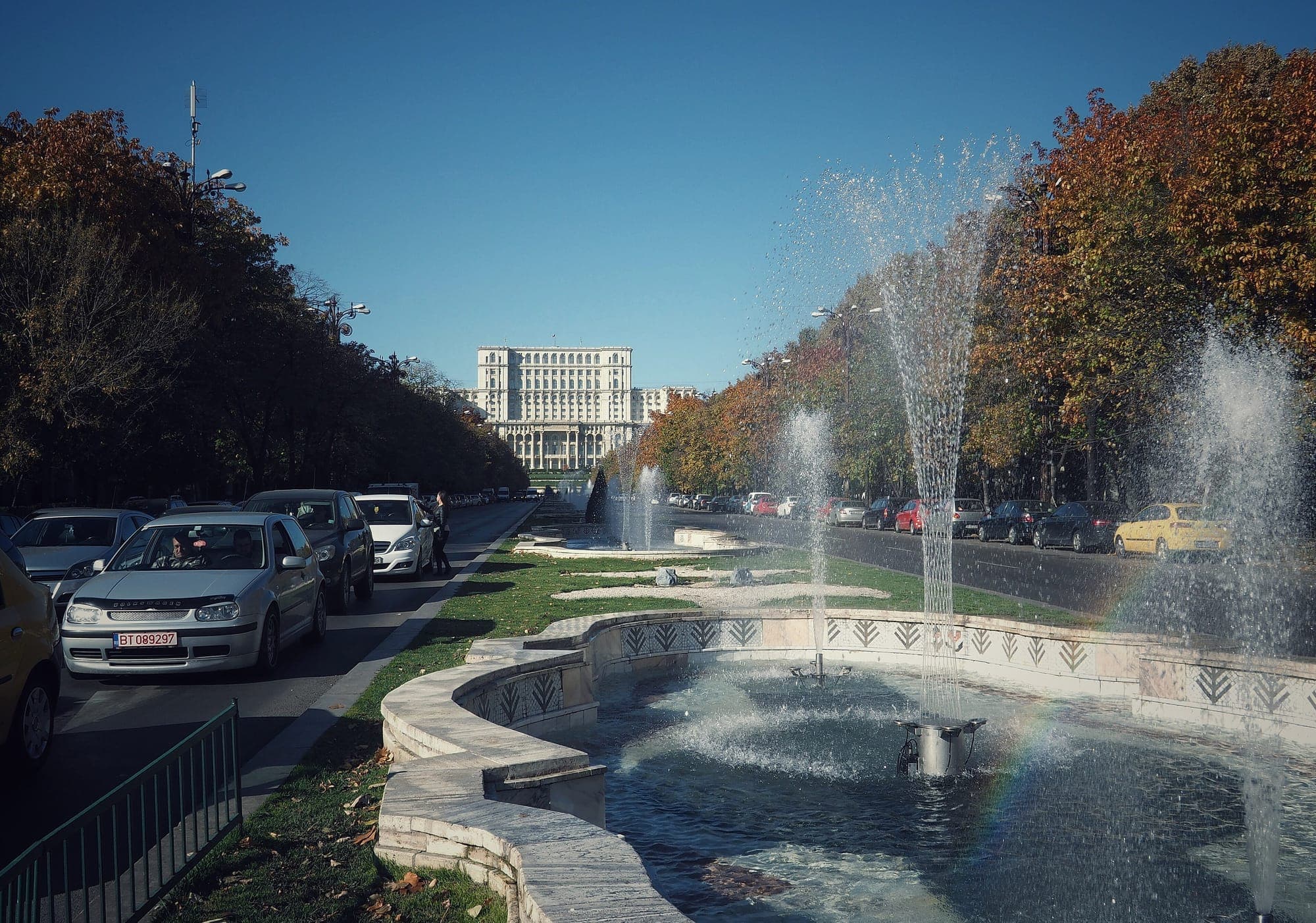
The heaviest building in the world, raised by Ceaușescu in the 1980s on Spirii Hill; the guided tour passes through marble-clad state rooms hung with crystal chandeliers weighing several tonnes.
Romania's National Cathedral, on Arsenal Hill next to the Palace of the Parliament: a 127 m Neo-Byzantine church with its altar consecrated in 2018 and its painting consecrated in 2025, open to visitors only in announced periods.
Bucharest's oldest public park, laid out from 1847 in the landscape style around a lake, with shady avenues, the Writers' Rotunda and romantic stone corners, right in the city centre.
An open-air ethnographic museum on the shore of Lake Herăstrău, in the middle of Bucharest: farmsteads, wooden churches, mills and workshops brought from all over the country and rebuilt here since 1936.
Museums and memorial housesVillages and traditions
The museum on Kiseleff Road holds the 1907 dioramas, the Deinotherium skeleton and over 2 million zoological, palaeontological and mineralogical pieces, in a building inaugurated in 1908.
An inn from 1808, built by the merchant and diplomat Manuc Bei beside the Old Court: a listed building with an inner courtyard and wooden balconies, where the 1812 Russo-Turkish peace talks took place.
The museum in the Neo-Romanian building on Kiseleff Road, named European Museum of the Year in 1996, keeps over 100,000 objects of peasant art and civilisation.
The concert hall in the heart of Bucharest, built in 1886–1888 and paid for largely by public subscription: Ionic columns outside, a fresco over 70 m long telling the story of the Romanians inside.
A small convent in the Old Town with a Brâncoveanu-style church from 1724, façades painted with saints in medallions, an arcaded courtyard and a lapidary of stones from vanished Bucharest churches.
Monasteries and churchesMonuments and historic sites
 Top 20


