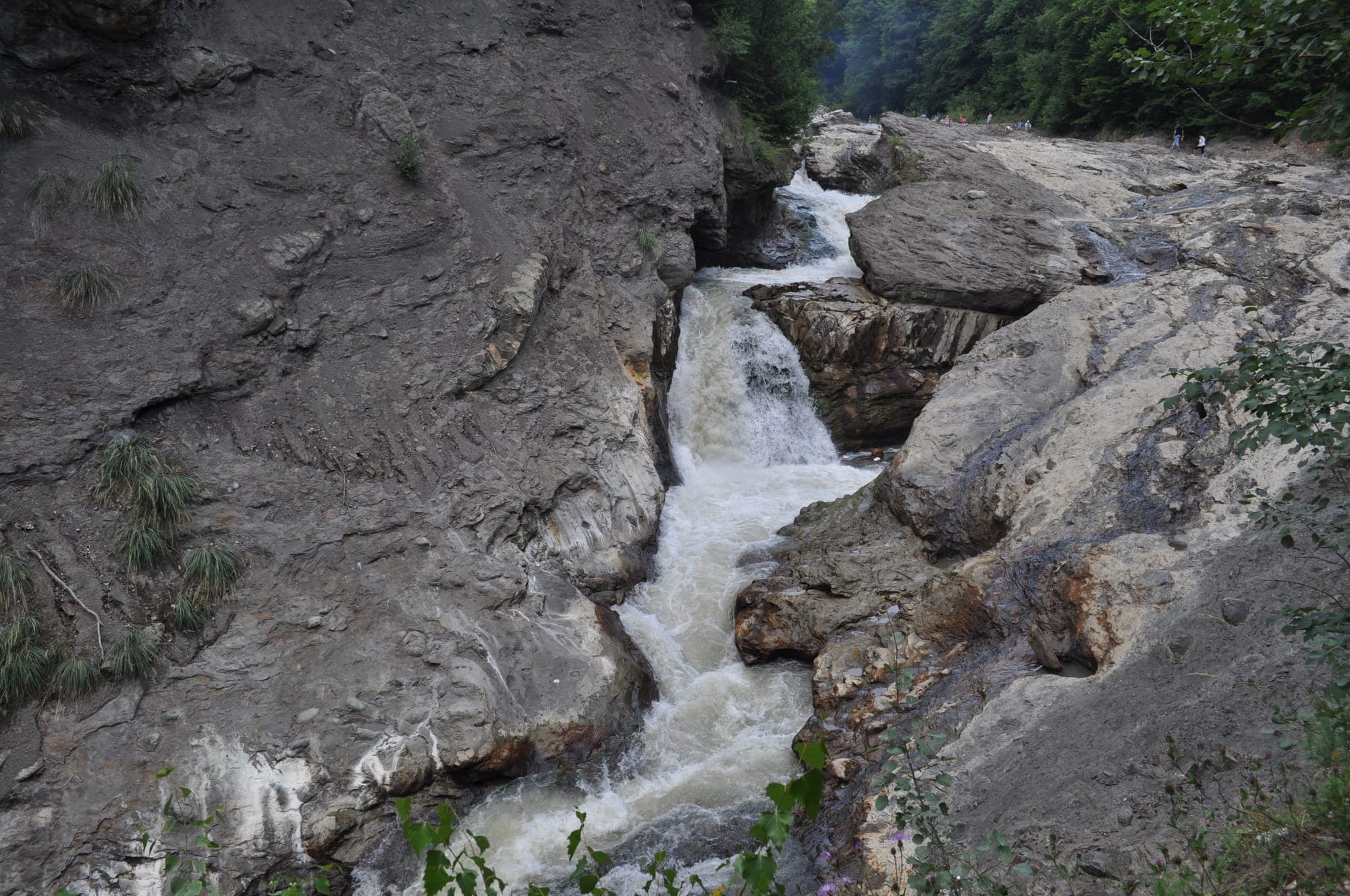
Putna Waterfall
Lepșa, VN
A series of steps and potholes where the Putna river drops 14 m over about 80 m between sandstone walls, near Lepșa; a nature reserve since 1973, minutes from the DN2D.
WaterfallsNational parks and reserves
45 min2 lei
A series of steps and potholes where the Putna river drops 14 m over about 80 m between sandstone walls, near Lepșa; a nature reserve since 1973, minutes from the DN2D.

The Oradea State Theatre building, designed by the Viennese firm Fellner & Helmer and opened in 1900: an Ionic portico on Piața Ferdinand and an auditorium with boxes and a balcony, still in use every week.

A Gothic basilica from the second half of the 14th century, with a gate tower and enclosure walls, known for the Green Man and the other faces carved in stone inside.

The Church of the Holy Archangels in Rogoz, built in 1663 and part of the Maramureș UNESCO site, has an asymmetric roof over the 'table of the ancestors', horse-head eaves brackets and paintings from 1785.

The Cathedral of the Assumption, built between 1752 and 1780: the largest Baroque church in Romania, with an organ given by Maria Theresa and an interior of marble, frescoes and gilding.
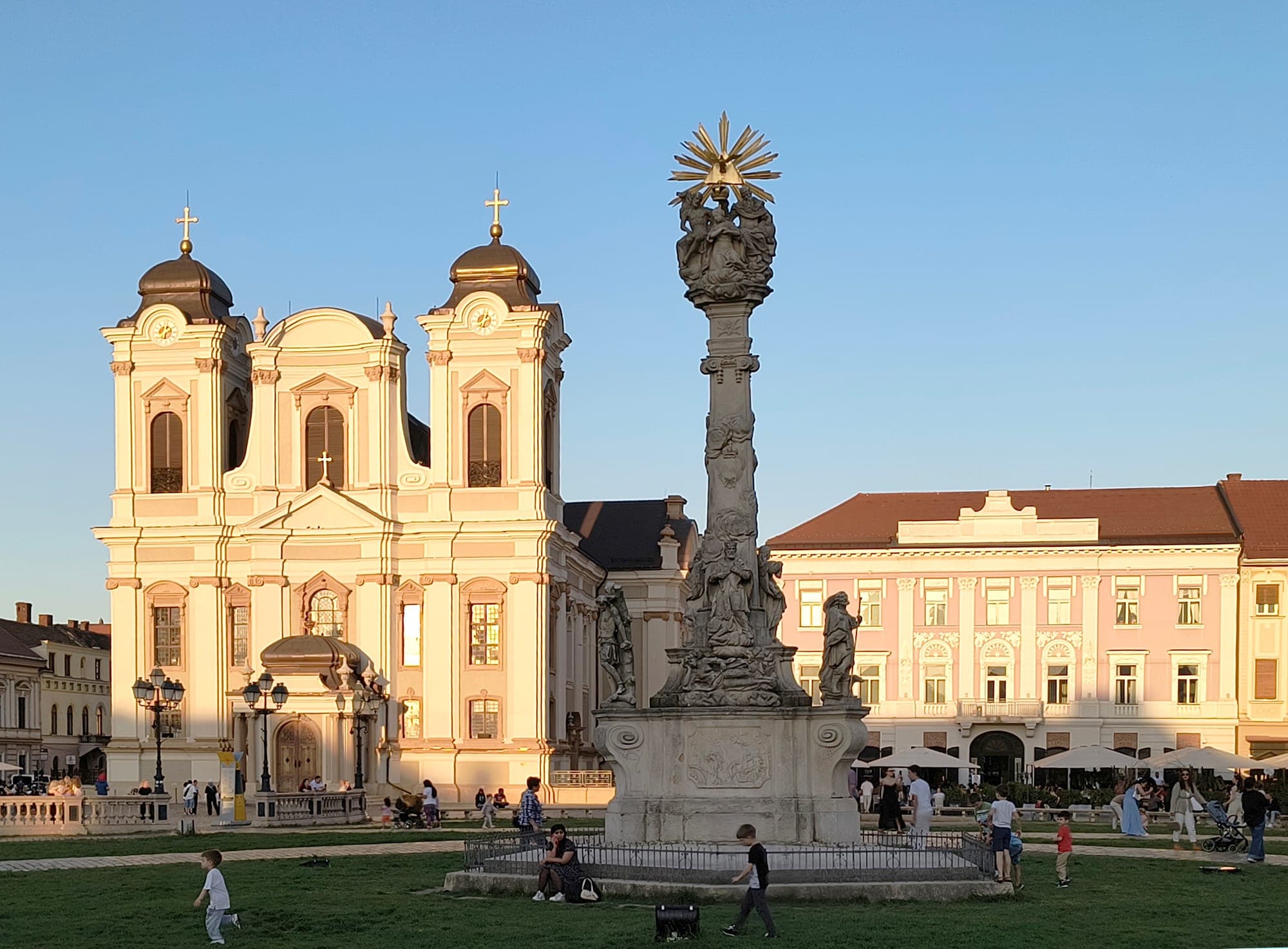
The Baroque cathedral of the Catholic bishopric of Timișoara, built between 1736 and 1774 on Union Square; restored with EU funds and reopened in April 2023, with the bishops' crypt under the altar.

A Roman fort on the Tirighina promontory where the Siret meets the Danube, in the Barboși district of Galați, with a site museum built inside the grounds and remains almost 1,900 years old.

The concert hall in the heart of Bucharest, built in 1886–1888 and paid for largely by public subscription: Ionic columns outside, a fresco over 70 m long telling the story of the Romanians inside.

Romania's first open-air museum, on Hoia hill: farmsteads, workshops, peasant installations and three wooden churches gathered over ~16 hectares into a scattered village.
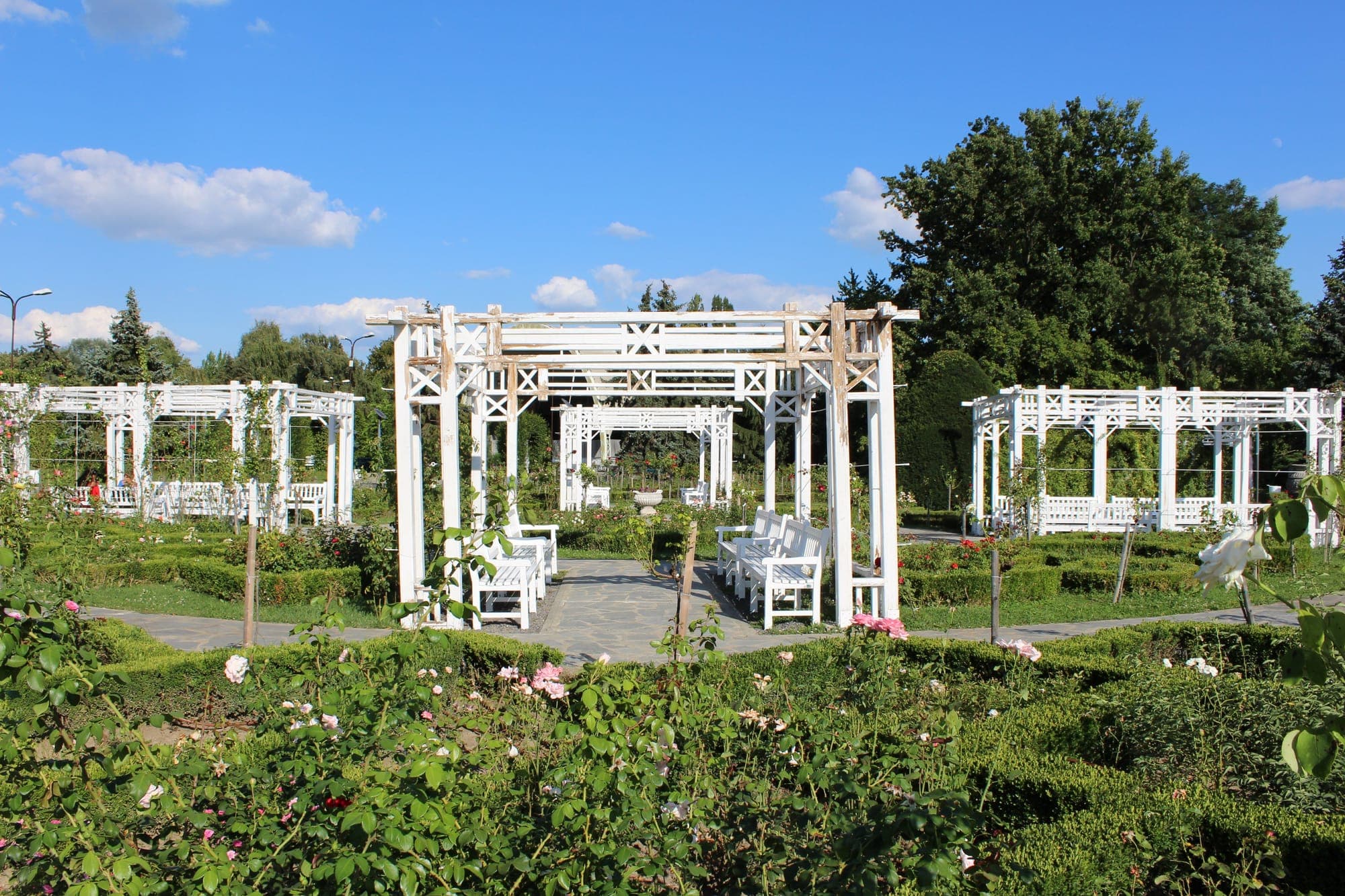
Timișoara's historic rose garden, laid out in 1929–1934: rose beds edged with clipped hedges, white wooden pergolas and an open-air summer theatre, in a park of nearly four hectares.

The pass between Piatra Craiului and the Bucegi: the DN73 climbs from Rucăr onto the Fundata plateau, over the Giuvala Pass at about 1,260 m, and descends to Bran past hamlets scattered on the ridges.
A wild waterfall on the Ieduțul stream, hidden among ferns and fir trees above the Iad Valley, a quarter of an hour's walk through the forest from the road between Stâna de Vale and Lake Leșu.

The resort that runs straight into Mangalia from the north: 1970s tower hotels, a beach in the middle of being widened, a public spa sanatorium and, behind it all, the Mlaștina Hergheliei nature reserve.

The oldest building in Galați, a merchants' church consecrated in 1647, with walls up to 1.8 m thick, a bell tower and a fortified loft with 28 loopholes, on the bank of the Danube.

The oldest monastery in the Bărăgan, founded by the Grand Postelnic Ianache Caragea and rebuilt by Matei Basarab, with a 17th-century brick enclosure wall and a bell tower you enter through.