
Fortresses in Dobruja: Histria, Enisala, Capidava and the other Greek, Roman and medieval fortresses, with a map

Dobruja has 13 fortresses with a page on the site: the Greek cities of Histria, Argamum and Callatis, nine Roman and late Roman fortresses, from Tropaeum Traiani in the south to Capidava and the others on the bank of the Danube, and the medieval Enisala fortress above Lake Razim. Six have opening hours and a ticket for the fortress, and at Callatis the ticket is for the museum; the others are open-air archaeological sites with no facilities.
Below they are all in one table, with the map, then by period and by route: what you can combine with a holiday on the coast and what lies on the way to the Danube Delta. The current opening hours and prices are on the page of each fortress. The other fortresses in the country are in the guide to Romania's fortresses, and the Dacian fortresses and the fortified churches of Transylvania have their own guides.
In short
- Dobruja has 13 fortresses with a page on the site: three Greek cities (Histria, Argamum, Callatis), nine Roman and late Roman fortresses (Tropaeum Traiani, Ulmetum, Ibida, Capidava, Carsium, Troesmis, Dinogetia, Noviodunum, Halmyris) and the medieval Enisala fortress.
- Histria, founded by settlers from Miletus in 657–656 BC according to ancient tradition, is the oldest Greek colony on the western shore of the Black Sea.
- In November 2026 the sites with opening hours and tickets are Histria (16 lei the fortress, 16 lei the museum), Tropaeum Traiani (16 lei the monument, 16 lei the museum), Capidava and Carsium (14 lei each), Halmyris (12 lei) and Enisala (20 lei), according to minac.ro and icemtl.ro.
- Enisala Fortress, from the second half of the 14th century, is ~40 km from Tulcea; in November 2026 it is open Wednesday–Sunday 9:00–17:00 (icemtl.ro).
- The MINAC multiple-access card costs 75 lei for adults and includes one entry each to Histria, Adamclisi, Capidava, Carsium and Axiopolis (minac.ro, November 2026).
- Capidava, Carsium, Troesmis, Dinogetia, Noviodunum and Halmyris are part of the “Danube Limes” nomination, on the UNESCO Tentative List since 2020.
The fortresses of Dobruja in one table
The table lists every fortress in Dobruja with a page on the site, from the Greek ones to Enisala, with the nearest city and the November 2026 opening hours. The first three stand on the coast or on lakes that were once bays of the sea; the last six are on the Danube or close to it.
| Fortress | Where | Period | Distance | Hours and ticket (Nov. 2026) |
|---|---|---|---|---|
| Histria | Istria (Constanța), on the shore of Lake Sinoe | Greek, then Roman | ~66 km from Constanța | daily 9–17; fortress 16 lei, museum 16 lei |
| Argamum | Cape Doloșman, near Jurilovca (Tulcea) | Greek, then Roman | ~60 km from Tulcea | open air; ARBDD permit 5 lei/day |
| Callatis | Mangalia, on the seafront | Greek, then Roman | ~45 km from Constanța | ruins in the town; museum Mon–Fri 9–17, 10 lei |
| Tropaeum Traiani | Adamclisi (Constanța) | Roman | ~70 km from Constanța | daily 9–17; monument and museum 16 lei each, fortress included |
| Ulmetum | Pantelimon (Constanța) | late Roman | ~50 km from Constanța | hours not published |
| Ibida | Slava Rusă (Tulcea) | Roman, late Roman | ~49 km from Tulcea | open air, no ticket |
| Capidava | Capidava (Constanța), on the Danube | Roman, Byzantine | ~86 km from Constanța | Wednesday–Sunday 9–17; 14 lei |
| Carsium | Hârșova (Constanța), on the Danube | Roman, Byzantine, Ottoman | ~91 km from Constanța | daily 9–17; 14 lei |
| Troesmis | Turcoaia (Tulcea), on the Danube | Roman | ~65 km from Tulcea | undeveloped site, no ticket |
| Dinogetia | Garvăn (Tulcea), in the Danube floodplain | late Roman | ~69 km from Tulcea | no published hours or prices |
| Noviodunum | Isaccea (Tulcea), on the Danube | Roman, Byzantine | ~39 km from Tulcea | no hours; guided visits at events |
| Halmyris | Murighiol (Tulcea) | Roman | ~42 km from Tulcea | Wednesday–Sunday 8–16; 12 lei |
| Enisala | Enisala (Tulcea), above Lake Razim | medieval | ~40 km from Tulcea | Wednesday–Sunday 9–17; 20 lei |
Road distances from the attraction pages; Ibida: calculated on OpenStreetMap (OSRM), November 2026, rounded. Winter opening hours and adult prices from minac.ro, icemtl.ro and muzeucallatis.ro, checked on 20 November 2026; the hours change in summer.


Map of the fortresses of Dobruja: coast, interior and Danube
On the site map, filtered to the fortresses in Constanța and Tulcea counties, the fortresses fall into three strips:
- On the coast and the lakes: Callatis in Mangalia, Histria on Lake Sinoe, Argamum and Enisala on the shore of Lake Razim, Halmyris near the Sfântu Gheorghe branch.
- Inland: Tropaeum Traiani at Adamclisi, in the south, Ulmetum in central Dobruja and Ibida near Babadag.
- On the Danube, from south to north: Capidava, Carsium at Hârșova, Troesmis near Măcin, Dinogetia across the river from Galați and Noviodunum at Isaccea.
All the fortresses of the region, with the other attractions, are also on the Dobruja, Constanța County and Tulcea County pages.
The Greek fortresses of Dobruja: Histria, Argamum, Callatis
Greek settlers founded port cities on the Dobruja coast, which the Romans later conquered and surrounded with new walls.
- Histria Citadel, founded by settlers from Miletus in 657–656 BC, according to ancient tradition, is the oldest Greek colony on this coast. You enter through the Great Gate in the late Roman wall, past the baths and the episcopal basilica, to the sacred area with the temples of Zeus and Aphrodite, by Lake Sinoe. The site museum has a separate ticket.
- Argamum Citadel, Orgame in Greek, is ~7 km from Jurilovca, on Cape Doloșman. The city was founded in the middle of the 7th century BC; today you can see the walls of the late Roman fortress and four early Christian basilicas, above Lake Razim.
- Callatis Citadel, a colony of Heraclea Pontica from the end of the 6th century BC, lies beneath today's Mangalia. On the seafront you can see the wall with two towers and the “Syrian-type” basilica, a few steps from the beach.
The fourth colony, Tomis, lies beneath the old centre of Constanța and has no fortress page (see the mix-ups below).
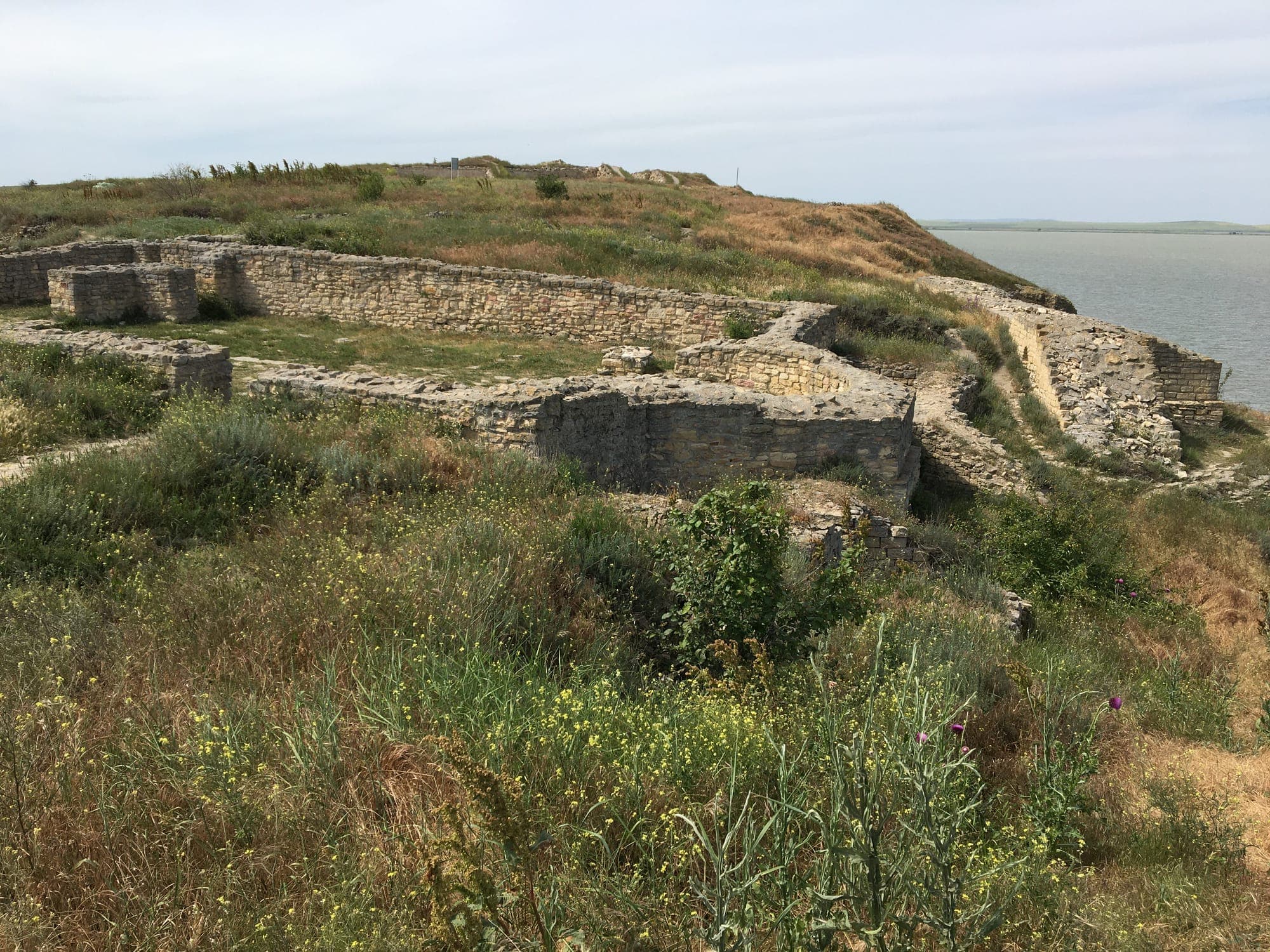

Tropaeum Traiani and the Roman fortresses of inland Dobruja
Tropaeum Traiani – Adamclisi has three parts: the triumphal monument raised by Trajan, reconstructed in 1977, the museum in the village, with 48 of the 54 original metopes, and the Roman fortress, about 2 km from the monument. In the fortress you can see the via principalis, the 300 m paved street between the east and west gates, with the enclosure wall and the ruins of several basilicas. Entry to the fortress is included in the monument and museum tickets; you drive between the three.
Further north, in central Dobruja, there are two late Roman open-air fortresses:
- Ulmetum Fortress, at the edge of the village of Pantelimon, with 13 towers, two gates and a three-aisled basilica, uncovered by Vasile Pârvan in 1911–1914. The administrator, MINAC, publishes no hours or prices, and the “România Atractivă” programme lists it as “temporarily closed”: call the museum before you go.
- Ibida Fortress, at the edge of the village of Slava Rusă, an ancient city of about 24 hectares, with sections of the enclosure wall and tower foundations. It is free to visit.

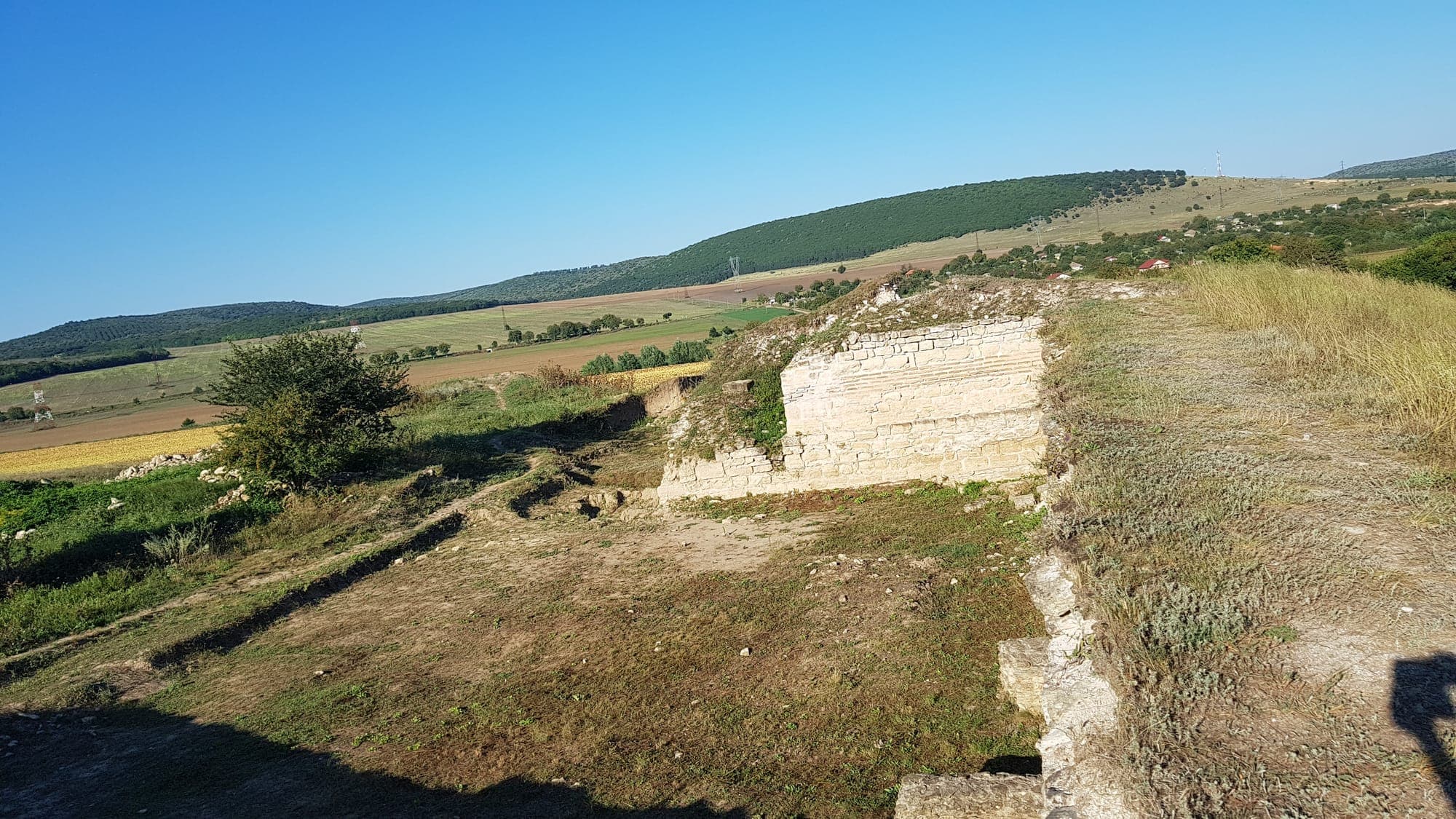
The Roman fortresses on the Danube: the Dobruja limes
The right bank of the Danube was the border of the Roman Empire, defended by a line of fortresses. Six of them have a page on the site and are part of the “Frontiers of the Roman Empire – The Danube Limes (Romania)” nomination, on the UNESCO Tentative List since 2020.
- Capidava Fortress, built under Trajan, has an enclosure of about 105 × 127 m, with large quarter-circle towers and the harbour quay. Since 2015 it has gone through a restoration in which some of the walls and towers were raised with new stone.
- Carsium Fortress, at Hârșova, was restored and reopened in 2025; many walls on the hill are medieval, rebuilt by the Byzantines and the Ottomans over the Roman fort.
- Troesmis Fortress, near Turcoaia, was the camp of the Fifth Legion Macedonica; today there are two ruined fortresses on the high bank, in a field with no facilities.
- Dinogetia Fortress, on a hillock near Garvăn, has its enclosure wall with horseshoe-shaped towers, but it is poorly maintained.
- Noviodunum Fortress, at Isaccea, was the base of the Danube fleet; it is an excavation site, open only during events.
- Halmyris Fortress, near Murighiol, where the crypt of the martyrs Epictetus and Astion was found, can be visited with a ticket.


Enisala Fortress: the medieval fortress above Lake Razim
The other fortresses on the list began in Antiquity; Enisala Fortress was built in the second half of the 14th century, very probably by Genoese merchants, on a limestone hill above Lakes Razim and Babadag, which was then a bay of the sea. In older sources it appears as Yeni-Sale or Heracleea. It became part of the defences of Wallachia under Mircea the Elder, then had an Ottoman garrison and was abandoned at the end of the 15th century.
From the car park at the foot of the hill you climb a few hundred metres, on a paved road and metal stairs, to the gate tower. In places the walls still stand 5–10 m high, and from them you can see Lake Razim stretching far away. The fortress is ~40 km from Tulcea and ~12 km from Babadag. In November 2026 it is open Wednesday–Sunday 9:00–17:00, with a 20 lei ticket (icemtl.ro). Every August the “Enisala – Unitate la Cetate” festival is held at its foot.
Which fortresses to see on a seaside holiday
From the coast you can reach four fortresses in a day, one or two per direction:
- From Mangalia: Callatis Citadel is right in the town, with the museum on Șoseaua Constanței and the ruins on the seafront.
- From Mamaia Nord and Năvodari: Histria is ~38 km away, through Corbu and Istria; from Constanța, ~66 km.
- From Constanța to the south-west: Tropaeum Traiani, ~70 km away, on the DN3; with the monument, the museum and the fortress, the visit takes about three hours.
- From Constanța to the Danube: Capidava, ~86 km away, on the A2 to Cernavodă, then Carsium, another ~33 km on, at Hârșova.
Between Capidava and Histria, Ulmetum is ~42 km from each (calculated on OpenStreetMap), if it is open. Histria, Adamclisi, Capidava and Carsium bought separately cost 92 lei per adult, and the MINAC card 75 lei. What else there is to see in the city and around it is in the Constanța guide, and the resorts in the guide to the Romanian seaside.
Fortresses on the way to the Danube Delta
On the road from Constanța to Tulcea, the DN22, short detours lead to most of the fortresses of northern Dobruja. The distances between the fortresses are calculated on OpenStreetMap (OSRM), November 2026.
- Histria, Enisala and Argamum: from Histria to Enisala it is ~67 km, and from Enisala to Argamum, through Jurilovca, ~21 km. The boats to Gura Portiței also leave from Jurilovca.
- Ibida: from Babadag, Slava Rusă is ~13 km to the south-west.
- Halmyris: ~42 km from Tulcea, near Murighiol, where the boat trips on the lakes of the southern Delta also start.
- West, on the Danube: Noviodunum at Isaccea (~39 km from Tulcea), Dinogetia at Garvăn (~69 km) and Troesmis, ~14 km from Măcin.
The winter opening hours of the Tulcea museums and the routes in the county are in the Tulcea guide, and the fortresses by the lakes in the Danube Delta guide. Argamum is inside the Danube Delta Biosphere Reserve, where the ARBDD permit is required.


Mix-ups: Tomis, Aegyssus and sites with nothing to visit
- Tomis has no separate site: it lies beneath the Constanța Peninsula. What you can see of it is the Roman Mosaic Edifice and the ruins in the cathedral park; the Museum of National History and Archaeology, Constanța, with the sculpture hoard, is closed for refurbishment.
- Aegyssus: the ruins of the ancient fortress are on Monument Hill in Tulcea, next to the History and Archaeology Museum, without a separate page on the site.
- Salsovia, at the edge of the village of Mahmudia, is an archaeological site, not a developed ruin.
- Axiopolis, at Cernavodă, is in the MINAC card through the town's history museum; the fortress has no page on the site, nor do Arrubium and Sacidava.
- Tropaeum Traiani is not just the monument: the Roman fortress is about 2 km from it.
- Sucidava Fortress is also on the Danube, but in Olt County, not in Dobruja; it is in the guide to Romania's fortresses.
Tickets, opening hours and what to bring
The fortresses are split by administrator. MINAC (Constanța) runs Histria, Tropaeum Traiani, Capidava and Carsium: in winter, from 1 October 2026 to 30 April 2027, they are open 9:00–17:00 every day, except Capidava, which is closed on Mondays and Tuesdays. Tickets can also be bought online. ICEM Tulcea runs Enisala and Halmyris, both closed on Mondays and Tuesdays. Argamum, Ibida and Troesmis have no ticket, and no opening hours are published for Dinogetia, Noviodunum and Ulmetum.
All of them are in the open, with almost no shade: in summer bring water, a hat and closed shoes, and mornings are easier. At Argamum, Troesmis and Dinogetia the last stretch is a dirt road, hard going after rain. Do not climb on the walls, and do not take stones or potsherds from the sites.
Frequently asked questions
- What fortresses are there in Dobruja?
- The site has 13: the Greek fortresses of Histria, Argamum and Callatis, the Roman and late Roman fortresses of Tropaeum Traiani, Ulmetum, Ibida, Capidava, Carsium, Troesmis, Dinogetia, Noviodunum and Halmyris, and the medieval Enisala fortress.
- What is the oldest fortress in Dobruja?
- Histria, founded by settlers from Miletus in 657–656 BC, according to ancient tradition; it is the oldest Greek colony on the western shore of the Black Sea. Argamum was also founded in the middle of the 7th century BC.
- How much is entry to Enisala Fortress?
- 20 lei for adults, 10 lei for pensioners and 5 lei for pre-schoolers, pupils and students. In November 2026 the fortress is open Wednesday–Sunday 9:00–17:00 and closed on Mondays and Tuesdays (icemtl.ro).
- What fortress is there at Jurilovca?
- Argamum, the Greek city of Orgame, on Cape Doloșman, ~7 km from Jurilovca. It is an open-air site with no ticket, but inside the Danube Delta Biosphere Reserve, where the ARBDD permit costs 5 lei per day.
- What fortress is there at Murighiol?
- Halmyris, ~2.5 km east of the village and ~42 km from Tulcea. In November 2026 it is open Wednesday–Sunday 8:00–16:00, with a 12 lei ticket (icemtl.ro).
- Which fortresses can you visit near Constanța?
- Callatis, in Mangalia (~45 km), Histria (~66 km), Tropaeum Traiani at Adamclisi (~70 km), Capidava (~86 km) and Carsium at Hârșova (~91 km). Ulmetum, about 50 km away, has no published opening hours.
- What does the MINAC card include?
- The MINAC multiple-access card costs 75 lei for adults and 18 lei for pupils and students and includes one entry each to Histria, Adamclisi, Capidava, Carsium and Axiopolis (minac.ro, November 2026).
- Is Tropaeum Traiani a fortress or a monument?
- Both: at Adamclisi there are Trajan's triumphal monument, reconstructed in 1977, the museum in the village and the Roman fortress of Tropaeum Traiani, about 2 km from the monument. Entry to the fortress is included in the monument and museum tickets.
- Are there Dacian fortresses in Dobruja?
- The fortresses in Dobruja with a page on the site are Greek, Roman and medieval. At Troesmis, Capidava and Dinogetia there were Getic settlements before the Romans, but what you see today is Roman. The Dacian fortresses of the Orăștie Mountains are in the [guide to the Dacian fortresses](/ghiduri/cetati-dacice).
Sources
- MINAC: prices and opening hours (Histria, Adamclisi, Capidava, Carsium, Axiopolis, multiple-access card)
- MINAC: Histria Museum Complex
- MINAC: Tropaeum Traiani
- MINAC: Capidava Fortress
- MINAC: Hârșova Museum Complex (Carsium)
- MINAC: Ulmetum
- ICEM Tulcea: Enisala Medieval Fortress (hours, prices)
- ICEM Tulcea: Halmyris Fortress (hours, prices)
- Callatis Archaeology Museum, Mangalia: hours and prices
- ARBDD: access permits for the Danube Delta Biosphere Reserve
- OSRM on OpenStreetMap data: road distances between the fortresses (November 2026)
Attractions by area and category
Related guides
- Fortresses in Romania: the most important ones, by type and region, with a map
- Fortified churches in Transylvania: the 7 UNESCO villages, the peasant fortresses and a route through the Saxon villages
- Dacian fortresses in Romania: the 6 UNESCO fortresses of the Orăștie Mountains, map and how to get there
- Things to do in Sibiu: what to see in 1–2 days, in the city and nearby
- Caves in Romania: the ones you can visit, by area, with a map