
Fortresses in Romania: the most important ones, by type and region, with a map

There are over 170 fortresses and fortifications in Romania on peplaiuri.ro, from the Dacian fortresses of the Orăștie Mountains and the Greek and Roman cities of Dobruja to the princely fortresses of Moldavia and Wallachia, the bastioned fortresses built by the Habsburgs and the fortified churches of the Transylvanian Saxons. The best known are Alba Carolina Fortress, the largest bastioned fortress in the country, Sighișoara Citadel, a medieval town that is still lived in, Suceava Princely Fortress, Neamț Citadel, Poenari Citadel and Sarmizegetusa Regia.
This guide first sorts them by type, in a table, then goes through them region by region, one short paragraph each with a link to the fortress's page, where you will find opening hours, prices and directions. The fortified churches, the Dacian fortresses and the fortresses of Dobruja have guides of their own; here they only get a summary each. They are all on the map of fortresses and fortifications.
In short
- There are over 170 fortresses and fortifications in Romania on peplaiuri.ro (November 2026): medieval, bastioned and peasant fortresses, Dacian, Greek and Roman citadels, Roman forts, town towers, kulas and over 40 fortified churches.
- The largest bastioned fortress in Romania is Alba Carolina in Alba Iulia, a seven-bastion star covering about 70 hectares, built by the Habsburgs in 1715–1738.
- The oldest city on Romanian soil is Histria, a Greek colony founded by Miletus on the shore of Lake Sinoe, and among the oldest medieval fortresses on the site is Dăbâca, from the 11th–12th centuries.
- UNESCO World Heritage includes the historic centre of Sighișoara and the six Dacian fortresses of the Orăștie Mountains (since 1999), seven villages with fortified churches (since 1993 and 1999) and, since 2024, the forts of the “Frontiers of the Roman Empire – Dacia”.
- In 2026 Ladislaus Fortress at Coronini, the Potaissa fort in Turda and the medieval fortifications of Bistrița reopened, while the upper enclosure of Râșnov Fortress remains closed for restoration, with reopening expected from 2028.
- Arad Fortress is a military unit and can only be visited on open days; at Poenari Citadel you climb 1,480 steps, and since August 2026 the climb is only allowed in a group, formed at the foot of the citadel with the help of the staff, so you can also come on your own.
Fortresses in Romania: list by type and map
The table sorts the fortresses on the site by type, according to the period and the way they were built, with the best-known examples and where they are described. The opening hours and prices of each one are on its own page, with the date they were checked.
By county, most are in Brașov and Sibiu, followed by Alba and Hunedoara: southern Transylvania gathers the fortified churches, the peasant fortresses and the walls of the Saxon towns. You can see them all on the map of fortresses and fortifications, and the full list is in the Fortresses and fortifications category.
| Type | Period | Examples | Where to find them |
|---|---|---|---|
| Dacian fortresses | 2nd century BC – 1st century AD | Sarmizegetusa Regia, Costești-Blidaru, Tilișca | the guide to Dacian fortresses |
| Greek and Roman citadels of Dobruja | Antiquity – 6th century | Histria, Callatis, Capidava | the guide to the fortresses of Dobruja |
| Roman forts and cities | 2nd–4th centuries | Porolissum, Potaissa, Drobeta | the Roman forts section |
| Royal and noble medieval fortresses | 11th–16th centuries | Deva, Șiria, Colț, Bologa | the regional sections |
| Princely fortresses | 14th–15th centuries | Suceava, Neamț, Poenari | Moldavia; Wallachia |
| Peasant fortresses and fortified churches | 13th–17th centuries | Râșnov, Rupea, Biertan, Prejmer | the guide to fortified churches |
| Walled towns, town towers and bastions | 13th–17th centuries | Sighișoara, Brașov, Sibiu, Cluj-Napoca | Sighișoara here; the rest in the city guides |
| Bastioned fortresses | 16th–18th centuries | Alba Carolina, Oradea, Arad | the bastioned fortresses section |
| Kulas | 16th–19th centuries | Greceanu Kula, Cula Duca, Cartianu Kula | the section on the kulas of Oltenia |
The periods come from the fortresses' pages, read on 20 November 2026; the grouping by type is the guide's own. Opening hours and prices are on each fortress's page.
Fortresses reopened and closed in 2026
Reopened. Ladislaus Fortress at Coronini returned to the tourist circuit in June 2026, after consolidation and restoration. The Potaissa Legionary Fortress in Turda has been open to the public since 2026, with its headquarters building and baths restored. At Bistrița Medieval Fortress (Coopers' Tower), the Coopers' Tower and the restored walls also reopened in 2026. At Oradea Fortress, the Crăișorul Bastion reopened on 1 September 2026, and at Colțești Fortress (Trascău Fortress) the walls and two towers were consolidated in 2026. Suceava Princely Fortress was closed in the first months of the year for consolidation work and reopened on 1 April.
Closed or restricted. The upper enclosure of Râșnov Fortress has been closed since 2020 for restoration; only the Fortress Garden and the Báthory Tower can be visited, and the phased reopening is expected from 2028. At Poenari Citadel, after bears were seen in the area, the climb has been allowed only in a group since August 2026; since 1 October 2026 the groups are formed at the foot of the citadel with the help of the staff, so you can also come on your own. The cable car of Deva Fortress has been out of service since November 2025, and the town hall hopes to restart it in spring 2027. The Council Tower (Turnul Sfatului) in Sibiu has been closed for restoration since January 2026, for about two years.
Work in progress. At Făgăraș Citadel, the works begun in 2025 may close some areas. Ineu Fortress and Báthory Fortress in Șimleu Silvaniei are being restored, and the interior of Brașov Fortress (Cetățuia) is closed for works; all three can be seen from outside.


Vauban bastioned fortresses: Alba Carolina, Oradea, Arad
Bastioned fortresses have thick walls and bastions at the corners, designed to withstand artillery. The largest on the site are all in the west of the country.
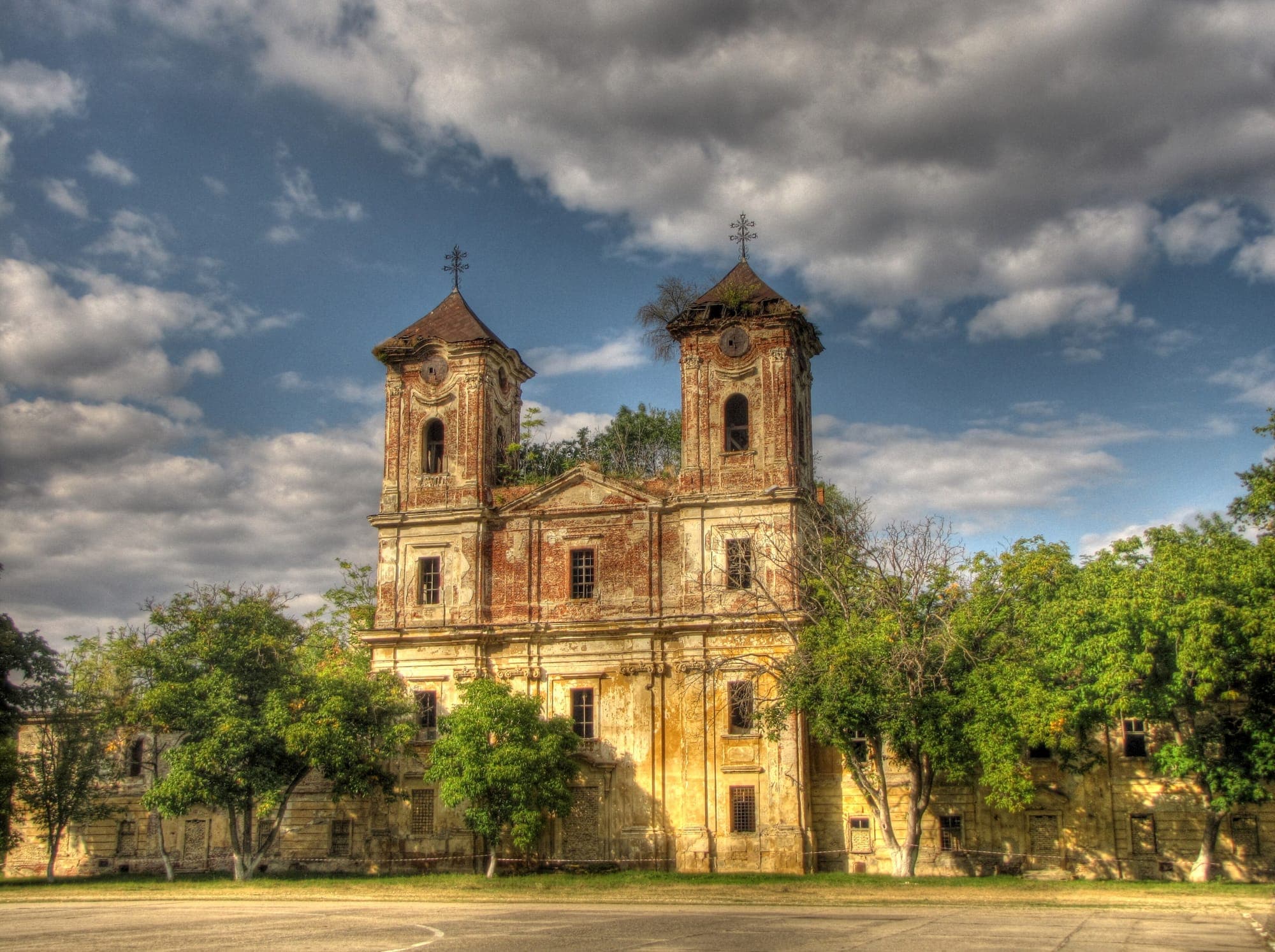
Alba Carolina Fortress in Alba Iulia is the largest bastioned fortress in Romania: a seven-bastion star covering about 70 hectares, built by the Habsburgs in 1715–1738 in the Vauban system. Horea and Cloșca were broken on the wheel here in 1785, the Union was voted on 1 December 1918 and Ferdinand and Marie were crowned here in 1922. The gates, moats and walkways are open at all times and free of charge. Beneath it you can see the remains of the Roman fort, at Apulum – the Roman remains of Alba Iulia.
Oradea Fortress is a pentagon with five bastions, designed by Italian military architects in the second half of the 16th century and rebuilt by the Austrians in 1775–1777, with the princely palace in the middle and the Oradea City Museum. Its moat was fed with thermal water and did not freeze in winter.
Arad Fortress is a six-bastion star, built in 1763–1783 on the bank of the Mureș, in the Vauban–tenaille system. It is a military unit, so you can only get in on the open days organised by the unit. All that remains of the fortress of Timișoara is the Maria Theresia Bastion, from 1732–1734, now home to the exhibitions of the National Museum of the Banat.
Also bastioned are Târgu Mureș Citadel, with seven guild bastions around a courtyard of about 4.3 hectares, Brașov Fortress (Cetățuia) and Cetățuia Fortress (Cluj-Napoca), fortifications on the hills above the two cities.



Fortresses around Brașov and in the Făgăraș Land
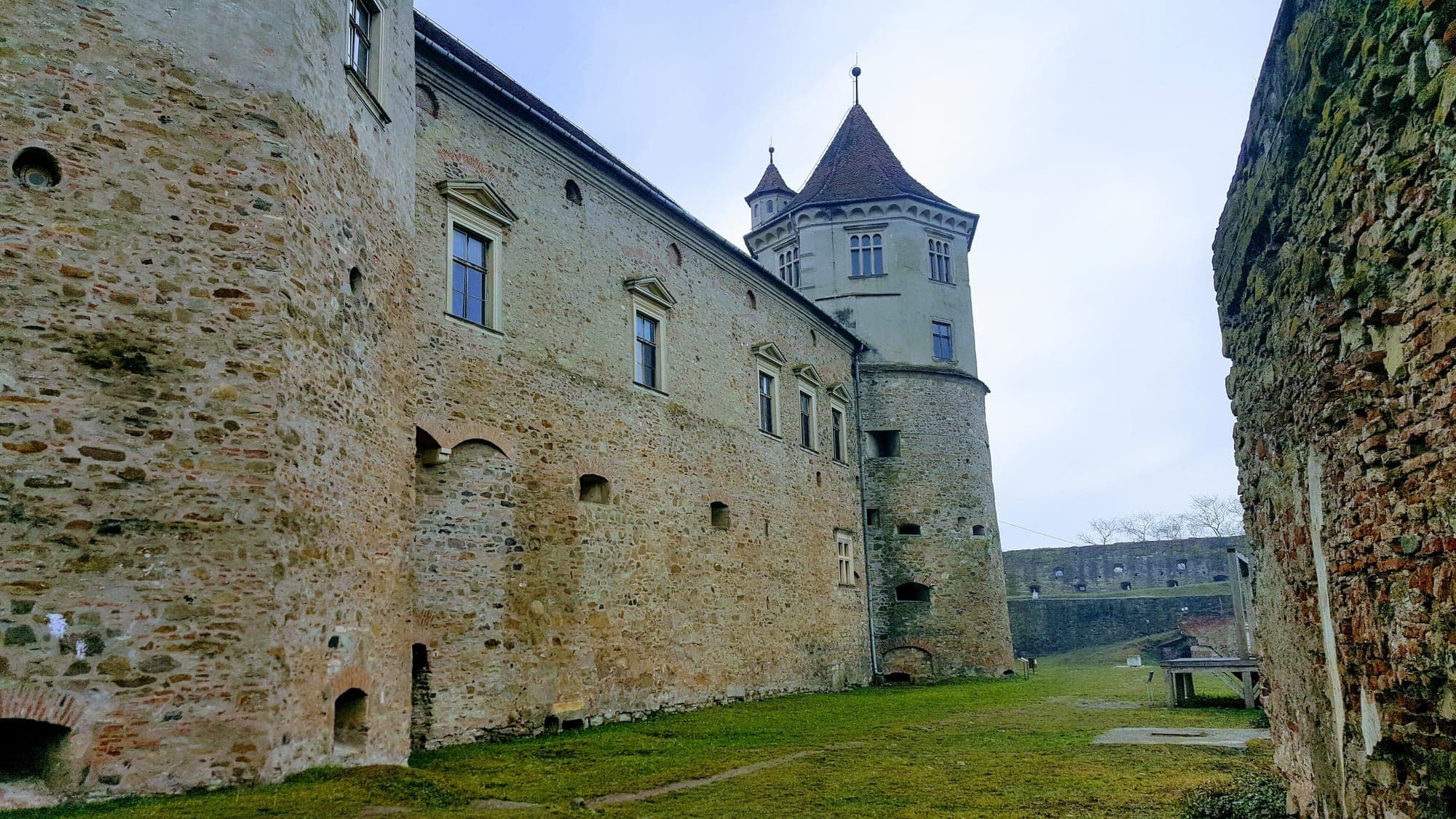
Brașov County has more fortresses on the site than any other. Făgăraș Citadel, with bastions and a water-filled moat in the town centre, was a residence of the princes of Transylvania: between 1670 and 1691, 11 Diets were held here. Today it houses the Museum of the Făgăraș Land.
The peasant fortresses nearby, Râșnov Fortress, Rupea Fortress and Jimbor Fortress, refuges for the village communities, and Feldioara Fortress, with roots in the time of the Teutonic Knights, are described in the guide to fortified churches.
On the hills there are older ruins: Brașovia Fortress, on Tâmpa, at the end of a hike from the centre of Brașov, and Heldenburg Fortress, a stone tower on a rock in the Perșani Mountains, first mentioned in writing in 1335, with a view over the whole Burzenland. The walls, bastions and Catherine's Gate in the centre of Brașov are in the Brașov city guide, and Bran Castle is under fortress or castle.

Fortresses in Sibiu and Alba counties
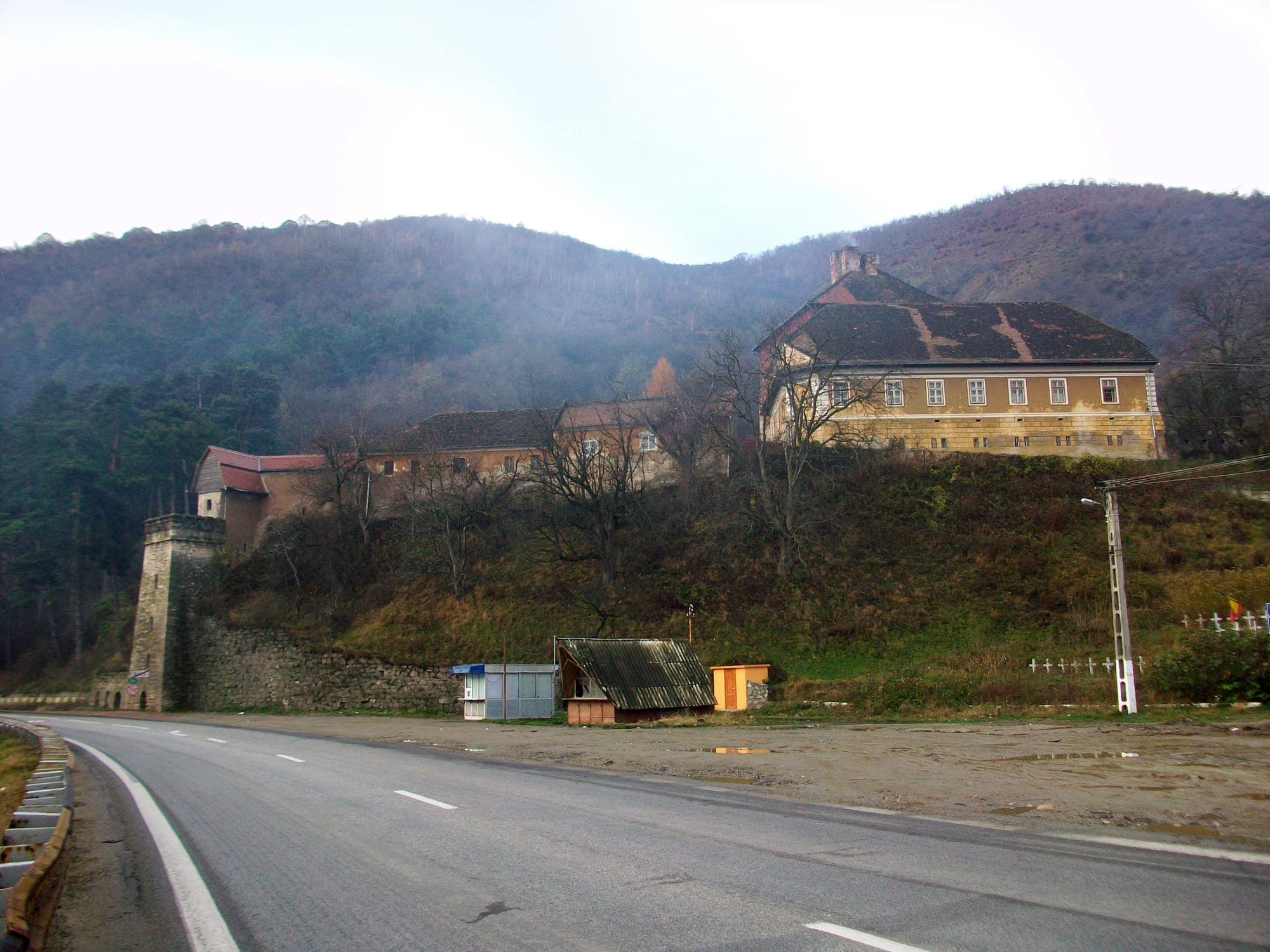
Turnu Roșu Castle, from the 14th century, guarded the northern entrance to the Olt Gorge, on the road to Wallachia, and was a customs point until 1918. It can only be seen from outside, from beside the DN7. Slimnic Fortress, a peasant fortress on a hill near Sibiu, is in the guide to fortified churches, and the bastions and guild towers of Sibiu are in the Sibiu city guide.
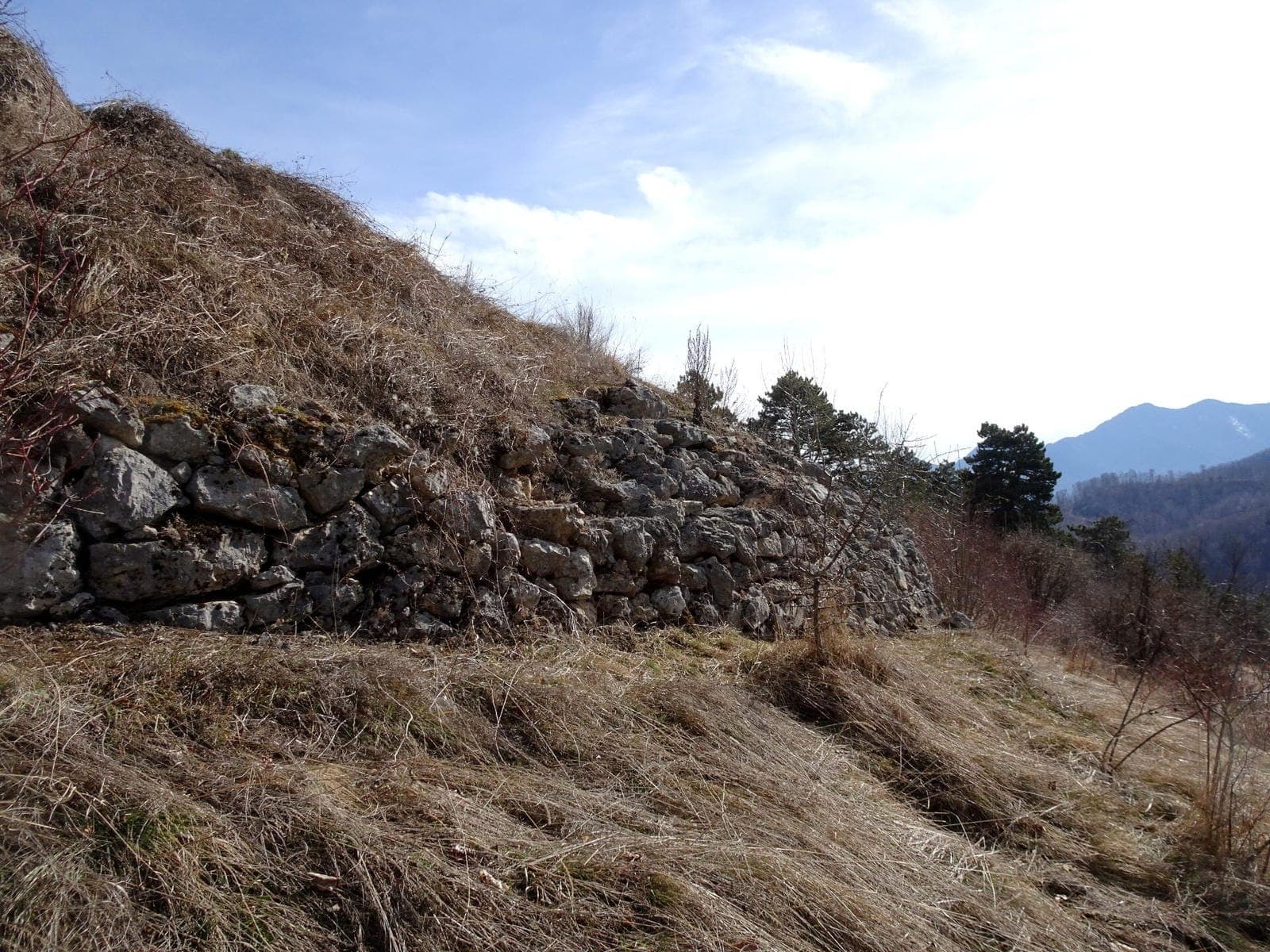
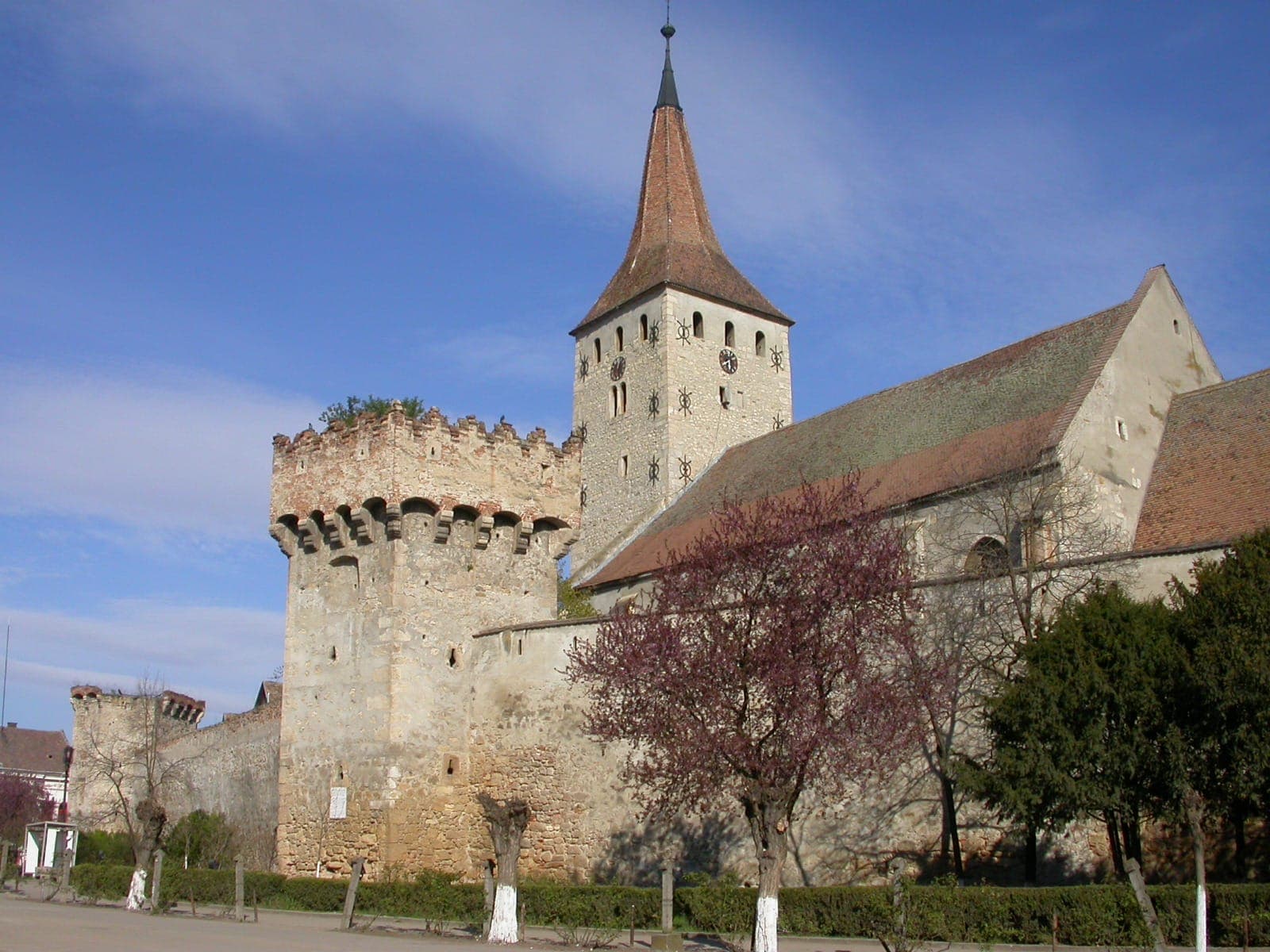
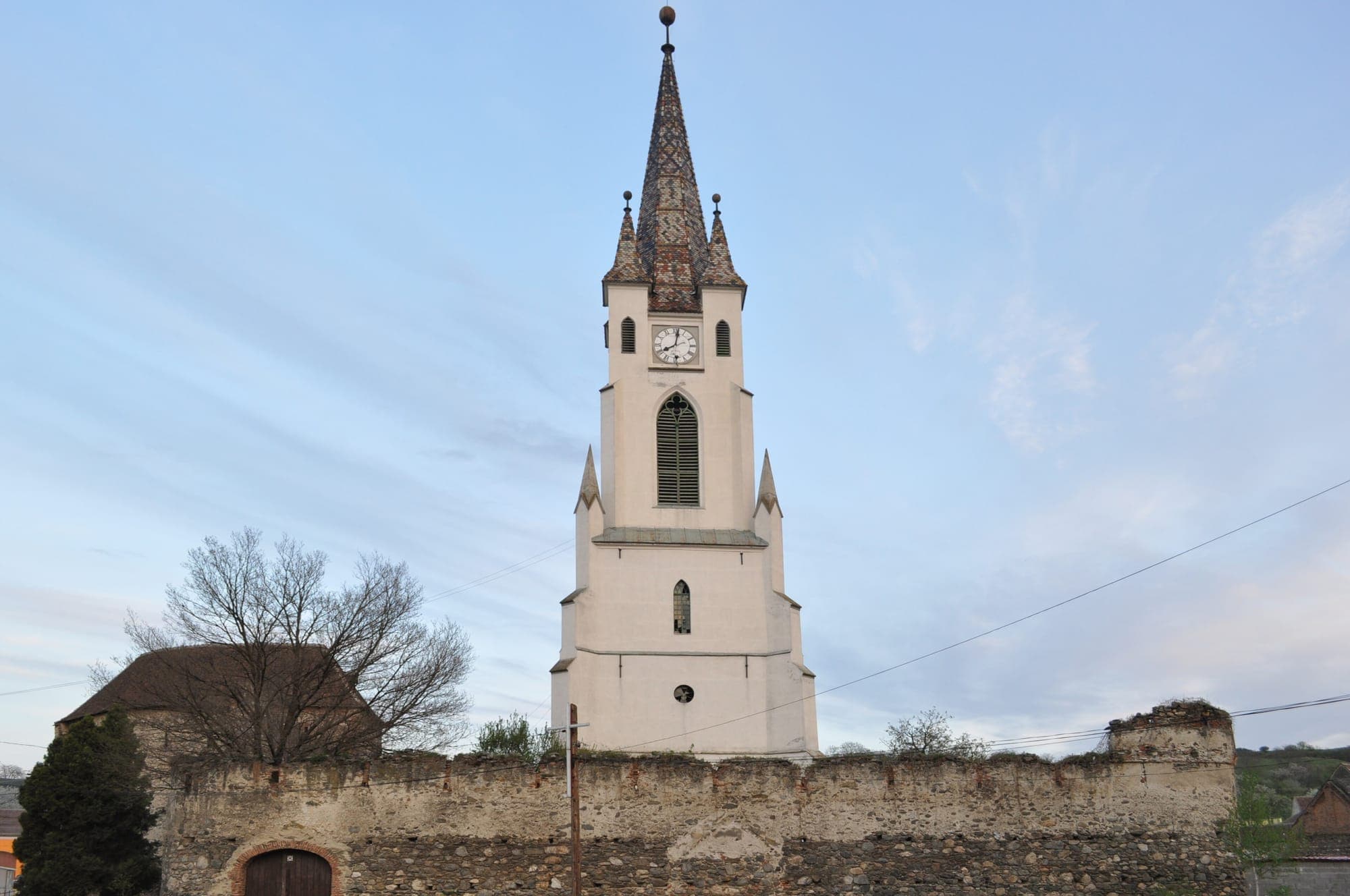
In Alba, besides Alba Carolina, there are a few lesser-known medieval fortresses. Colțești Fortress (Trascău Fortress) is a 13th-century ruin on a rocky spur above the village, with a view towards Piatra Secuiului. Aiud Citadel, in the town centre, has stone walls, guild towers and two places of worship inside its enclosure, while Counts' Fortress (Cetatea Greavilor) in Gârbova is a fortified noble residence whose former keep became a clock tower. In Sebeș the Tailors' Tower (Students' Tower) survives, linked to the story of the student who lived through the Turkish siege of 1438.

Fortresses in Hunedoara: Deva, Colț and Mălăiești
Deva Fortress stands on a 378 m volcanic cone right above the town and appears in documents from 1269. It has three tiered enclosures; the upper one, oval, with the ruins of the Princely Palace, reopened on 30 May 2024, after restoration. While the cable car is out of service, you walk up the forest paths, in 30–45 minutes, or take the electric minibus to Gate 1.
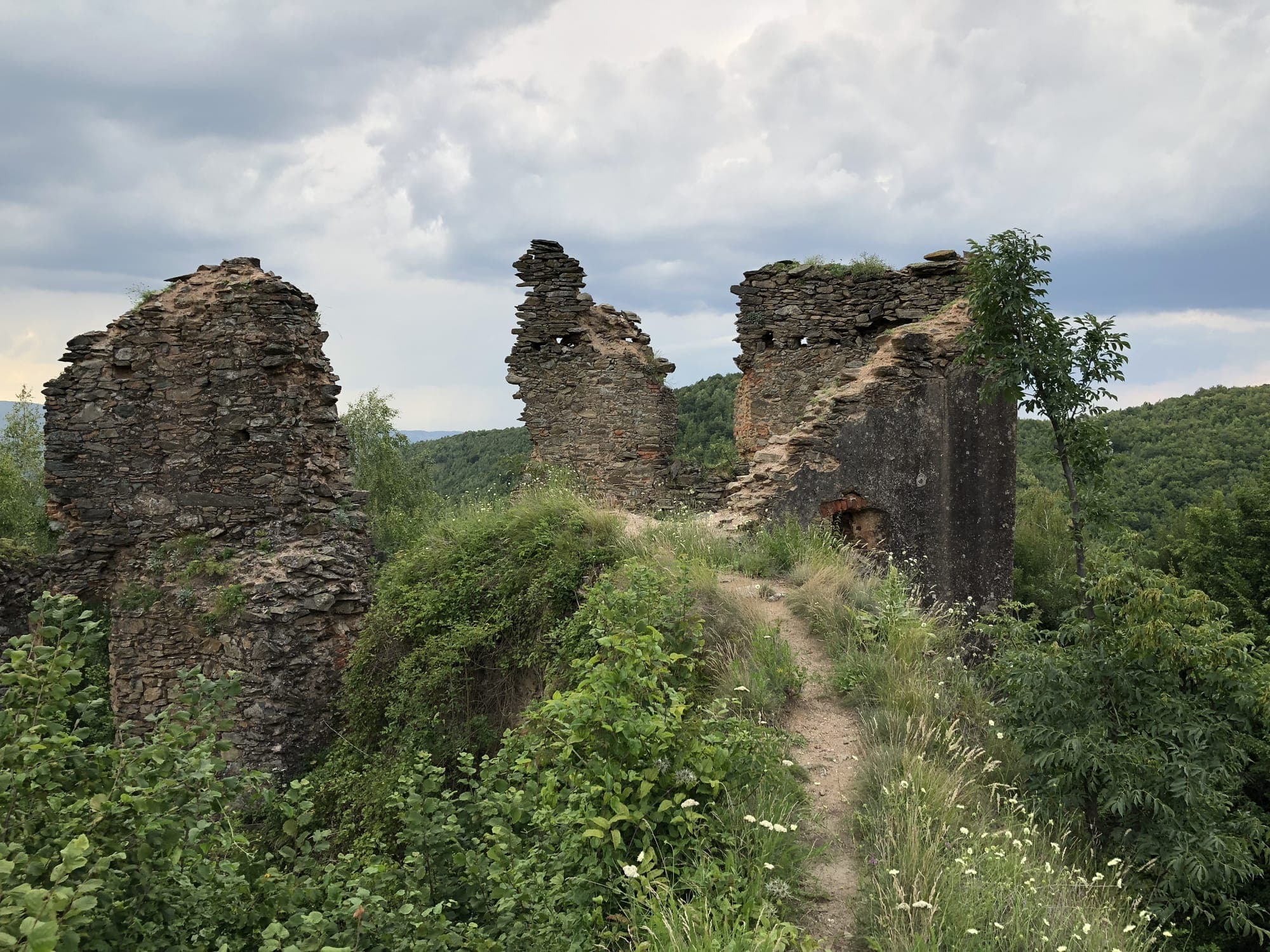
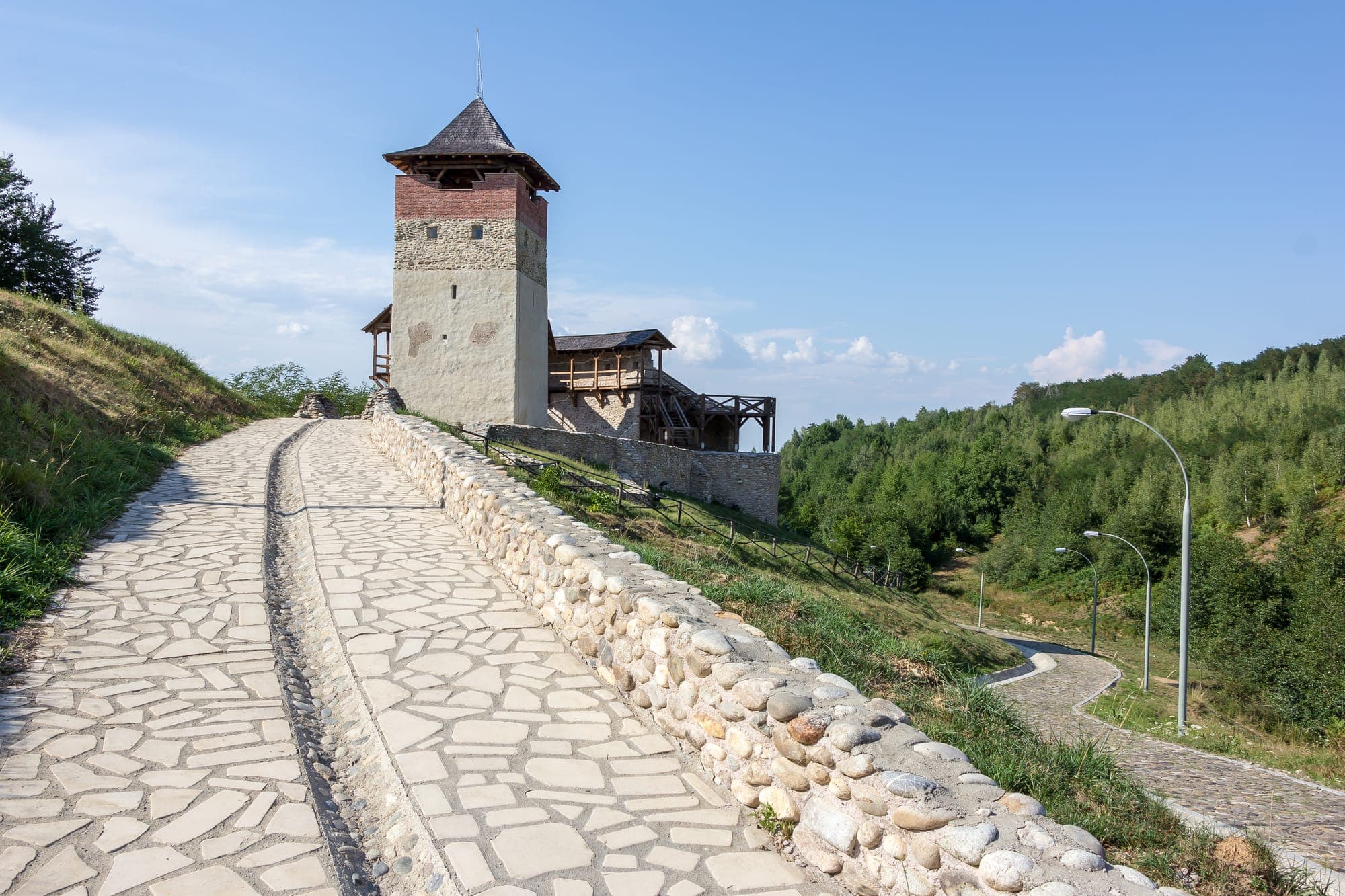
The Hațeg Land has two fortresses of the Romanian knezes. Colț Fortress, the ruin of the Cândea knezes on a rock at the entrance to the Râușor gorge, below the Retezat, is linked by tradition to Jules Verne's “The Carpathian Castle”; you reach it on a 20–30 minute path. Mălăiești Fortress, from the 14th century, has a keep and a ring-shaped stone enclosure and was restored after 2012. In the centre of Orăștie, Orăștie Citadel has walls and round towers, with two churches inside its enclosure.
The Dacian fortresses of the Orăștie Mountains, also in Hunedoara, have their own section, and Corvin Castle, often searched for as “Hunedoara fortress”, is under fortress or castle.

Fortresses in Mureș, Cluj, Sălaj and the Székely Land
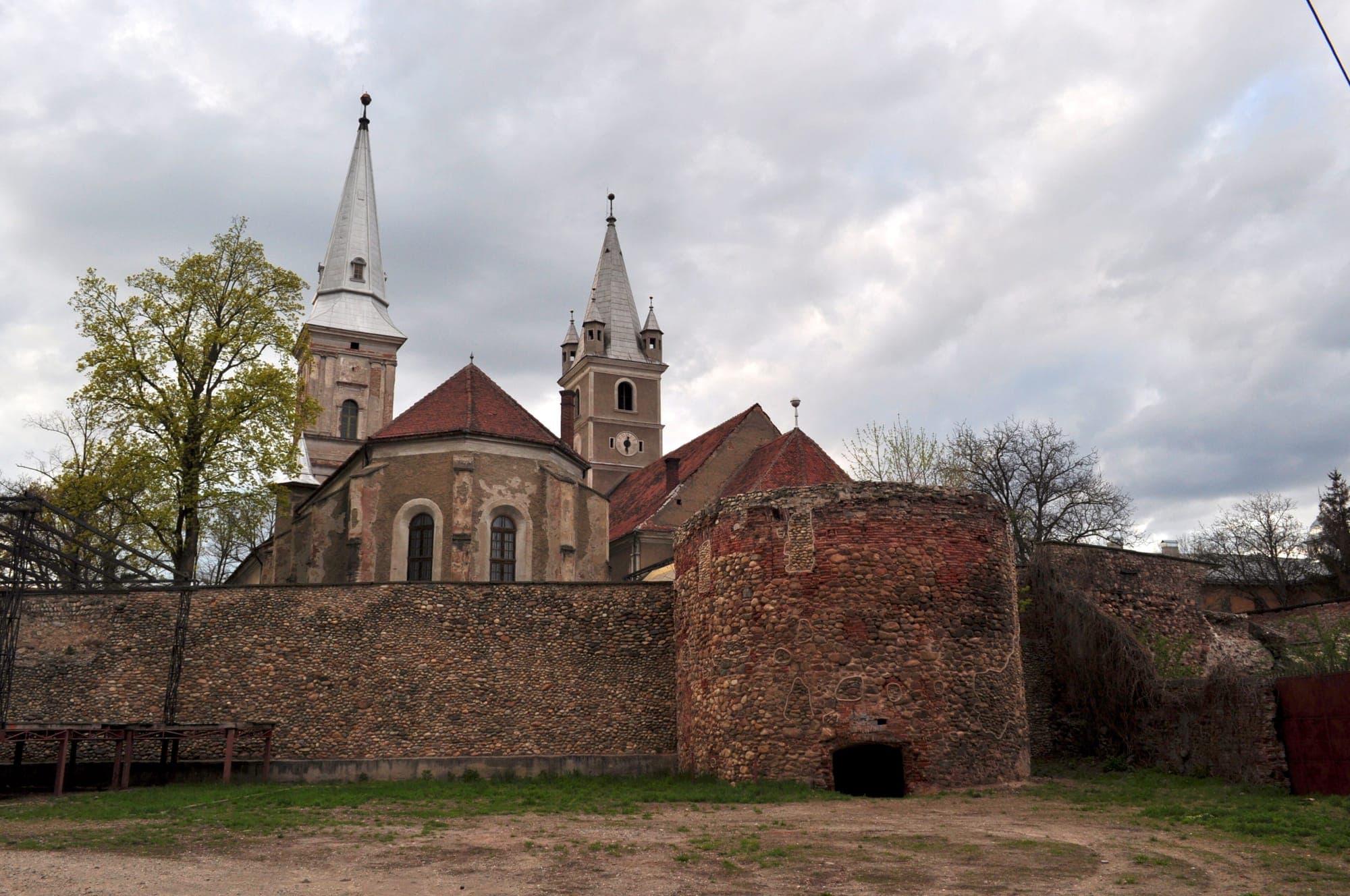
Sighișoara Citadel is one of the few fortified medieval towns in Europe that are still lived in today. Of the wall of about 930 m, defended by 14 guild towers, nine towers survive, among them the 64 m Sighișoara Clock Tower. The historic centre has been on the UNESCO World Heritage list since 1999 and can be visited freely, at any hour. At Târgu Mureș Citadel you enter, without a ticket, a wide courtyard used as a park.
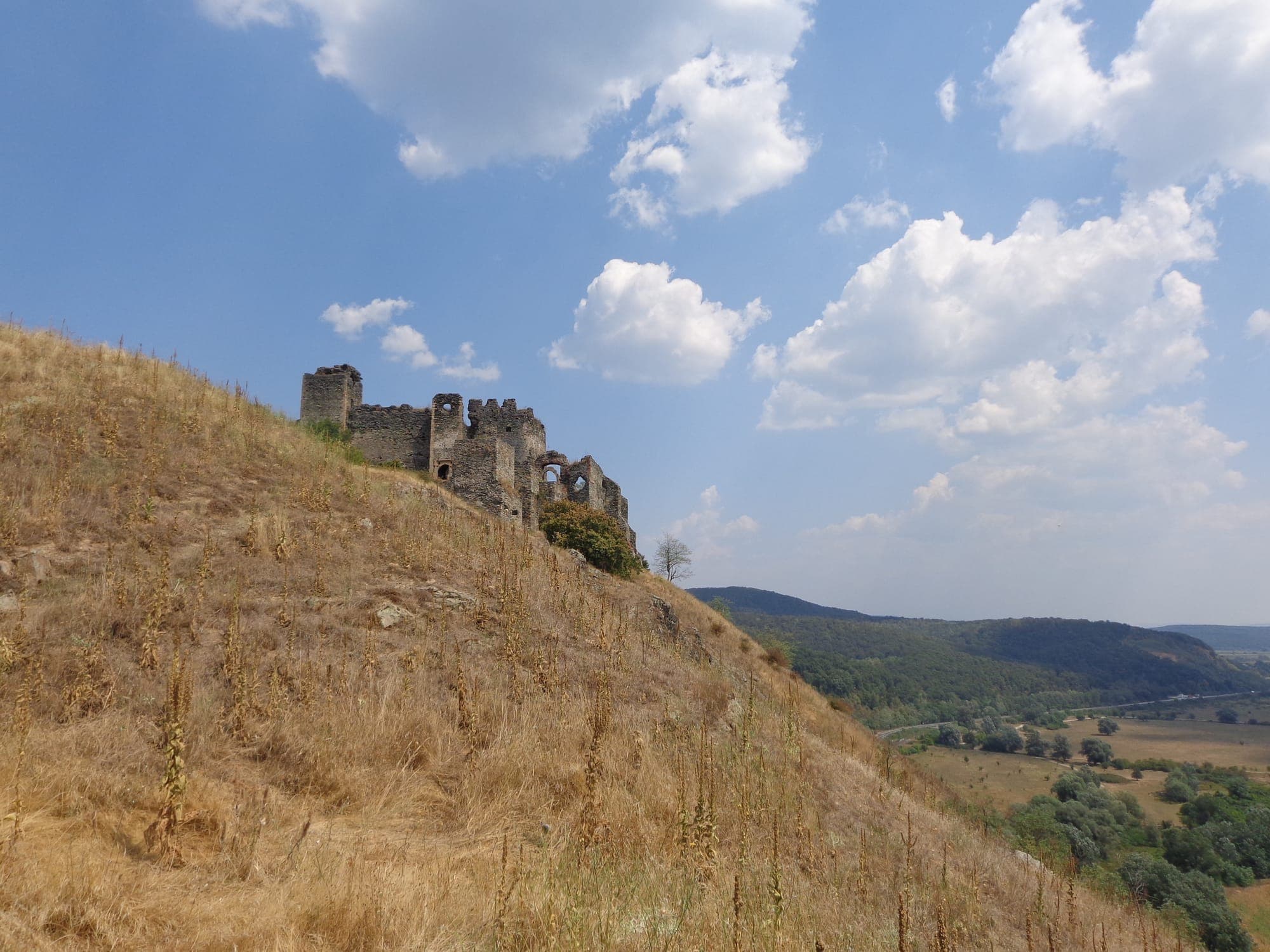
Cluj and Sălaj have the ruins of several royal fortresses. Bologa Fortress has a round tower above the Crișul Repede and walls consolidated in 2018–2020, Liteni Castle stands on a rock above the Iara Valley, and Dăbâca Fortress, a former royal fortress from the 11th–12th centuries, keeps earthworks and a rebuilt wall. Of Almașu Fortress a tower of about 20 m remains. In Șimleu Silvaniei, Báthory Fortress is being restored, and in Satu Mare County Ardud Fortress has a white crenellated tower. The towers in the centre of Cluj are in the Cluj-Napoca city guide.
In the Székely Land, Mikó Castle in Miercurea Ciuc, a Renaissance castle rebuilt as a fortification, houses the Székely Museum of Csík. In Odorheiu Secuiesc the walls and bastions of Székelytámadt Fortress survive, while Bálványos Fortress is a ruin at over 1,000 m, an hour's climb through the forest from the Băile Bálványos resort.


Fortresses in the Banat and Crișana: Șiria, Șoimoș, Ineu
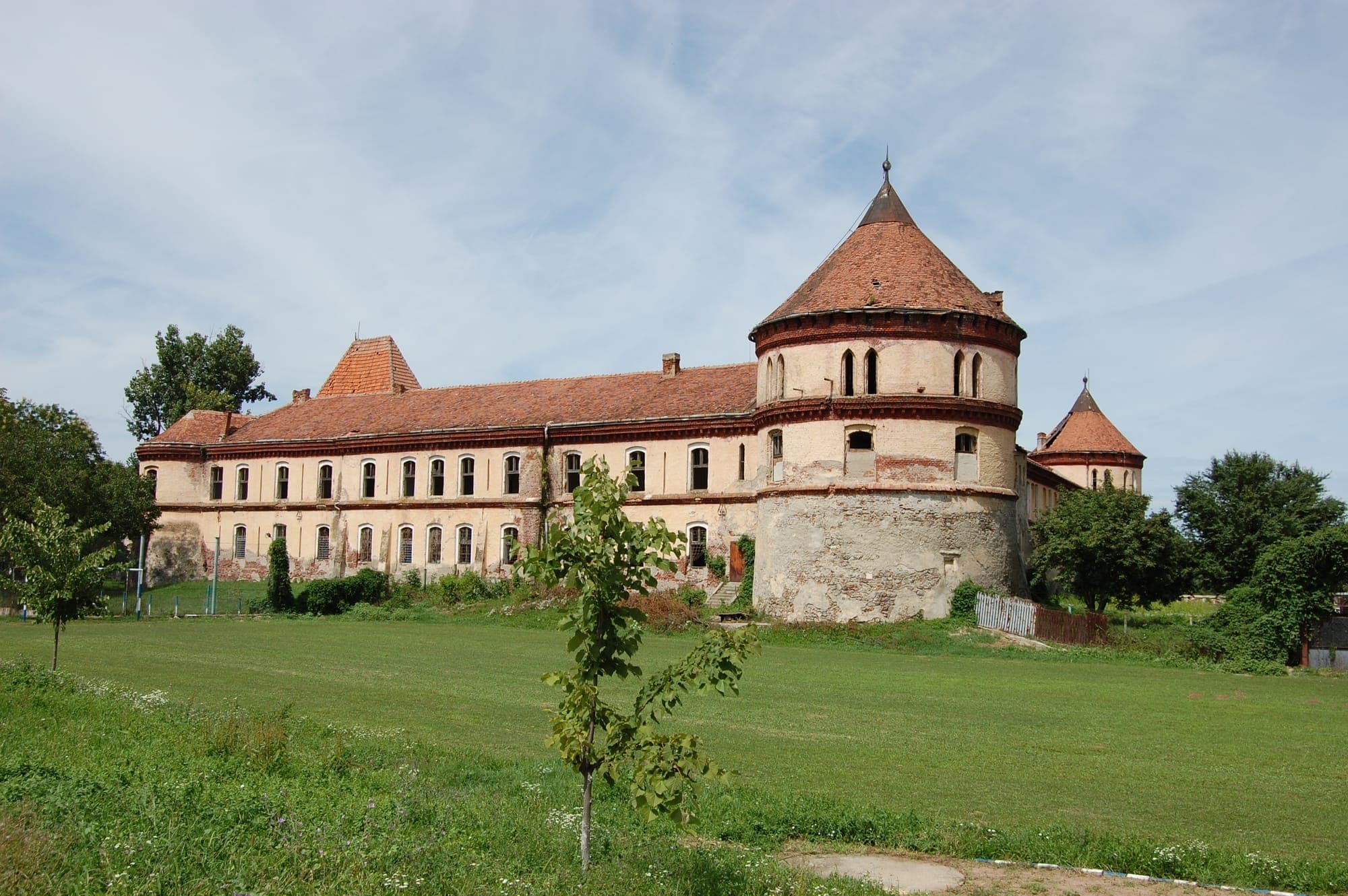
Arad County has, besides the bastioned fortress, four medieval fortresses. Șiria Fortress, a 13th-century stone ruin on Fortress Hill, has a wide view over the Arad Plain and free access, with no opening hours. Șoimoș Fortress, a royal fortress from the same century, stands on a rock above the Mureș, near Lipova; after a wall collapsed in February 2024, the affected area is cordoned off. To Dezna Fortress you climb on waymarked paths through the forest, while Ineu Fortress, with four round towers on the bank of the Crișul Alb, is being restored and can be seen from outside.
In the Banat, Caraș Fortress, attested in 1323, has two moats cut into the rock above the Caraș Gorge. Jdioara Fortress is a ruin in the forest, reached on foot, and Făget Fortress keeps foundations and low walls from the 16th–17th centuries. Oradea, Arad and Timișoara are under bastioned fortresses, and Ladislaus Fortress, near Coronini, under the Danube.

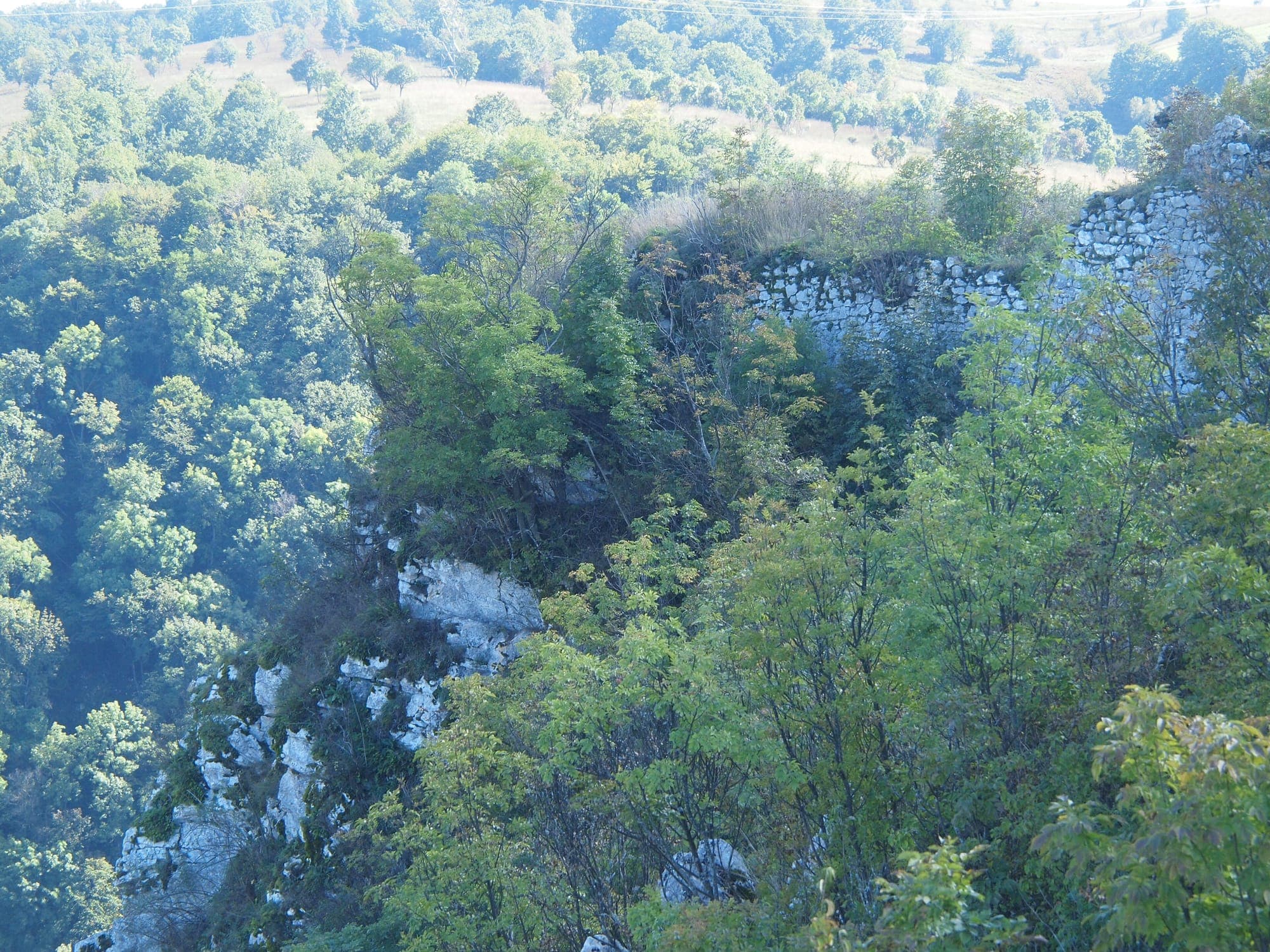
The fortresses of Moldavia and Stephen the Great
The princely seat fortresses of Moldavia were built by Petru Mușat at the end of the 14th century and strengthened by Stephen the Great. Suceava Princely Fortress appears in a document from 1388 and withstood the siege of Mehmed II in 1476; after it, Stephen the Great doubled it with a wall over 3 m thick. Today it is a museum, with the largest collection of medieval weapons in Moldavia, and in August its courtyard hosts the “Stephen the Great” Medieval Art Festival.
Neamț Citadel, often also called Cetatea Neamțului, stands on the Timuș rock above Târgu Neamț. Stephen the Great added an enclosure with four semicircular bastions and the bridge on stone piers, and in 1476 the sultan besieged it for almost a week without taking it. Restored in 2007–2009, it has over 20 rooms set up as a museum.
On Șeptilici Hill in Suceava are the ruins of Șcheia Fortress, from the end of the 14th century, which you reach on foot, through the forest. Moldavia also has monasteries with enclosure walls and towers, such as Cașin Monastery, Solca Monastery and the Armenian complex of Zamca Monastery in Suceava; the other monasteries of Bukovina are under Monasteries.


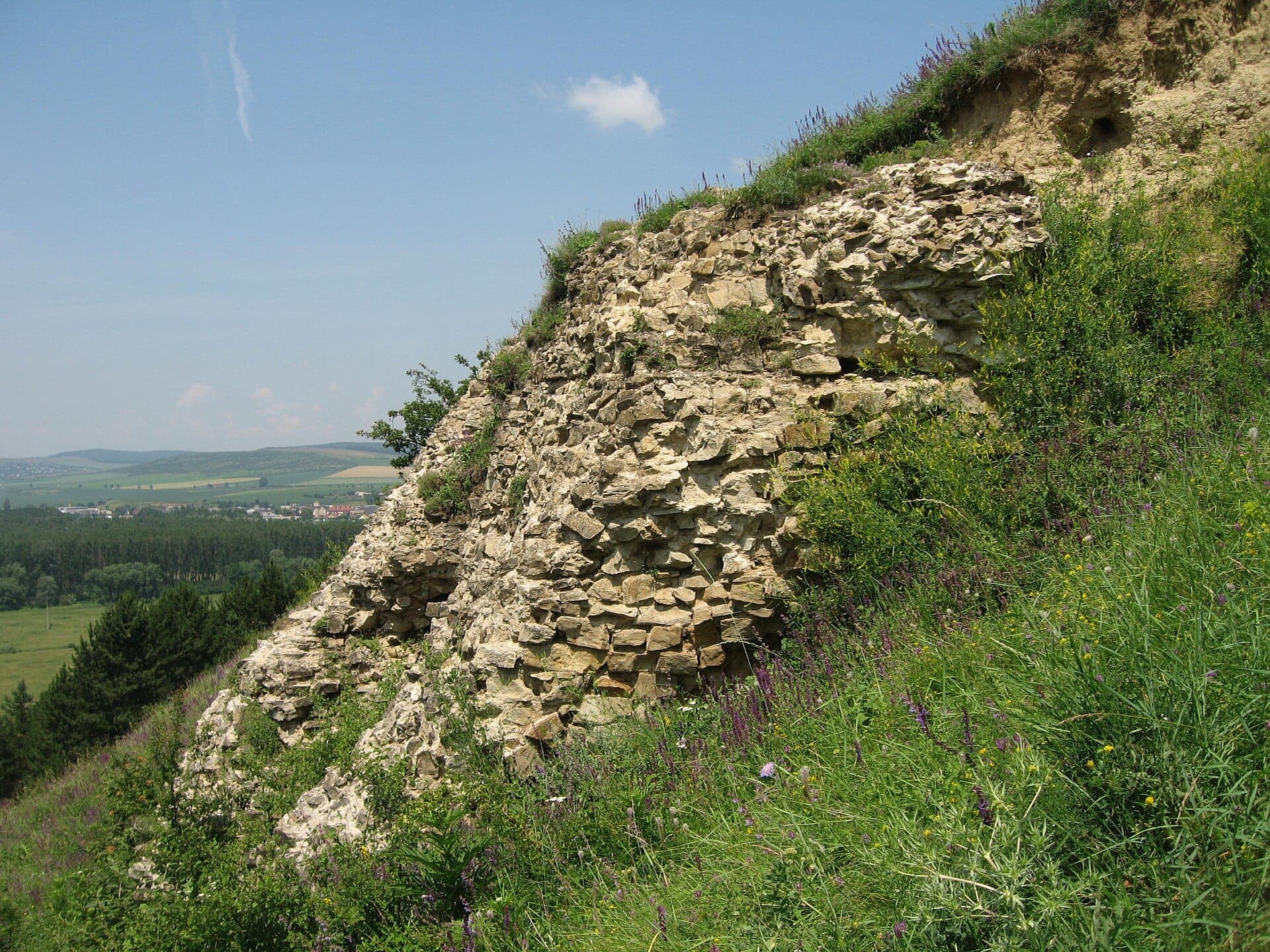
Fortresses in Wallachia: Poenari and Vlad the Impaler
Poenari Citadel, on Mount Cetățuia, above the Argeș Gorge, on the Transfăgărășan, is the fortress with the strongest link to Vlad the Impaler: the chronicles tell how the prince made the punished townspeople of Târgoviște work on the walls, and excavations confirm that the fortress was extended in the 15th century. You climb 1,480 steps through the forest. It reopened in April 2025, after restoration; since then access has been restricted several times because of bears, so check the rules before you set off.
Târgoviște Princely Court (Curtea Domnească din Târgoviște), also searched for as “Târgoviște fortress”, was the residence of the princes of Wallachia for almost three centuries. Under Vlad Dracul and Vlad the Impaler it was heavily fortified, and the 27 m Chindia Tower is attributed by tradition to Vlad the Impaler. On the old road between Wallachia and Transylvania, Oratea Fortress, from the 14th century, has consolidated stone walls above the village of Podu Dâmboviței.
Near Bucharest, Fort 13 Jilava, a fort of the capital's defensive ring built in 1870–1890, became a political prison; it has been on the UNESCO Tentative List since 2024. The medieval fortresses on the bank of the Danube, such as Turnu and Giurgiu, are in the Danube section.

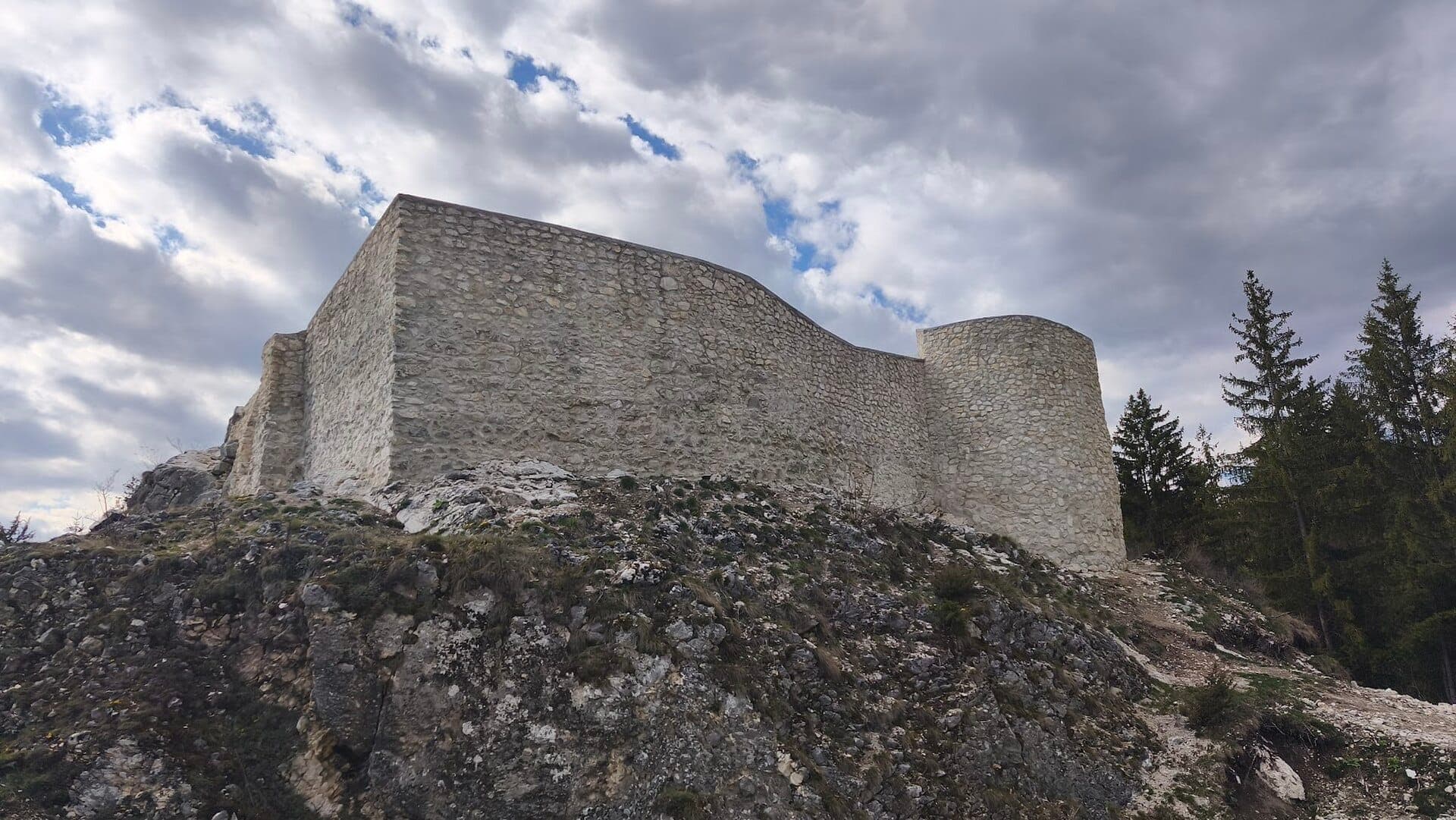

Fortresses on the Danube, from the Iron Gates to Giurgiu
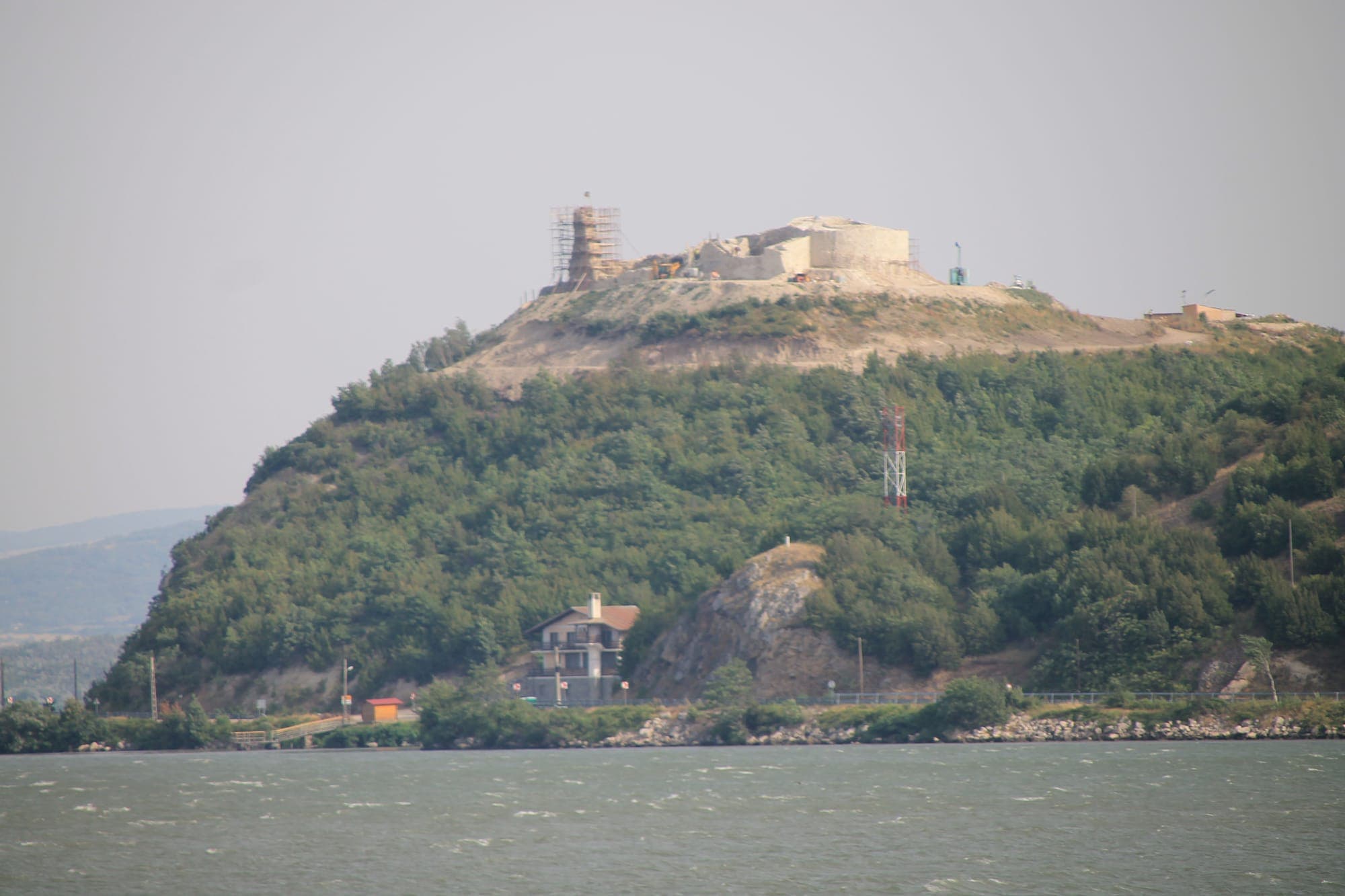
Along the Romanian bank of the Danube, outside Dobruja, Roman and medieval fortresses follow one another. Near Coronini, Ladislaus Fortress, from the 15th century, has a lookout tower from which you can see the Babacaia rock and Golubac fortress on the Serbian bank. Near Svinița, two crenellated towers of Tricule Fortress rise out of the water, remains of a fortification with three towers.
In Drobeta-Turnu Severin, the Roman Fort of Drobeta guarded the northern end of Trajan's Bridge, and Severin Medieval Fortress, the centre of the Banate of Severin in the 13th century, is a ruin in a park, with a medieval festival every year at the end of summer. Further downstream, the Roman Fort of Hinova has low walls and seven towers, and at Corabia Sucidava Fortress keeps the walls of the late Roman city, the “secret well” and the northern abutment of the bridge of Constantine the Great, inaugurated in 328.
Downstream, Turnu Fortress in Turnu Măgurele, attested in the time of Mircea the Elder and held by the Ottomans until 1829, has a consolidated round central tower, and Giurgiu Fortress, built on a former island of the Danube, keeps thick stone walls. The Danube fortresses in Dobruja, such as Capidava or Carsium, are in the guide to the fortresses of Dobruja.


The kulas of Oltenia: fortified boyar houses
Kulas (cule) are fortified boyar houses in Oltenia, with a massive ground floor and an upper floor with a veranda or porch, built between the 16th and 19th centuries. There are six on the site. Greceanu Kula, a 16th-century boyar tower completed in the 18th century, is the oldest in the Măldărești Museum Complex, near Horezu; the same complex includes Cula Duca, from 1812–1827, bought in 1910 by I.G. Duca.
In Gorj, Cartianu Kula, from around 1760, houses a museum of Gorj folk costume, and Glogoveanu Kula has a massive 17th-century cellar and an upper floor with a wooden porch. Near Drobeta-Turnu Severin are Nistor Kula, in Cerneți, with a veranda on carved pillars, and the Tudor Vladimirescu Cula, on Gârdan Hill, which is being restored.


Roman forts in Romania: Porolissum, Potaissa, Micia
There are almost 30 Roman forts and cities on the site, most of them on the former frontier of Dacia; since 2024 many are components of the UNESCO site “Frontiers of the Roman Empire – Dacia”. At most of them you see low ruins or just earthworks in a field; only a few are set up for visitors.
Porolissum Archaeological Complex, at Moigrad, in Sălaj, is the northernmost bastion of Roman Dacia, with the fort's gates rebuilt, the paved imperial road and the amphitheatre. The Potaissa Legionary Fortress in Turda, of Legio V Macedonica, has its headquarters and baths restored. In Alba Iulia, Apulum – the Roman remains of Alba Iulia keeps the south gate of the fort of Legio XIII Gemina, and Ulpia Traiana Sarmizegetusa, the capital of Roman Dacia, has a restored amphitheatre and a museum.
Also worth seeing are the Roman Fort of Micia, near Deva, with its amphitheatre and Roman baths, the Jidava Roman Fort (Jidova) at Câmpulung, the only stone fort on the Limes Transalutanus, with a site museum, the Roman Fort of Arutela, near Cozia Monastery, with a reconstructed gate, the Roman Fort at Buciumi and the Roman Fort of Călugăreni, now an archaeological park. The Hoghiz Roman Fort is the largest auxiliary fort in eastern Dacia, the Roman Fort of Tibiscum the most extensively researched Roman site in the Banat, and the Roman Fort of Pietroasele a late fort, from the 4th century, north of the Danube. The Danube forts are in the Danube section.


Fortified churches and peasant fortresses of Transylvania
Over 40 fortified churches on the site are in the fortresses category: Saxon, Székely and Hungarian churches surrounded by walls with towers, where the village defended itself when needed. Seven villages with fortified churches are UNESCO World Heritage: Biertan Fortified Church, Câlnic Fortress, Dârjiu Fortified Church, Prejmer Fortified Church, Saschiz Fortified Church, Valea Viilor Fortified Church and Viscri Fortified Church. The peasant fortresses, such as Râșnov, Rupea or Saschiz Peasants' Fortress, were the refuge of the surrounding villages.
All of them, with the Rupea – Viscri – Saschiz route, are in the guide to the fortified churches of Transylvania.


The Dacian fortresses of the Orăștie Mountains
The Dacian fortresses on the site date from the 2nd century BC – 1st century AD. Six have been UNESCO World Heritage since 1999, in the ensemble “Dacian Fortresses of the Orăștie Mountains”: Sarmizegetusa Regia, the capital of the Dacian kingdom, Costești-Cetățuie Dacian Fortress, Costești-Blidaru Dacian Fortress, Piatra Roșie Dacian Fortress, Bănița Dacian Fortress and Căpâlna Dacian Fortress, the only one in Alba County. Outside the ensemble are Tilișca Dacian Fortress, in the Mărginimea Sibiului, and Piatra Craivii Dacian Fortress, in the Trascău Mountains.
How to reach each of them and how to link them into a route is in the guide to Dacian fortresses.


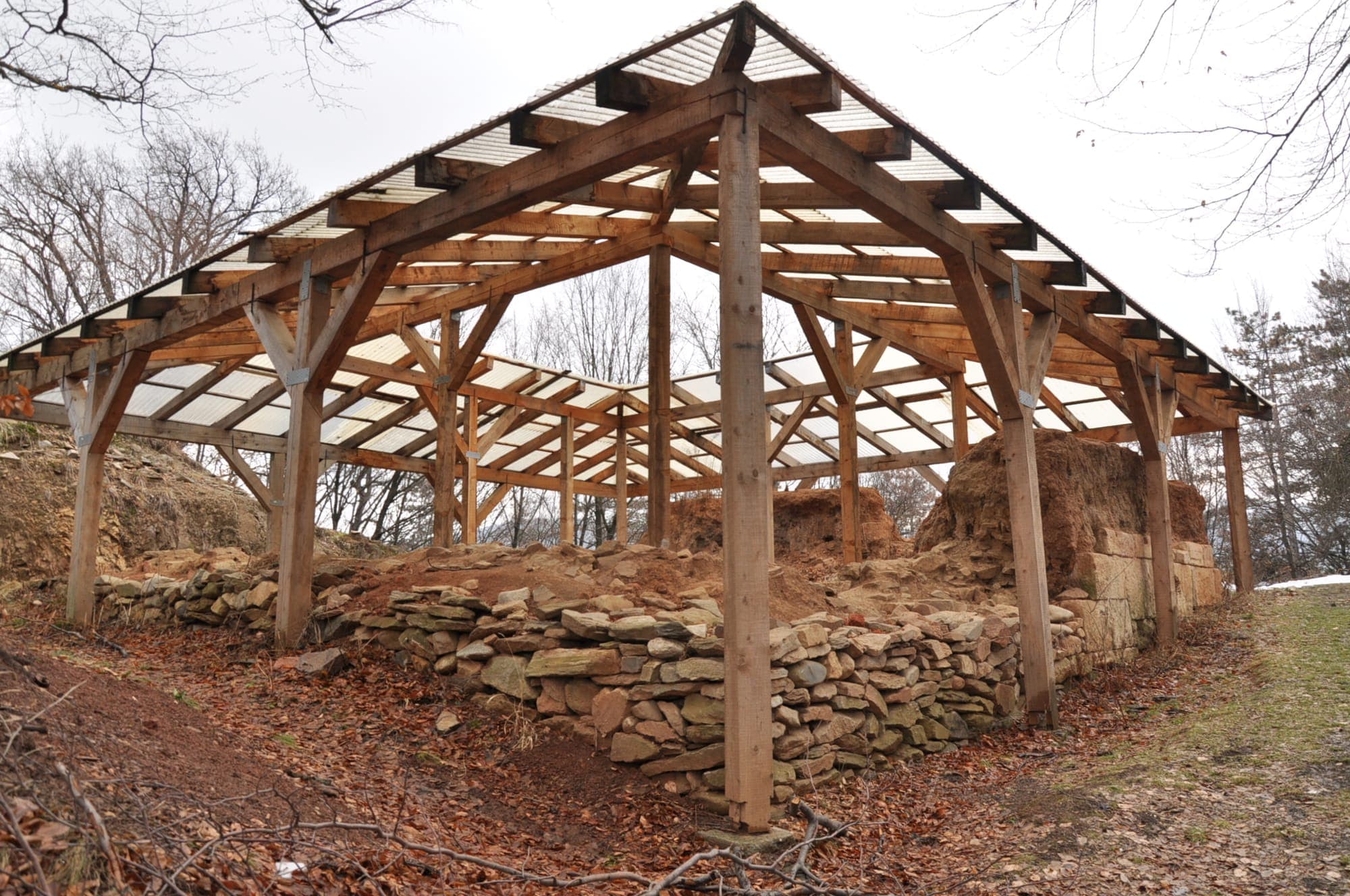
Greek, Roman and medieval fortresses of Dobruja
Between the Danube and the Black Sea are the oldest fortified cities on the site. Histria Citadel, a colony founded by Miletus on the shore of Lake Sinoe, is the oldest city on Romanian soil; Callatis Citadel is the Greek city from which Mangalia grew, and Argamum Citadel stands on Cape Doloșman, above Lake Razim. The Roman and Byzantine fortresses are Capidava Fortress, Carsium Fortress, Dinogetia Fortress, Noviodunum Fortress, Troesmis Fortress, Halmyris Fortress, Ulmetum Fortress and Ibida Fortress, plus Tropaeum Traiani – Adamclisi, with Trajan's triumphal monument and the ruins of the Roman city. Enisala Fortress, from the 14th century, probably built by the Genoese, has one of the widest views in Dobruja.
They are all in the guide to the fortresses of Dobruja.


The most beautiful fortresses in Romania, by criterion
There is no official ranking of fortresses, but going by what their pages publish, a few stand out for each criterion.
The largest. Alba Carolina Fortress, the largest bastioned fortress in the country, covering about 70 hectares. Among the medieval enclosures, Târgu Mureș Citadel, of about 4.3 hectares, is one of the largest in Transylvania.
The oldest. Histria Citadel is the oldest city on Romanian soil. Among the oldest medieval fortresses on the site is Dăbâca Fortress, a former royal fortress from the 11th–12th centuries.
Still lived in. Sighișoara Citadel, a medieval town with cobbled streets and over a hundred listed houses, on the UNESCO World Heritage list.
The view. Poenari Citadel, above the Argeș Gorge, Deva Fortress, over the Mureș Valley, Rupea Fortress, over the hills of Transylvania, Enisala Fortress, over lakes Razim and Babadag, and Heldenburg Fortress, over the Burzenland.
Restored, with a museum. Suceava Princely Fortress, Neamț Citadel, Făgăraș Citadel and Oradea Fortress have rooms set up as museums. Rupea was restored in 2010–2013, Feldioara Fortress in 2013–2017, and the upper enclosure at Deva in 2024.
No ticket. Alba Carolina, the courtyards of Oradea Fortress, Sighișoara and Târgu Mureș Citadel can be walked freely; you only pay for the museums.
With children. At Alba Carolina the changing of the guard takes place in summer, and on Saturday evenings there are horses and cannon salvoes. Neamț Citadel has rooms with mannequins in period costume, and Suceava a Hall of the Voivodes with wooden thrones and a film about the fortress. Poenari, with its 1,480 steps, and the ruins on rocks, such as Colț, call for good fitness and care near the edges.
Fortress or castle: Bran, Corvin Castle and Făgăraș
A fortress is a fortification built for defence, with walls and towers; a castle is a residence, sometimes fortified. Many places have changed from one to the other, so people search for them under both names.
Bran Castle was built by the people of Brașov in 1377–1388 as a border fortress and customs point at the entrance to the Bran Pass. It became a summer residence after the city of Brașov gave it, in 1920, to Queen Marie. Its fame as “Dracula's castle” comes from Bram Stoker's novel; its link to Vlad the Impaler is slim. Corvin Castle, searched for as “Hunedoara fortress”, started out as a royal stone fortress, transformed by John Hunyadi after 1440 into a Gothic residence.
The other way round, Făgăraș Citadel was turned by Ștefan Mailat from a military fortress into a fortified castle, but kept “cetate” (fortress) in its name, just like Mikó Castle, a Renaissance castle. And “Poenari castle”, “Râșnov castle” or “Deva castle”, as they are often searched for, are Poenari Citadel, Râșnov Fortress and Deva Fortress. The castles proper are in the Castles and palaces category.


Before you go: opening hours, tickets and access
Opening hours and prices. The restored fortresses with museums have opening hours and tickets, and many are closed on Mondays: Neamț Citadel, Făgăraș Citadel, the museums at Alba Carolina and Oradea and, outside summer, Suceava Princely Fortress. Hours and prices change from one season to the next; they are on each fortress's page, with the date they were checked. Open-air ruins, such as Șiria, Colț, Liteni or Heldenburg, have no opening hours, and some have no lighting either, so go up in daylight.
Climbs. Many fortresses can only be reached on foot: 1,480 steps at Poenari, 30–45 minutes on a path at Deva while the cable car is out of service, 20–30 minutes at Colț, about an hour at Bálványos. Good footwear matters. Vipers live on Deva hill and at Colț, and bears in the Poenari area.
Restricted access. Arad Fortress is a military unit: you can only get in on open days, usually with an identity document. Turnu Roșu Castle and Brașov's Cetățuia can only be seen from outside, and at Râșnov only the Fortress Garden and the Báthory Tower can be visited. Sighișoara is lived in: only residents and guests staying inside may drive into the citadel.
Frequently asked questions
- How many fortresses are there in Romania?
- There is no single official list. On peplaiuri.ro there are over 170 fortresses and fortifications (November 2026): medieval, bastioned and peasant fortresses, Dacian, Greek and Roman citadels, Roman forts, town towers, kulas and over 40 fortified churches.
- What is the largest fortress in Romania?
- Alba Carolina Fortress in Alba Iulia, the largest bastioned fortress in the country: a seven-bastion star covering about 70 hectares, built by the Habsburgs in 1715–1738. Its gates and walkways are open at all times and free of charge.
- What is the oldest fortress in Romania?
- Histria, a Greek colony founded by Miletus on the shore of Lake Sinoe, is the oldest city on Romanian soil. The Dacian fortresses of the Orăștie Mountains date from the 2nd century BC – 1st century AD, and among the oldest medieval fortresses is Dăbâca, from the 11th–12th centuries.
- What are the most beautiful fortresses in Romania?
- There is no official ranking. The best known are Alba Carolina, Sighișoara, Suceava Princely Fortress, Neamț Citadel, Făgăraș Citadel and Deva Fortress; for the view, Poenari, Rupea and Enisala stand out.
- Which fortresses in Romania are UNESCO World Heritage Sites?
- The historic centre of Sighișoara and the six Dacian fortresses of the Orăștie Mountains, since 1999; seven villages with fortified churches, Biertan since 1993 and the others since 1999; and, since 2024, the forts of the “Frontiers of the Roman Empire – Dacia”, such as Porolissum, Potaissa or Micia.
- What is the difference between a fortress and a castle?
- A fortress is a fortification built for defence, a castle a residence, sometimes fortified. Bran Castle was built as a border fortress and became a royal residence, while Făgăraș Citadel was turned into a fortified castle but kept its name.
- Which is Vlad the Impaler's fortress?
- Poenari Citadel, above the Argeș Gorge, on the Transfăgărășan, is the one with the strongest link to Vlad the Impaler, according to the chronicles and the excavations. The Princely Court in Târgoviște was his residence, and Bran Castle's link to him is slim.
- Which fortresses did Stephen the Great build?
- Suceava Princely Fortress and Neamț Citadel were built by Petru Mușat and strengthened by Stephen the Great, who added walls and bastions. Both withstood the siege of Mehmed II in 1476.
- Can you visit Arad Fortress?
- Only on the open days organised by the military unit based in the fortress, usually with an identity document (November 2026). The fortress has belonged to the city of Arad since 2022, but permanent opening depends on the unit moving out.
- What fortresses are there near Brașov?
- In the Burzenland there are the peasant fortresses of Râșnov, Rupea and Feldioara, Bran Castle, the ruins of Brașovia Fortress on Tâmpa and Heldenburg Fortress at Crizbav; Făgăraș Citadel is halfway to Sibiu.
Tickets and tours
- Buy ticket· from €5
Audio tour of the Porolissum Roman fort

- Buy ticket· from €19.99
Museum of Oradea + guided fortress tour


- Buy ticket· from €33.35
Guided tour of the citadel, with the Clock Tower Museum
- Buy ticket· from €32.90
Bran Castle entry ticket
- Buy ticket· from €62.60
Ticket bundle: Bran Castle + Peleș Castle
- Buy ticket· from €58.71
Bran Castle + Pelișor Castle, with a guided tour
- Buy ticket
Day trip from Bucharest in Vlad the Impaler's footsteps: Târgoviște, Curtea de Argeș, Poenari


Sources
- Argeș County Museum: Poienari Fortress, access in groups
- Alba Iulia Tourism: Alba Carolina Fortress
- Visit Oradea: Oradea Fortress
- Neamț National Museum Complex: Neamț Citadel Museum
- Deva Fortress: official website
- Făgăraș Citadel: official website
- Rosenau Turism: Râșnov Fortress
- Potaissa Legionary Fortress, Turda
- National Museum of the Banat
Attractions by area and category
Related guides
- Fortified churches in Transylvania: the 7 UNESCO villages, the peasant fortresses and a route through the Saxon villages
- Dacian fortresses in Romania: the 6 UNESCO fortresses of the Orăștie Mountains, map and how to get there
- Fortresses in Dobruja: Histria, Enisala, Capidava and the other Greek, Roman and medieval fortresses, with a map
- Things to do in Sibiu: what to see in 1–2 days, in the city and nearby
- Caves in Romania: the ones you can visit, by area, with a map