
Dacian fortresses in Romania: the 6 UNESCO fortresses of the Orăștie Mountains, map and how to get there

The Dacian fortresses of the Orăștie Mountains are six, and together they form a UNESCO site inscribed in 1999: Sarmizegetusa Regia, the capital of the Dacian kingdom, Costești-Cetățuie, Costești-Blidaru, Piatra Roșie and Bănița, in Hunedoara County, plus Căpâlna, in Alba. All are ruins on hills or crags, built mostly in the 1st century BC–1st century AD and taken or destroyed by the Romans in AD 101–106. Only Sarmizegetusa Regia and Costești-Cetățuie have a museum entry ticket; at the others you climb on paths, with no ticket office.
Below you will find where each one is, how to get there and how to link them in a day from Costești, then two more Dacian fortresses you can visit, Tilișca (Sibiu) and Piatra Craivii (Alba), and the difference between Sarmizegetusa Regia and Ulpia Traiana. The other fortresses in the country, by type and region, are in the guide to Romania's fortresses.
In short
- The ‘Dacian Fortresses of the Orăștie Mountains’ have been on the UNESCO World Heritage List since 1999 and have six components: Sarmizegetusa Regia, Costești-Cetățuie, Costești-Blidaru, Luncani-Piatra Roșie, Bănița and Căpâlna.
- Five of the six UNESCO fortresses are in Hunedoara County; Căpâlna, in the Sebeș valley, is the only one in Alba County.
- In November 2026 Sarmizegetusa Regia opens on Sundays only, 09:00–18:00, because of restoration work on Terrace X (Museum of Dacian and Roman Civilisation, mcdr.ro).
- The ticket for Sarmizegetusa Regia costs 30 lei (pupils, students, seniors 10 lei) and for Costești-Cetățuie 10 lei (5 lei reduced), according to the museum's 2026 rates.
- Costești-Blidaru, Piatra Roșie, Bănița and Căpâlna have no ticket office and are reached on foot only: 20–30 minutes at Piatra Roșie, ~40 minutes at Bănița, ~50 minutes at Blidaru and ~2 km at Căpâlna.
- Sarmizegetusa Regia (the Dacian capital, in the Orăștie Mountains) and Ulpia Traiana Sarmizegetusa (the capital of Roman Dacia, in the Hațeg Country) are two different sites, about 40 km apart.
The 6 Dacian fortresses of the Orăștie Mountains (UNESCO)
The Dacians defended their capital, Sarmizegetusa Regia, with a system of fortresses on the surrounding hills: those at Costești guarded the valley that led up to the capital, Piatra Roșie the roads from the west, Bănița the pass from the south, and Căpâlna the road along the Sebeș valley. The walls are built mostly in the murus dacicus technique: dressed limestone blocks tied together with timber beams. All six were taken or destroyed in the wars with Trajan, and today you see conserved walls (Sarmizegetusa, Blidaru, Costești-Cetățuie) or only traces among the trees (Piatra Roșie, Bănița, Căpâlna).
The table shows where each one is and how far you walk. All of them are also on the page of Romania's UNESCO sites.
| Fortress | Where | How to reach the ruins | Ticket (2026) |
|---|---|---|---|
| Sarmizegetusa Regia | Grădiștea de Munte, Hunedoara | car park at the end of DJ705A, then ~850 m on foot (10–15 min) | 30 lei; pupils, students, seniors 10 lei |
| Costești-Cetățuie | Costești, Hunedoara | gravel road to a small car park and ~200 m of path, or ~2.5 km on foot from the village (30–40 min) | 10 lei; reduced 5 lei |
| Costești-Blidaru | Costești, Hunedoara | on foot only, ~50 min from the bridge over the Grădiștea stream | no ticket of its own; natural park fee, 5 lei |
| Piatra Roșie | Luncani (Boșorod), Hunedoara | dirt road, then 20–30 min of steep climbing | no ticket office |
| Bănița | by the DN66, ~6 km from Petroșani, Hunedoara | waymarked themed trail, ~570 m, ~40 min uphill | free |
| Căpâlna | Căpâlna, on the DN67C, Alba | ~2 km on foot, on a dirt road and path | free |
From the attraction pages on this site; the rates of the Museum of Dacian and Roman Civilisation (Sarmizegetusa, Costești-Cetățuie) checked on mcdr.ro on 20 November 2026.


Map of the Dacian fortresses: where they are
On the map, three fortresses lie along the same valley: you drive up from Orăștie on the DJ705A and first reach Costești-Cetățuie and Costești-Blidaru, on the edge of the village of Costești, then, after another ~19 km up the Grădiștea valley, Sarmizegetusa Regia. The other three are on different roads, on the edges of the Orăștie Mountains: Piatra Roșie to the west, above Luncani (access from Călan), Bănița to the south, on the crag beside the DN66 before Petroșani, and Căpâlna to the east, in the Sebeș valley, on the Transalpina (DN67C). All the fortresses on the site are on the map of fortresses, and the other sights in the area on the Hunedoara County page.
| Fortress | Starting point | Distance |
|---|---|---|
| Costești-Cetățuie, Costești-Blidaru | Orăștie (A1 exit) | ~20 km to Costești |
| Sarmizegetusa Regia | Orăștie | ~40 km, the last ~19 km from Costești |
| Piatra Roșie | Călan (DN66) | ~20 km to Luncani, plus ~2 km of dirt road |
| Bănița | Petroșani / Hațeg | ~6 km / ~40 km, on the DN66 |
| Căpâlna | Sebeș (A1) | ~20 km on the DN67C |
| Tilișca | Sibiu | ~26 km, via Săliște |
| Piatra Craivii | Alba Iulia | ~22 km to the foot of the crag |
Distances come from the access section of each fortress page. Orăștie is ~30 km from Deva, ~40 km from Alba Iulia and ~85 km from Sibiu on the A1.
Sarmizegetusa Regia: the Dacian capital
Sarmizegetusa Regia was the political, military and religious capital of the Dacians for the last century and a half before the Roman conquest, and was taken by Trajan in AD 106. The site has three parts: the fortress, an enclosure of about 3 ha with 3 m thick walls, the civilian settlement on terraces and the sacred area, with the rectangular sanctuaries, the two circular sanctuaries and the ‘Andesite Sun’. From the ticket office you walk down to the sacred area on the road paved with limestone slabs. Next to the ticket office there are toilets and an audio guide for hire, and the routes have panels in Romanian and English.
Good to know in November 2026: because of the restoration work on Terrace X, the site opens on Sundays only, 09:00–18:00, and the museum has not announced an end date. The road is paved up to the car park, but in winter it may have snow or ice. Check the hours on the fortress page before setting off.
Costești-Cetățuie and Costești-Blidaru
The two fortresses at the entrance to the mountains are a few kilometres apart, on either side of the road to Sarmizegetusa.
Costești-Cetățuie, on the hill at the end of the village, is considered one of the oldest Dacian fortifications in the area: earth ramparts still several metres high, a limestone wall in the Hellenistic technique, two tower-houses on the plateau and a monumental stairway of slabs. You drive up a gravel road waymarked with a yellow cross to a small car park, or walk from the village. The museum publishes no opening hours for this site, so call ahead, especially out of season.
Costești-Blidaru, on a 705 m hill, is one of the strongest Dacian fortresses: walls about 3 m thick, preserved along almost the whole outline, an entrance built with a dog-leg turn and a cistern of almost 200 m³. It can only be reached on foot: the path waymarked with a blue stripe starts after the bridge over the Grădiștea stream and climbs for ~50 minutes, the first stretch being the steepest.
Piatra Roșie Dacian Fortress, above Luncani
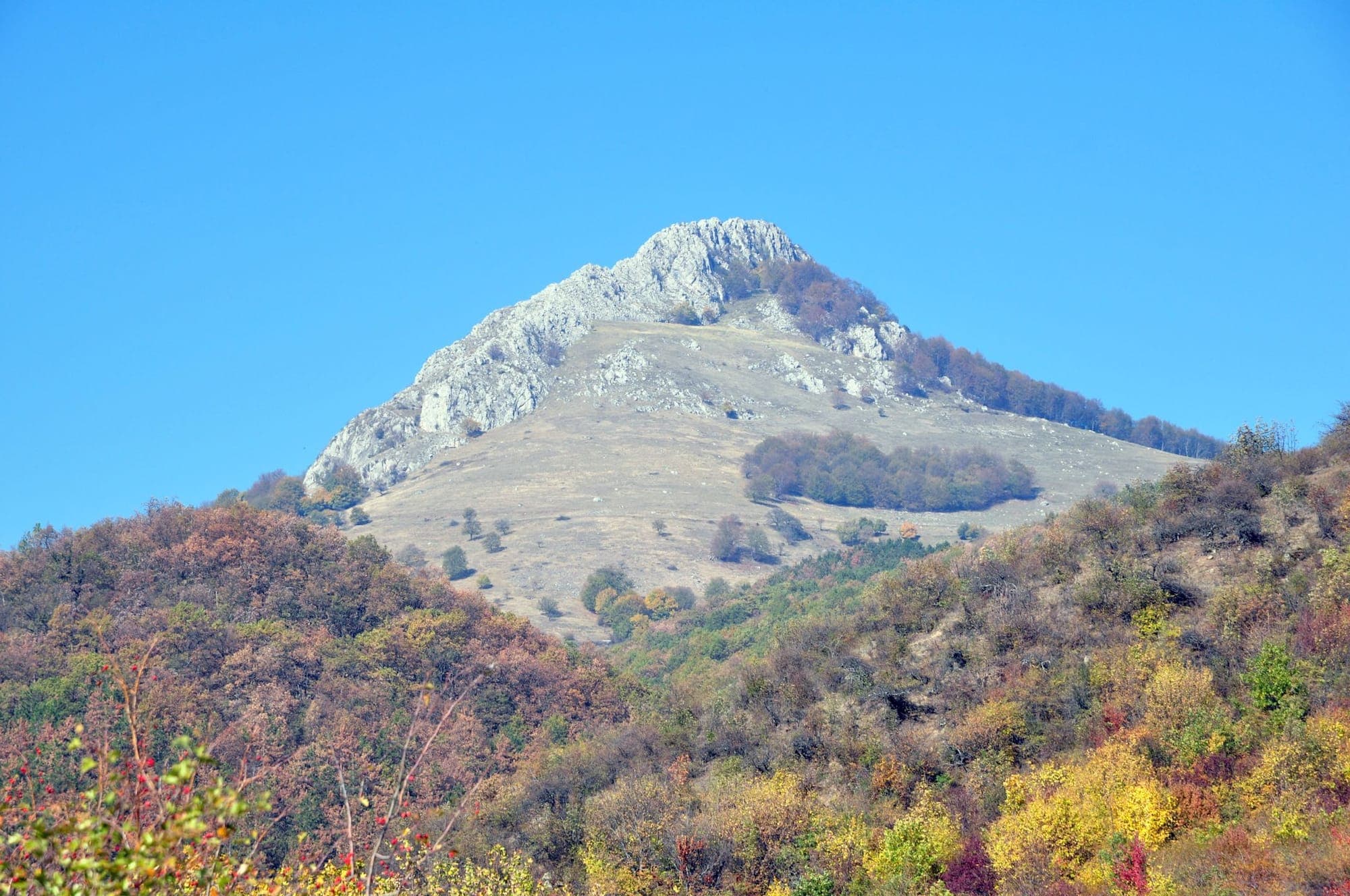
Piatra Roșie stands on an 832 m limestone hill, with rock walls on three sides. The first enclosure, about 102 × 45 m, had five towers; the last part of the climb follows the Dacian road with steps of large stone slabs. The site has not been restored, and many walls lie under earth and vegetation. From Luncani you continue on a dirt road that breaks up after rain, leave the car where it is no longer passable and climb for 20–30 minutes on a steep path. There is no ticket office, toilet or water, and in summer the panels warn about vipers.
Bănița Dacian Fortress, near Petroșani
Bănița sits on Piatra Cetății, a limestone peak of about 900 m that the DN66 winds past, and guarded the way in from the south towards Sarmizegetusa. Of the walls you only see dressed limestone blocks on the northern slope; the reward is the position itself. Since 1 August 2026 the museum has a free, waymarked themed trail through the Bănița Gorge: ~570 m, 104 m of ascent, ~40 minutes uphill. Other paths, such as the one behind the chalet, are not waymarked and are dangerous. At the foot of the hill is Bolii Cave, with a railway halt.

Căpâlna Dacian Fortress, in the Sebeș valley
Căpâlna, the only UNESCO Dacian fortress in Alba County, stands on Dealul Cetății, at about 650 m: sections of murus dacicus wall and the foundation of a tower-house about 9.5 m across. The site is not developed. At the edge of the village towards Șugag, a sign shows the way: ~2 km on foot, on a dirt road and a sloping path, with ~280 m of ascent. Alba County Council has taken over the fortress for restoration, but work had not started at the last check. The gold necklace found here is at the National Museum of the Union in Alba Iulia.
The Dacian fortress route from Costești, in a day
The only three UNESCO fortresses that are easy to link in one day are those on the Orăștie – Costești – Grădiștea de Munte road. The durations come from the fortress pages:
- Costești-Blidaru in the morning, while you have the energy for the climb: ~2 h 30 up and down, from the bridge over the Grădiștea stream.
- Costești-Cetățuie, at the end of the village: ~1 h 30 if you walk up, less if you drive to the car park.
- Sarmizegetusa Regia, ~19 km further up the valley, through almost uninhabited country: ~2 h 30 including the walk from the car park.
There are no shops or petrol stations on the last ~19 km, so take water and food from Costești. The order depends on Sarmizegetusa's opening hours: in November 2026, Sundays only. Piatra Roșie, Bănița and Căpâlna are on other roads, each with its own climb; Bănița pairs most easily with Bolii Cave, and Căpâlna with a stop in Sebeș or on the Transalpina.
Other Dacian fortresses in Romania: Tilișca, Piatra Craivii
Besides the six UNESCO fortresses, the site lists two Dacian fortresses you can visit:
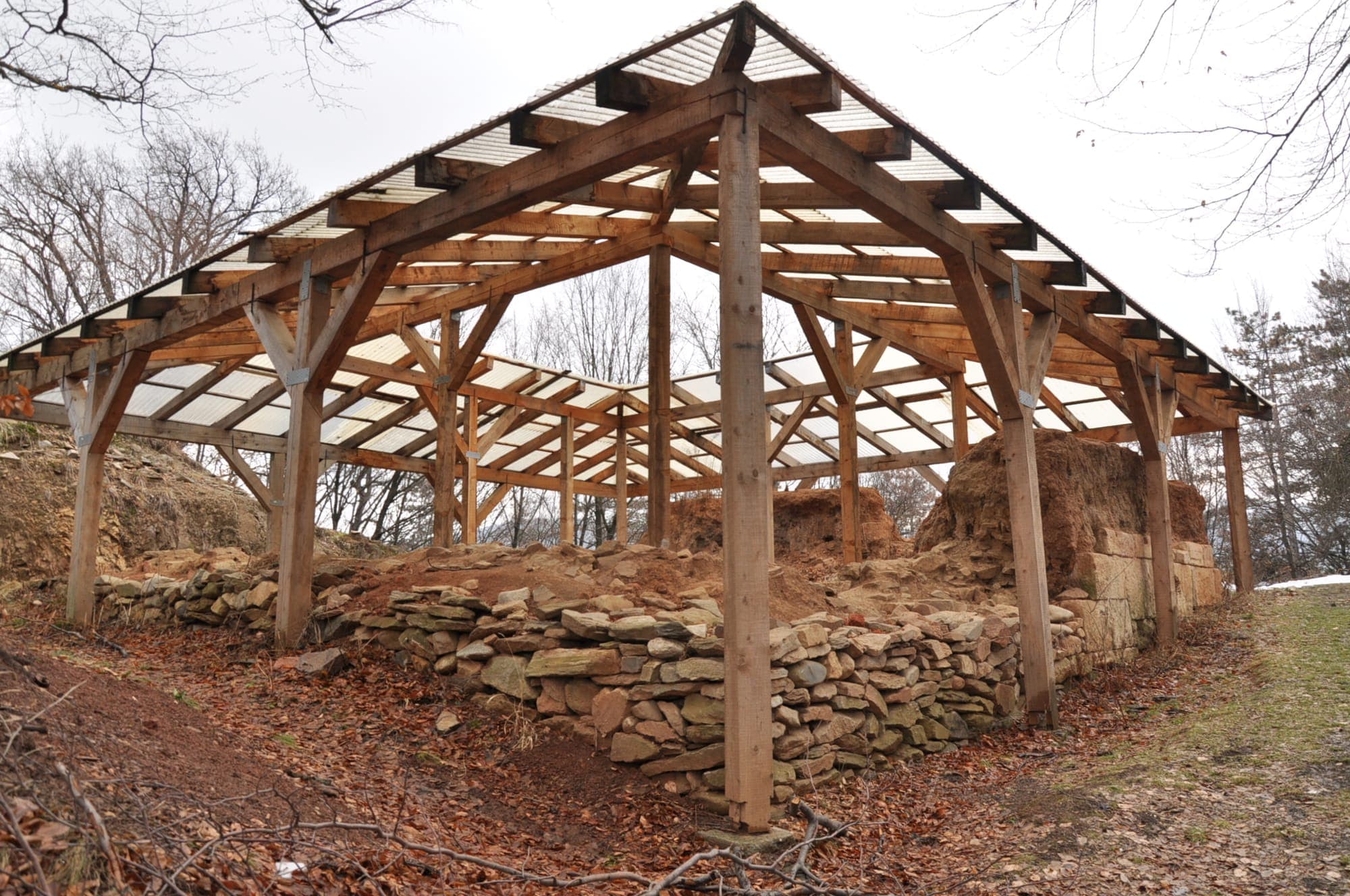
- Tilișca Dacian Fortress, on Dealul Cățănaș, above the village in the Mărginimea Sibiului area, ~26 km from Sibiu. You see the ruins of a tower-house under a protective roof, earth ramparts and ditches; you walk up from the village centre ~1.5 km (~25 minutes). Bronze coin dies were found here, and the one discovered in 2025 went to the History Museum in Sibiu.
- Piatra Craivii, a limestone spur of about 1,080 m in the Trascău Mountains, north of Alba Iulia, which many archaeologists identify as Apoulon. Of the Dacian fortress you mostly see the terraces on the slope; on the summit are the ruins of a medieval castle. The climb from the spring at the foot of the crag is short (~0.7 km) but steep and rocky.
Dacian traces also appear on other kinds of pages: the hill by the Ocnele Mari Salt Mine, where the fortress of Buridava was found, the Valea Zânelor at Covasna and the hill of Rupea Fortress, which tradition links to the dava of Ramidava. Other Dacian fortresses people search for, such as Fețele Albe, Bâtca Doamnei (Piatra Neamț), Jigodin, Polovragi or Zargidava, do not yet have a page on the site.
Sarmizegetusa Regia or Ulpia Traiana Sarmizegetusa?
They are two different places, about 40 km apart. Sarmizegetusa Regia is the Dacian capital of Decebalus: a mountain fortress, above 1,000 m, in the forests of the Orăștie Mountains, with Dacian walls and sanctuaries. Ulpia Traiana Sarmizegetusa is the Roman town founded after the conquest, between 108 and 110, the capital of Roman Dacia: it lies on the plain, in the Hațeg Country, at 531 m, and has an amphitheatre, a forum and temples. The Romans took only the name of the defeated capital. If your GPS takes you to the commune of Sarmizegetusa, on the DN68, you have reached the Roman town, not the Dacian fortress.

Where to see Dacian gold and finds
The best-known objects found in the fortresses are not at the ruins but in museums:
- The Dacian gold bracelets from Sarmizegetusa Regia are in the Historical Treasury of the National Museum of Romanian History, in Bucharest.
- The blocks with Greek letters from the fortress walls and column plinths from the temples are in the lapidarium at Magna Curia (Bethlen Castle), in Deva, home of the Museum of Dacian and Roman Civilisation, which also has exhibitions of Dacian archaeology.
- The gold necklace from Căpâlna and finds from the fortresses at Căpâlna, Cugir and Piatra Craivii are at the National Museum of the Union in Alba Iulia.


When to visit the Dacian fortresses and what to bring
- Season. The fortress pages give May–October (April–October at Costești-Cetățuie, Căpâlna, Tilișca and Piatra Craivii). In winter the mountain roads may have snow, and the earth paths are slippery after rain.
- Footwear. Hiking or sports shoes everywhere: none of the UNESCO fortresses can be reached with a pushchair, and at Bănița and Piatra Craivii the last climb is steep and rocky.
- Water and food. Apart from Sarmizegetusa, the fortresses have no toilet, water or shop. Get supplies in Costești, Luncani, Petroșani or Sebeș.
- Rules. All are historic monuments: do not climb on the walls or move stones, and metal detectors are forbidden. In summer watch out for vipers (Piatra Roșie) and ticks (Căpâlna).
- Daylight. At sites without opening hours, go up and come down in daylight: the forest paths are not lit.
General advice for fortresses (with children, fortress or castle) is in the guide to Romania's fortresses; the full category is at fortresses and fortifications. For the peasant fortresses and fortified churches of the Saxons, see the fortified churches of Transylvania, and for Histria and the ancient fortresses by the sea, the fortresses of Dobruja.
Frequently asked questions
- How many Dacian fortresses are UNESCO World Heritage?
- Six, inscribed in 1999 as the ‘Dacian Fortresses of the Orăștie Mountains’: Sarmizegetusa Regia, Costești-Cetățuie, Costești-Blidaru, Luncani-Piatra Roșie and Bănița, in Hunedoara County, and Căpâlna, in Alba County.
- What are the Dacian fortresses of the Orăștie Mountains?
- Sarmizegetusa Regia (the capital), Costești-Cetățuie, Costești-Blidaru, Piatra Roșie, Bănița and Căpâlna. The first three are in the same valley, at Costești and Grădiștea de Munte; Piatra Roșie is near Luncani, Bănița near Petroșani and Căpâlna in the Sebeș valley.
- Is Sarmizegetusa Regia open?
- In November 2026 on Sundays only, 09:00–18:00, because of restoration work on Terrace X; Monday to Saturday it is closed, according to the Museum of Dacian and Roman Civilisation. Check the hours on mcdr.ro before setting off.
- How much does it cost to visit the Dacian fortresses?
- In 2026 Sarmizegetusa Regia costs 30 lei (pupils, students, seniors 10 lei) and Costești-Cetățuie 10 lei (reduced 5 lei). At Blidaru you pay the Grădiștea Muncelului-Cioclovina Natural Park fee, 5 lei; Bănița and Căpâlna are free, and Piatra Roșie has no ticket office.
- How do you get to the Dacian fortresses at Costești?
- Leave the A1 motorway at Orăștie and follow the DJ705A for ~20 km to Costești. Costești-Cetățuie is at the end of the village, Costești-Blidaru ~50 minutes on foot from the bridge over the Grădiștea stream, and Sarmizegetusa Regia another ~19 km up the Grădiștea valley.
- What is the difference between Sarmizegetusa Regia and Ulpia Traiana Sarmizegetusa?
- Sarmizegetusa Regia is the Dacian capital of Decebalus, a mountain fortress in the Orăștie Mountains; Ulpia Traiana Sarmizegetusa is the Roman town founded after the conquest of 106, in the Hațeg Country, about 40 km away. The Romans took over only the name.
- Which Dacian fortresses are near Sibiu?
- Tilișca Dacian Fortress, in the Mărginimea Sibiului area, ~26 km from Sibiu, with a tower-house under a protective roof. The UNESCO fortress closest to Sibiu is Căpâlna, ~20 km from Sebeș on the DN67C.
- Can you visit the Dacian fortresses with children?
- Sarmizegetusa Regia, Costești-Cetățuie, Costești-Blidaru, Piatra Roșie, Căpâlna and Tilișca are listed on their pages as suitable for children, but on foot only, without a pushchair. At Bănița and Piatra Craivii the last climb is steep and rocky.
Sources
- Museum of Dacian and Roman Civilisation: Sarmizegetusa Regia, November 2026 hours
- Museum of Dacian and Roman Civilisation: 2026 fees and rates
- Museum of Dacian and Roman Civilisation: Bănița Fortress
- UNESCO: Dacian Fortresses of the Orăștie Mountains
- Agerpres, July 2026: the themed trail to Bănița Fortress opens on 1 August
- Grădiștea Muncelului-Cioclovina Natural Park: visitor fee
- Alba24: Alba County Council takes over the Căpâlna Dacian fortress
Attractions by area and category
Related guides
- Fortresses in Romania: the most important ones, by type and region, with a map
- Fortresses in Dobruja: Histria, Enisala, Capidava and the other Greek, Roman and medieval fortresses, with a map
- Fortified churches in Transylvania: the 7 UNESCO villages, the peasant fortresses and a route through the Saxon villages
- Things to do in Sibiu: what to see in 1–2 days, in the city and nearby
- Caves in Romania: the ones you can visit, by area, with a map