
Caves in Romania: the ones you can visit, by area, with a map

peplaiuri.ro lists 48 caves, and 37 of them can be visited at the end of October 2026: 13 developed and lit, with a ticket, 7 wild caves you enter only with a guide, 13 wild or open-air caves you see on your own, and 4 cave churches. The other 11 are closed to the public, one of them, Unguru Mare Cave, only temporarily. Most are in the Apuseni Mountains (Bihor and Alba); the rest are in the Bucegi Mountains and along the Rucăr–Bran corridor, in Oltenia, in Mehedinți and the Banat, in Hunedoara, in Dobruja and in the Eastern Carpathians.
This guide puts every cave in one table, with the type of visit, the length of the route and the ticket, then goes through them by area, starting with the most searched. At the end come the common choices (the most beautiful, developed or wild, with children), the confusion over “Peștera Liliecilor” (Bat Cave) and the practical side: temperature, clothing and winter.
In short
- peplaiuri.ro lists 48 caves in Romania; 37 can be visited at the end of October 2026, and 11 are closed to the public.
- There are 13 developed, lit caves with a ticket: Bears' Cave, Scărișoara, Meziad, Farcu, Vadu Crișului, Poarta lui Ionele, Ialomița, Dâmbovicioara, Valea Cetății, Women's Cave, Polovragi, the Bat Cave at Bistrița (Vâlcea) and Bolii.
- Bears' Cave, at Chișcău (Bihor), is the most visited cave in Romania, with a 488 m route and a 40 lei ticket (September 2026).
- Unguru Mare Cave is temporarily closed for refurbishment, and Vadu Crișului Cave reopened in December 2025, with visits Tuesday to Sunday, booked 24 hours ahead.
- Most developed caves stay between 8 and 12 °C all year; Ialomița Cave is at 5–6 °C, and Scărișoara Ice Cave at around 0 °C.
- Romania has more than 12,000 known caves; most are not developed and are explored only by cavers.
How many caves you can visit in Romania: the full list
Romania has more than 12,000 known caves, in limestone, salt, gypsum and, more rarely, sandstone. For a visitor, though, another figure matters: how many have a route you can walk. The site has 48 caves and karst sites, and 37 can be visited at the end of October 2026. The table groups them by type: first the developed ones, with electric lighting, walkways and a ticket office; then the wild caves you enter only with a guide, a helmet and a torch; then the ones you see on your own, from the entrance or along a marked trail; and finally the cave churches and the closed caves.
“Visitable length” is the route published by the operator; where none is published, the total length of the cave is given, marked as such. The ticket is the adult price. For the salt mines with developed galleries, sometimes searched for as “salt caves”, see the guide to the salt mines of Romania.
Each cave links to its own page, with opening hours, prices and directions, in the section for its area below. All of them are also on the Caves category page.
| Cave | County | How you visit | Visitable length | Ticket (adult) |
|---|---|---|---|---|
| Bears' Cave | Bihor | developed, guided | 488 m | 40 lei |
| Scărișoara Ice Cave | Alba | developed, guided | not published (720 m in total) | not officially published |
| Meziad Cave | Bihor | developed, guided | not published (4,750 m in total) | 40 lei |
| Crystal Cave of the Farcu Mine | Bihor | developed, guided | 300 m, including the mine gallery | 40 lei |
| Vadu Crișului Cave | Bihor | developed, guided, by appointment | 680 m | 20 lei |
| Poarta lui Ionele Cave | Alba | developed, guided | not published (386 m in total) | not published |
| Ialomița Cave | Dâmbovița | developed, no guide required | 480 m | 30 lei |
| Dâmbovicioara Cave | Argeș | developed | 250 m | not officially published (~15 lei) |
| Valea Cetății Cave | Brașov | developed, guided | not published (958 m in total) | 35 lei |
| Women's Cave | Gorj | developed, guided | 860 m | 20 lei |
| Polovragi Cave | Gorj | developed, guided | 800 m | 20 lei |
| Bat Cave at Bistrița (Vâlcea) | Vâlcea | lit, with the monastery's guide | not published (250 m in total) | not published |
| Bolii Cave | Hunedoara | developed, no guide required | 466 m | ~10 lei |
| Comarnic Cave | Caraș-Severin | wild, with the park rangers (April–October) | 1,750 m | 35 lei |
| Șugău Cave | Harghita | wild, with a guide and torches | 300 m | 25 lei |
| Vârtop Cave | Alba | undeveloped, guided | not published (340 m in total) | 15 lei |
| Huda lui Papară Cave | Alba | guided tours in neoprene, booking required | depends on the tour (~2 km on Adventure+) | 300 lei, with equipment |
| Râșnoavei Cave | Brașov | wild, only with a guide or caver | 390 m | no ticket |
| Wind Cave (Peștera Vântului) | Bihor | cave tourism with an accredited guide | 800 m | from the operator |
| Vârghiș Gorge (Orbán Balázs Cave) | Harghita | the cave with a guide (May–October), the gorge freely | not published | not published |
| Focul Viu Ice Cave | Bihor | wild, free access up to the gate | the entrance only | free |
| Coiba Mare Cave | Alba | wild, entrance freely accessible | the entrance and the start of the Great Hall | free |
| Cetățile Ponorului | Bihor | marked circuit on the surface; the cave only for cavers | a circuit of a few hours | free |
| Cetatea Rădesei Cave | Bihor | wild, free walk-through at low water | 260 m | no ticket |
| Bat Cave at Moieciu | Brașov | wild, free access (not in winter) | 162 m in total | no ticket |
| Ponicova Cave | Mehedinți | wild, with equipment | not published (1,660 m in total) | not published |
| Veterani Cave | Mehedinți | grotto, by boat only | the entrance grotto | the boat trip, from the operator |
| God's Bridge | Mehedinți | natural bridge, free; the Ponoarele cave undeveloped | the bridge and the path beneath it | free |
| Thieves' Cave (Peștera Hoților) | Caraș-Severin | undeveloped, free access | 143 m | not published |
| Românești Cave | Timiș | undeveloped, no opening hours | 340 m | not published |
| Gura Dobrogei Cave | Constanța | undeveloped, no guide | not published (480 m in total) | not published |
| Puturoasă Cave (Smelly Cave of Torja) | Covasna | former mine gallery, free access, up to the grille | 14 m | no ticket office |
| Ice Cave (Borsec) | Harghita | free access, on a footpath | not published | free |
| St Andrew's Cave | Constanța | cave church, inside the monastery | the cave is small | not published |
| St John Cassian's Cave | Constanța | cave church, up a metal ladder | not published | not published |
| Sihla Monastery and the Cave of St Theodora | Neamț | the cave next to the hermitage, free access | not published | donation |
| Onufrie's Cave (Peștera lui Onufrie) | Botoșani | rock shelter, free access | not published | not published |
| Unguru Mare Cave | Bihor | developed, temporarily closed | not published (554 m in total) | 20 lei, when open |
| Topolnița Cave | Mehedinți | closed; the entrance can be seen from the path | — | — |
| Movile Cave | Constanța | permanently closed | — | — |
| Coliboaia Cave | Bihor | closed | — | — |
| Peștera cu Oase (Cave with Bones) | Caraș-Severin | closed, research only | — | — |
| Cloșani Cave | Gorj | closed, underground laboratory | — | — |
| Izvorul Tăușoarelor Cave | Bistrița-Năsăud | closed to ordinary tourism | — | — |
| Cioclovina Cave | Hunedoara | authorised cavers only | — | — |
| Piatra Altarului Cave | Cluj | closed, research only | — | — |
| Zeicu Cave | Hunedoara | closed to tourist visits | — | — |
| Limanu Cave | Constanța | no organised access | — | — |
The type of visit, lengths and prices come from the cave pages, with their official sources, checked between 28 September and 31 October 2026. “Not published” = the operator does not display the price; the Dâmbovicioara price is from unofficial sources from 2026. Opening hours and discounts are on each cave's page.
Which caves are open now and what changed in 2025–2026
Closed or uncertain at the end of October 2026. Unguru Mare Cave, near Șuncuiuș, is temporarily closed for refurbishment works announced in 2025; even once the works are done, it closes every year from 1 November to 31 March for the hibernating bats. At Huda lui Papară Cave, no official source confirms the tours for autumn 2026; they depend on the water level and on the bat protection period.
Reopened and new. Vadu Crișului Cave reopened in December 2025, after a period of closure; it can be visited Tuesday to Sunday, with a guide, and the visit is booked by phone at least 24 hours ahead. The Crystal Cave of the Farcu Mine, at Roșia, is open daily, all year, with a guide, in groups of at least two people. Scărișoara Ice Cave was closed between 2019 and 2021 for the stairs to be rebuilt and is open again; in recent years its glacier has been losing 20–25 cm of ice a year, the fastest melting rate in a hundred years of measurements.
Winter. From 1 November, many caves switch to shorter hours: at Meziad Cave and at Farcu the last entries are earlier, at Women's Cave the last entry is at 15:00, and Comarnic Cave closes until spring. Bears' Cave stays open daily, all year.

The caves of the Apuseni Mountains: Bihor and Alba
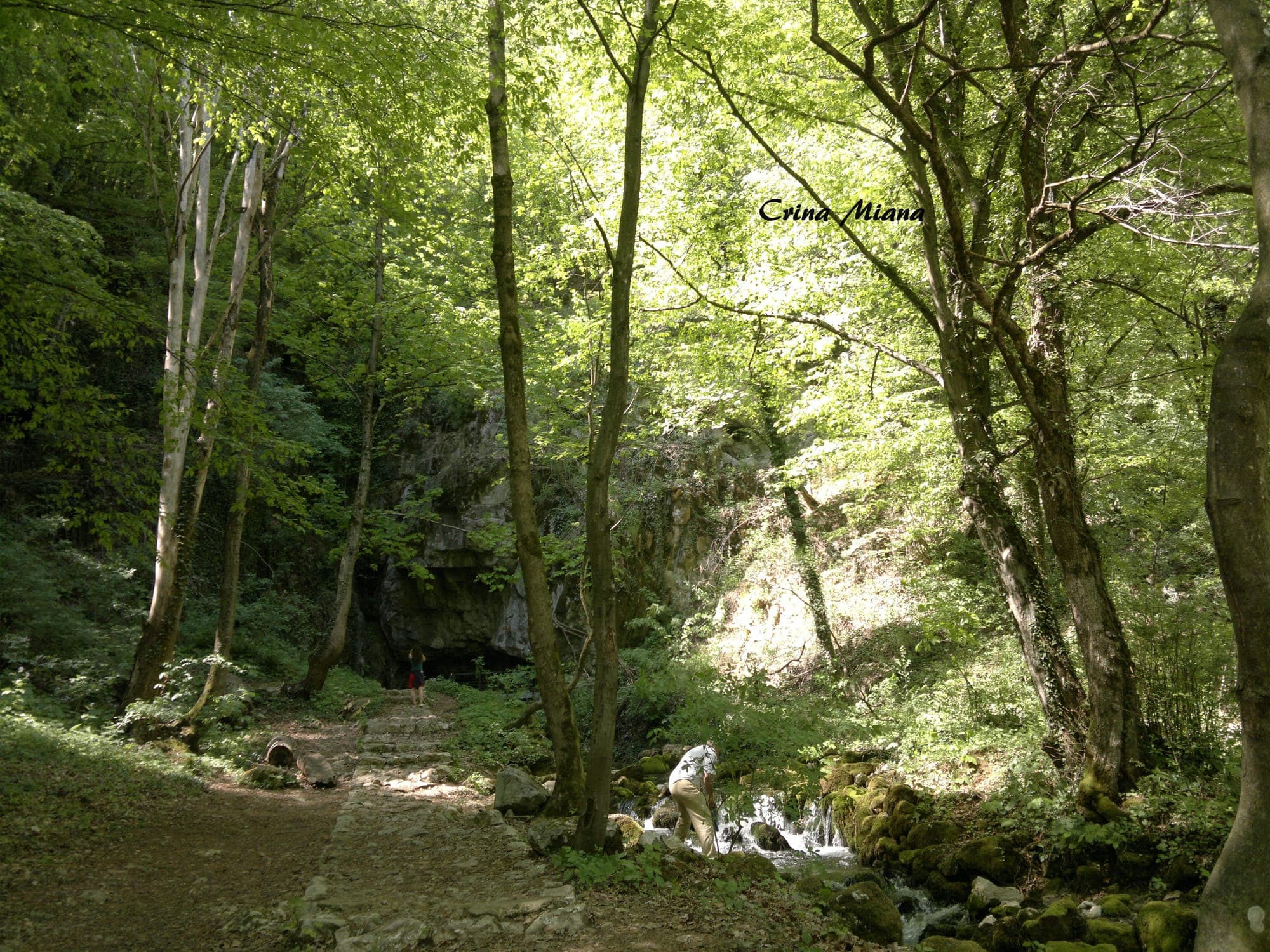
The Apuseni have the largest share of the visitable caves on the site, on both slopes of the Bihor Mountains. On the Bihor side are Bears' Cave at Chișcău, the most visited cave in Romania, with the bones of about 140 cave bears left in place, Meziad Cave, one of the oldest show caves in the country, with a 16 m entrance, the Crystal Cave of the Farcu Mine, a geode lined with calcite crystals, and, in the Crișul Repede Gorge, Vadu Crișului Cave and Unguru Mare Cave, the latter temporarily closed. On the Padiș Plateau are Cetățile Ponorului, with sinkholes more than 200 m deep, Cetatea Rădesei Cave, a tunnel you walk through, in the water, and Focul Viu Ice Cave, seen from the gate. Wind Cave (Peștera Vântului), the longest known cave in Romania, can be visited only on cave tourism trips.
On the Alba side, near Gârda de Sus, are Scărișoara Ice Cave, Poarta lui Ionele Cave, with a 22 m entrance and a stream flowing through it, Vârtop Cave and the huge entrance of Coiba Mare Cave; in the Trascău Mountains, Huda lui Papară Cave, with an underground river, is done only in neoprene. The order to link them in, how many days you need and the distances between them are in the guide to the caves of the Apuseni.
Top 100 Top 100

 Top 100
Caves in the Bucegi, along the Rucăr–Bran corridor and near Brașov
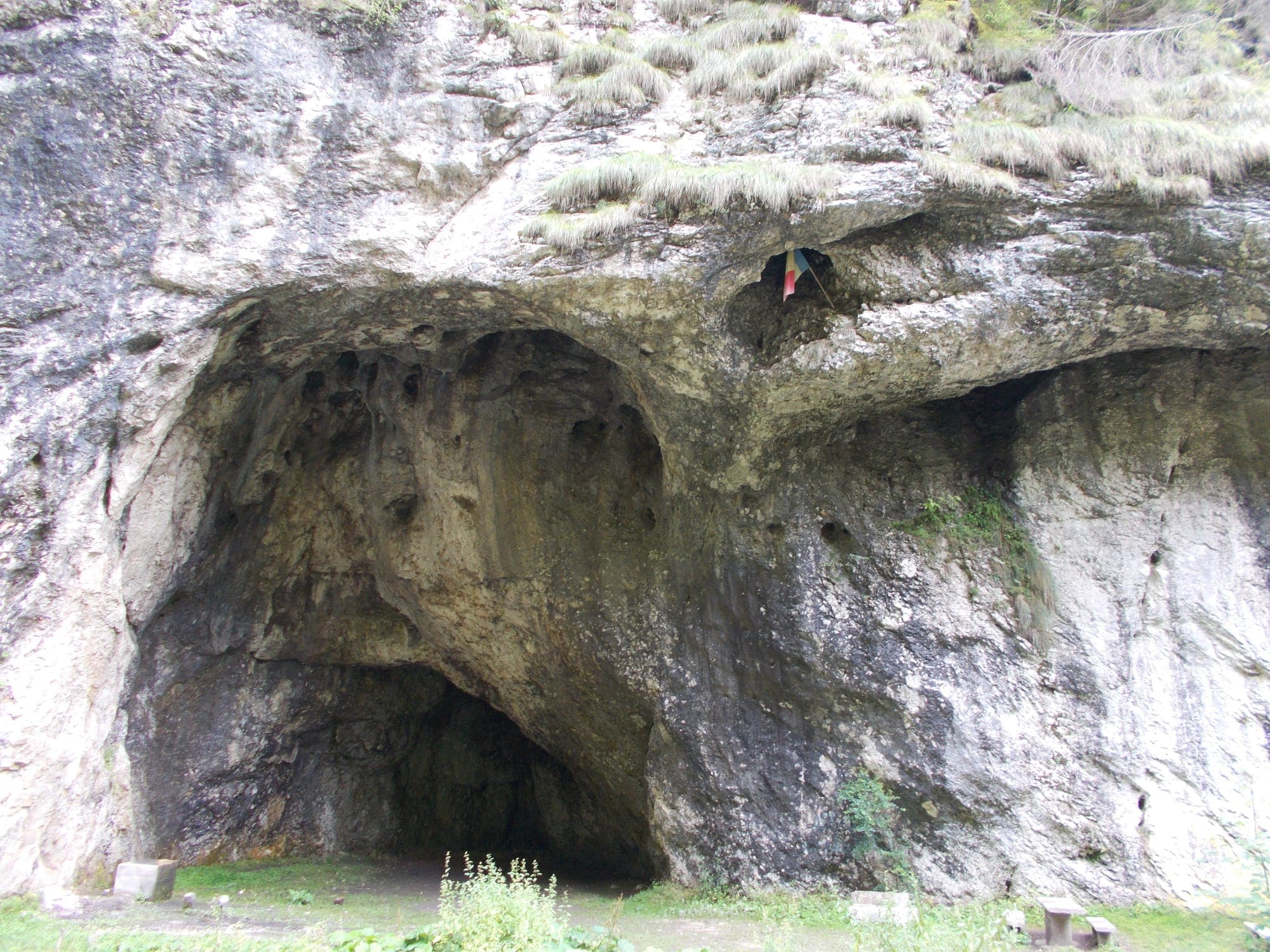
Ialomița Cave is cut into the wall of the Ialomița Gorge, at 1,660 m, in the heart of the Bucegi Mountains, and has a monastery built right against its mouth. It is also called Peștera Ialomicioarei or Peștera Schitului. The 480 m of lit galleries, up to the Sala Urșilor (Bears' Hall) and “La Altar”, are walked without a compulsory guide, on many metal stairs; inside it is only 5–6 °C. From Hotel Peștera it is about a kilometre downhill on foot.
On the Rucăr–Bran corridor, in Piatra Craiului National Park, Dâmbovicioara Cave is a dry, easy gallery, with about 250 m developed and no narrow passages, which you see in half an hour. Near Râșnov, on the slope of Postăvarul, Valea Cetății Cave has a hall more than 20 m high where concerts are sometimes held, with guided entries every 30 minutes. Also near Râșnov, Râșnoavei Cave is wild, about 390 m with tight passages, only with a guide or caver. In the village of Peștera in Moieciu, the 162 m Bat Cave at Moieciu can be visited freely, with a torch and boots, but not in winter, when the bats hibernate.
 Top 100


Caves in Oltenia: Gorj and Vâlcea
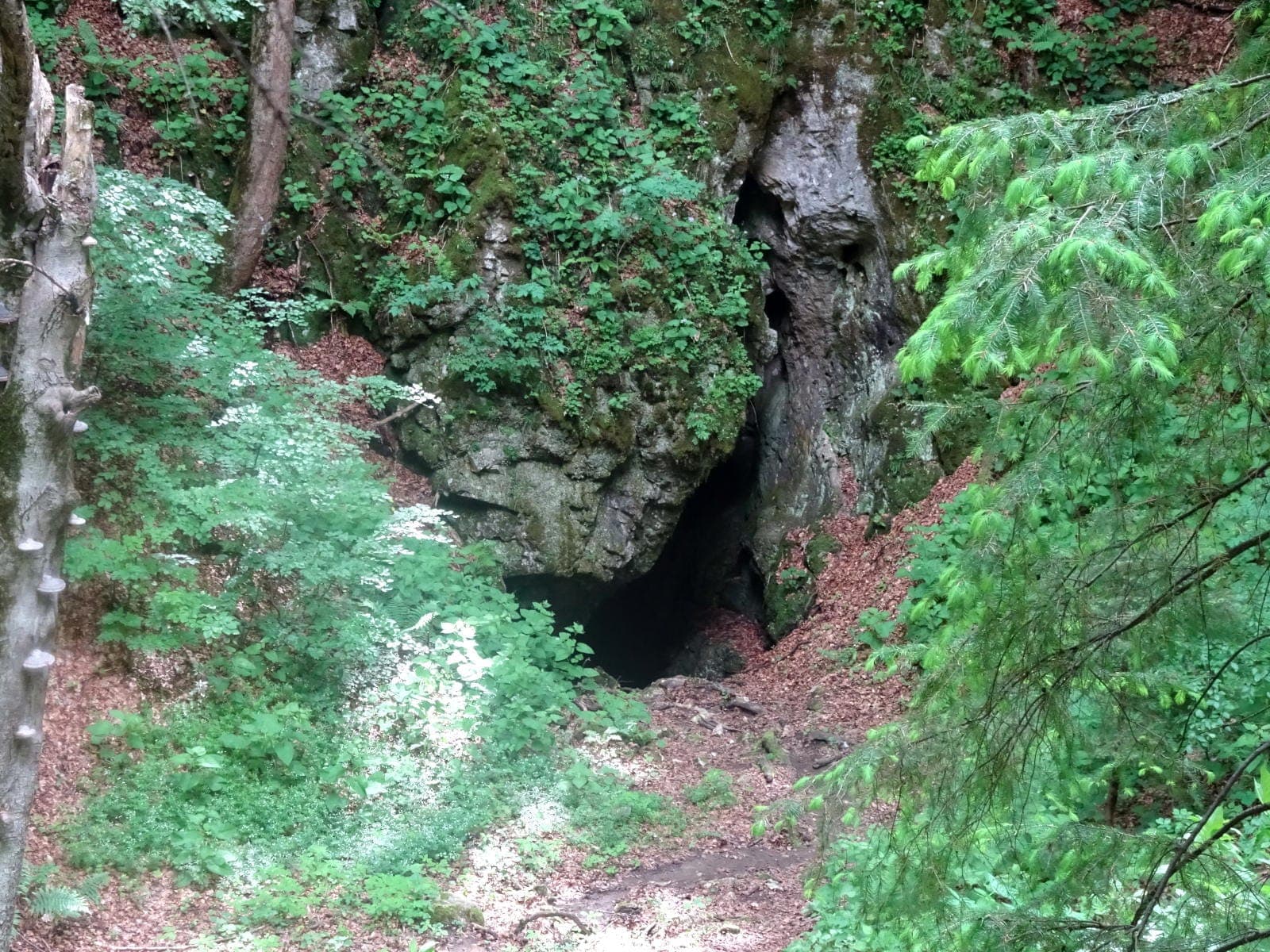
Gorj and Vâlcea have three developed caves, at the foot of the Parâng and Căpățâna mountains. Women's Cave, at Baia de Fier, in the Galbenul Gorge, is considered the first electrified cave in Romania: 860 m of galleries on four levels, with cave bear bones and some of the oldest remains of modern humans in Europe. The tour leaves every hour and in places goes through passages one metre high. Searches for “Peștera de la Baia de Fier” or “Peștera Muierii” lead to the same place.
Polovragi Cave, carved by the Olteț in the Olteț Gorge, is more than 10 km long, of which 800 m can be visited with a guide; local legends link it to Zalmoxis, and a kilometre away is Polovragi Monastery. The floor is unpaved, with puddles and mud, and is not suitable for pushchairs. In Vâlcea, in the Bistrița Gorge, the Bat Cave at Bistrița (Vâlcea) has two churches built inside it and is visited with a guide from Bistrița Monastery (Vâlcea). Cloșani Cave, also in Gorj, is an underground laboratory and cannot be visited.
 Top 100

Caves in Mehedinți and the Danube Gorge
God's Bridge, at Ponoarele, in the Mehedinți Plateau Geopark, is the largest natural bridge in Romania: a 30 m limestone arch, left from the collapsed roof of a cave, with the road running over it. The bridge and the path beneath it are free to visit; the Ponoarele cave below is not developed and is often flooded in spring.
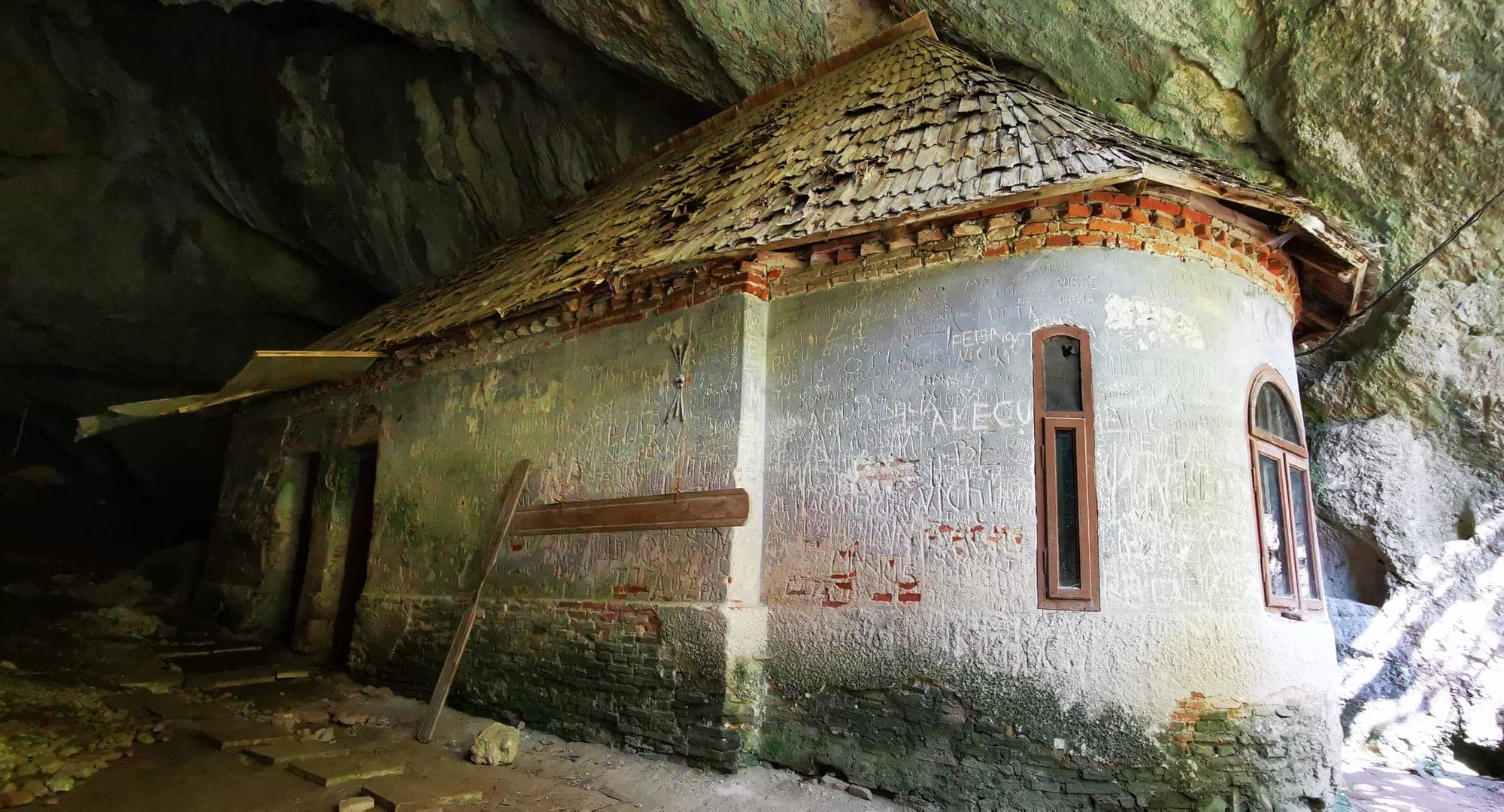
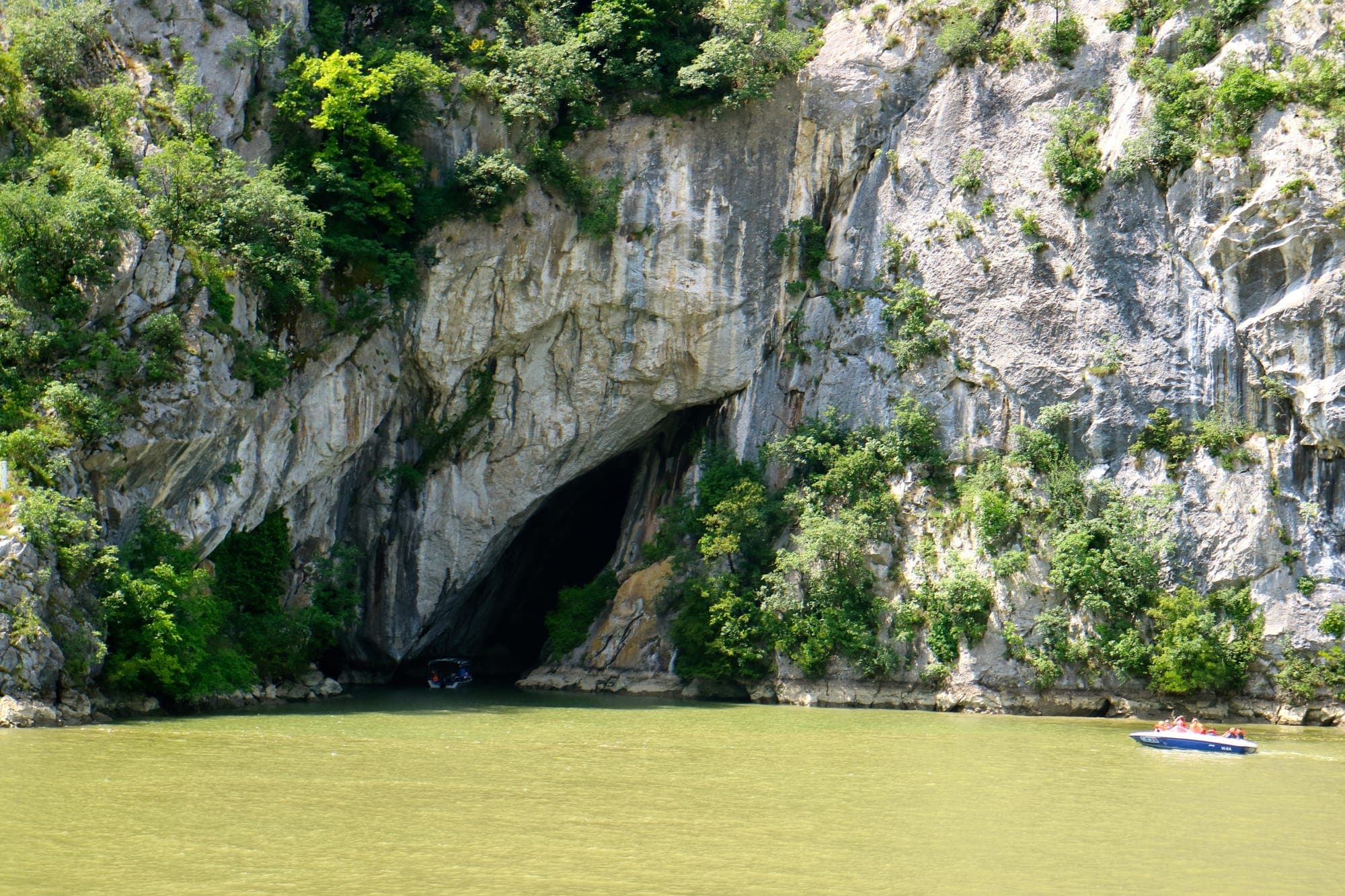
In the Danube Gorge, at Dubova, there are two caves you see in different ways. Ponicova Cave, the largest in the gorge, with more than 1.6 km of galleries through Ciucaru Mare, is entered from the Ponicova Gorge, next to the DN 57, or from the Danube, by boat; it is wild and calls for boots, a helmet and a torch, and the gallery floods when the river is high. Veterani Cave is a wide grotto above the water, in the Great Cauldrons (Cazanele Mari), with fortification walls from the Romans to the Austrians, which you reach only by boat from Dubova or Eșelnița, mostly between May and October. What else to see in the gorge is on the Danube Gorges (Cazanele Dunării) page. Topolnița Cave, one of the longest in the country, has no tourist route; you only see its Gura Prosacului entrance, from a path.
 Top 100
Caves in the Banat: Caraș-Severin and Timiș
Comarnic Cave, in Semenic – Cheile Carașului National Park, is a wild, unlit cave with more than 6 km of galleries on three levels, and the tour of about two hours covers 1,750 m, with no electric lighting, with a helmet and head torch provided by the park and with its rangers. It is open from April to October, with weekend tours at 10:30, 13:00 and 15:30, for groups of at least five people.
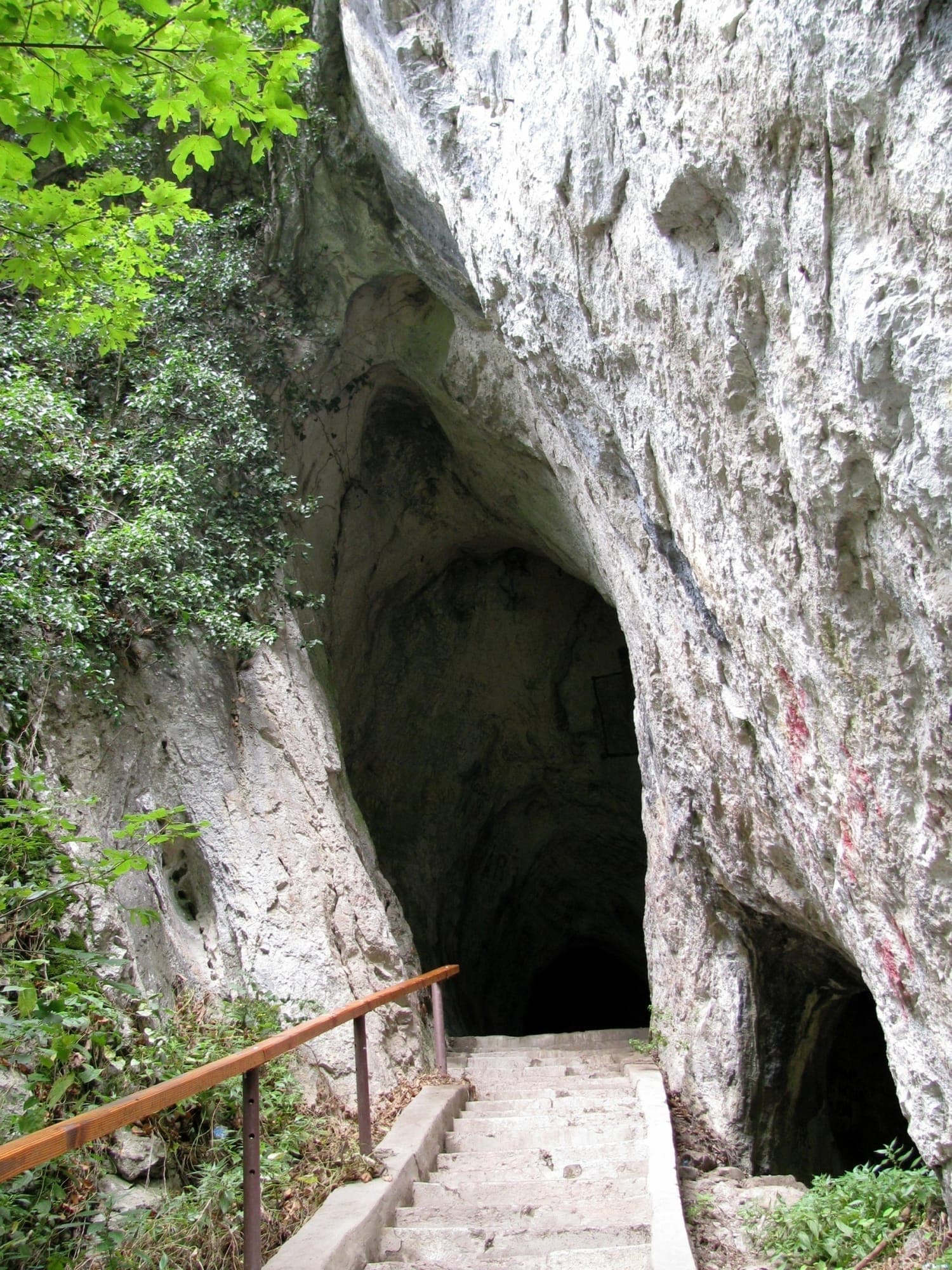
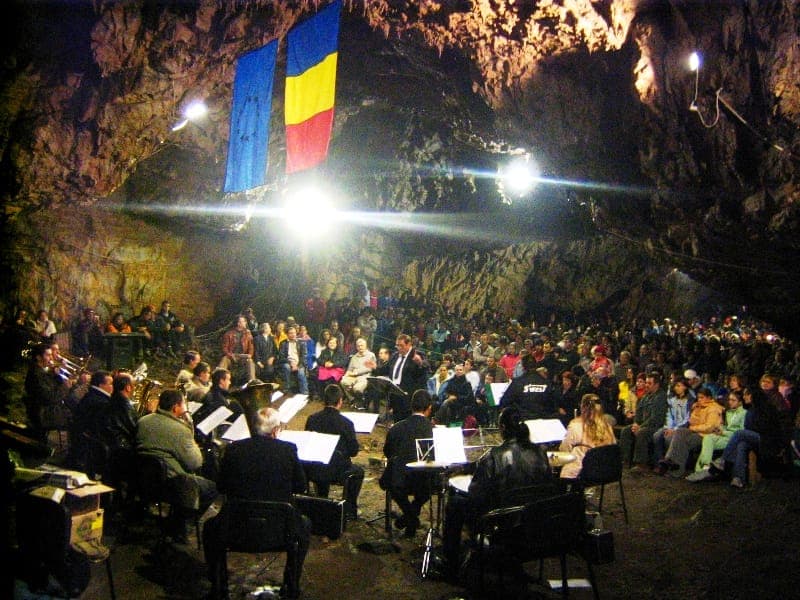
At Băile Herculane, behind the Hotel Roman, a five-minute climb up concrete steps leads to Thieves' Cave (Peștera Hoților), a 143 m shelter with 19th-century signatures on the walls and traces of habitation from the Palaeolithic to the Roman period. In Timiș, in the Poiana Ruscă Mountains, Românești Cave has 1,450 m of galleries and a hall with good acoustics where the Speotimiș association has held concerts since 1984, usually in autumn; the cave is undeveloped and has no opening hours. Peștera cu Oase (Cave with Bones), near Anina, with some of the oldest modern human fossils in Europe, cannot be visited.

Caves in Hunedoara: Bolii Cave and the Hațeg Country
Bolii Cave, north of Petroșani, is a through cave: a mountain stream runs through it, and the gallery of about 466 m is walked end to end on walkways, from one 20 m entrance to the other, without a compulsory guide. Above it is the Bănița Dacian Fortress. The gallery is wide, with no low passages, and the ticket is about 10 lei for an adult; in summer it is open daily, otherwise usually only at weekends, so call ahead. Concerts are sometimes held in the cave.
The other two Hunedoara caves on the site are reserves. Cioclovina Cave, in the Șureanu Mountains, where the “Cioclovina 1” skull was found, is explored only by authorised cavers, and Zeicu Cave, in the Retezat, is a vertical cave where tourist activities are forbidden.

Caves in Dobruja: the cave churches and Gura Dobrogei
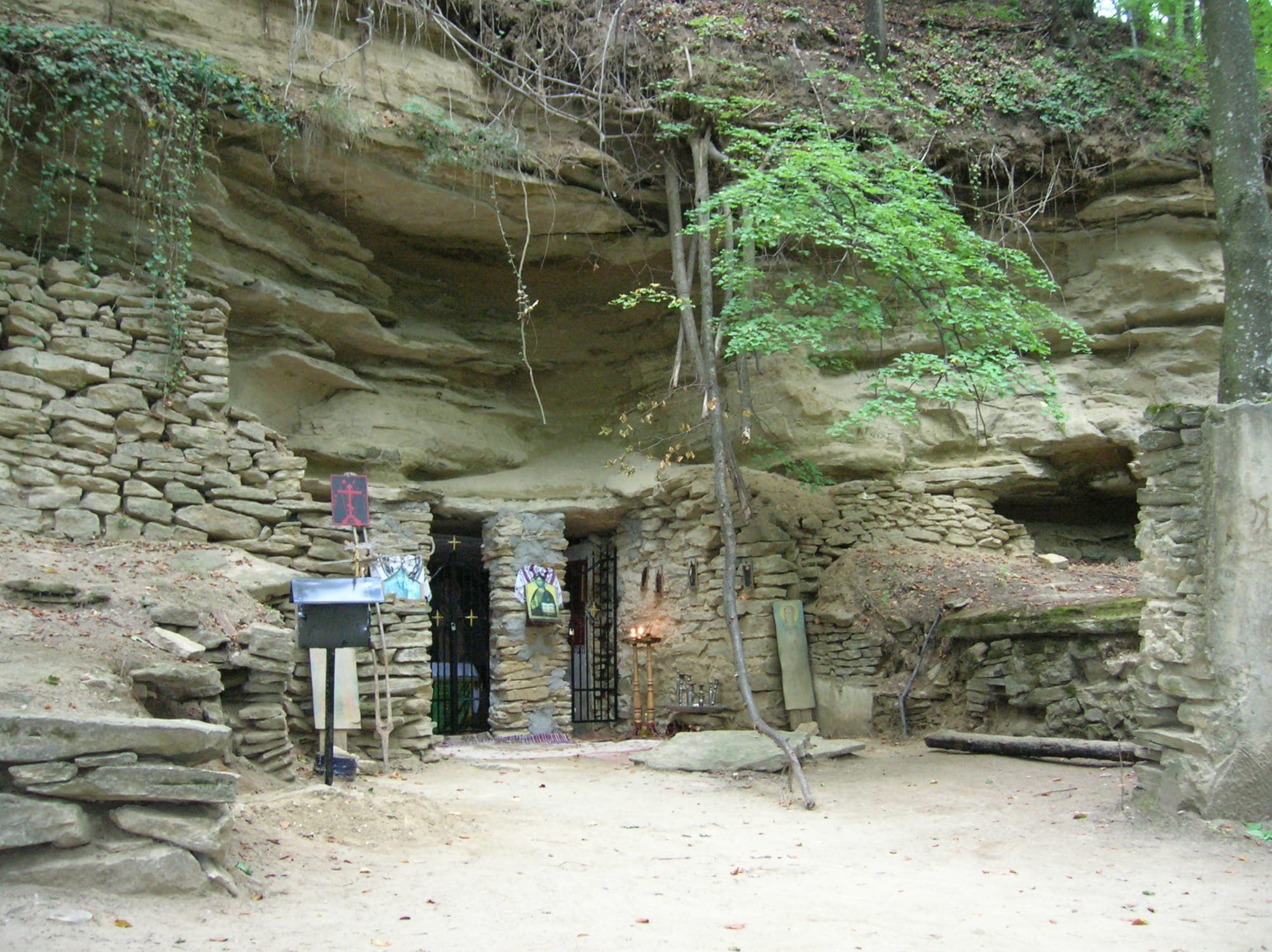
The caves of Dobruja are small and are visited differently from mountain caves: two are places of prayer, one is a bat reserve. St Andrew's Cave, in the forest near Ion Corvin, is fitted out as a church, and tradition says the Apostle Andrew lived there; a monastery has grown up around it, with a large pilgrimage on 30 November. St John Cassian's Cave is in the limestone face of Dealul Casian, above the Casimcea valley, and you climb to it on an 8–10 m metal ladder.
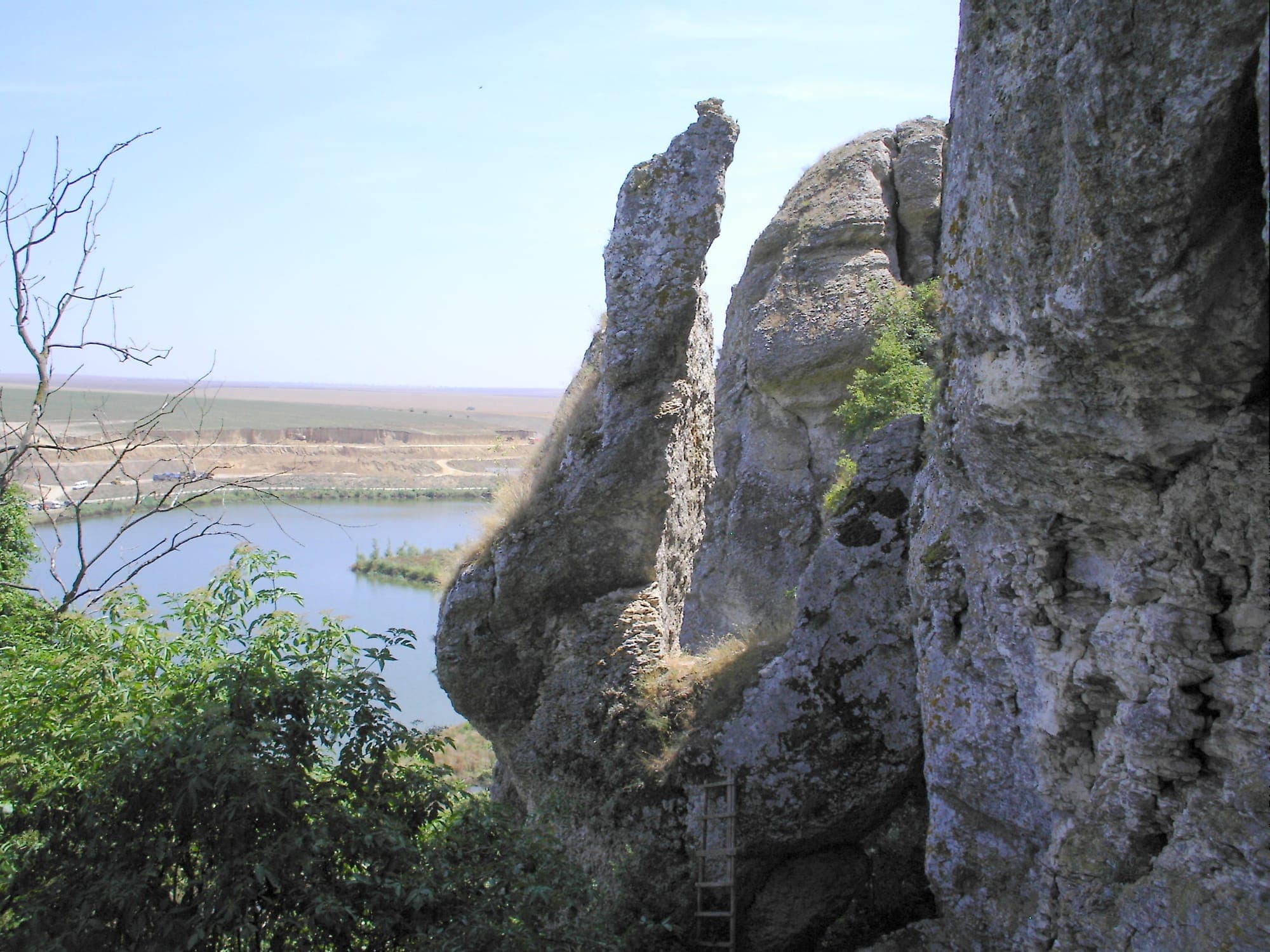
Gura Dobrogei Cave, near Târgușor, also called Peștera Liliecilor (Bat Cave), has three entrances, more than 480 m of galleries and colonies of protected bats. It is not developed and has no guide on site: you go in with a head torch, in the warm season. On the coast, Limanu Cave has no officially organised access, and Movile Cave, near Mangalia, is permanently closed; the spot above it can be seen in the Mlaștina Hergheliei Nature Reserve.

Other caves: Harghita, Covasna, Neamț and Botoșani
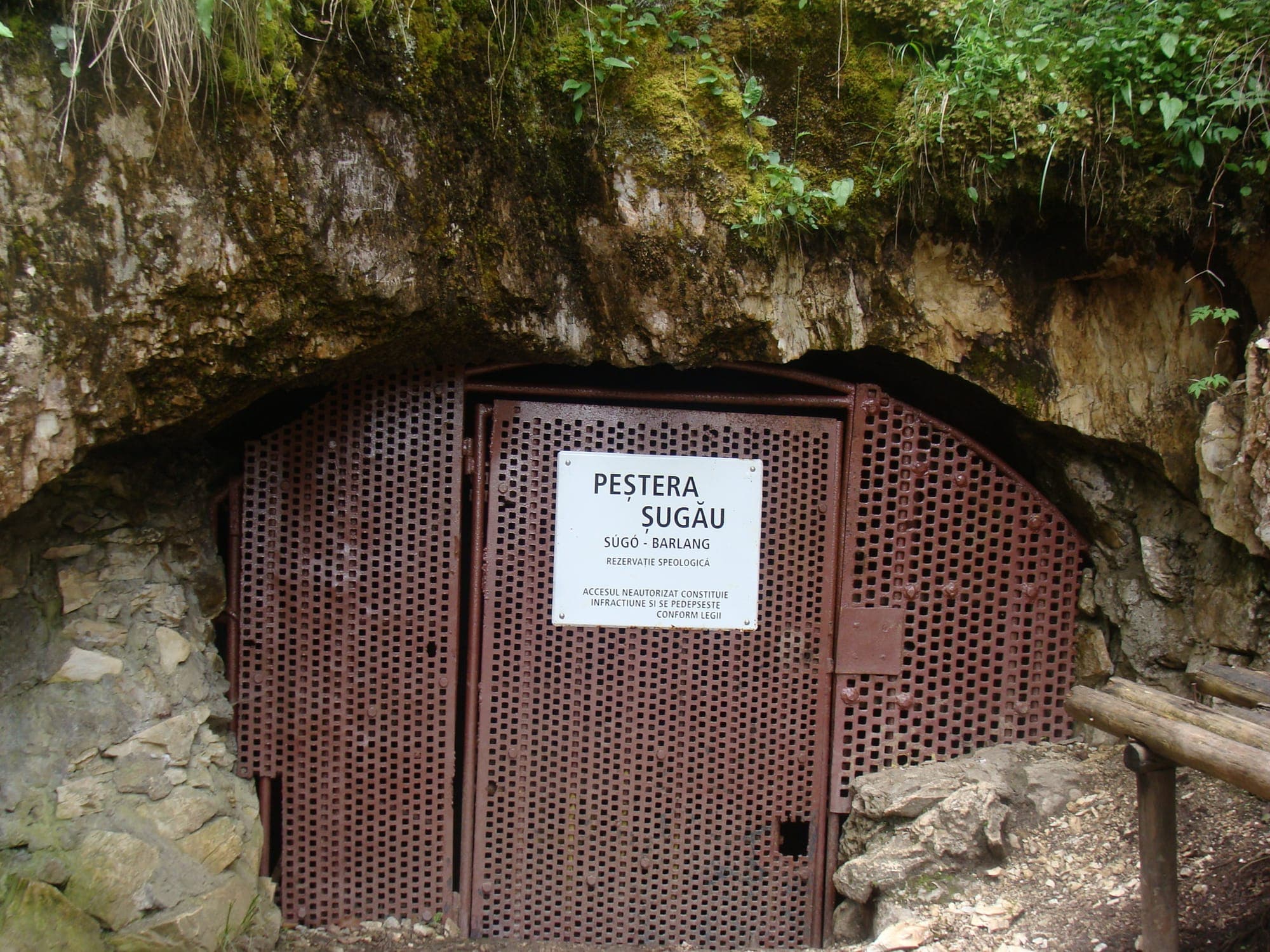
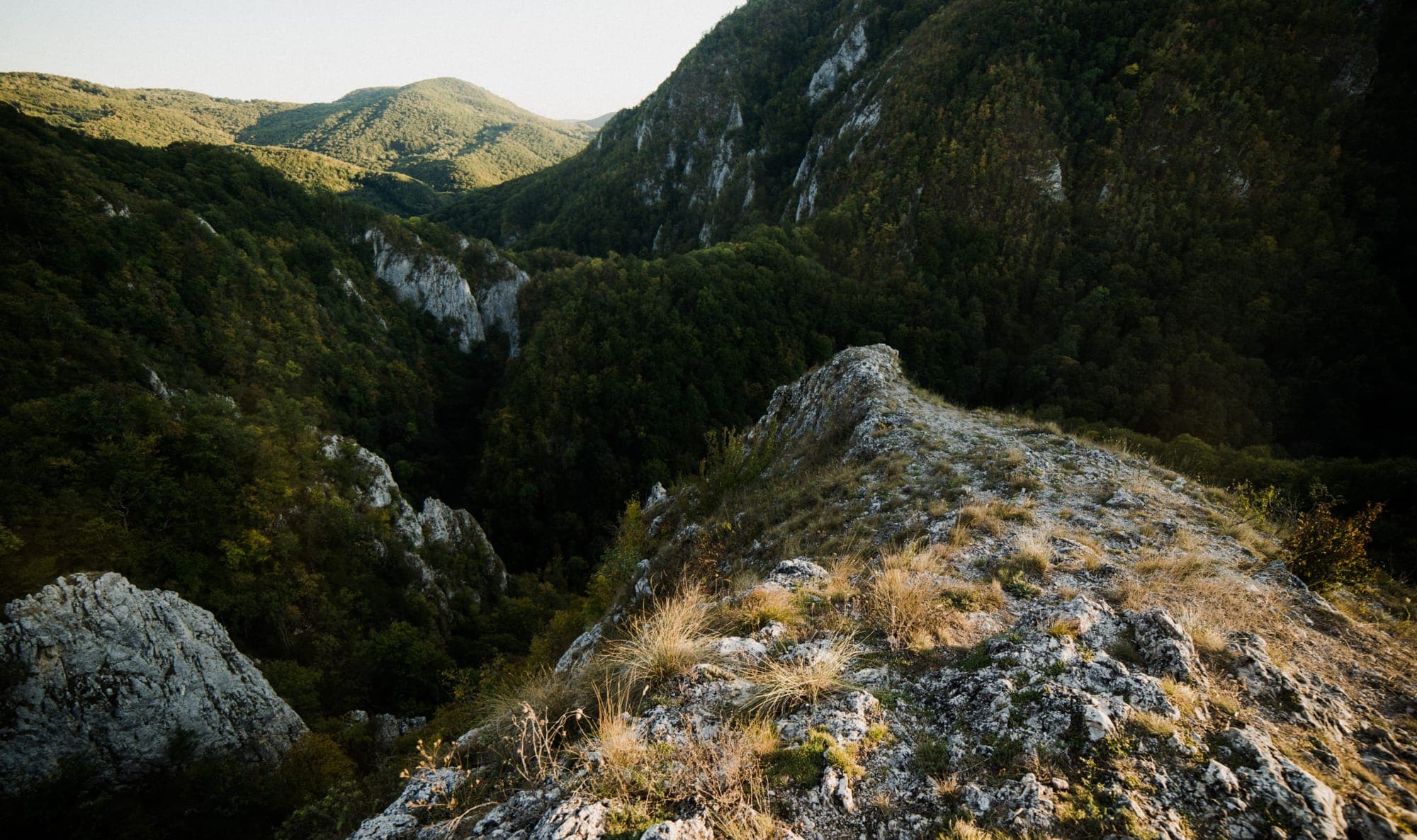
In the Giurgeu Mountains, near Suseni, Șugău Cave is a speleological reserve with more than 1,000 m of galleries on four levels; it is visited with a guide, on a 300 m route lit only by the torches the operator hands out, among stalactites and aragonite crystals. In summer, in July and August, tours leave every hour, Tuesday to Sunday; the rest of the year, only at weekends, by appointment. In the Vârghiș Gorge, a gorge of about 3 km with more than a hundred caves, the Orbán Balázs Cave can be visited with a guide between May and October, and its entrance hall is open all year. At Borsec, the Ice Cave in the Scaunul Rotund reserve is 2–3 km from the resort park, on a footpath, with free access.
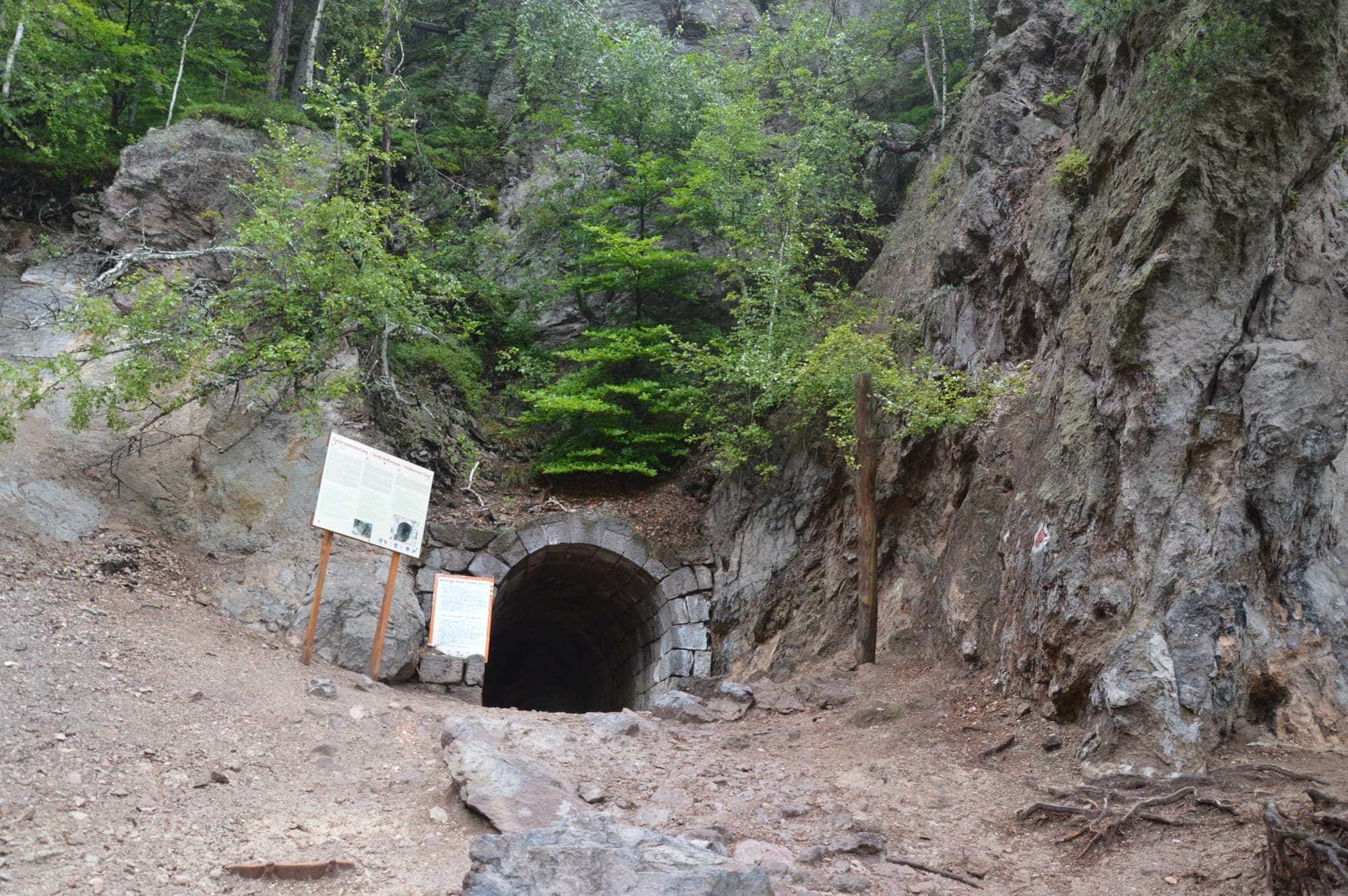
In Covasna, at Turia, Puturoasă Cave (Smelly Cave of Torja) is a 14 m former sulphur mine gallery from which post-volcanic gas rises; you do not go past the grille and you do not bend down, because the gas stays low. In Neamț, at Sihla Monastery and the Cave of St Theodora, the cave is next to the hermitage, at the top of a flight of stone steps. In Botoșani, Onufrie's Cave (Peștera lui Onufrie) is a sandstone shelter in the Vorona forests, about 1.5 km on foot from Sihăstria Voronei Monastery. Izvorul Tăușoarelor Cave, in the Rodna Mountains, is closed to ordinary tourism.

Ice caves: Scărișoara, Focul Viu, Vârtop and Borsec
Four caves on the site have ice: Scărișoara Ice Cave, with a block more than 10,000 years old, which you reach down stairs through a 60 m wide shaft, one of the largest underground glaciers in the world; Focul Viu Ice Cave, near Padiș, seen from the gate; Vârtop Cave, with ice at the entrance and a Neanderthal footprint; and the Ice Cave at Borsec, where the ice stalactites last until late spring. How the ice forms, when there is most of it and how fast it melts are in the guide to ice caves. The ice cave near Predeal, often searched for, is not confirmed by any official source as a visitable cave and has no page on the site.
The most beautiful caves in Romania: top 10
The ranking is a choice, not a measurement: it weighs what you see along the route, how easy the cave is to reach and how different the caves are from one another, so that the list is not ten identical galleries.
- Bears' Cave, for the formations in the Emil Racoviță Gallery and the cave bear skeletons left in place.
- Scărișoara Ice Cave, for the descent through the shaft down to the ice block.
- Cetățile Ponorului, for the entrance more than 70 m high and the sinkholes seen from above, from the circuit.
- Meziad Cave, for the 16 m entrance and the wide halls on two levels.
- Crystal Cave of the Farcu Mine, for the walls covered in calcite crystals.
- Women's Cave, for the four levels and the bear bones.
- Ialomița Cave, for the entrance in the wall of the Ialomița Gorge and the monastery at its mouth.
- Poarta lui Ionele Cave, for the 22 m entrance and the tufa cascades at the entrance.
- Comarnic Cave, for the 1,750 m through a wild cave, by the light of a head torch.
- God's Bridge, for the 30 m arch left from the roof of a cave.
The records that can be measured, the largest, the longest and the deepest cave, are in the guide to the largest cave in Romania.
Developed or wild caves: which to choose
Developed. They have electric lighting, walkways or stairs, a ticket office and opening hours; most can be seen only on a guided tour of 30–60 minutes. For them, a jacket and shoes with a good grip are enough. There are 13: Bears' Cave, Scărișoara Ice Cave, Meziad Cave, Crystal Cave of the Farcu Mine, Vadu Crișului Cave, Poarta lui Ionele Cave, Ialomița Cave, Dâmbovicioara Cave, Valea Cetății Cave, Women's Cave, Polovragi Cave, Bat Cave at Bistrița (Vâlcea) and Bolii Cave.
Wild, with a guide. They have no lighting, and the floor is rock, clay or water. The guide, ranger or operator usually provides the helmet and torch, and some set a minimum age: at Vârtop, children under 6 are not allowed in. This group includes Comarnic Cave, Șugău Cave, Vârtop Cave, Râșnoavei Cave, Wind Cave (Peștera Vântului) and, in neoprene, Huda lui Papară Cave.
Wild, on your own. Cetatea Rădesei Cave, the Bat Cave at Moieciu, Gura Dobrogei Cave and Ponicova Cave have no gate and no guide at the entrance. You go in with a head torch and a spare one, in boots or hiking shoes, and only when the water is low; after heavy rain, some of them flood. In caves that are reserves, entering without a permit is forbidden.
Caves to visit with children
For young children, pick a developed cave with a short tour and no low passages. Dâmbovicioara Cave has no narrow passages and can be seen in about 30 minutes. The Crystal Cave of the Farcu Mine has a tour of about 25 minutes, and Bolii Cave is a wide gallery with no low passages. Bears' Cave has steps and walkways and the same ticket for children as for adults; Valea Cetății Cave has a reduced ticket for children aged 3–14 and a path through the forest up to the entrance.
Note a few limits published by the operators: at Vârtop Cave, children under 6 are not allowed in, at Polovragi Cave the route is not suitable for pushchairs, at Women's Cave you walk bent over in a few places, and at Scărișoara Ice Cave the stairs in the shaft are steep. At Puturoasă Cave (Smelly Cave of Torja), young children do not go in alone, because of the gas near the ground. No operator publishes whether pushchairs can go along the route; if you need one, call ahead. For a baby carrier, check whether the route has low passages.
Caves with churches and cave monasteries
Five caves on the site are also places of prayer. St Andrew's Cave, in Dobruja, is a church inside a cave, with a pilgrimage on 30 November, a day best avoided if you are only coming to see it. St John Cassian's Cave is up a metal ladder above the Casimcea valley, and on its feast day the service is held at midnight in the cave. The Bat Cave at Bistrița (Vâlcea) has two churches inside: Ovidenia, from the end of the 15th century, and the Holy Archangels, from 1633. At Sihla Monastery and the Cave of St Theodora, the cave is next to the hermitage in the Neamț mountains, and at Ialomița Cave the monastery is built against the mouth of the cave. Onufrie's Cave (Peștera lui Onufrie), in the Vorona forests, is where the Venerable Onufrie lived as a hermit, between 1764 and 1789. Modest dress is expected everywhere, with shoulders and knees covered.

Which Bat Cave? The caves with the same name
“Peștera Liliecilor” (Bat Cave) is the name of at least eight caves in Romania, and searches mix them up. Three have a page on the site:
- the Bat Cave at Bistrița (Vâlcea), in the Bistrița Gorge, near Bistrița Monastery, also called the Cave of St Gregory the Decapolite, with two churches inside; it is the one searched for as “Peștera Liliecilor Vâlcea” or “Cheile Bistriței”;
- the Bat Cave at Moieciu, in the village of Peștera, in Brașov County, 162 m, with free access outside winter;
- Gura Dobrogei Cave, in Constanța County, which is also called Peștera Liliecilor.
Searches also mention bat caves at Rarău, Moneasa, Carașova, Ampoița, Râșnov and in the Turda Gorge, which have no pages on the site. Bats also live in caves with other names: Meziad Cave has one of the largest colonies in the country.
Caves you cannot visit
Some of the most searched caves have no tourist route: Movile Cave, Topolnița Cave, Coliboaia Cave, Peștera cu Oase (Cave with Bones), Cloșani Cave, Piatra Altarului Cave, Izvorul Tăușoarelor Cave, Cioclovina Cave, Zeicu Cave and Limanu Cave. They are scientific reserves, archaeological sites or caves with no organised access; at a few of them you can still see the entrance or the spot above. Wind Cave (Peștera Vântului), often thought to be closed, can be visited on cave tourism trips. Why each one is closed and what you can see instead is in the guide to the caves you cannot visit.
The nearest cave to your city
In short: from Bucharest, the easiest to reach are Ialomița Cave and Dâmbovicioara Cave; from Brașov, Valea Cetății Cave; from Oradea, the caves of Bihor, among them Vadu Crișului Cave and Meziad Cave; from Timișoara, Românești Cave; from Constanța, the caves of Dobruja. Distances and driving times, city by city, including for Cluj-Napoca and Sibiu, are in the guide to the nearest cave.
Practical: temperature in the cave, what to bring, winter and pets
Temperature. In caves the temperature stays almost the same all year. Most developed caves are between 8 and 12 °C: 10 °C at Bears' Cave and Women's Cave, 9 °C at Polovragi, 9–12 °C at Meziad and Valea Cetății, 10–12 °C at Dâmbovicioara. It is colder at Ialomița Cave, 5–6 °C, at Vârtop, about 4 °C, and at Scărișoara, around 0 °C. Humidity is high everywhere.
What to bring. A jacket or a warm layer even in summer, and shoes with soles that do not slip, because the steps and walkways are wet. For wild caves, a head torch and a spare one, clothes that can get dirty and boots or hiking shoes; at Vârtop your own torch is compulsory. Bring cash: at Bears' Cave, Scărișoara and Unguru Mare, card payment does not always work or is not available.
How long it takes. A guided tour of a developed cave lasts 25–60 minutes, plus the walk from the car park, about 1.2 km at Meziad and about 30 minutes at Vadu Crișului. Comarnic takes about two hours, and Huda lui Papară 3–7 hours, depending on the tour.
Winter. Bears' Cave, Meziad, Farcu, Ialomița, Women's Cave, Polovragi and Valea Cetății stay open daily, all year, most of them with shorter hours. Comarnic, Unguru Mare and the Bat Cave at Moieciu close in winter for the hibernating bats, and the circuits at Cetățile Ponorului and Focul Viu are forbidden in the cold season. The road to Ialomița is difficult in winter, and at Scărișoara the stairs are icy.
Pets. They are not allowed into developed caves: at Bears' Cave, Meziad, Farcu, Vadu Crișului and Valea Cetății the rule is published. At Meziad and Farcu they can wait at the entrance.
Photos and bats. Flash and phone torches are forbidden in many caves, so as not to disturb the bats. Do not touch the stalactites: how they form and why they grow so slowly is explained in the guide to stalactites and stalagmites. All the caves are on the site map, filtered to the Caves category.
Frequently asked questions
- How many caves are there in Romania?
- Romania has more than 12,000 known caves. Only a few dozen can be visited: peplaiuri.ro lists 48 caves, of which 37 can be visited at the end of October 2026, 13 of them developed and lit.
- What is the most beautiful cave in Romania?
- There is no official ranking. The most visited and best known are Bears' Cave, in Bihor, and Scărișoara Ice Cave, in Alba; next come Meziad, Women's Cave, Ialomița and the Crystal Cave of the Farcu Mine.
- Which caves can you visit in Romania?
- Developed, with a ticket: Bears' Cave, Scărișoara, Meziad, Farcu, Vadu Crișului, Poarta lui Ionele, Ialomița, Dâmbovicioara, Valea Cetății, Women's Cave, Polovragi, the Bat Cave at Bistrița (Vâlcea) and Bolii. Wild, with a guide: Comarnic, Șugău, Vârtop, Râșnoavei, Wind Cave (Peștera Vântului) and Huda lui Papară.
- Which caves are closed in 2026?
- At the end of October 2026, Unguru Mare Cave is temporarily closed for refurbishment. Movile, Topolnița, Coliboaia, Peștera cu Oase, Cloșani, Piatra Altarului, Izvorul Tăușoarelor, Cioclovina, Zeicu and Limanu have no tourist route.
- Can you visit caves in Romania in winter?
- Yes, many. Bears' Cave, Meziad, Farcu, Ialomița, Women's Cave, Polovragi and Valea Cetății are open daily all year, most with shorter hours. Comarnic, Unguru Mare and the Bat Cave at Moieciu close in winter for the bats.
- What is the temperature inside a cave?
- Most developed caves are between 8 and 12 °C all year, for example 10 °C at Bears' Cave. Ialomița Cave is at 5–6 °C, and Scărișoara Ice Cave at around 0 °C.
- What should you bring to a cave?
- A jacket even in summer, shoes with soles that do not slip and cash for the ticket. For wild caves, a head torch with a spare one, boots or hiking shoes and clothes that can get dirty.
- Which cave is good to visit with young children?
- The developed ones, with a short tour and no low passages: Dâmbovicioara Cave (about 30 minutes), the Crystal Cave of the Farcu Mine (about 25 minutes), Bolii Cave and Bears' Cave. At Vârtop, children under 6 are not allowed in.
- What is the nearest cave to Bucharest?
- Ialomița Cave, in the Bucegi Mountains, and Dâmbovicioara Cave, on the Rucăr–Bran corridor, are the easiest to reach from Bucharest. Driving distances are in the guide to the nearest cave.
- Where can you see a map of the caves in Romania?
- The site map, filtered to the Caves category, shows all 47 caves and karst sites in the category, each with its own page, with opening hours, price and directions.
Sources
- Ponta & Onac (eds.), Cave and Karst Systems of Romania, Springer, 2019 (more than 12,000 caves)
- Bears' Cave: official website (opening hours, prices)
- Apuseni Nature Park: developed show caves
- Apuseni Nature Park: Scărișoara Ice Cave
- Apuseni Nature Park: Vârtop Ice Cave
- Meziad Cave: official website
- Pădurea Craiului (CAPDD Bihor): Farcu Cave
- Pădurea Craiului (CAPDD Bihor): Unguru Mare Cave
- Pădurea Craiului (CAPDD Bihor): Wind Cave, cave tourism
- Țării Crișurilor Museum: Vadu Crișului Cave
- Oradea24: the cave at Vadu Crișului has reopened (December 2025)
- Salvaspeo: list of cave tourism caves in Romania (31.01.2026)
- “Curtea Domnească” National Museum Complex: Ialomița Cave
- Valea Cetății Cave: official website
- Women's Cave: official website
- Polovragi Cave: official website
- Bistrița Monastery (Vâlcea)
- Petro Aqua Association: Bolii Cave
- Semenic – Cheile Carașului National Park: Comarnic Cave
- Șugău Cave: official website
- Huda lui Papară: guided tours
- Mehedinți Plateau Geopark
- “Emil Racoviță” Institute of Speleology
- Grădiștea Muncelului–Cioclovina Nature Park
All guides
- Ski slopes in Romania: the ski resorts and ski areas by region, with a map
- When the ski slopes open and where the snow comes first: the ski season in Romania
- Sledging, alpine coasters and tubing in Romania: where to go with a sledge
- The longest ski slope in Romania and the other records: the largest ski area, the highest, the hardest
- The nearest ski slopes to Bucharest, Cluj, Brașov, Sibiu, Iași, Timișoara and Oradea: distances for a day of skiing
- Beginner and kids' ski slopes in Romania: where to learn to ski, ski schools and slope colours
- Ice caves and underground glaciers in Romania: Scărișoara, Focul Viu, Vârtop, Borsec
- Apuseni caves: a 2–3 day route through Bihor and Alba
- The largest cave in Romania and the other records: the longest, the deepest, the oldest show cave
- The nearest cave to Bucharest, Brașov, Cluj, Sibiu, Oradea and Timișoara: distances for a day trip
- Famous caves in Romania you cannot visit: Movile, Topolnița, Vântului, Coliboaia, Peștera cu Oase (and what to see instead)
- Stalactites and stalagmites: what they are, how a cave forms and where to see them in Romania
- The Danube Delta: map, what it is, the villages and what to see
- Danube Delta trip: one, two or three days, where to start and how to get to Sulina and Sfântu Gheorghe
- Things to do in Tulcea: what to see in the city and around it
- Birds and wildlife of the Danube Delta: pelicans, where and when to see them
- Visiting the Danube Delta for the first time: the access permit, mosquitoes and when to go
- Fishing in the Danube Delta: the fishing permit, the 2026 closed season and where you may fish
- Sulina or Sfântu Gheorghe? The beaches of the Danube Delta (and Gura Portiței)
- Deltas near Bucharest: Văcărești, Comana (the Neajlov Delta) and Balta Mică a Brăilei
- The Romanian Black Sea coast: the resorts in order, north to south, with a map
- The best beaches in Romania (and the Blue Flag ones)
- The Black Sea season in Romania: when it opens, how long it lasts and when the water is warmest
- Wild beaches on the Romanian coast: Corbu, Vadu, Tuzla and the south
- Which Romanian seaside resort to choose: for young people, families, quiet, budget
- The Romanian seaside with kids: resorts, shallow beaches and what to do off the beach
- Things to do in Constanța: what to see in the city, on the seafront and nearby
- Jellyfish, sharks and lifeguard flags in the Black Sea
- Salt mines in Romania: the complete guide to the salt mines you can visit
- The largest, the deepest and the oldest salt mine in Romania
- The nearest salt mine to Bucharest, Cluj, Brașov, Sibiu, Iași, Timișoara, Oradea, Constanța and other cities
- Salt mines with children and babies: from what age, which one suits, what to bring
- Turda or Slănic Prahova? Which salt mine to choose
- Visiting a salt mine for the first time: temperature, clothing, how long, lift or bus, dogs
- Salt lakes and salt baths in Romania: where to swim, season and prices
- Salt mine therapy in Romania: what the operators say, how long to stay, which mines have a treatment base