
Famous caves in Romania you cannot visit: Movile, Topolnița, Vântului, Coliboaia, Peștera cu Oase (and what to see instead)

Eight famous caves in Romania cannot be visited as an ordinary tourist: Movile, Topolnița, Coliboaia, Peștera cu Oase, Cloșani, Izvorul Tăușoarelor, Piatra Altarului and Cioclovina. There are three reasons: they are scientific reserves or laboratories, they shelter ecosystems and bat colonies that cannot cope with visitors, or they hide fossil and cave-art sites reached only through sumps and shafts. Wind Cave (Peștera Vântului), often listed among them, can be visited legally, with an accredited speleotourism guide.
Below, for each one: why it is closed, what you can still see from outside, how to get in legally where that is possible, and which cave or open sight on the site is nearest. At the end come the caves with no organised access (Limanu, Zeicului), the temporarily closed one (Unguru Mare) and the common mix-ups. The list of caves you can visit is in the guide to Romania's caves.
In short
- Movile Cave, near Mangalia, is permanently closed to the public: only researchers with permission go in, a few times a year, through a shaft about 18 m deep closed by an airtight gate.
- Topolnița Cave, with more than 20 km of passages, has no show-cave route; entry is only with a permit from the Speleological Heritage Commission, but the Gura Prosacului portal can be seen from a marked trail.
- Wind Cave (Peștera Vântului), the longest known cave in Romania, can be visited all year on speleotourism trips with an accredited guide, booked through the local operators in Șuncuiuș (October 2026).
- The cave drawings in Coliboaia Cave, about 32,000–36,000 years old, lie beyond the sumps of the underground river; the cave will not be opened to the public and has been on Romania's UNESCO tentative list since April 2026.
- At Peștera cu Oase, where fossils of modern humans about 37,000–42,000 years old were found, the only way in runs through a 16 m sump that can be passed only with diving equipment.
- Unguru Mare Cave, at Șuncuiuș, is temporarily closed for refurbishment works announced in 2025, with no reopening date published (September 2026).
Famous caves in Romania you cannot visit: the list at a glance
For each cave, the table answers three questions: why it is closed, what you can see or how to get in legally, and what can be visited nearby. The links to the pages are in the sections below. "Closed" here means no visiting hours for the public; some of these caves still admit cavers and speleotourism groups with a permit.
| Cave | County | Why it is closed | What you can see / how to get in legally | Open alternative |
|---|---|---|---|---|
| Movile | Constanța | sealed chemosynthetic ecosystem, reserve | researchers with permission only; outside, the closed shaft | Mlaștina Hergheliei (~6 km) |
| Topolnița | Mehedinți | protected area, no show-cave route | CPS permit, with guide and gear; the Gura Prosacului portal from the trail | God's Bridge (~34 km), Ponicova |
| Vântului | Bihor | not closed: undeveloped | speleotourism trip with an accredited guide, through local operators | Vadu Crișului (~14 km), a show cave |
| Coliboaia | Bihor | cave drawings beyond sumps, fragile microclimate | specialists only; the Sighiștel Valley on foot | Bears' Cave (~16 km from Sighiștel) |
| Cu Oase | Caraș-Severin | palaeoanthropological site, access through a sump | researchers only | Bigăr Waterfall (~19 km), Comarnic Cave |
| Cloșani | Gorj | laboratory of the "Emil Racoviță" Institute | the institute's approval, for research | God's Bridge (~21 km) |
| Izvorul Tăușoarelor | Bistrița-Năsăud | reserve, colony of ~10,000 bats | CPS-authorised speleotourism, with the custodian | Rodna Mountains National Park |
| Piatra Altarului | Cluj | class A reserve, under lock | scientific research only, park approval + CPS | Bears' Cave, Scărișoara |
| Cioclovina | Hunedoara | scientific reserve, flash-flood risk | park approval + CPS; closed 1 Dec–31 Mar | Bolii Cave |
| Unguru Mare | Bihor | temporarily closed, refurbishment | call Șuncuiuș town hall before going | Vadu Crișului, Wind Cave |
CPS = Speleological Heritage Commission (Comisia Patrimoniului Speologic). Access status from the attraction pages, checked against official sources on 31 October 2026 (Unguru Mare on 28 September 2026); distances from the same pages.
Can you visit Movile Cave? No, and what to see instead near Mangalia
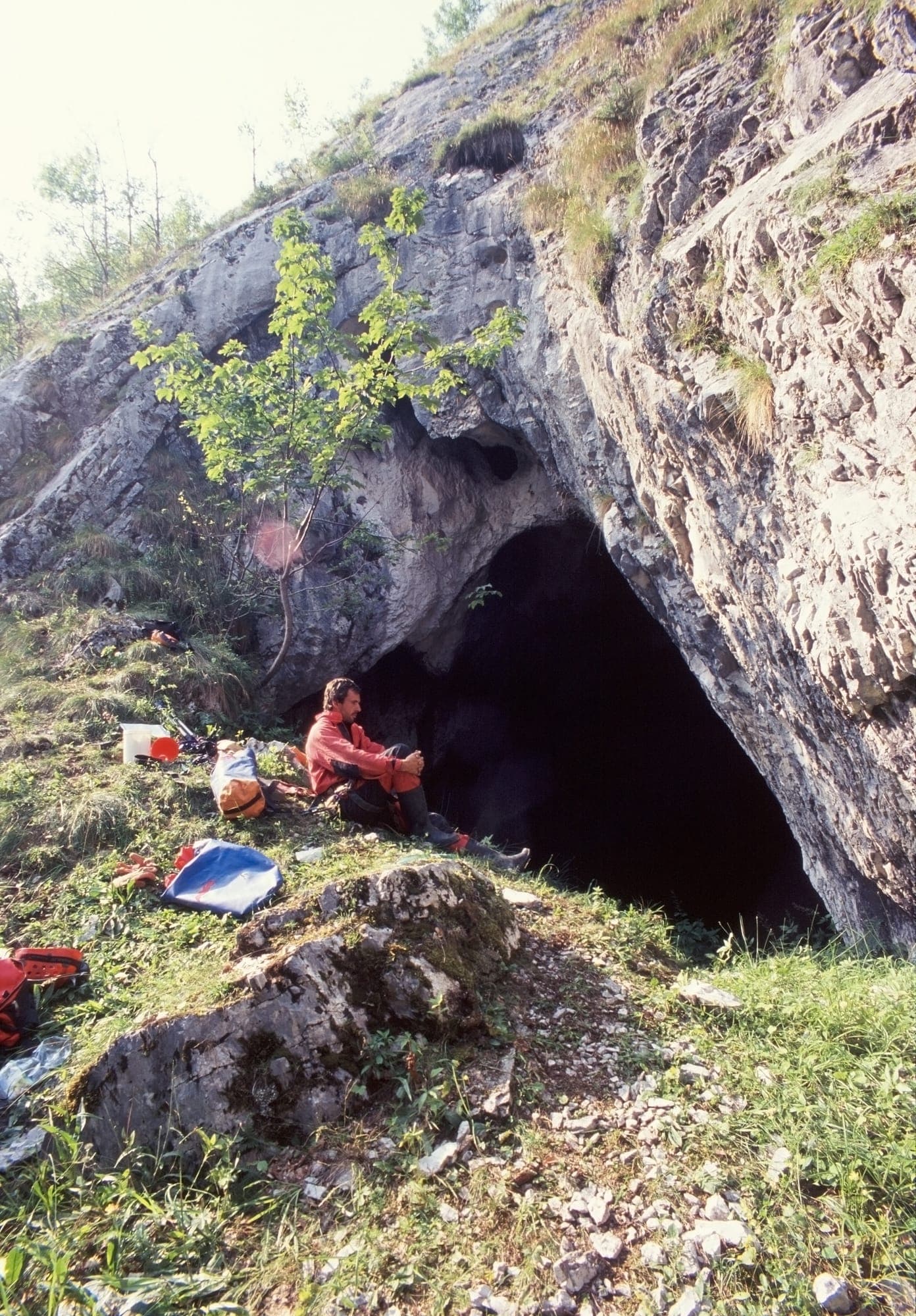
Movile Cave, on the edge of Mangalia, cannot be visited and has no natural entrance: layers of clay and loess have sealed it off from the surface. It was discovered in 1986 at the bottom of a shaft dug for geological surveys, and it was the first chemosynthesis-based underground ecosystem ever discovered. The air holds little oxygen and 1–2% methane, and 37 of the invertebrate species living here exist nowhere else. That is why the shaft, about 18 m deep, is closed by an airtight gate: only researchers with permission go in, a few times a year. On the surface you see only the shaft, in a field.
What to see instead: Mlaștina Hergheliei Nature Reserve, ~6 km away and part of the same Natura 2000 site, has sulphurous springs bubbling with methane, visible from the roadside. Limanu Cave is ~8.5 km away, but it has no organised access either (see below).


Topolnița Cave: visits only with a permit, the portal from the trail
Topolnița Cave, on the Mehedinți Plateau between Marga and Cireșu, has more than 20 km of passages on four levels and is a protected area with no show-cave route. Entry is only with a permit from the Speleological Heritage Commission, issued to caving clubs and to organisers who go with a guide and equipment, in small groups and with a limited number of entries.
What you can see legally: the Gura Prosacului portal, where the Topolnița river disappears under the limestone wall. The trail marked with a red triangle starts from the La Varnițe clearing, by the DJ 607B, and gets there in about an hour, with a few fords; do not walk it when the river is high. The way back on the yellow dot passes the entrance of Peștera Femeii, a sector closed from 1 December to 31 March and from 1 June to 30 July, for the bats.
What to see instead: God's Bridge, ~34 km away, and, on the Danube, Ponicova Cave and Veterani Cave.
 Top 100
Can you visit Wind Cave (Peștera Vântului)? Yes, with a speleotourism guide
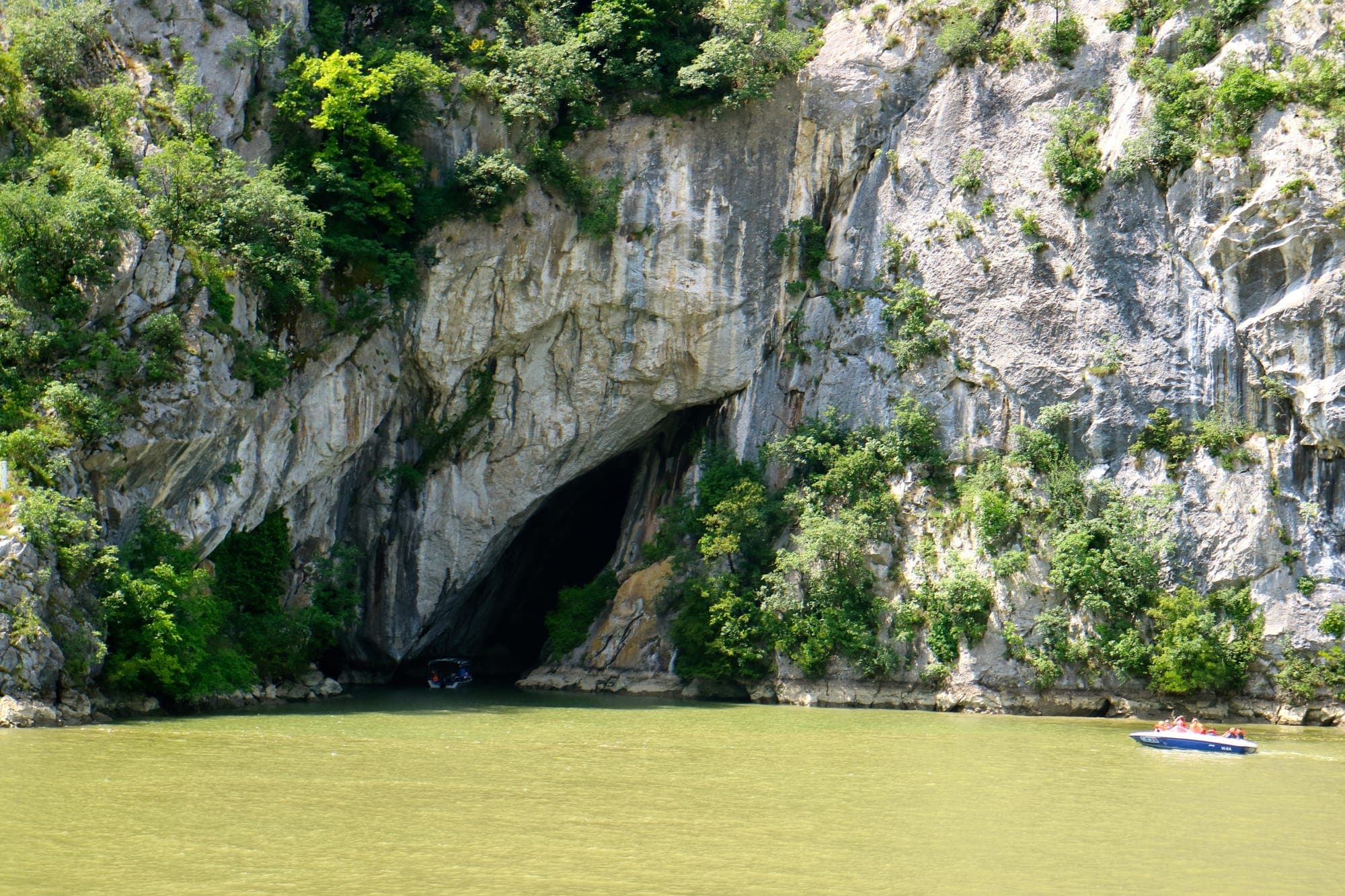
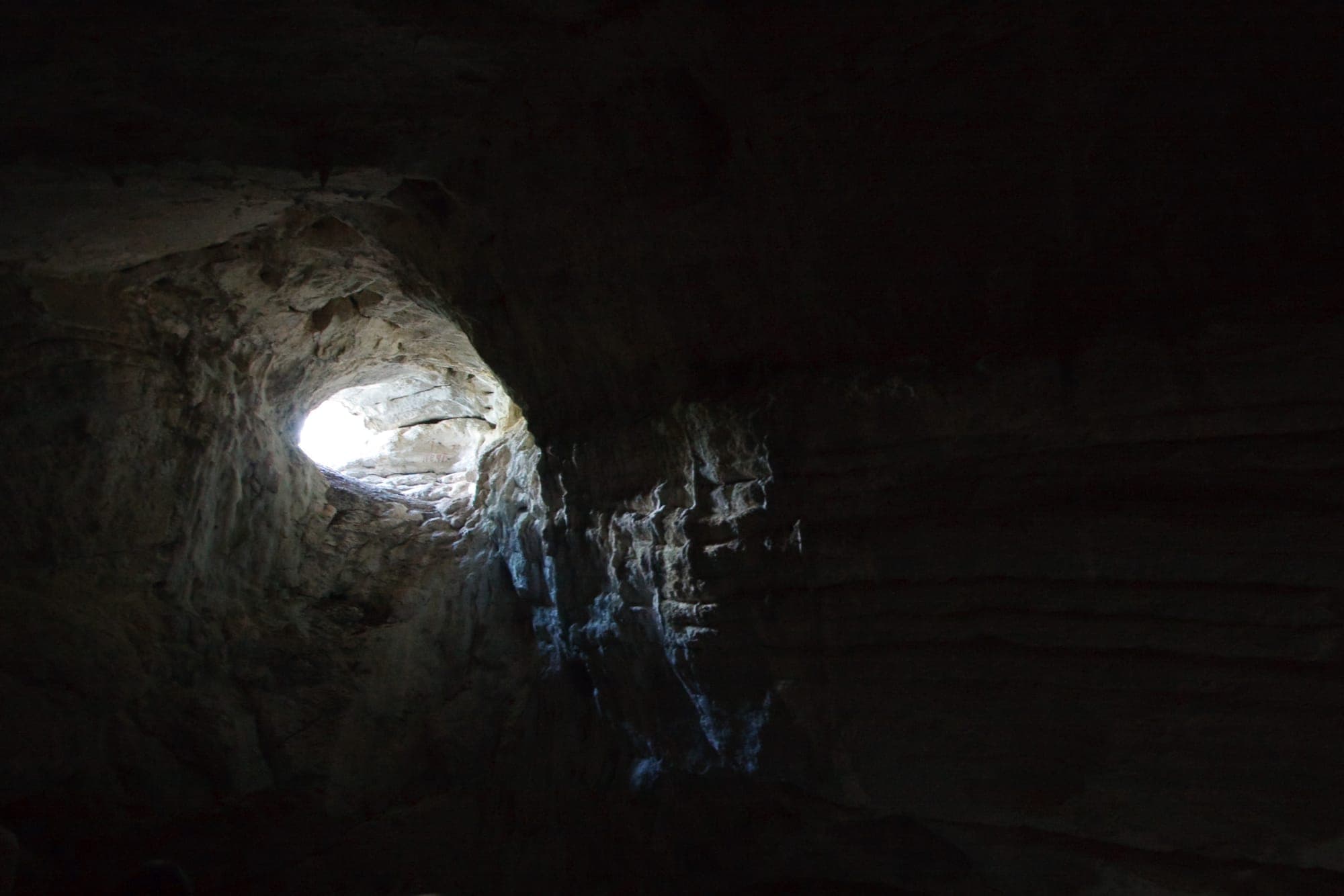
Wind Cave (Peștera Vântului), at Șuncuiuș in Bihor, is often listed among the closed caves, but it is not: it is undeveloped and you cannot go in on your own, yet it can be visited all year on speleotourism trips with an accredited guide, booked in advance through the local operators. The operator provides the overalls, the helmet with a lamp and the gloves, and sets the day and the price. Groups have at most 10–12 people, a trip lasts about two hours, and inside it is about 12 °C.
The trip covers the first 800 m or so of more than 50 km known: the active passage, then nine fixed metal ladders, the tallest 10 m high, up to the fossil level, with the Torpedo, a stalactite of about 4.5 m. It is not suitable for children. How its length compares with other caves is in the guide to cave records.
Without experience: Vadu Crișului Cave, a show cave ~14 km away, or the Crystal Cave of the Farcu Mine, with a guide.
Coliboaia Cave and its cave paintings: why you cannot see them
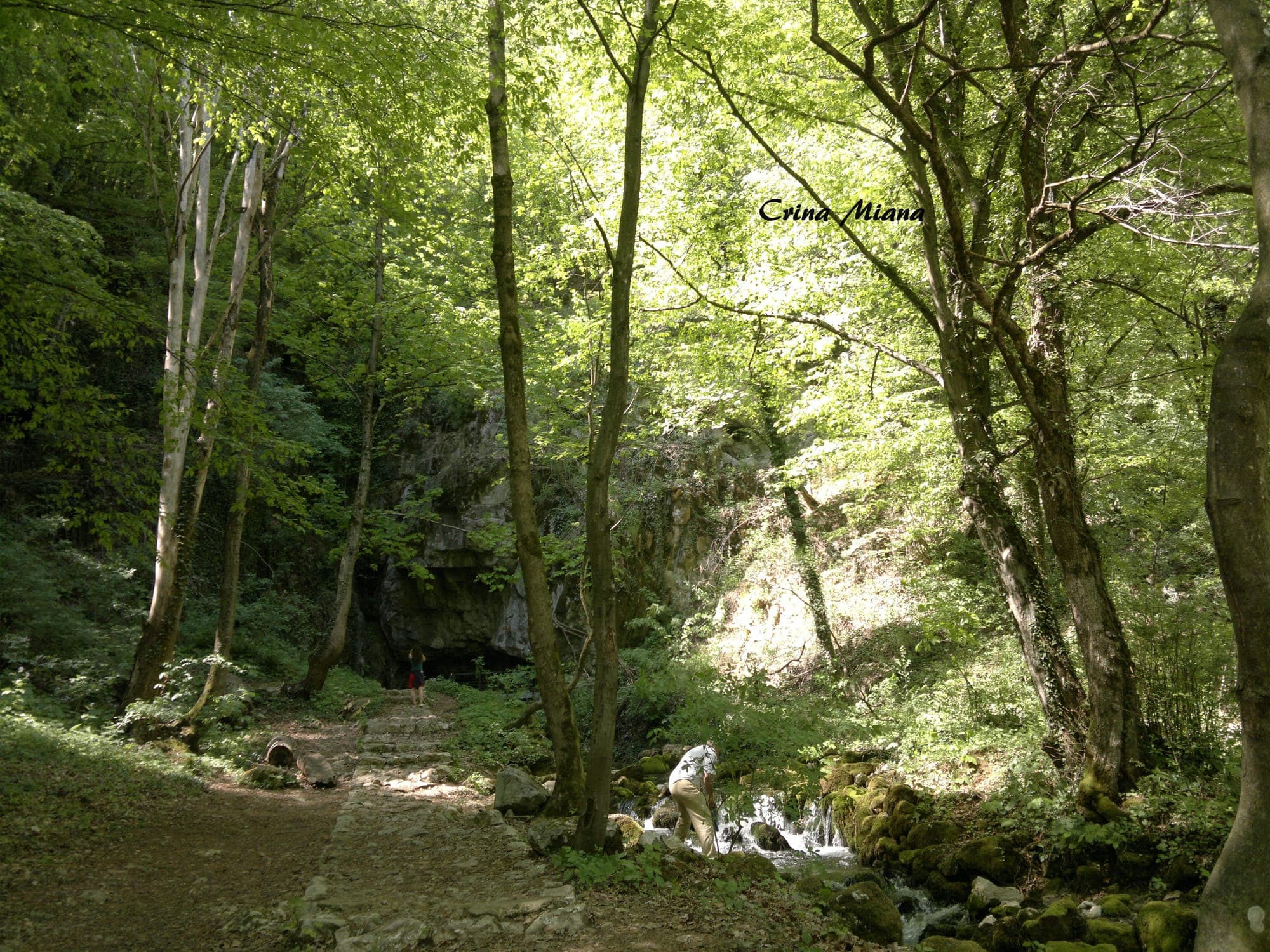
Coliboaia Cave, in the Sighiștel Valley, Câmpani commune, has charcoal drawings about 32,000–36,000 years old, considered the oldest known Palaeolithic images in Central Europe: a bison, a horse, bear heads and two rhinoceros heads. They were found in 2009, about 770 m from the entrance, beyond flooded stretches of the underground river. Measurements showed that even a few people in the gallery change its temperature, which can damage the drawings; exploration stopped in 2012, and the cave will not be opened to the public. Since April 2026 it has been on Romania's tentative list for UNESCO World Heritage.
What to see instead: the Sighiștel Valley, on the path marked with a blue triangle. Bears' Cave, ~16 km from Sighiștel, has the bones of cave bears, and in Vârtop Cave the footprint of a Neanderthal was found.
 Top 100

Can you visit Peștera cu Oase? No: the only way in is through a sump
Peștera cu Oase (Cave with Bones), in the Miniș Valley near Anina, is where cavers found the Oase 1 jawbone in 2002 and, in 2003, the face of a teenager, Oase 2: fossils of modern humans about 37,000–42,000 years old, among the oldest in Europe. The passages no longer have any opening to the surface. The only way runs through the Plopa spring, through a sump 16 m long and 5 m deep that can be passed only with diving equipment, then along 220 m of underground river and up a 30 m shaft. Access is allowed only to researchers, and the collapsed entrances are not reopened.
What to see instead: Bigăr Waterfall, ~19 km away on the DN57B, the Nera Gorge and Ochiul Beiului Lake. Comarnic Cave, ~42 km away, is explored with a guide from April to October, and Women's Cave also holds some of the oldest modern human remains in Europe.
 Top 100

 Top 100
Cloșani Cave: an underground laboratory, closed to the public
Cloșani Cave, above the village of Cloșani in Padeș commune, Gorj, has been a research station and underground laboratory of the "Emil Racoviță" Institute of Speleology since 1959: its passages hold rearing facilities for the study of underground fauna, and researchers have found about 70 species of microscopic animals here. Entry is only with the institute's approval, for research. Padeș town hall began steps in 2024 to take over the cave and develop it; for now there is no show-cave route.
What you can see: the station building, on the right bank of the Motru, and Piatra Cloșanilor, on the trail marked with a red dot (~10.5 km). What to see instead: God's Bridge, ~21 km away, and Tismana Monastery, ~25 km away. Show caves, about two hours to the east: Women's Cave and Polovragi Cave.
Top 100

Tăușoare Cave: a reserve, authorised speleotourism only
Izvorul Tăușoarelor Cave, in the southern Rodna Mountains at Rebrișoara, is one of the deepest and longest caves in Romania, with about 17 km of known passages. It has gypsum flowers, mirabilite crystals and the "Tăușoare Balls", and in winter it shelters about 10,000 bats of five species. It is a reserve and a Natura 2000 site, in the custody of the Bistrița-Năsăud Museum Complex. The hibernation galleries are in protection class A, reserved for monitoring and research. In the permitted sectors only speleotourism groups with the approval of the Speleological Heritage Commission go in, physically assessed beforehand, with equipment and an escort; the first such groups went in in May 2026.
What to see instead: the marked trails of the Rodna Mountains National Park, Cheilor Waterfall near Sângeorz-Băi and the Bistrița Medieval Fortress (Coopers' Tower).

Piatra Altarului Cave: under lock, for research only
Piatra Altarului Cave, discovered in 1984 in the Ponor Valley near Răchițele (Cluj), is a speleological reserve in the Apuseni Nature Park and one of the class A caves, the highest protection class. The park administration considers it the most valuable cave in Romania: the Palace Hall, about 30 m high, the Geode, with walls covered in calcite crystals, and the Altar, with cave bear skulls under a calcite crust. The entrance is locked, and the park's approval and the Speleological Heritage Commission's permit are given only for scientific research. The cave will not be developed, and the entrance is not even signposted.
What to see instead: Vălul Miresei Waterfall, near Răchițele, and towards Padiș, Cetățile Ponorului. Show caves in the Apuseni: Bears' Cave and Scărișoara Ice Cave.

 Top 100
 Top 100
Cioclovina Cave: a scientific reserve, what you see from outside
The karst complex of Cioclovina Cave, in the Șureanu Mountains, Boșorod commune, has two caves: Cioclovina cu Apă, which together with Ponorici forms an underground through-trip of 6,713 m, and Cioclovina Uscată, where miners found the "Cioclovina 1" skull, about 33,000 years old, in 1941. Neither is developed. Cioclovina Uscată is a scientific reserve, in the strict protection zone of the Grădiștea Muncelului–Cioclovina Nature Park. Exploring requires the park's approval, requested in writing at least 10 days in advance, and a permit from the Speleological Heritage Commission; from 1 December to 31 March access is forbidden, for the bats, and in May and June the flash-flood risk is very high.
What you can see: the valley, the entrances in the limestone and the waterfall about 200 m away. What to see instead: in the same park, only Bolii Cave can be walked through without caving gear; Piatra Roșie Dacian Fortress is ~6 km away.


Limanu Cave and Zeicului Cave: no organised access
Limanu Cave, in the village of Limanu near Mangalia, is the longest in Dobruja, a maze of about 3.6 km with traces of use since antiquity. It has no lighting, marked routes or opening hours, and access is not officially organised: the metal gate was torn off, some areas are unstable, and the maze has not been fully mapped. Exploring requires caving equipment and authorised cavers; the custodian of the protected area is the GESS association. Caves in Dobruja you can visit: Gura Dobrogei Cave, undeveloped and without opening hours, best in the warm season, and St John Cassian's Cave, the monastery's cave, outside service times.
Zeicu Cave (Peștera Zeicului), in the Retezat National Park, is not on the list of caves equipped for speleotourism and has no approved visiting rules, so tourist activities inside are illegal. The 6 × 8 m portal can be seen from the path on the slope, about 40 minutes from the Scorota stream.
How to get legal access to a closed cave
The legal route depends on who looks after the cave, and it is stated on each cave's page:
- The Speleological Heritage Commission (CPS) issues the permits for protected caves: Topolnița, Tăușoare, Cioclovina, Piatra Altarului. They go to caving clubs and to organisers with a guide and equipment, not to people who turn up on their own.
- The park administration gives its approval for caves in parks: at Cioclovina, requested in writing at least 10 days in advance; in the Apuseni Nature Park, for any undeveloped cave.
- The custodian or administrator decides alone in a few cases: the "Emil Racoviță" Institute at Cloșani, the Bistrița-Năsăud Museum Complex at Tăușoare.
- Authorised speleotourism operators are the way in for anyone who wants a wild cave without being a caver: trips with an accredited guide, equipment provided by them and small groups, as in Wind Cave.
At Movile, Coliboaia and Peștera cu Oase there is no route for tourists: only research teams go in.
Unguru Mare Cave closed: temporarily closed caves
Unguru Mare Cave, at Șuncuiuș, with its portal over 30 m high opening towards the Crișul Repede, is a show cave, but it has been announced as temporarily closed for refurbishment works since 2025, with no reopening date published. Call Șuncuiuș town hall before you set off. Even after it reopens, its usual season is April–October: from 1 November to 31 March it is closed for the hibernating bats.
What to see instead: Vadu Crișului Cave, a show cave with a 680 m guided route, open Tuesday–Sunday with booking 24 hours ahead, or the speleotourism trip in Wind Cave, less than 1 km from Unguru Mare.
"Closed" caves that can be visited, and other mix-ups
- Is Wind Cave closed? No. It can be visited all year with an accredited speleotourism guide; only going in on your own is not allowed.
- "Movile Cave visit": there are no visits or tours; near Mangalia you can see Mlaștina Hergheliei.
- "Topolnița boat trip": Topolnița has no boat trips. The caves in Mehedinți reached by boat are Veterani Cave and the Danube entrance of Ponicova Cave.
- Is Limanu Cave open? It no longer has a gate, but access is not organised, and some areas are unstable.
- If Unguru Mare is closed, is Wind Cave closed too? No: they are less than 1 km apart, but the speleotourism trips in Wind Cave run all year, through the local operators.
- Cave paintings to see: those in Coliboaia cannot be seen. How the formations you see in open caves are formed is in the guide to stalactites and stalagmites.
If you reach a closed cave: what you must not do
- Do not force gates, locks or shafts. In the Apuseni Nature Park, unauthorised entry into caves is punishable by law, according to the park administration.
- Leave the bats alone. Many caves close in winter for hibernation (Cioclovina 1 December–31 March, Unguru Mare 1 November–31 March), and some also in summer, for breeding (Peștera Femeii at Topolnița, 1 June–30 July). Do not make noise at the entrances and do not shine lights on the colonies.
- Take nothing. Collecting fossils, minerals or formations is forbidden, for example in the Grădiștea Muncelului–Cioclovina Nature Park.
- In case of an accident, call 112.
Which caves you can visit instead of the closed ones, by region, is in the guide to Romania's caves; equipment and temperature are on each cave's page.
Frequently asked questions
- Can you visit Movile Cave?
- No. Movile Cave, near Mangalia, is permanently closed to the public; only researchers with permission go in, a few times a year. Nearby you can see Mlaștina Hergheliei, part of the same Natura 2000 site, with sulphurous springs bubbling with methane.
- Can you visit Topolnița Cave?
- Not as an ordinary tourist: it has no show-cave route, and entry is only with a permit from the Speleological Heritage Commission, with a guide and equipment. The Gura Prosacului portal can be seen from the red-triangle trail from the La Varnițe clearing, about an hour's walk.
- Can you visit Wind Cave (Peștera Vântului)?
- Yes, all year, but only on speleotourism trips with an accredited guide, booked through the local operators in Șuncuiuș, who also provide the equipment. The trip covers about 800 m and lasts around two hours (October 2026).
- Can you see the cave paintings in Coliboaia Cave?
- No. The drawings, about 32,000–36,000 years old, lie beyond the sumps of the underground river, and the cave will not be opened to the public; only specialists have access, under strict conditions. Since April 2026 it has been on Romania's UNESCO tentative list.
- Can you visit Peștera cu Oase?
- No. The only way in runs through a 16 m sump that can be passed only with diving equipment, and access is allowed only to researchers. In the area you can visit Bigăr Waterfall, the Nera Gorge and Comarnic Cave, with a guide.
- Is Unguru Mare Cave closed?
- Yes, temporarily, for refurbishment works announced in 2025, with no reopening date published (September 2026). Call Șuncuiuș town hall before going; nearby you can visit Vadu Crișului Cave and, with a speleotourism guide, Wind Cave.
- Can you visit Limanu Cave?
- It has no officially organised access: no lighting, routes or opening hours, and some areas are unstable. It can be explored only with caving equipment and authorised cavers.
- Who issues permits to enter a protected cave in Romania?
- The Speleological Heritage Commission, usually to caving clubs and to organisers with a guide; in parks, the administration's approval is also needed (at Cioclovina, requested in writing at least 10 days in advance). At Cloșani, approval is given by the "Emil Racoviță" Institute of Speleology.
Sources
- Mehedinți Plateau Geopark: trails (La Varnițe – Gura Prosacului)
- Ministry of the Environment: Speleological Heritage Commission permit for Topolnița
- Pădurea Craiului: Discover Wind Cave (speleotourism)
- Salvaspeo: list of speleotourism caves in Romania (31.01.2026)
- Pădurea Craiului: Unguru Mare Cave
- Agerpres: Coliboaia Cave on Romania's tentative list for UNESCO World Heritage (April 2026)
- UNESCO: tentative list, Coliboaia Cave
- GESS: Movile Cave
- "Emil Racoviță" Institute of Speleology
- ANANP: Tăușoare Cave
- Bistrița-Năsăud Museum Complex: Tăușoare Cave
- Agerpres: the first speleotourism groups entered Tăușoare Cave (May 2026)
- Apuseni Nature Park: caves
- Grădiștea Muncelului–Cioclovina Nature Park: caves
- Grădiștea Muncelului–Cioclovina Nature Park: regulations
- Retezat National Park: Peștera Zeicului Nature Reserve
- Zilhão et al.: The Peștera cu Oase people, Europe's earliest modern humans (2007)
- Fu et al.: An early modern human from Romania with a recent Neanderthal ancestor, Nature (2015)
All guides
- Ski slopes in Romania: the ski resorts and ski areas by region, with a map
- When the ski slopes open and where the snow comes first: the ski season in Romania
- Sledging, alpine coasters and tubing in Romania: where to go with a sledge
- The longest ski slope in Romania and the other records: the largest ski area, the highest, the hardest
- The nearest ski slopes to Bucharest, Cluj, Brașov, Sibiu, Iași, Timișoara and Oradea: distances for a day of skiing
- Beginner and kids' ski slopes in Romania: where to learn to ski, ski schools and slope colours
- Caves in Romania: the ones you can visit, by area, with a map
- Ice caves and underground glaciers in Romania: Scărișoara, Focul Viu, Vârtop, Borsec
- Apuseni caves: a 2–3 day route through Bihor and Alba
- The largest cave in Romania and the other records: the longest, the deepest, the oldest show cave
- The nearest cave to Bucharest, Brașov, Cluj, Sibiu, Oradea and Timișoara: distances for a day trip
- Stalactites and stalagmites: what they are, how a cave forms and where to see them in Romania
- The Danube Delta: map, what it is, the villages and what to see
- Danube Delta trip: one, two or three days, where to start and how to get to Sulina and Sfântu Gheorghe
- Things to do in Tulcea: what to see in the city and around it
- Birds and wildlife of the Danube Delta: pelicans, where and when to see them
- Visiting the Danube Delta for the first time: the access permit, mosquitoes and when to go
- Fishing in the Danube Delta: the fishing permit, the 2026 closed season and where you may fish
- Sulina or Sfântu Gheorghe? The beaches of the Danube Delta (and Gura Portiței)
- Deltas near Bucharest: Văcărești, Comana (the Neajlov Delta) and Balta Mică a Brăilei
- The Romanian Black Sea coast: the resorts in order, north to south, with a map
- The best beaches in Romania (and the Blue Flag ones)
- The Black Sea season in Romania: when it opens, how long it lasts and when the water is warmest
- Wild beaches on the Romanian coast: Corbu, Vadu, Tuzla and the south
- Which Romanian seaside resort to choose: for young people, families, quiet, budget
- The Romanian seaside with kids: resorts, shallow beaches and what to do off the beach
- Things to do in Constanța: what to see in the city, on the seafront and nearby
- Jellyfish, sharks and lifeguard flags in the Black Sea
- Salt mines in Romania: the complete guide to the salt mines you can visit
- The largest, the deepest and the oldest salt mine in Romania
- The nearest salt mine to Bucharest, Cluj, Brașov, Sibiu, Iași, Timișoara, Oradea, Constanța and other cities
- Salt mines with children and babies: from what age, which one suits, what to bring
- Turda or Slănic Prahova? Which salt mine to choose
- Visiting a salt mine for the first time: temperature, clothing, how long, lift or bus, dogs
- Salt lakes and salt baths in Romania: where to swim, season and prices
- Salt mine therapy in Romania: what the operators say, how long to stay, which mines have a treatment base