Peter Rareș's 1530 foundation and his family's burial place, with the fresco-painted church of St Nicholas inside fortress-like walls; a UNESCO site near Dolhasca.
Monasteries and churchesMonuments and historic sitesUNESCO
The Oradea State Theatre building, designed by the Viennese firm Fellner & Helmer and opened in 1900: an Ionic portico on Piața Ferdinand and an auditorium with boxes and a balcony, still in use every week.
The Cathedral of the Assumption, built between 1752 and 1780: the largest Baroque church in Romania, with an organ given by Maria Theresa and an interior of marble, frescoes and gilding.
Monasteries and churchesMonuments and historic sites
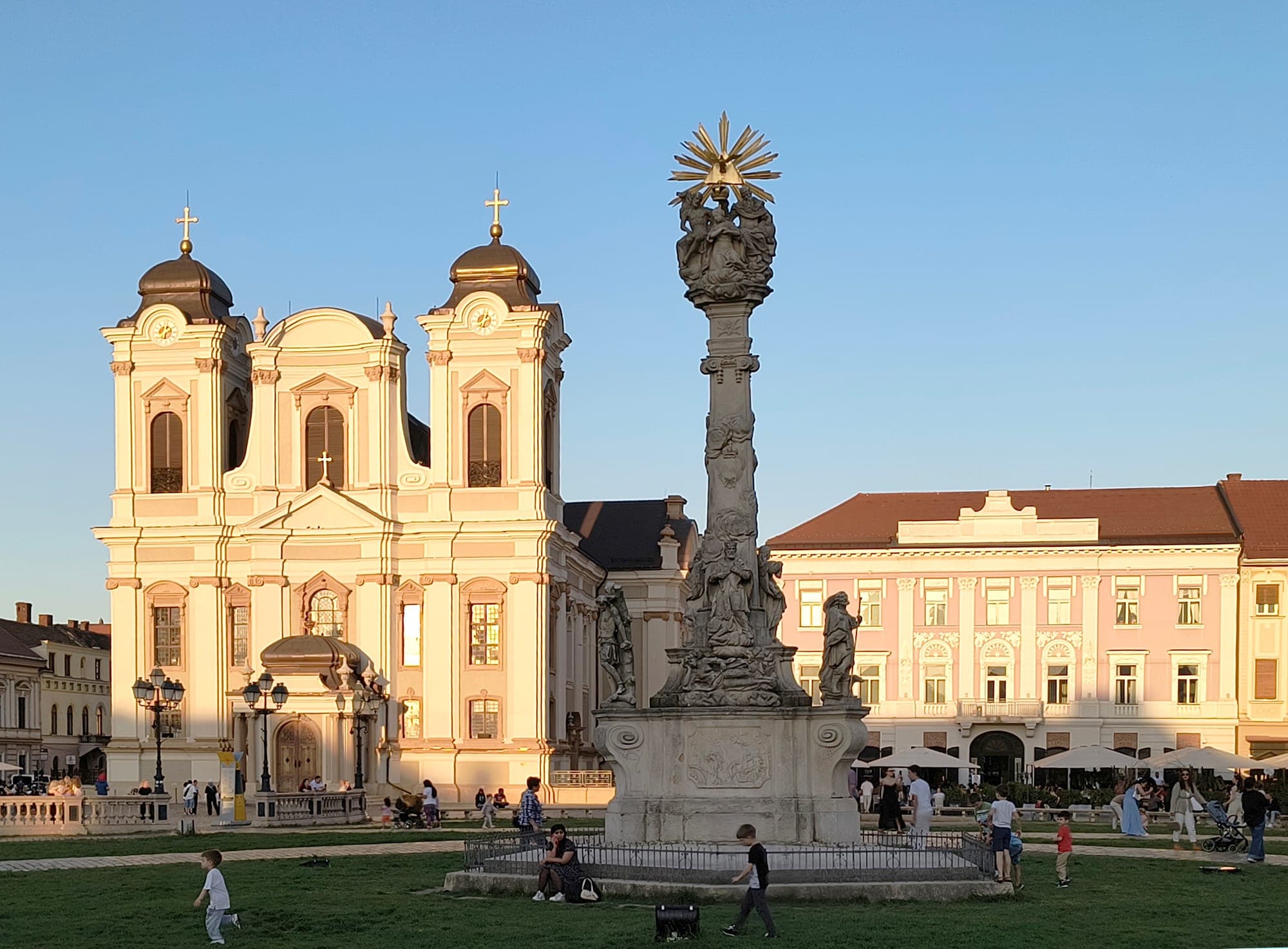
The Baroque cathedral of the Catholic bishopric of Timișoara, built between 1736 and 1774 on Union Square; restored with EU funds and reopened in April 2023, with the bishops' crypt under the altar.
Monasteries and churchesMonuments and historic sites
A Roman fort on the Tirighina promontory where the Siret meets the Danube, in the Barboși district of Galați, with a site museum built inside the grounds and remains almost 1,900 years old.
Monuments and historic sitesFortresses and fortifications
The concert hall in the heart of Bucharest, built in 1886–1888 and paid for largely by public subscription: Ionic columns outside, a fresco over 70 m long telling the story of the Romanians inside.
The oldest monastery in the Bărăgan, founded by the Grand Postelnic Ianache Caragea and rebuilt by Matei Basarab, with a 17th-century brick enclosure wall and a bell tower you enter through.
Monasteries and churchesMonuments and historic sites
A synagogue of 1877–1878 on the bank of the Crișul Repede, with a broad dome and a Moorish-style painted interior; restored and reopened in 2015, it is now a cultural venue.
The former metropolitan cathedral of Moldavia, built in 1514–1522 in the centre of Suceava and home to the relics of St John the New; its church of St George is a UNESCO site.
Monasteries and churchesMonuments and historic sitesUNESCO
The Orthodox church of the Romanians of Șcheii Brașovului, built from 1495 on the site of a wooden one, with Gothic-Baroque towers, painted façades and Nicolae Titulescu's grave in the churchyard.
Monasteries and churchesMonuments and historic sites
A small convent in the Old Town with a Brâncoveanu-style church from 1724, façades painted with saints in medallions, an arcaded courtyard and a lapidary of stones from vanished Bucharest churches.
Monasteries and churchesMonuments and historic sites
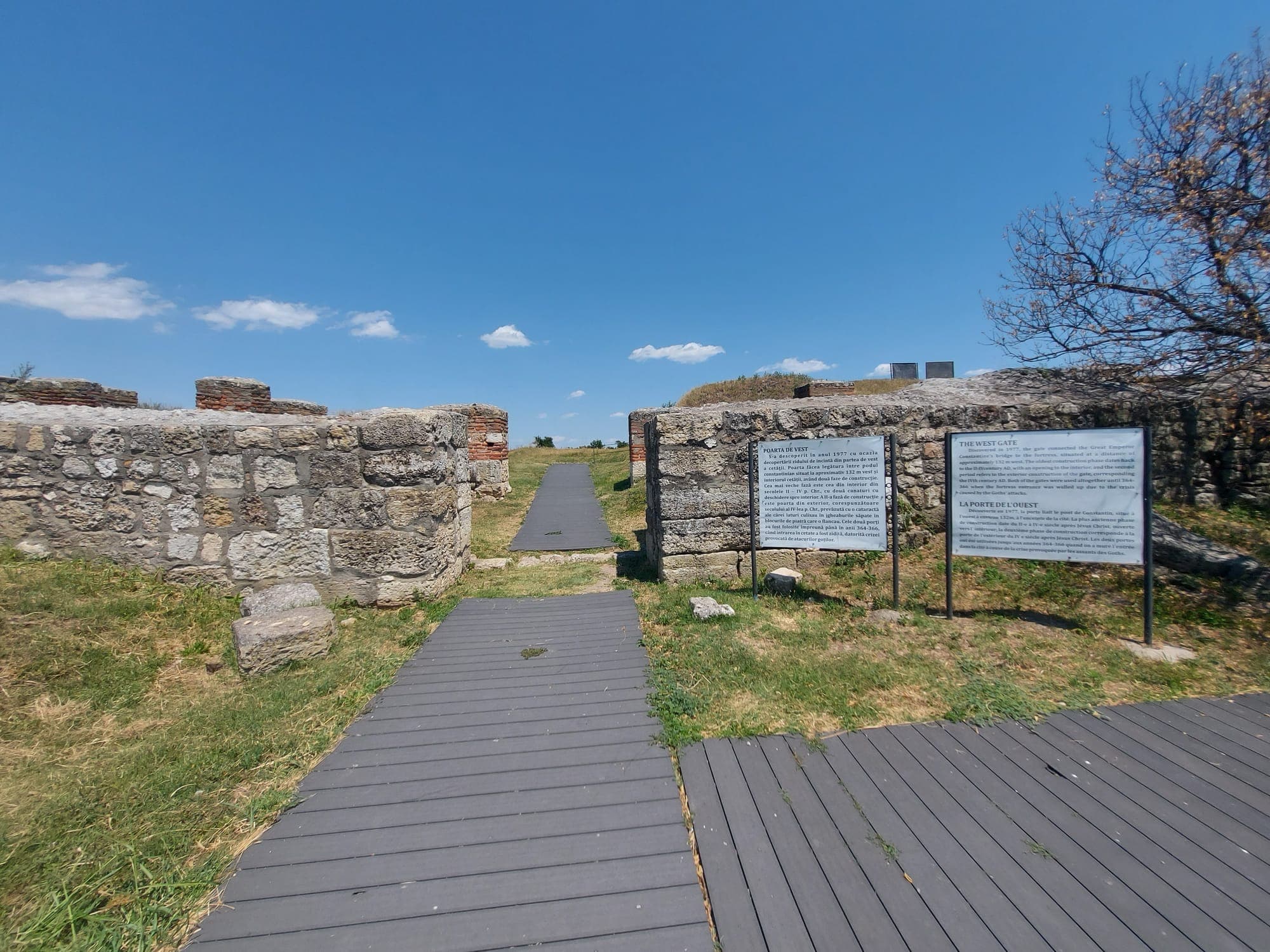
The Daco-Roman and Roman-Byzantine fortress in Corabia, with its excavated walls and towers, a 6th-century basilica, the "secret well" and the northern pier of Constantine the Great's bridge over the Danube.
Fortresses and fortificationsMonuments and historic sites
The central square of old Brăila, from which the streets of the historic centre fan out, with the blue Public Clock of 1909, the Holy Archangels church, a former mosque, and the statue of Trajan.
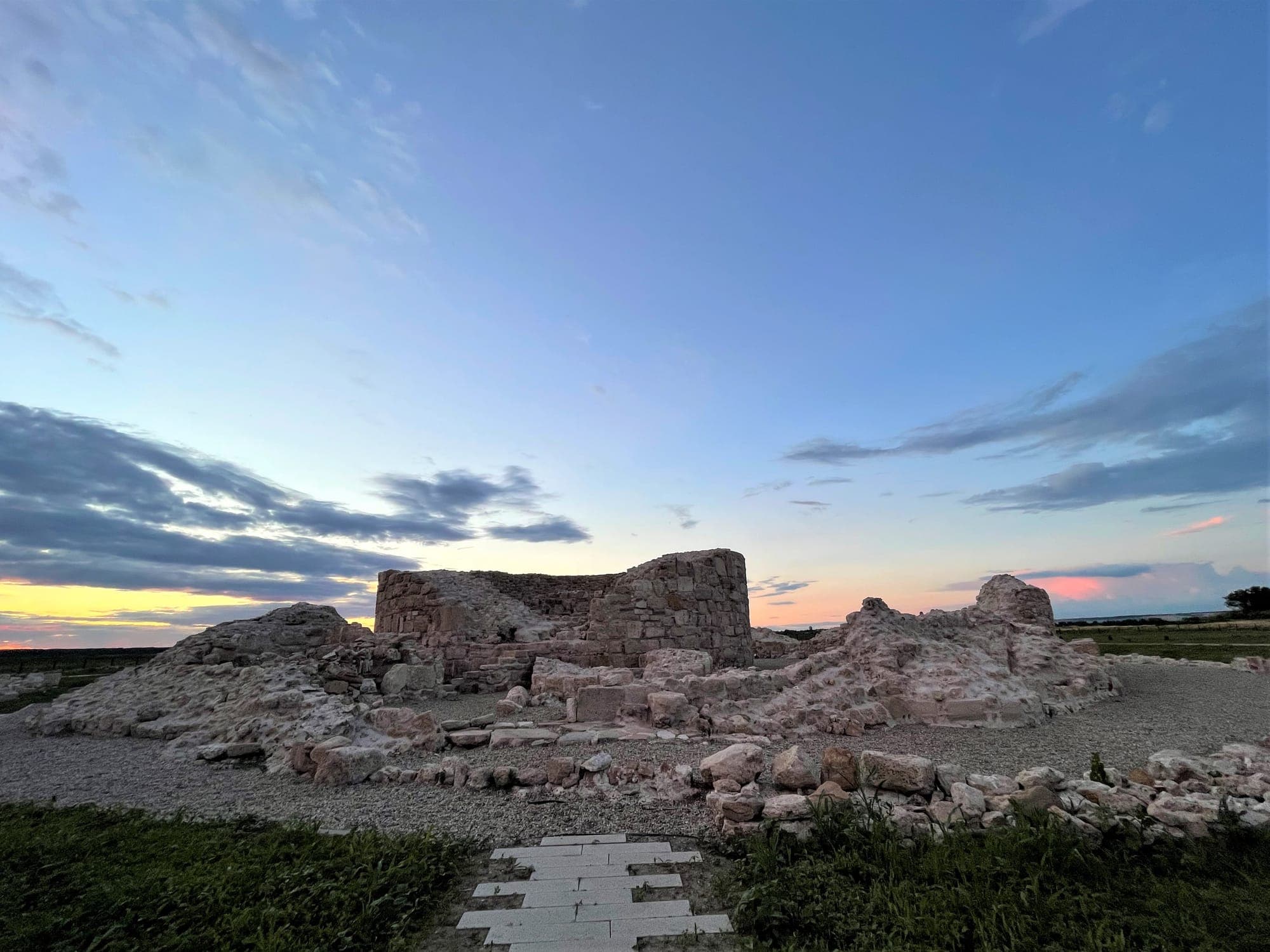
The ruins of a medieval fortress on the Danube bank, documented in the time of Mircea the Elder and held by the Ottomans until 1829, with a consolidated round central tower.
Fortresses and fortificationsMonuments and historic sites