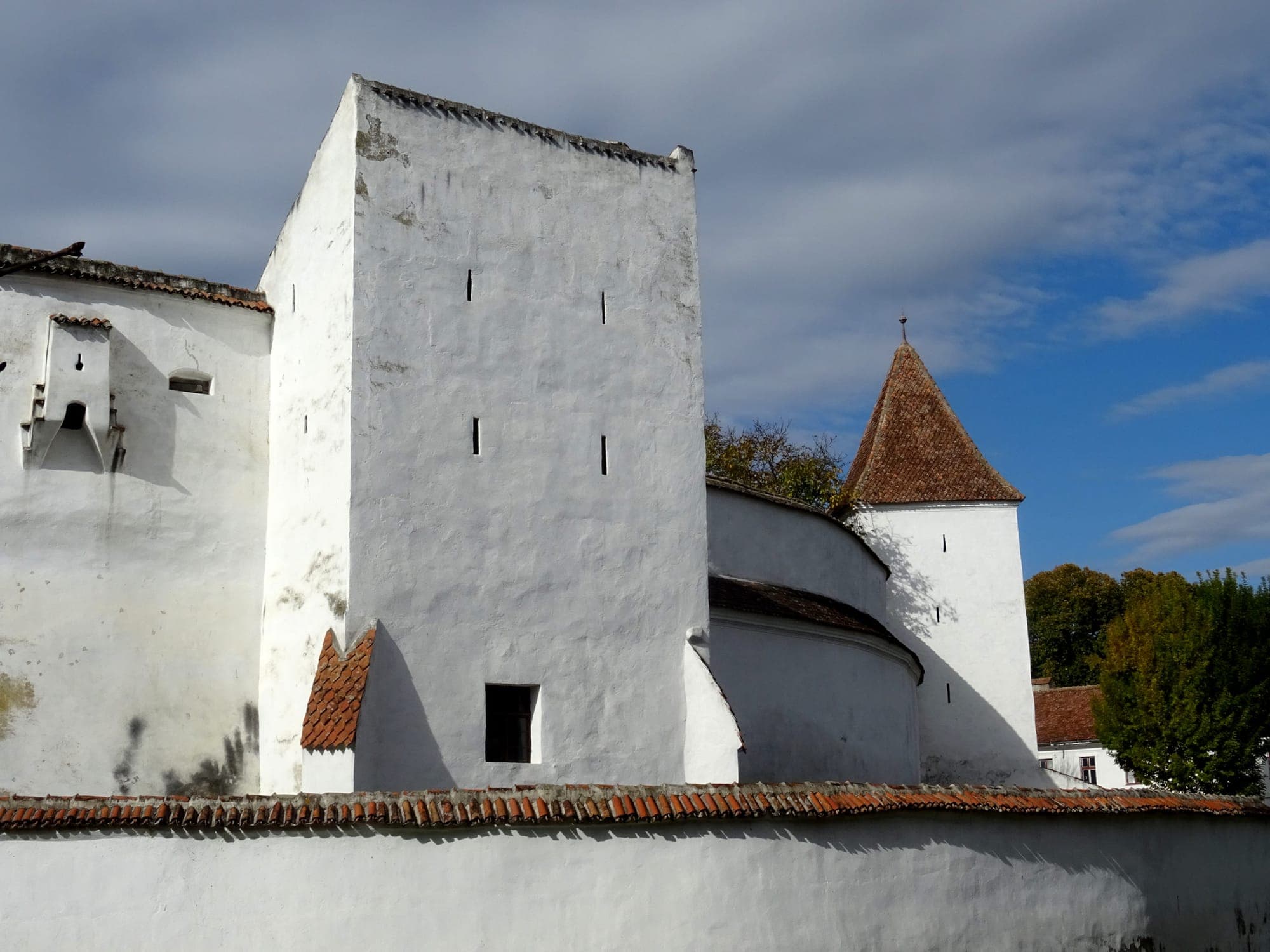
A 13th-century Romanesque basilica enclosed by 12 m walls with seven towers, with the tallest bell tower in the Burzenland and a chapel of 15th-century Gothic frescoes.
Monasteries and churchesFortresses and fortifications
Constantin Brâncoveanu's largest foundation, officially Hurezi Monastery: the model ensemble of the Brâncovenesc style, built in 1690–1693 and a UNESCO site since 1993.
Monasteries and churchesMuseums and memorial housesUNESCO
The Church of Saints Peter and Paul, founded by Stephen the Great in 1495 and rebuilt in the 18th century: the cathedral of the Diocese of Huși, with the voivode's inscription preserved and a historic walled precinct.
The Church of the Nativity of the Virgin on Ieud's rocky hillside, built in 1611–1621, painted inside by Alexandru Ponehalschi and the place where the Ieud Codex was found. A UNESCO site.
The Orthodox cathedral of the Banat, built between 1936 and 1946 in the Neo-Moldavian style, with a main tower of over 80 m, glazed-tile roofs and a museum of old church art in the basement.
Monasteries and churchesMonuments and historic sites
Founded by Petru Rareș in 1532, with a church painted on the outside in shades of yellow and blue and the famous Siege of Constantinople fresco; a UNESCO site in Bukovina.
Monasteries and churchesMonuments and historic sitesUNESCO
The Orthodox church of the Dormition of the Mother of God in Piața Unirii, built in 1784–1790 and known for the globe in its tower that shows the phases of the Moon, in a mechanism of 1793.
Monasteries and churchesMonuments and historic sites
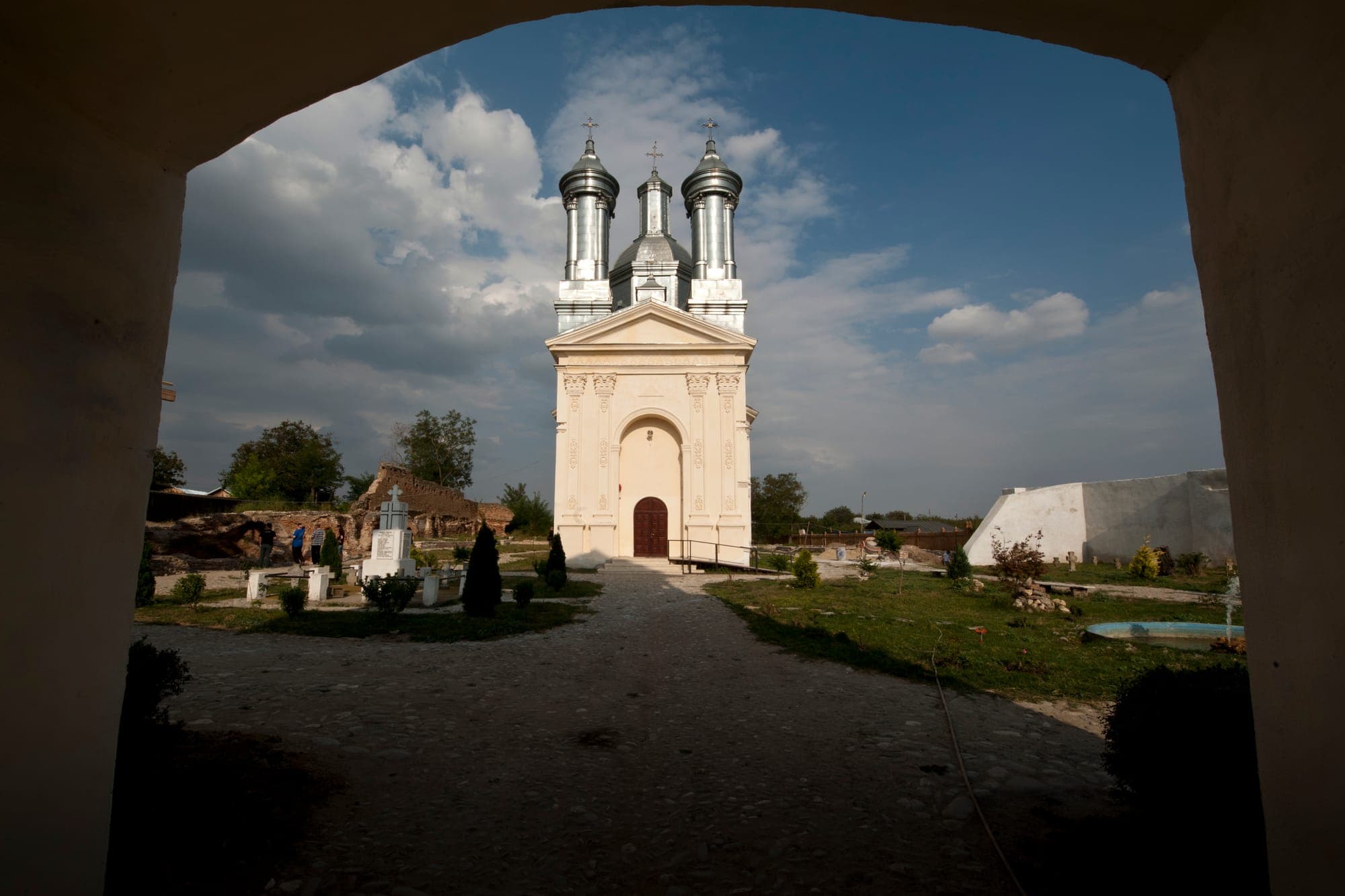
A foundation of 1648–1649 by Matei Basarab and Lady Elina on the bank of the Argeș: a three-towered church with 19th-century frescoes, restored with EU funds and reconsecrated in 2016.
The Church of the Exaltation of the Holy Cross, built by Stephen the Great in 1487: his oldest surviving foundation, with the "Cavalcade of the Holy Cross" fresco; a UNESCO site near Suceava.
Monasteries and churchesMonuments and historic sitesUNESCO
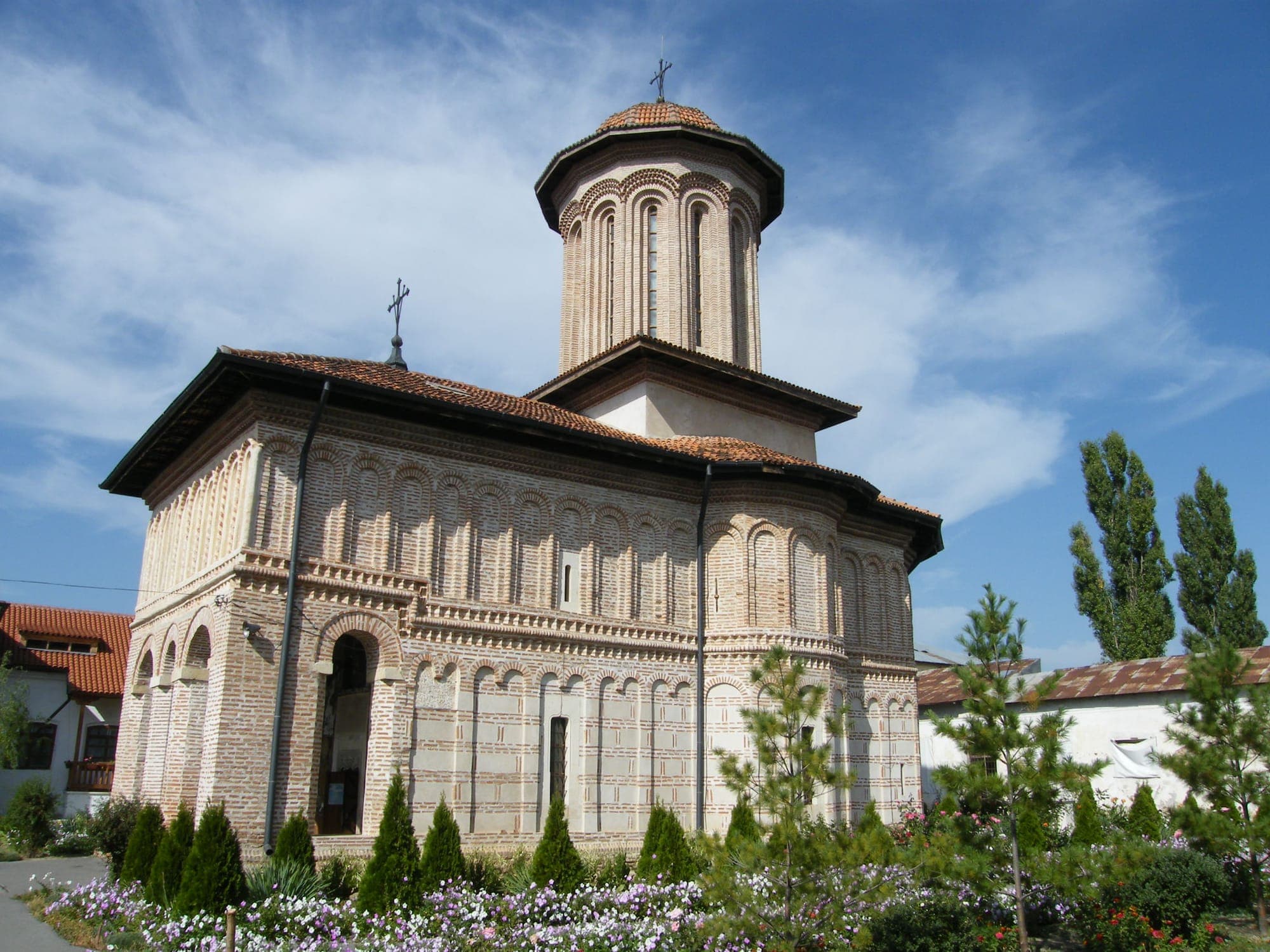
A foundation of Prince Matei Basarab, 20 km from Bucharest: a brick church built in 1642–1646, with original frescoes from 1649 in the narthex, preserved only here and at Arnota.
The Church of St Nicholas, built by Stephen the Great in 1496: the oldest church in Botoșani, of bare red brick, with a stone bell tower from the same period.
Monasteries and churchesMonuments and historic sites
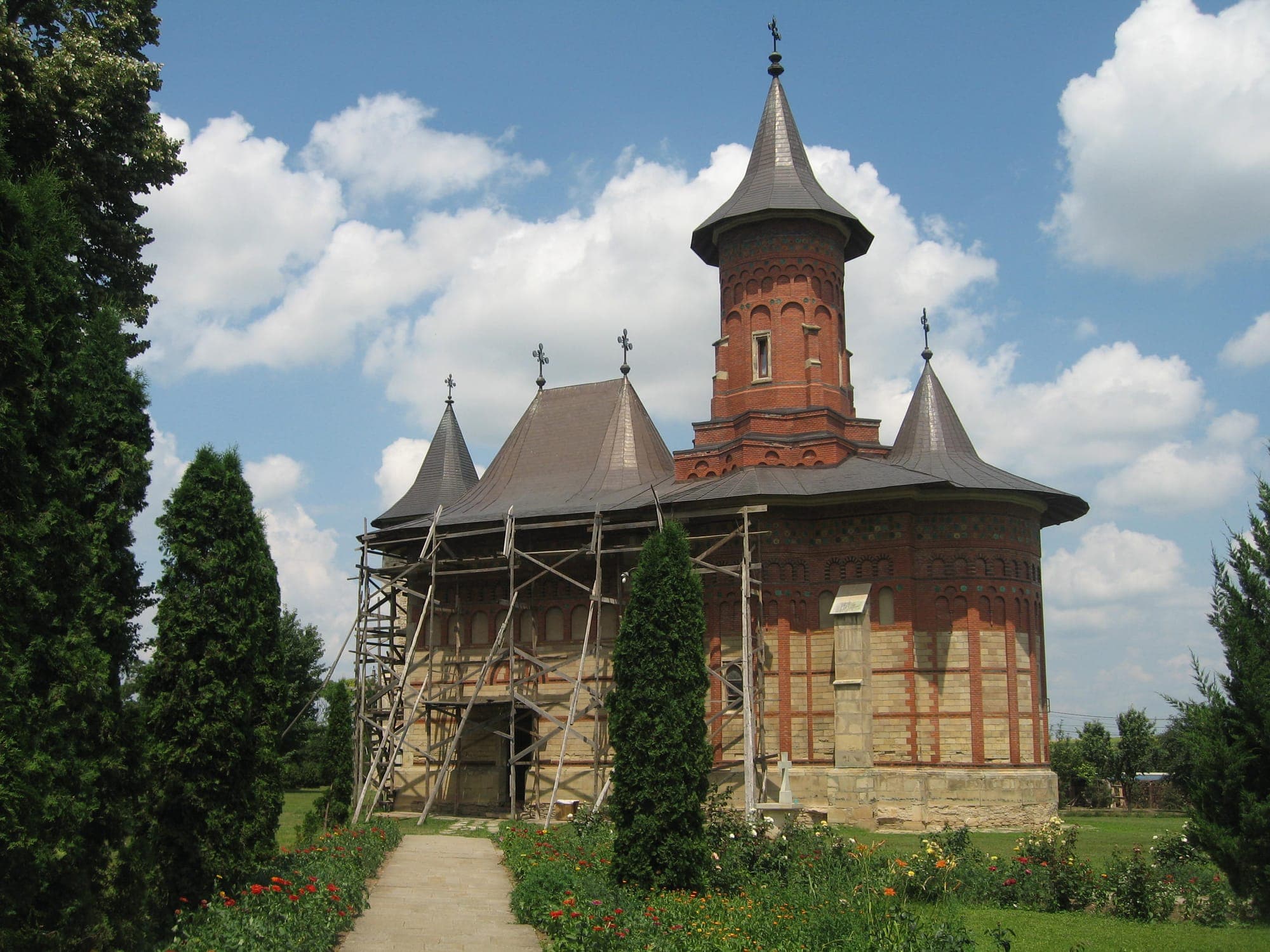
Peter Rareș's 1530 foundation and his family's burial place, with the fresco-painted church of St Nicholas inside fortress-like walls; a UNESCO site near Dolhasca.
Monasteries and churchesMonuments and historic sitesUNESCO
The Church of the Holy Archangels in Rogoz, built in 1663 and part of the Maramureș UNESCO site, has an asymmetric roof over the 'table of the ancestors', horse-head eaves brackets and paintings from 1785.
The Cathedral of the Assumption, built between 1752 and 1780: the largest Baroque church in Romania, with an organ given by Maria Theresa and an interior of marble, frescoes and gilding.
Monasteries and churchesMonuments and historic sites
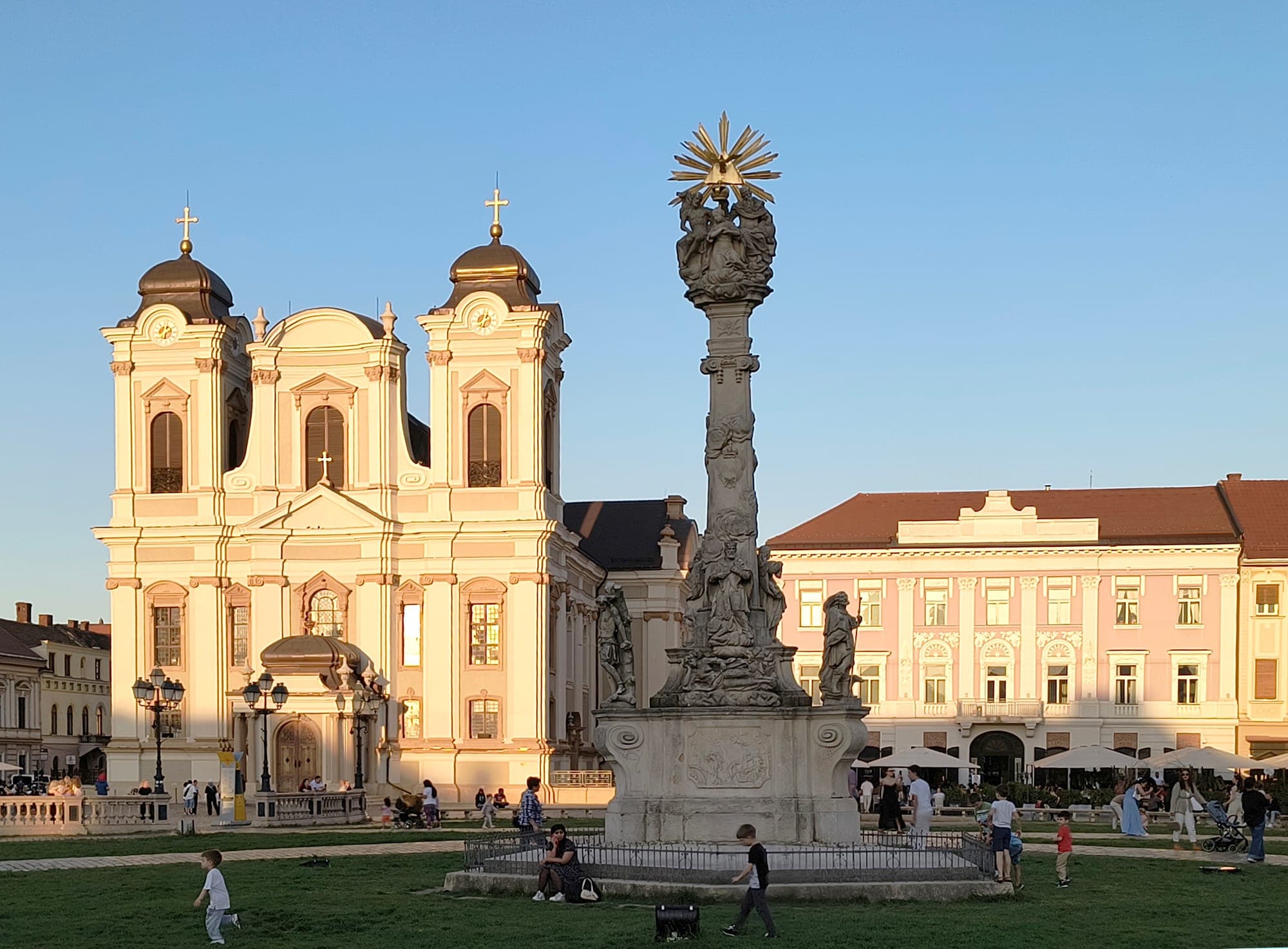
The Baroque cathedral of the Catholic bishopric of Timișoara, built between 1736 and 1774 on Union Square; restored with EU funds and reopened in April 2023, with the bishops' crypt under the altar.
Monasteries and churchesMonuments and historic sites