New St George Church
The last church founded by Constantin Brâncoveanu in Bucharest, built in 1705–1707 at the edge of the Old Town, with a porch on twelve stone columns, the founder's crypt and Kilometre Zero in front.
164 results

The last church founded by Constantin Brâncoveanu in Bucharest, built in 1705–1707 at the edge of the Old Town, with a porch on twelve stone columns, the founder's crypt and Kilometre Zero in front.

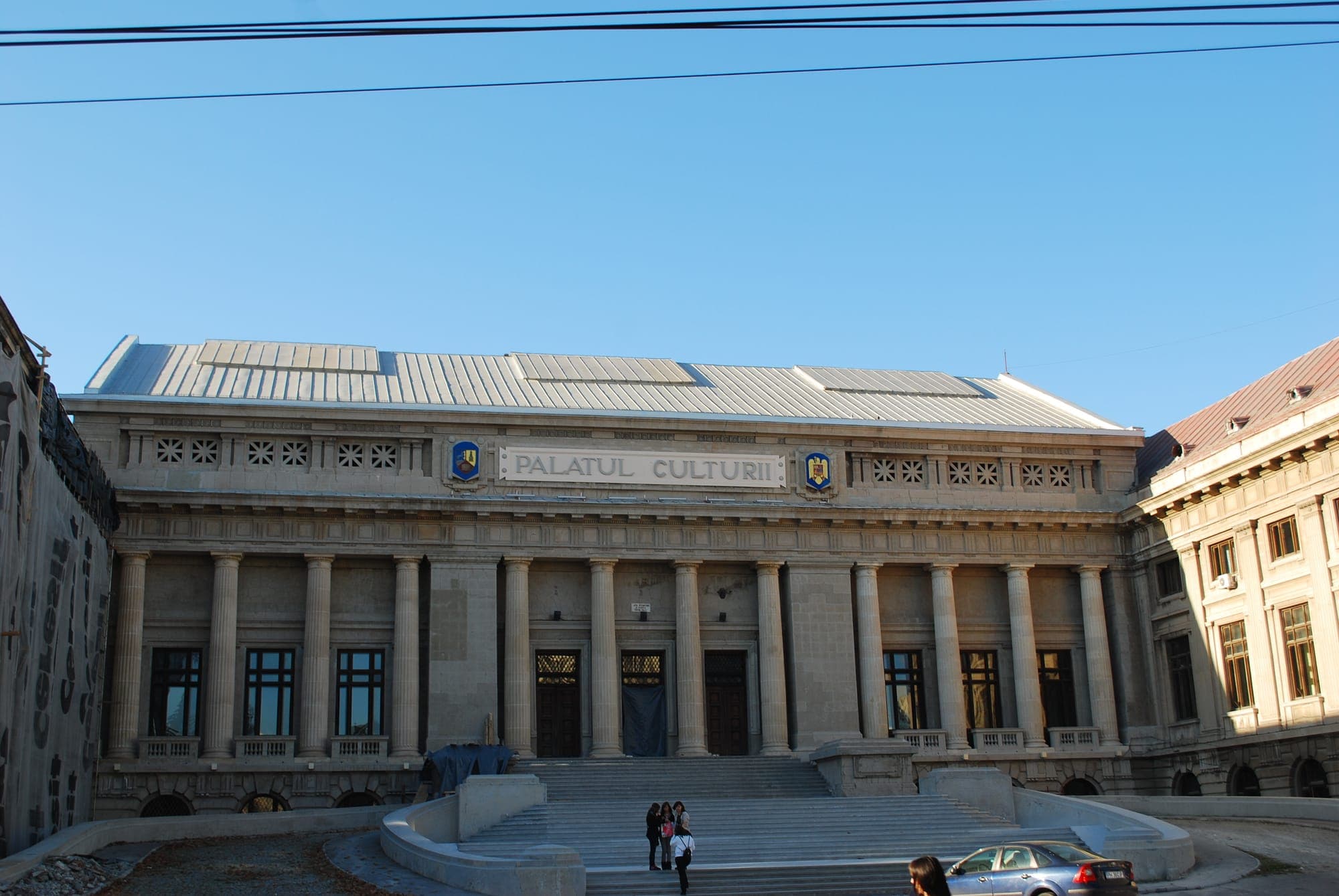
The former Palace of Justice in the centre of Ploiești, inaugurated in 1933, a Neoclassical building with a columned portico; today it houses the Museum of Man, the Aquarium and the “Nicolae Iorga” County Library.

The church built in 1654–1658 on Metropolitan Hill, a patriarchal cathedral since 1925, with the relics of Saint Demetrius the New and a Brâncoveanu bell tower from 1698.
A zoo in Constantin Stere Memorial Park in Bucov, with over 50 animal species, from lions and jaguars to bears and peacocks.

A church built in 1905–1909 by the Russian embassy, with seven Russian-style towers, brick façades with glazed ceramic, a gilded iconostasis and interior painting with icons by Viktor Vasnetsov.

An Art Deco tower of about 52 m on Calea Victoriei, built in 1931–1933 on a steel frame to plans by Louis Seabury Weeks; for a long time the tallest building in Bucharest.

The house museum of the collector Krikor H. Zambaccian, near Piața Dorobanților: Romanian art from Grigorescu to Baba alongside Cézanne, Renoir, Matisse and Picasso, in a 1940s villa.
A waterfall of almost 100 m in three tiers on the side of the Valea Rea valley in the Făgăraș Mountains, below Moldoveanu Peak; it can be seen from Stâna lui Burnei, at the end of the forest road from Slatina.

An Orthodox church on Calea Victoriei, between Lipscani and Stavropoleos, rebuilt from 1850 on the site of a place of worship more than three centuries old, with paintings by Gheorghe Tattarescu and the relics of Saint Cyprian.

An eclectic Orthodox church of 1898–1901 near Amzei Square, with three towers, façades of alternating brick and plaster, and the interior painting of the Italian artist Umberto Marchetti.

A wooden church of 1742 built of oak beams, with a wide porch, an open bell tower and wall paintings of heaven and hell in the porch, in a village of Coșești commune.

Bucharest's largest cemetery, covering 28 hectares, with the first burials in 1859: a necropolis and open-air museum with a monumental gate, a domed chapel and listed funerary monuments.

A quiet 3.3-hectare park on the shore of Lake Floreasca in northern Bucharest, next to Herăstrău, with paved paths, benches and a playground.

The former Carol I University Foundation, built in 1891–1895 to plans by Paul Gottereau on Revolution Square: a Beaux-Arts façade with a pediment and domes, an Aula that survived the 1989 fire, and visits by guided tour only.

A beer hall founded in 1879, in a Gothic Revival building of 1899 on Strada Stavropoleos: a listed monument with a vaulted hall, wall paintings, stained glass and a carved oak staircase.