Palace of Justice
The seat of the Bucharest Court of Appeal on the bank of the Dâmbovița, built in 1890–1895 to plans by Albert Ballu and Ion Mincu: a stone façade with allegorical statues and a high French-style roof.
164 results

The seat of the Bucharest Court of Appeal on the bank of the Dâmbovița, built in 1890–1895 to plans by Albert Ballu and Ion Mincu: a stone façade with allegorical statues and a high French-style roof.

A foundation of Prince Matei Basarab, 20 km from Bucharest: a brick church built in 1642–1646, with original frescoes from 1649 in the narthex, preserved only here and at Arnota.

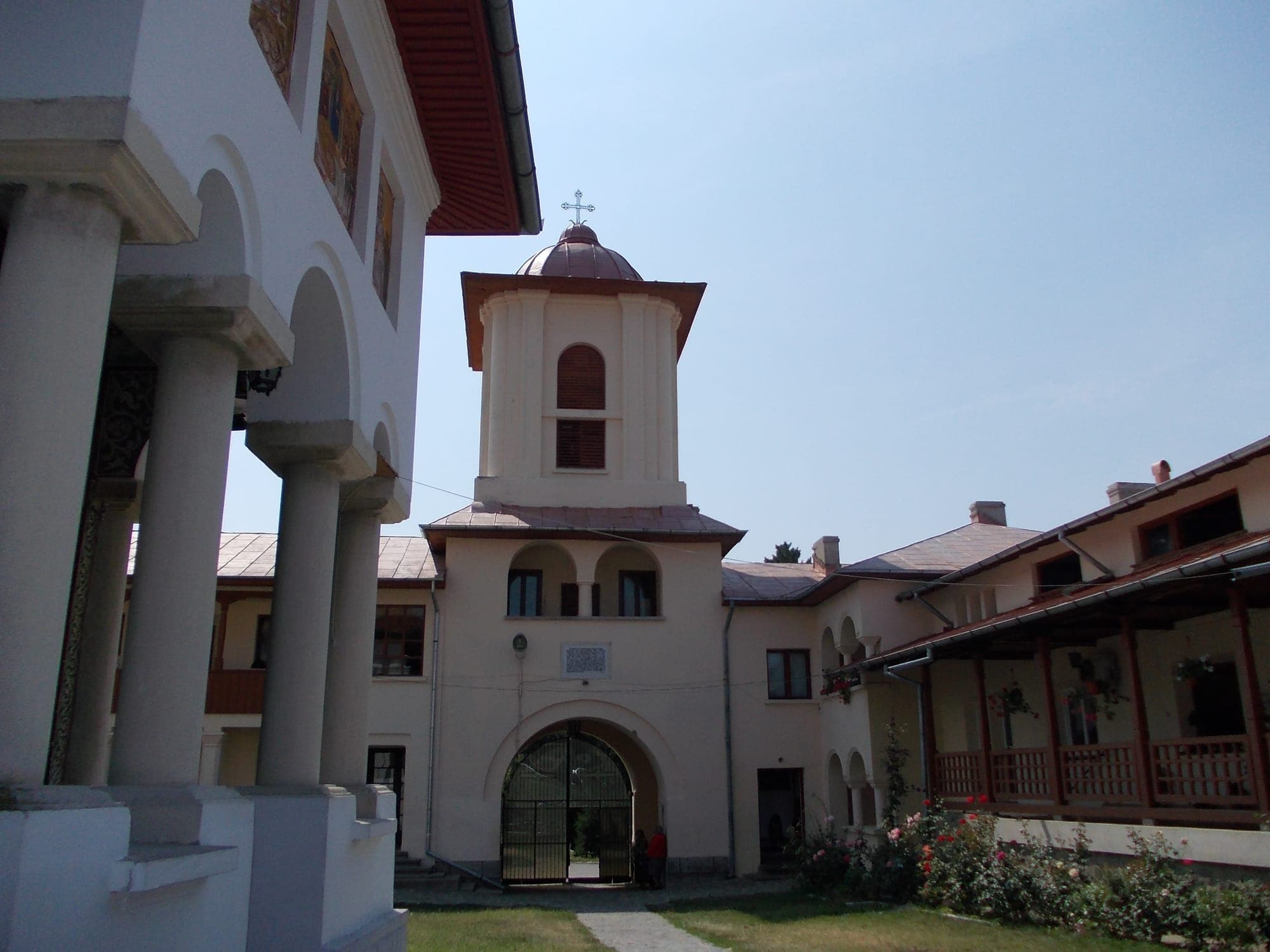
A 16th–17th-century monastery in Colentina, with a church rebuilt by Matei Basarab in 1647, a gatehouse bell tower and an arcaded princely house.

The former communist prison known as the 'prison of silence', where Ion Mihalache, Corneliu Coposu and other political prisoners were held alone in their cells; on UNESCO's Tentative List, currently closed to visitors.
A Roman fort in the Teleajen Valley, built during the Dacian Wars, with stone walls and a building with hypocaust heating; currently being developed as an archaeological park.

A wooden church moved twice, with a tall bell-tower spire and folk-style painting, in the grounds of Dragoslavele Hermitage on the hill north of the village.

A small convent in the Old Town with a Brâncoveanu-style church from 1724, façades painted with saints in medallions, an arcaded courtyard and a lapidary of stones from vanished Bucharest churches.

A Neoclassical palace on Calea Victoriei, built around 1835 to plans by Michel Sanjouand, with a façade decorated with caryatids; since 2025 it has housed the luxury store TOFF Galleries.
Salt lakes formed over the old salt mines of Telega, near Câmpina: in summer you swim in water holding almost 277 g of salts per litre. The mine galleries cannot be visited.

The central square of old Brăila, from which the streets of the historic centre fan out, with the blue Public Clock of 1909, the Holy Archangels church, a former mosque, and the statue of Trajan.

A convent first recorded in 1530, founded by Vlad the Drowned, a few kilometres from Târgoviște: a church with a porch painted with scenes from the Apocalypse, Brâncoveanu votive portraits and cells with wooden verandas.

The railway bridge over the Borcea branch, part of the complex Anghel Saligny built in 1890–1895 between Fetești and Cernavodă; best seen from a distance, next to the new A2 bridge.

The cathedral of the Diocese of Alexandria and Teleorman, built between 1869 and 1898 in the town centre: a three-towered brick church painted in 1898 by Ștefan Luchian and Constantin Artachino, and a listed historic monument.

The largest park in the Drumul Taberei neighbourhood, redeveloped in 2013–2015, with a boating lake, a cable-stayed footbridge with a red pylon and greenhouses of exotic plants.

An inn in the Old Town on Strada Lipscani, built in the early 19th century and restored in 2009–2014: today the seat of ARCUB, with a cobbled passage between Lipscani and Strada Gabroveni.