Top 100Scărișoara Ice Cave
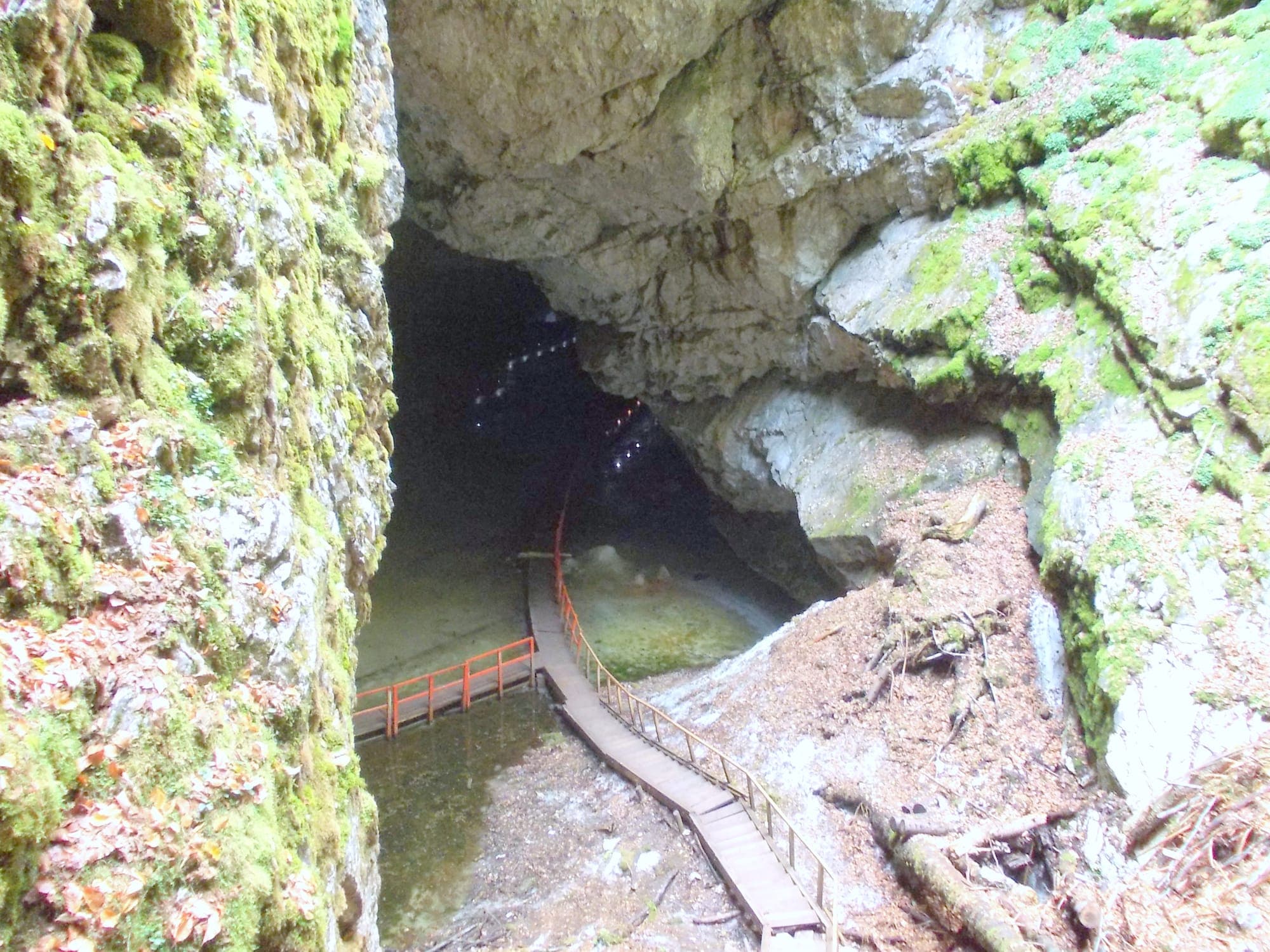
A cave in the Apuseni Mountains that holds one of the largest underground glaciers in the world: a block of ice over 10,000 years old, reached by stairs down a shaft 60 m across.
Top 100A cave in the Apuseni Mountains that holds one of the largest underground glaciers in the world: a block of ice over 10,000 years old, reached by stairs down a shaft 60 m across.
A narrow limestone gorge in the Piatra Mare Mountains near Brașov, with seven rock steps climbed on metal ladders and walkways; at the top you can ride a zip line back down.
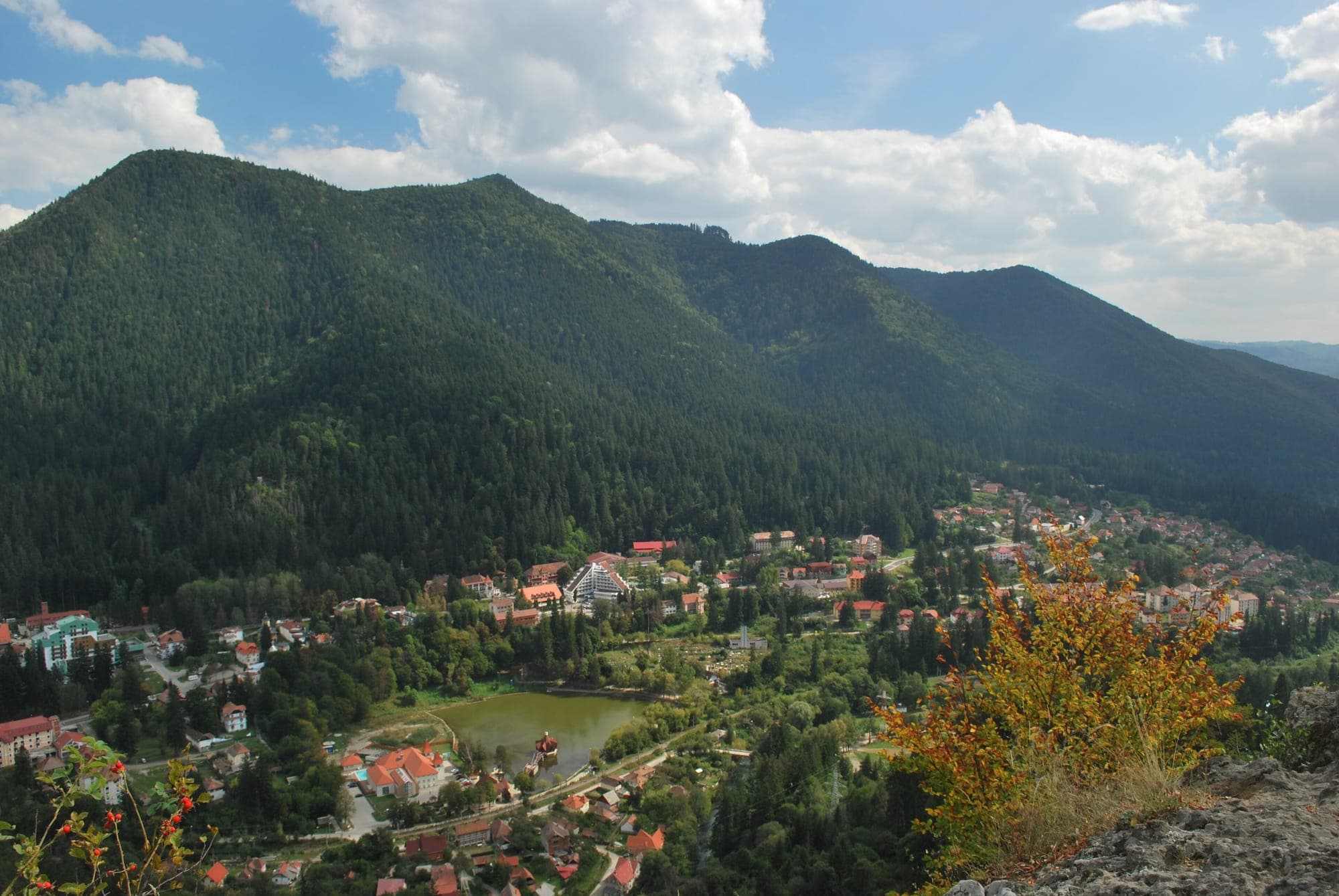
Top 100A spa resort in the Olt gorge between the Harghita and Bodoc mountains: naturally sparkling mineral springs, mofettes, a wellness centre with thermal water and trails up to Falcon Rock.
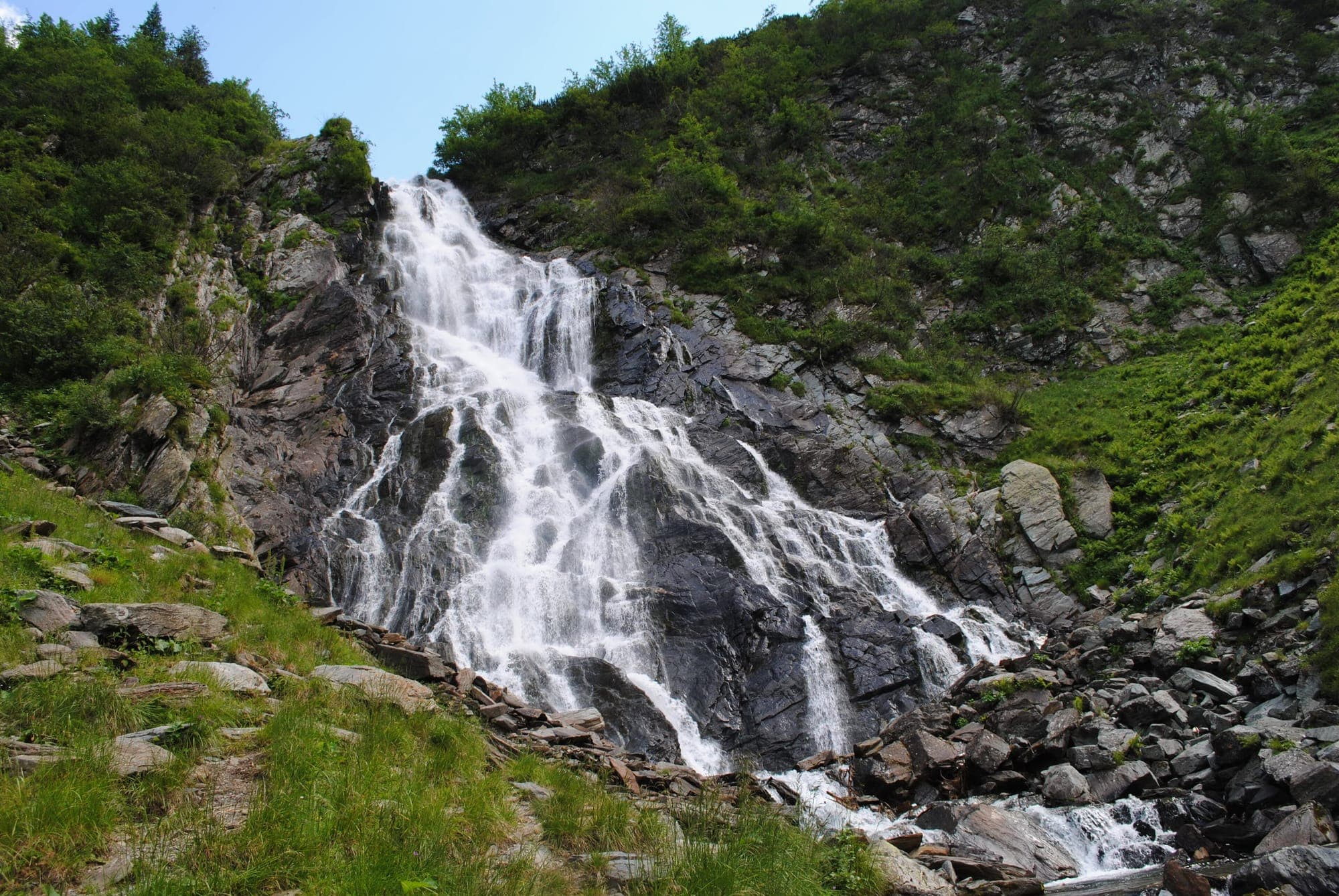
Top 100Romania's biggest tiered waterfall, dropping about 60 m over the lower step of the Bâlea cirque in the Făgăraș Mountains; an hour's walk up from the Bâlea Cascadă chalet on the Transfăgărășan.
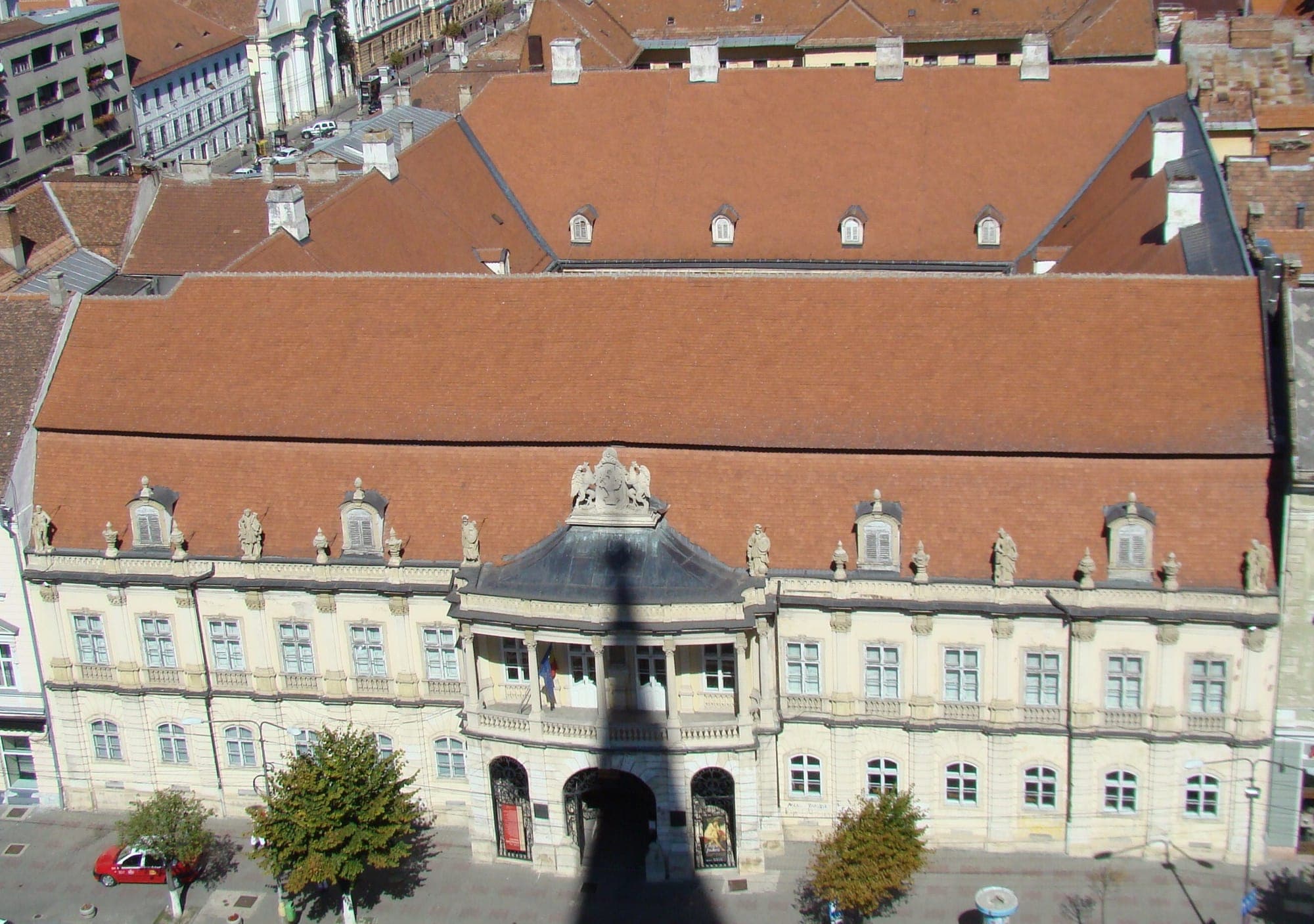
Top 100The finest Baroque palace in Transylvania, built between 1774 and 1785 on Cluj's Union Square, with classical statues along its attic; it houses the Art Museum, with five centuries of Romanian and Transylvanian painting.
Top 100Romania's largest glacial lake, at 2,040 m in the heart of Retezat National Park; it can only be reached on foot, after a climb of about two hours from Poiana Pelegii.
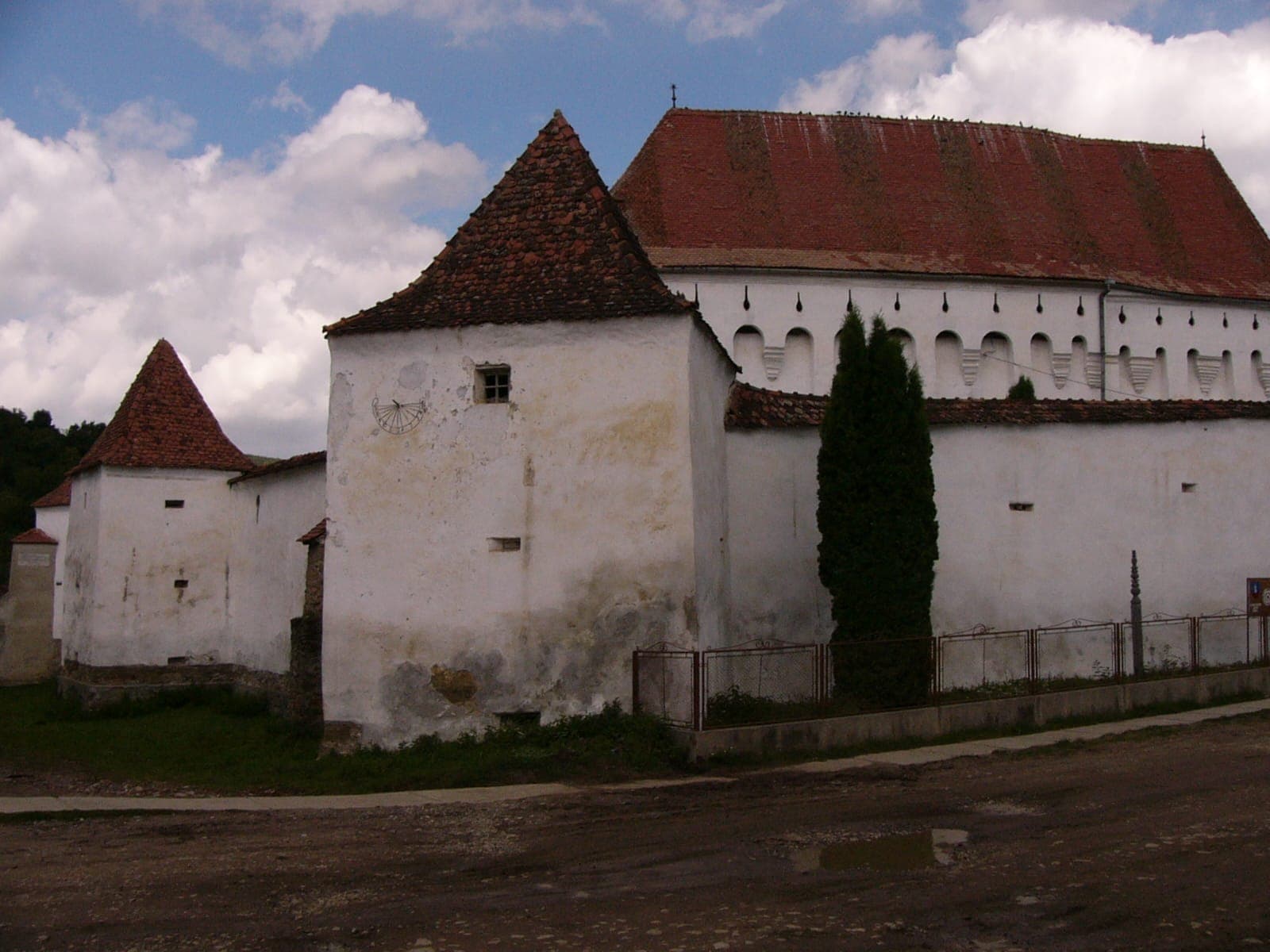
Top 100The only Székely and Unitarian church in the UNESCO fortified-church site: a Gothic church with 1419 frescoes of the legend of Saint Ladislaus, whose fortress villagers still use to store their bacon.
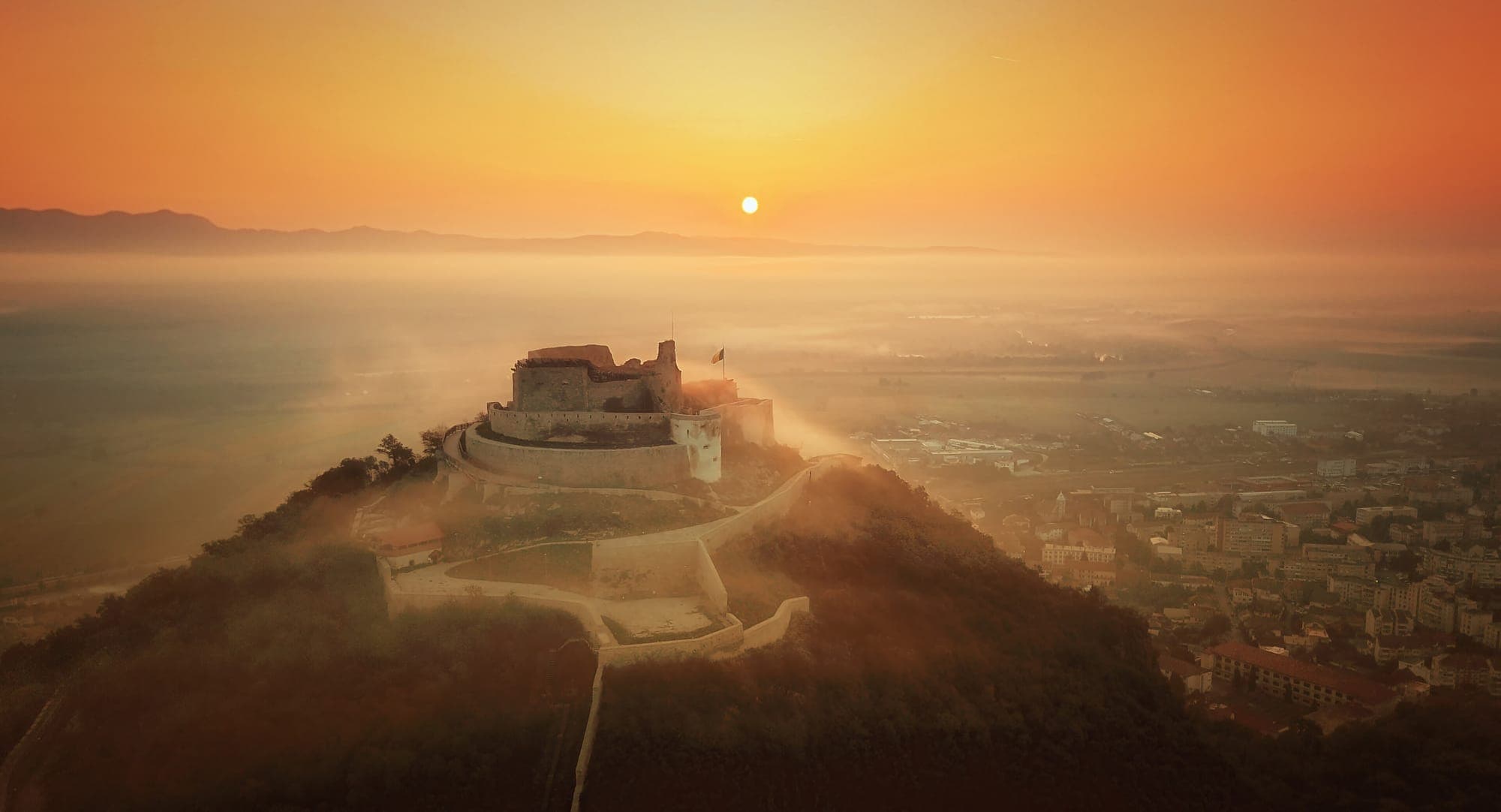
Top 100A 13th-century hilltop fortress on a volcanic hill above Deva, with three enclosures restored by 2024 and wide views over the Mureș valley.
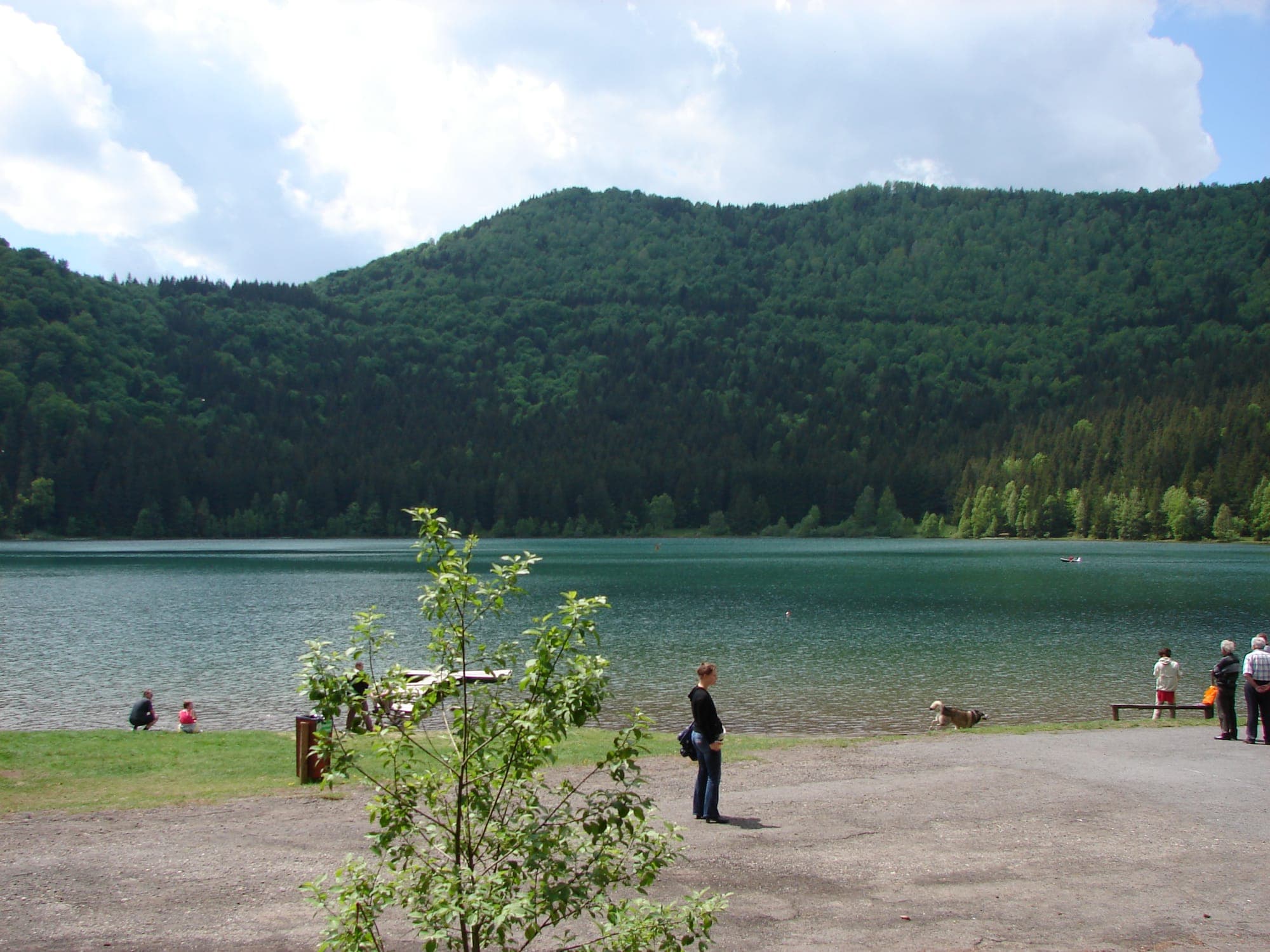
Top 100Romania's only volcanic lake: an almost round sheet of water in the Ciomatu crater, ringed by forest, with a Catholic chapel on the shore and the Mohoș peat bog in the neighbouring crater.
Top 100A masterpiece of Transylvanian Secession architecture, completed in 1913, with a gold-ground mosaic façade, the Hall of Mirrors and its 12 stained-glass windows, a concert hall with an organ and the Mureș County Museum's art galleries.
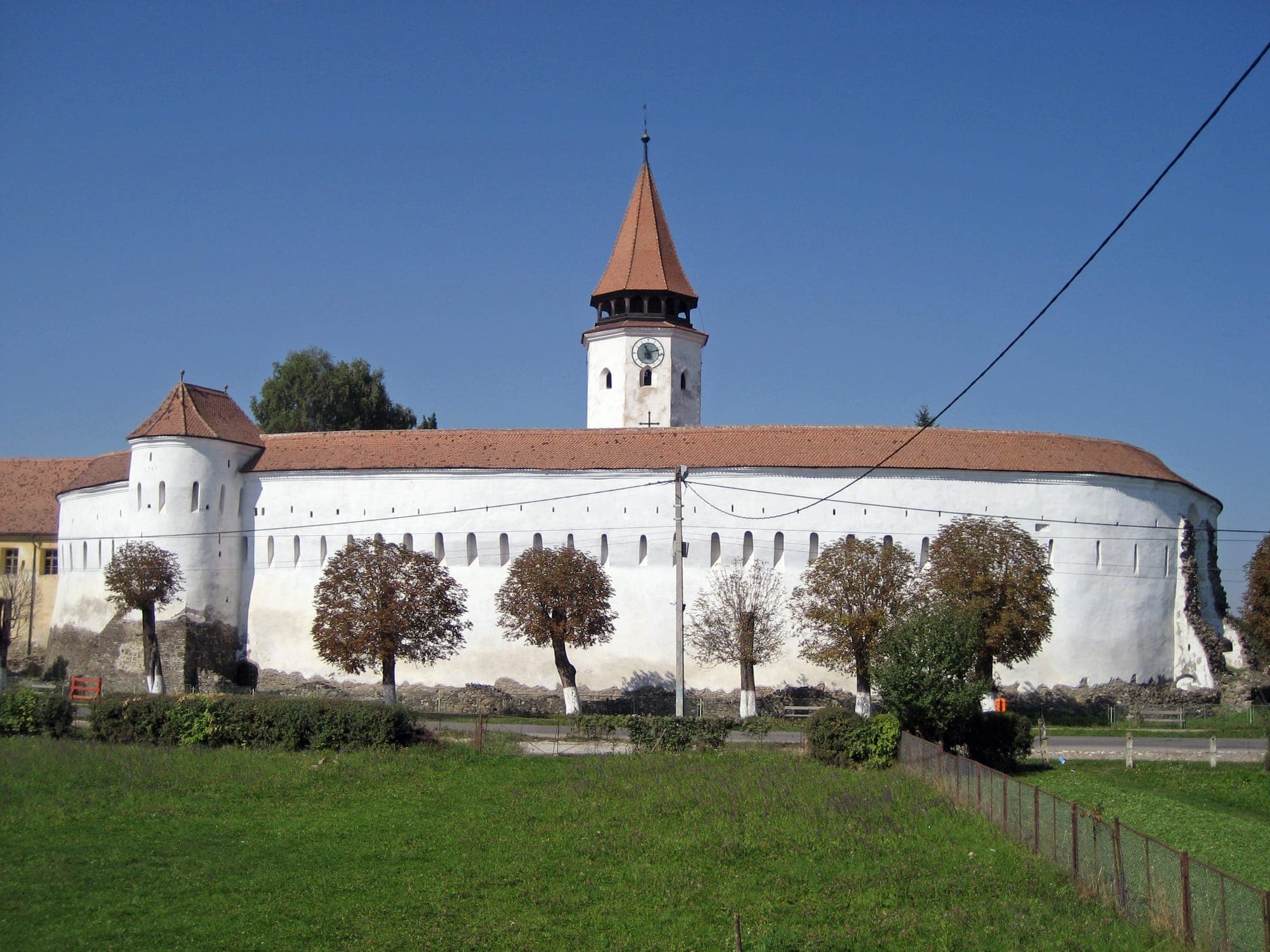
Top 100One of the largest Saxon fortified churches: a Gothic church on a cross-shaped plan, ringed by an oval wall with over 270 refuge rooms reached by timber galleries.
Top 100A natural dam lake formed in 1837, when a mountainside blocked the Bicaz valley; the trunks of the drowned forest still rise from the water, at the upper end of the Bicaz Gorge.
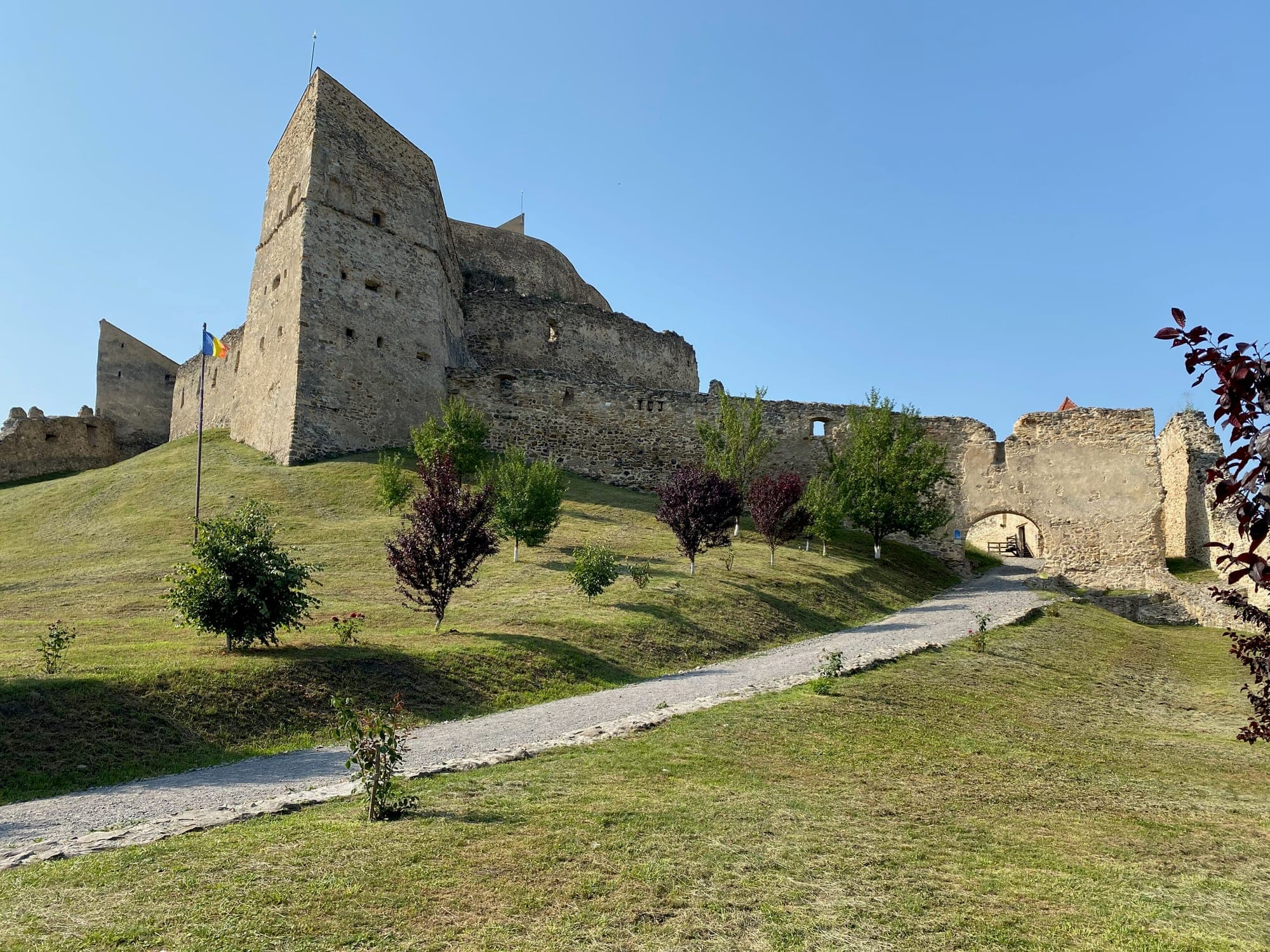
Top 100A Saxon peasant fortress climbing in tiers up a basalt hill above the town of Rupea, first recorded in 1324 and restored in 2010–2013, with wide views over the Transylvanian hills.
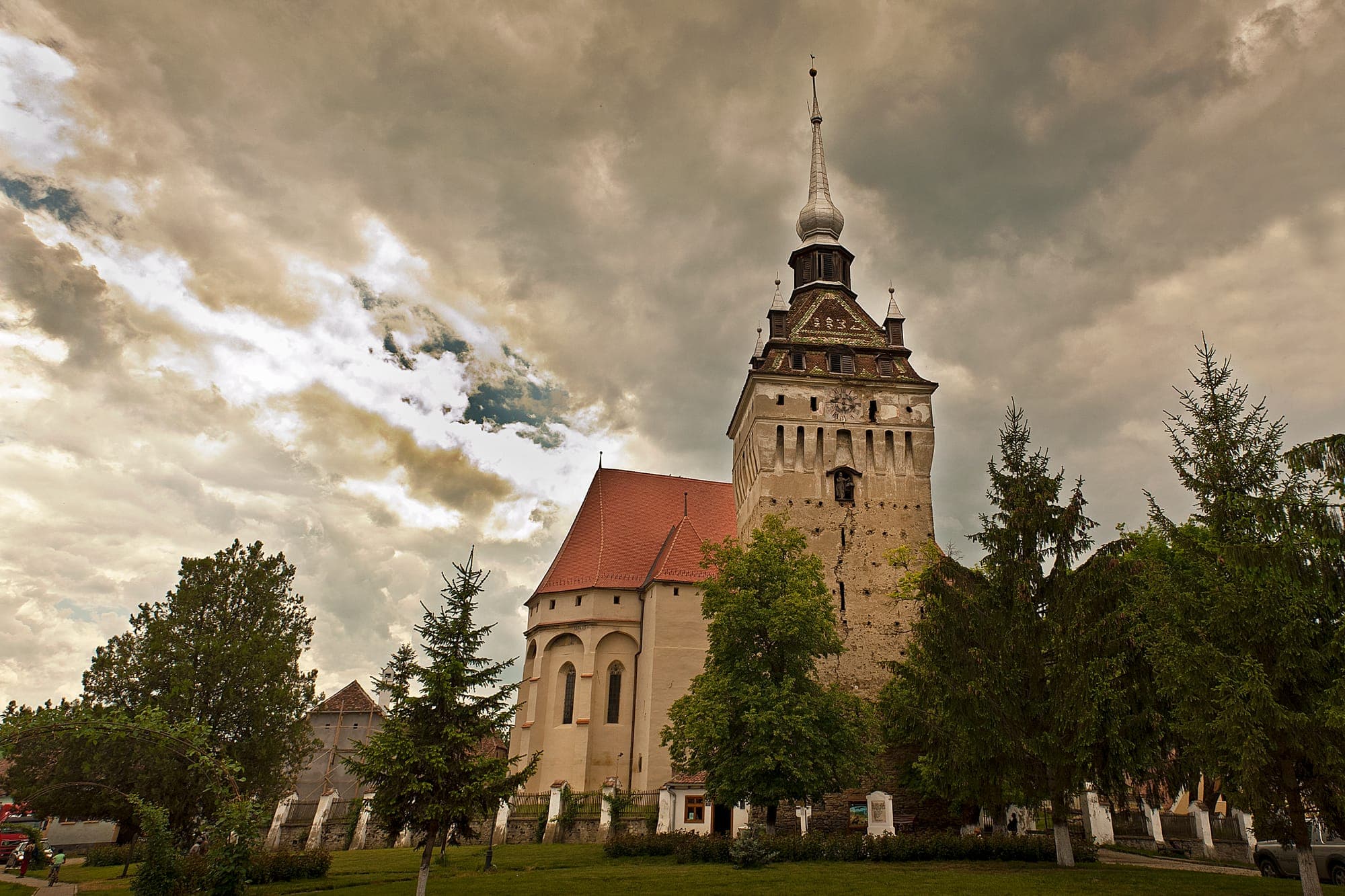
Top 100A Late Gothic Saxon church beside the DN13, with a bell tower modelled on Sighișoara's Clock Tower; on the hill above the village stand the walls of a 14th-century peasant fortress.
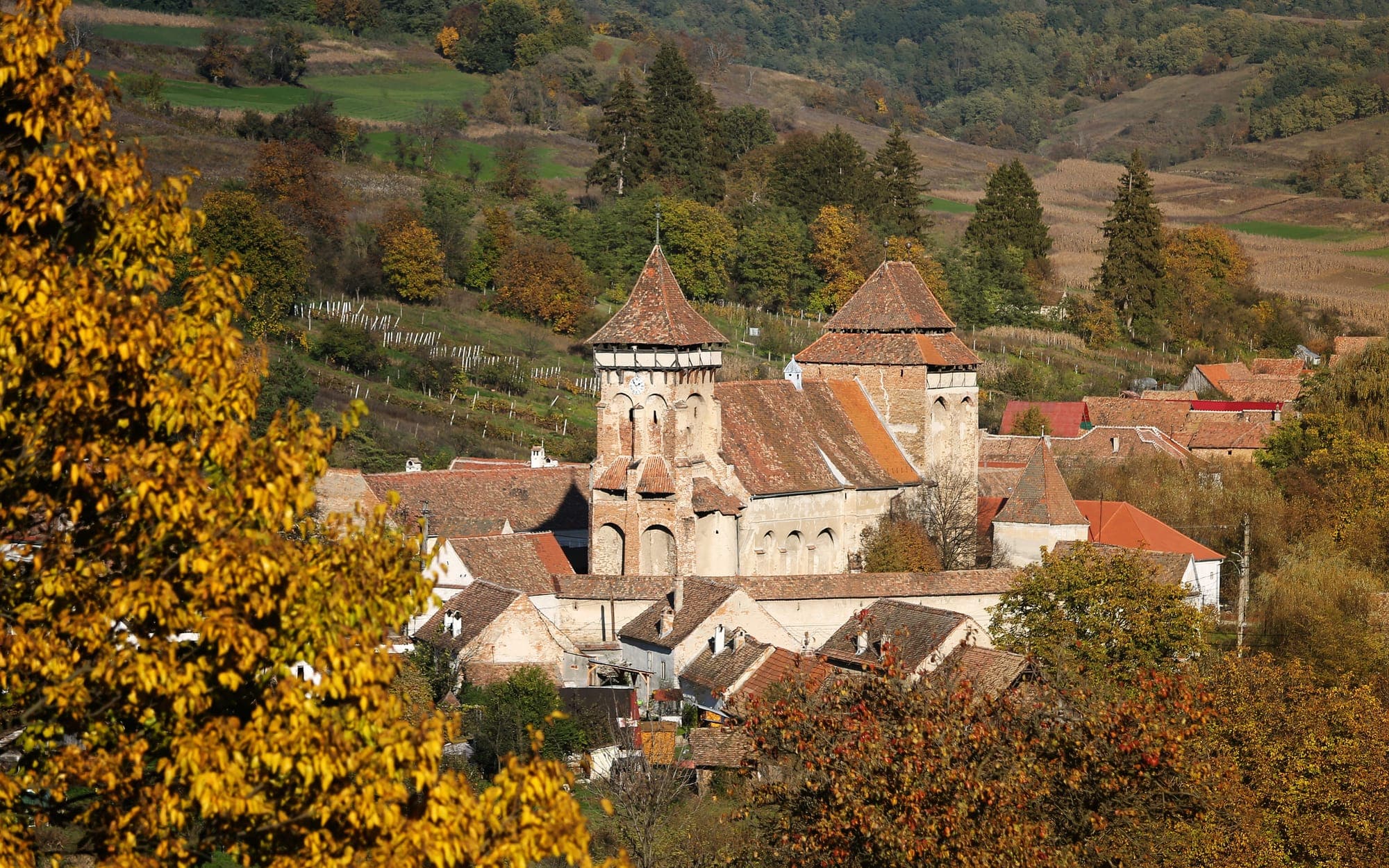
Top 100The Saxon church in a vineyard valley near Mediaș, with its choir turned into a defence tower, an almost intact oval wall and a wood-and-iron portcullis that has survived for centuries.
Top 100
Top 100
Top 100
Top 100
Top 100
Top 100
Top 100
Top 100
Top 100
Top 100
Top 100
Top 100
Top 100
Top 100