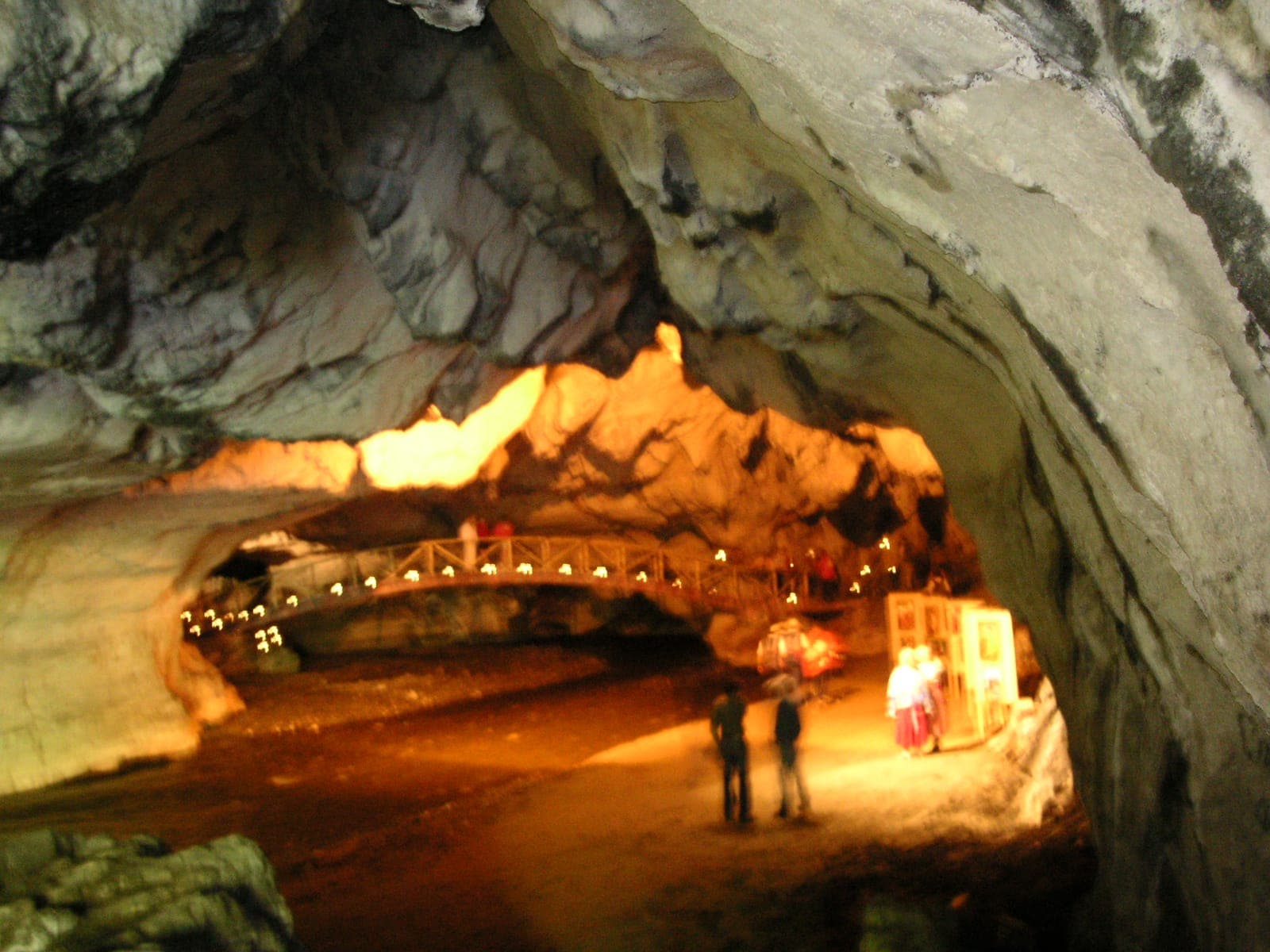
A cave crossed by a mountain stream north of Petroșani, with a 20 m-wide portal and a gallery of about 466 m walked end to end on footbridges, beneath the Dacian fortress of Bănița.
A mountain spa resort at 900 m in northern Harghita, with carbonated mineral springs you can drink from for free, old wooden villas, travertine caves and a new spa centre.
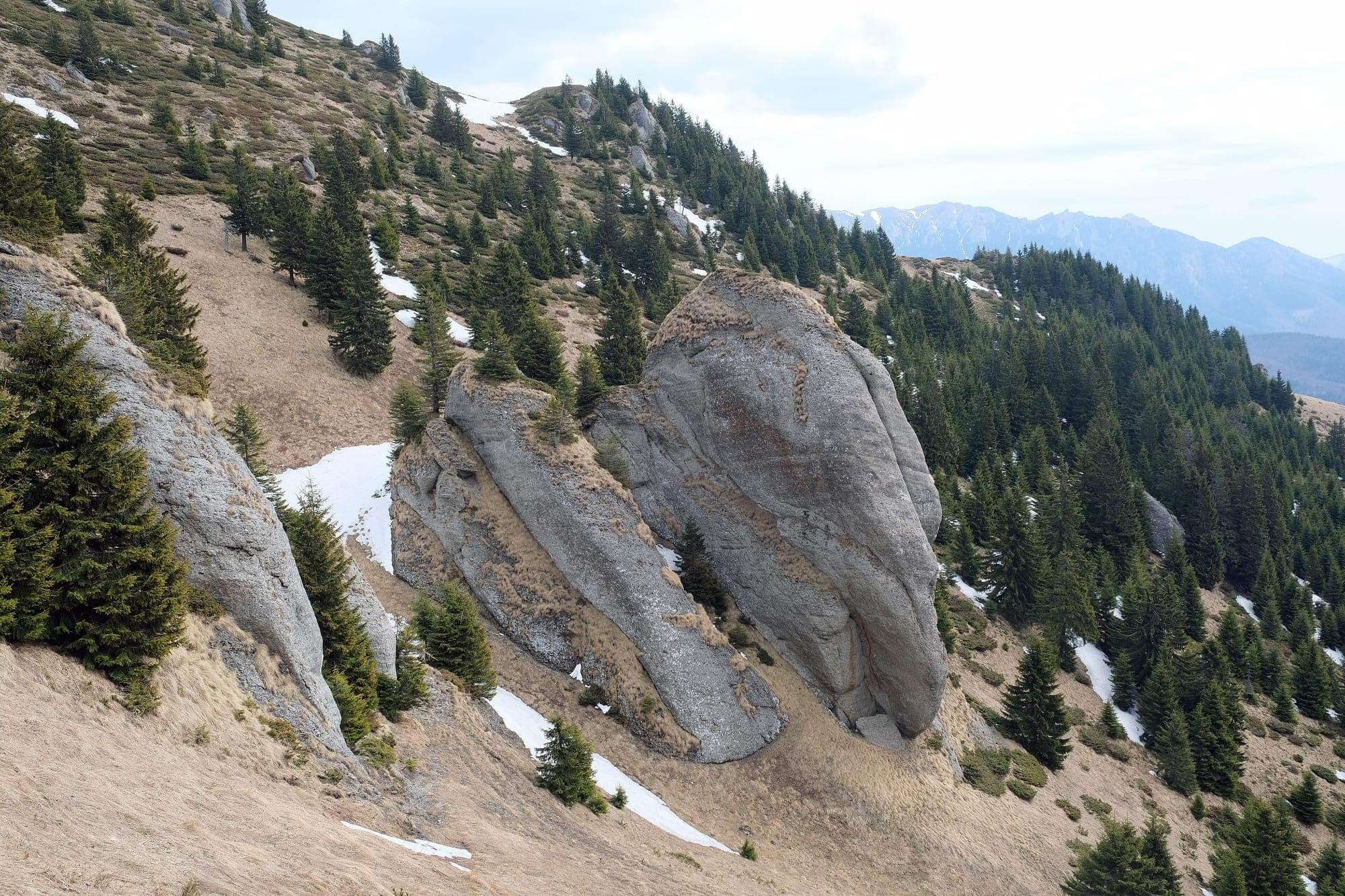
The pass where the DN1A crosses from the Teleajen valley into the Bârsa region at 1,263 m, below the Ciucaș Mountains: a mountain road between Cheia and Săcele and the trailhead for Ciucaș Peak.
A 20–30 m waterfall in the Cormaia Valley, at the foot of the Rodna Mountains near Sângeorz-Băi; a built path of about 1 km, with steps, footbridges and chains, climbs alongside its tiers.
A thermal waterfall that never freezes, spilling over a moss-covered travertine wall, a quarter of an hour's walk from the centre of the Geoagiu-Băi spa resort.
An undeveloped cave in the Bihor Mountains near Casa de Piatră: a huge portal, tens of metres high, through which the Gârdișoara stream vanishes underground.
The spa resort in the town of Covasna, Romania's "resort of the heart": carbon dioxide mofettes, sparkling mineral springs on every corner and the Devil's Pond, a mud volcano in the central park.
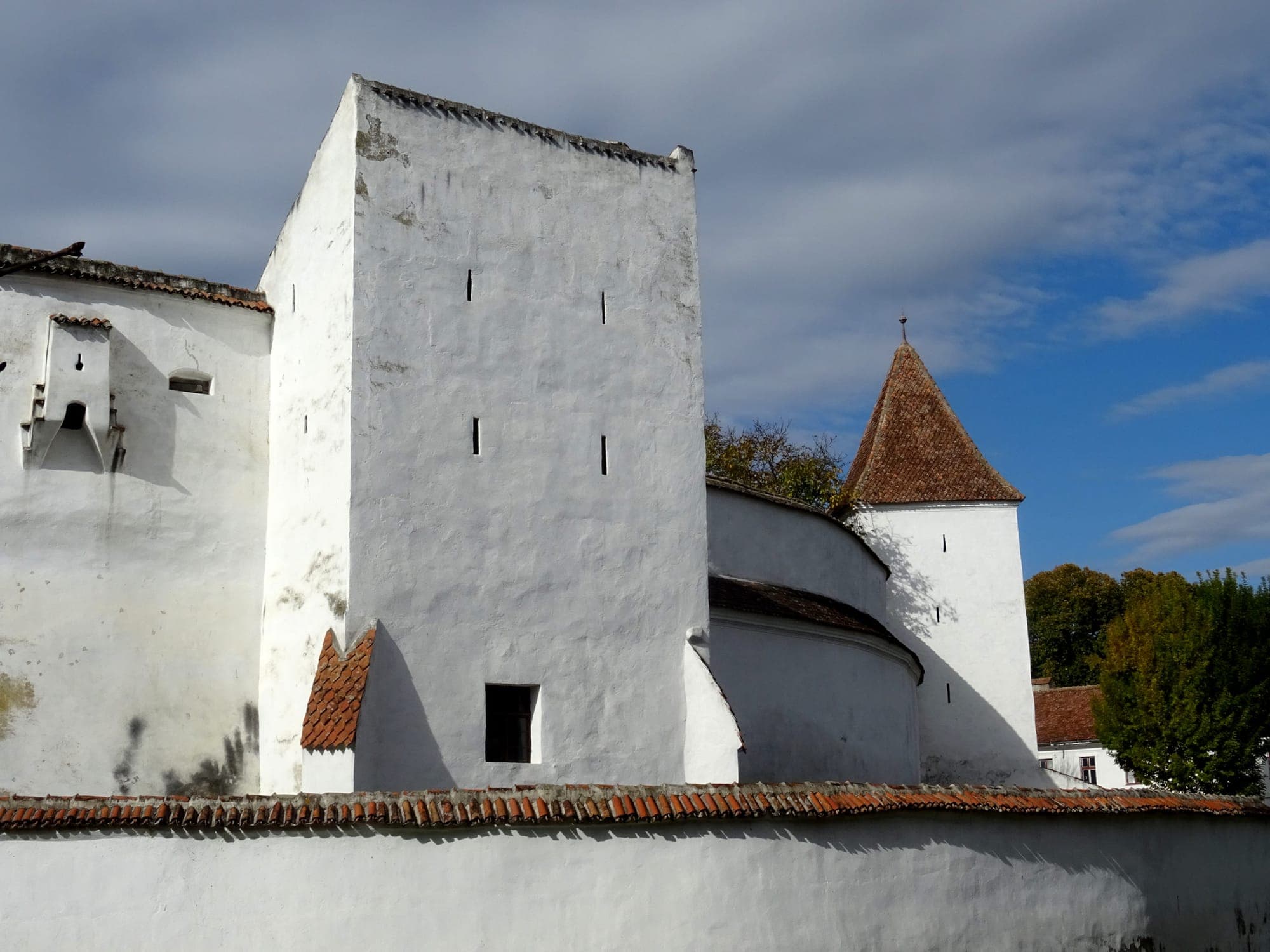
A Saxon church fortress in the Burzenland, near Brașov: a 19th-century Neoclassical church ringed by a double medieval wall with eight surviving defensive towers.
Monasteries and churchesFortresses and fortifications
A 13th-century Romanesque basilica enclosed by 12 m walls with seven towers, with the tallest bell tower in the Burzenland and a chapel of 15th-century Gothic frescoes.
Monasteries and churchesFortresses and fortifications
An active cave in the Trascău Mountains, with a portal almost 40 m high in the limestone wall and an underground river of lakes and waterfalls, visited only on guided tours in a wetsuit.
A Renaissance hunting manor of the Counts Kálnoky, begun in 1648, with bastions and rare stucco work, restored and opened in 2017 as the Museum of Transylvanian Life, with guided tours.
A reservoir about 13 km long on the Someșul Cald in the Apuseni Mountains, at almost 1,000 m; in dry summers the ruined church of the drowned village of Giurcuța de Jos rises from the water.
A reservoir almost 9 km long on the Someșul Cald, about 30 km from Cluj-Napoca, with wooded slopes, a 97 m arch dam and sailing or kayaking on the water.
The Renaissance castle of the Lázár family, with four bastions, a gate tower and walls topped by ornamental crenellations, at the edge of the forest near Gheorgheni; Gabriel Bethlen spent his childhood here.
A waterfall of about 15 m, split by a rock into two streams, in the Nucșoara valley in the north of Retezat National Park; a 15–20 minute walk from Cârnic.