
Things to do in Bucharest: what to see in 1–2 days, in the city and nearby

The sights of Bucharest cluster in a few areas you can link by metro: the Old Town with Stavropoleos Monastery and Manuc's Inn, Calea Victoriei with the Royal Palace and the Romanian Athenaeum, Spirii Hill with the Palace of the Parliament, and Șoseaua Kiseleff, with the National Museum of the Romanian Peasant, the Grigore Antipa National Museum of Natural History, the Arch of Triumph and the Dimitrie Gusti National Village Museum on the shore of Lake Herăstrău. The Palace of the Parliament can only be visited on a guided tour, booked by phone at least 24 hours in advance.
Below are the 25 best-known sights in the city, out of more than 70 on the site, by area: how to combine them in a day or a weekend, what is open in winter and on Mondays, what to do with children or when it rains and what to see around the city, 15–40 km away. The current opening hours and prices are on the page of each attraction; all the places are on the Bucharest page and on the map.
In short
- The best-known sights in Bucharest are the Old Town (Lipscani), the Palace of the Parliament, the Romanian Athenaeum, the Royal Palace with the National Museum of Art, the National Village Museum and Herăstrău Park.
- The Palace of the Parliament is open daily 9:00–17:00, on guided tours only, booked by phone at least 24 hours in advance; the standard tour costs 85 lei for adults, and tickets are sold only at the ticket office on Strada Izvor.
- Free in Bucharest: the Old Town, Stavropoleos Monastery, the Patriarchal Cathedral, Kretzulescu Church, Cișmigiu Gardens, Herăstrău Park and Carol I Park; the Royal Palace (National Museum of Art) has free entry on the first Wednesday of the month.
- On Mondays and Tuesdays the National Museum of Art, the National History Museum, the Peasant Museum and the Technical Museum are closed; on Mondays the Antipa Museum, the Arch of Triumph, Cotroceni Palace, Primăverii Palace and the zoo are closed as well.
- The Romanian Athenaeum can be visited in short windows, published monthly by the Philharmonic, with a 15 lei ticket payable in cash only.
- Around Bucharest, 15–40 km away, are Mogoșoaia Palace, Cernica Monastery, the Therme complex in Balotești and Lake Snagov with the monastery on its island.
Bucharest attractions: what to see, in one table
The table brings together the best-known sights in the city, from the Old Town to Herăstrău and Cotroceni, with the opening hours and the adult price from their pages. The Old Town, Calea Victoriei and Metropolitan Hill are done on foot; to Kiseleff, Herăstrău and Cotroceni you take the metro.
| Attraction | Area | What it is | Visit length | Hours and price |
|---|---|---|---|---|
| Old Town (Lipscani) | Old Town | pedestrian streets, the Old Princely Court | ~2 h | always open, free |
| Stavropoleos Monastery | Old Town | Brâncoveanu-style church from 1724 | ~30 min | daily 8–19, free |
| Manuc's Inn | Old Town | inn from 1808, courtyard with galleries | ~45 min | during restaurant hours, free |
| National Museum of Romanian History | Calea Victoriei | the Treasury, the copy of Trajan's Column | ~2 h | Wednesday–Sunday 10–18, 32 lei |
| Royal Palace (MNAR) | Revoluției Square | Throne Room, art galleries | ~3 h | Wednesday–Sunday, 32 lei one gallery, 80 lei all |
| Romanian Athenaeum | Revoluției Square | concert hall from 1888 | ~45 min | monthly windows, 15 lei cash |
| Cișmigiu Gardens | centre | the oldest public park, from 1847 | ~1 h 30 | free |
| Palace of the Parliament | Spirii Hill | guided tour through the protocol halls | ~1 h 30 | daily 9–17, booking, 85 lei |
| Patriarchal Cathedral | Metropolitan Hill | church from 1654–1658 | ~30 min | daily 7–20, free |
| Museum of the Romanian Peasant | Victoriei Square | peasant art and civilisation | ~2 h | Wednesday–Sunday 10–18, 20 lei |
| Antipa Museum | Victoriei Square | natural history, dioramas from 1907 | ~2 h | Tuesday–Sunday, 32 lei |
| Arch of Triumph | Șoseaua Kiseleff | 27 m arch, terrace | ~45 min | winter Tuesday–Sunday 9–17, 15 lei |
| Village Museum | Herăstrău | open-air museum, from 1936 | ~2 h 30 | winter daily 9–17, 40 lei |
| Herăstrău Park | north | the largest park, ~190 ha | ~2 h 30 | always open, free |
| Primăverii Palace | north | the Ceaușescu family home | ~45 min | Tuesday–Sunday, guided tour, 85 lei |
| Cotroceni Palace | Cotroceni | residence of King Ferdinand | ~1 h 30 | Tuesday–Sunday 9–17, 50 lei |
Visit lengths, opening hours and adult prices from the attraction pages (checked on the official websites in September–October 2026), valid at the beginning of November 2026. MNAR = the National Museum of Art of Romania.


The Old Town: Lipscani, Stavropoleos and Manuc's Inn
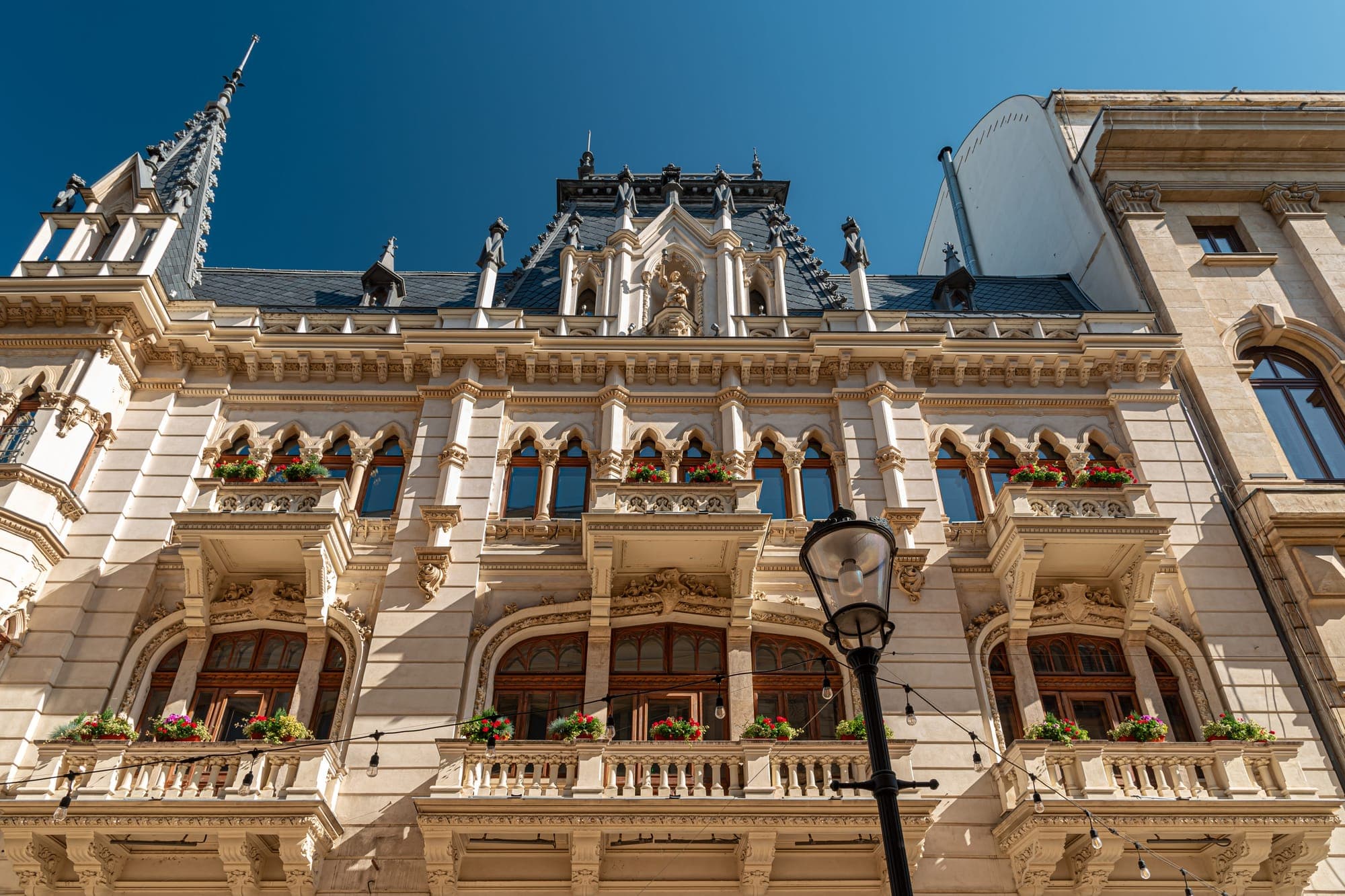
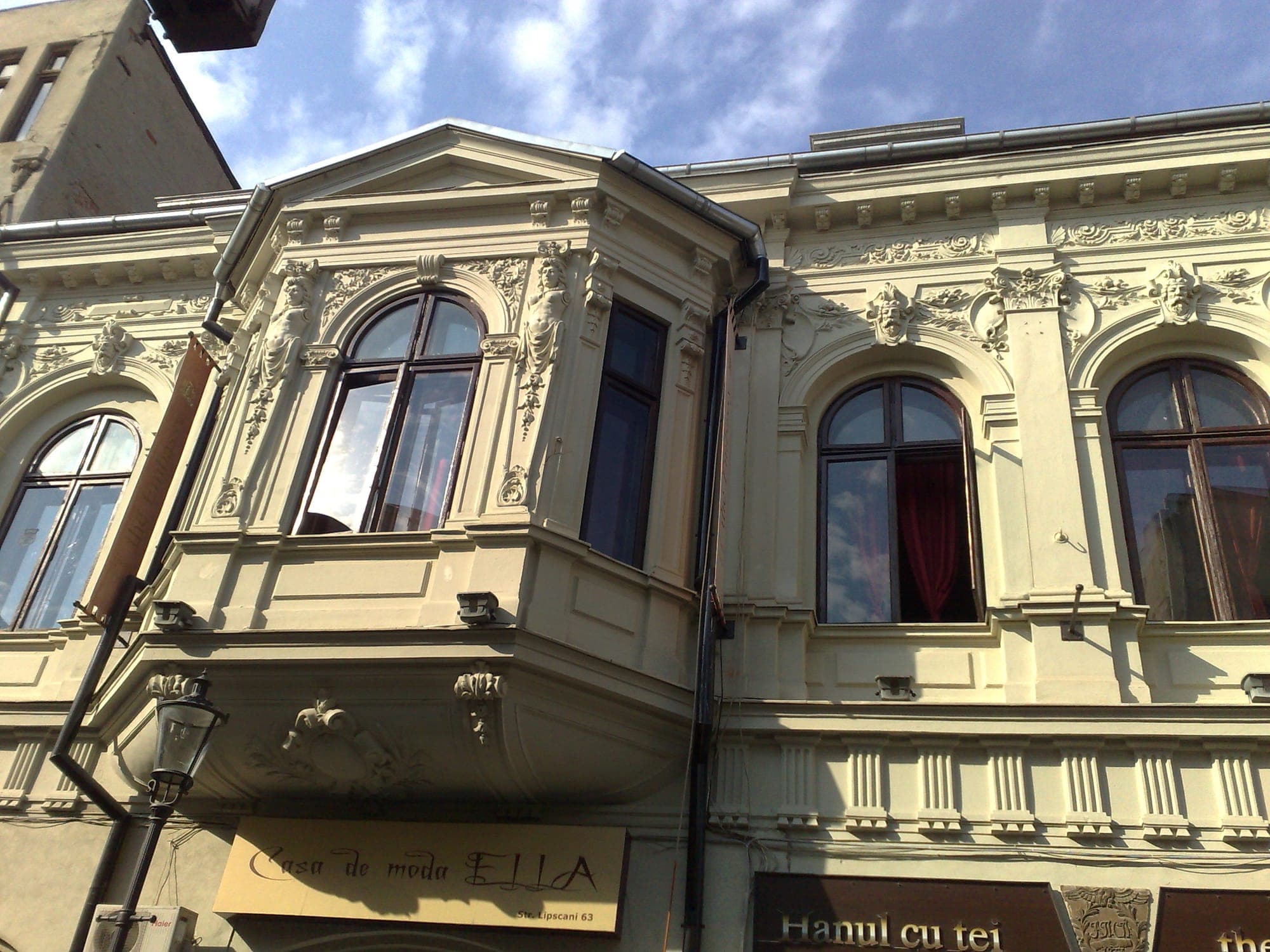
The Old Town (Lipscani) is the core of the city: narrow pedestrian streets between Calea Victoriei and Unirii Square, named after the old guilds (Lipscani, Șelari, Covaci, Gabroveni). On Strada Franceză are the ruins of the Princely Court: the Curtea Veche Princely Palace has been closed since 2015, and since September 2026 it has had works to make it safe, so it can only be seen from outside; the Curtea Veche church can be visited outside services. On Lipscani, at no. 63–65, the Linden Tree Inn (Hanul cu Tei), from 1833, is a passage through to Strada Blănari, with art galleries and antiquarian bookshops.
On the street of the same name is Stavropoleos Monastery, the church from 1724 with painted façades, a porch with carved columns and an arcaded courtyard, open daily 8:00–19:00, with free entry. On the same street, Caru' cu Bere, the beer hall from 1899, with a vaulted hall, murals and stained glass, is a historic monument. Opposite Curtea Veche is Manuc's Inn, from 1808, with two levels of wooden galleries; the Russo-Turkish peace of 1812 was negotiated here. The courtyard can be seen for free, during restaurant hours.
On the edge of the area, on Calea Victoriei, are the CEC Palace, from 1897–1900, which can only be seen from the street, and, opposite, the National Museum of Romanian History, in the Postal Palace. Most of the building has been closed since 2002; you can visit the Historical Treasury, with the royal crowns and the Dacian gold, the Lapidarium and the copy of Trajan's Column, Wednesday–Sunday 10:00–18:00 (32 lei).



Calea Victoriei: Royal Palace, Athenaeum and Cișmigiu
Heading north on Calea Victoriei, you reach Revoluției Square, ~2 km from Unirii Square. Here is the Royal Palace, the former residence of the kings, today the National Museum of Art: the Throne Room, the Voivodes' Staircase, Brâncuși and Luchian in Romanian art, El Greco and Rembrandt in European art. It is open Wednesday–Friday 10:00–18:00 and Saturday–Sunday 11:00–19:00; one gallery costs 32 lei, the whole palace 80 lei, and on the first Wednesday of the month entry is free.
Opposite is the Romanian Athenaeum, the concert hall from 1888, with a ~41 m dome and a fresco of more than 70 m with the history of the Romanians. It has no fixed schedule: the Philharmonic publishes the visiting windows monthly, and the 15 lei ticket is payable in cash only. On the same side is Kretzulescu Church, in the Brâncoveanu style, from 1720–1722, open daily 8:00–18:00.
To the south, at Drapelului Square, the National Military Circle Palace can be seen from the street. From there, along Bulevardul Regina Elisabeta, you enter Cișmigiu Gardens, the oldest public park in the city, laid out from 1847 around a lake, with the Writers' Rotunda.


The Palace of the Parliament and Metropolitan Hill
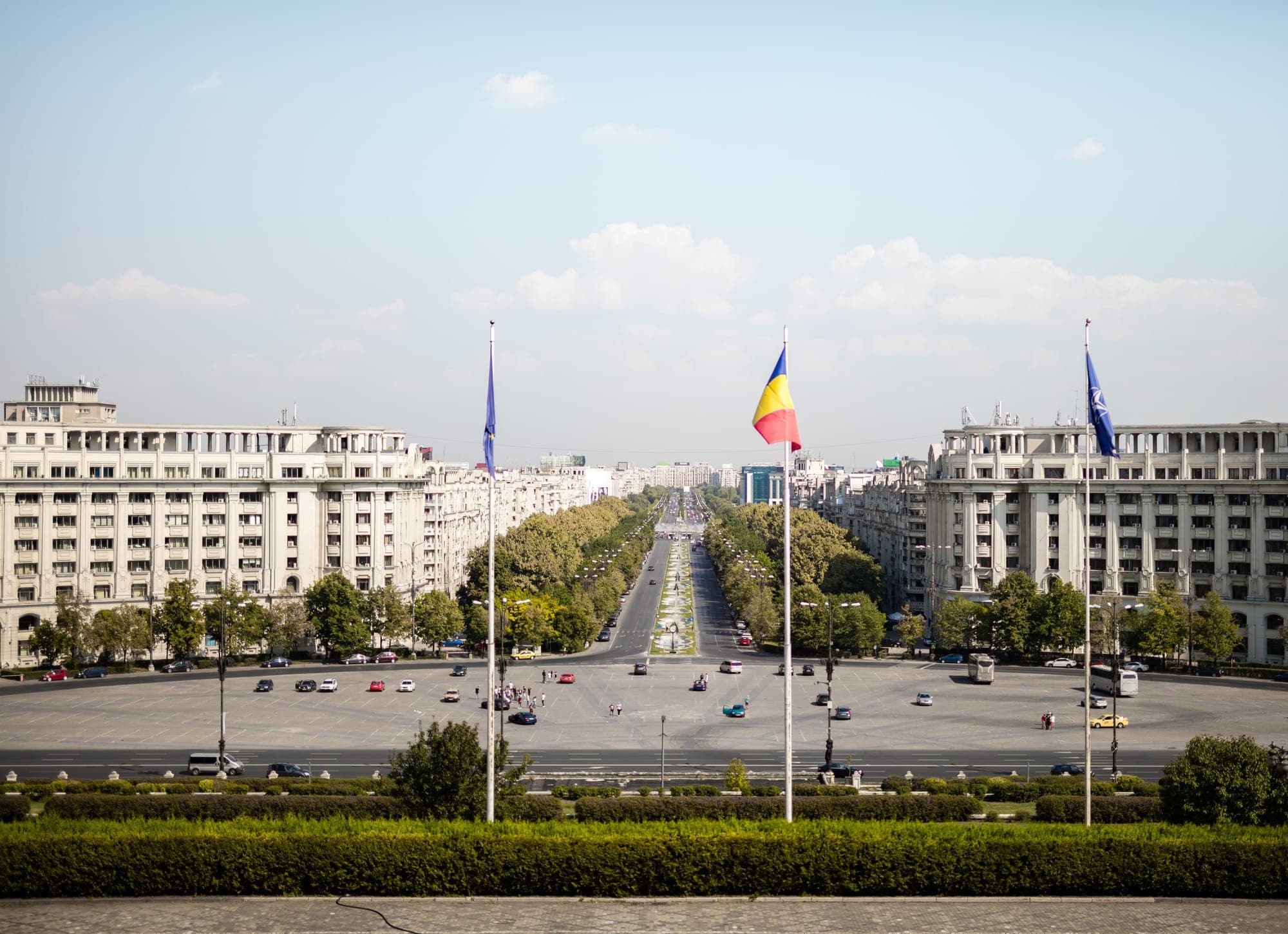
The Palace of the Parliament, built from 1984 on Spirii Hill, is the heaviest building in the world: 270 by 245 m, 84 m high. You can enter only on guided tours, daily 9:00–17:00, with a phone booking made at least 24 hours in advance (the line is open 9:00–16:00). The standard tour lasts ~90 minutes and costs 85 lei for adults, 55 lei for students and 40 lei for children aged 7–18; tickets are sold only at the ticket office at the entrance. The visitors' entrance is on Strada Izvor, not from Constituției Square; the nearest metro station is Izvor.
Behind the palace, on Arsenalului Hill, is the People's Salvation Cathedral, ~127 m tall and still unfinished: the interior opens only in periods announced by the Patriarchate, and since 9 January 2026 it has been closed for works. About 600 m from Unirii Square metro station, on Metropolitan Hill, is the Patriarchal Cathedral of Bucharest, from 1654–1658, with the relics of Saint Demetrius the New and the bell tower from 1698, open daily 7:00–20:00.
To the south-east, ~1.5 km from Unirii Square, Carol I Park climbs beside the lake to the Tomb of the Unknown Soldier; the Dimitrie Leonida National Technical Museum is also in the park.


Șoseaua Kiseleff and Herăstrău: museums and parks
At Victoriei Square (metro M1, M2) two museums face each other. The National Museum of the Romanian Peasant, fully reopened on 28 June 2026 after restoration, has more than 100,000 objects; the permanent exhibition is visited in groups, with entry at 10:00, 11:30, 13:00, 14:30 and 16:00 (20 lei, Wednesday–Sunday). The Grigore Antipa National Museum of Natural History has the dioramas from 1907 and the Deinotherium skeleton in the hall (32 lei, closed on Mondays).
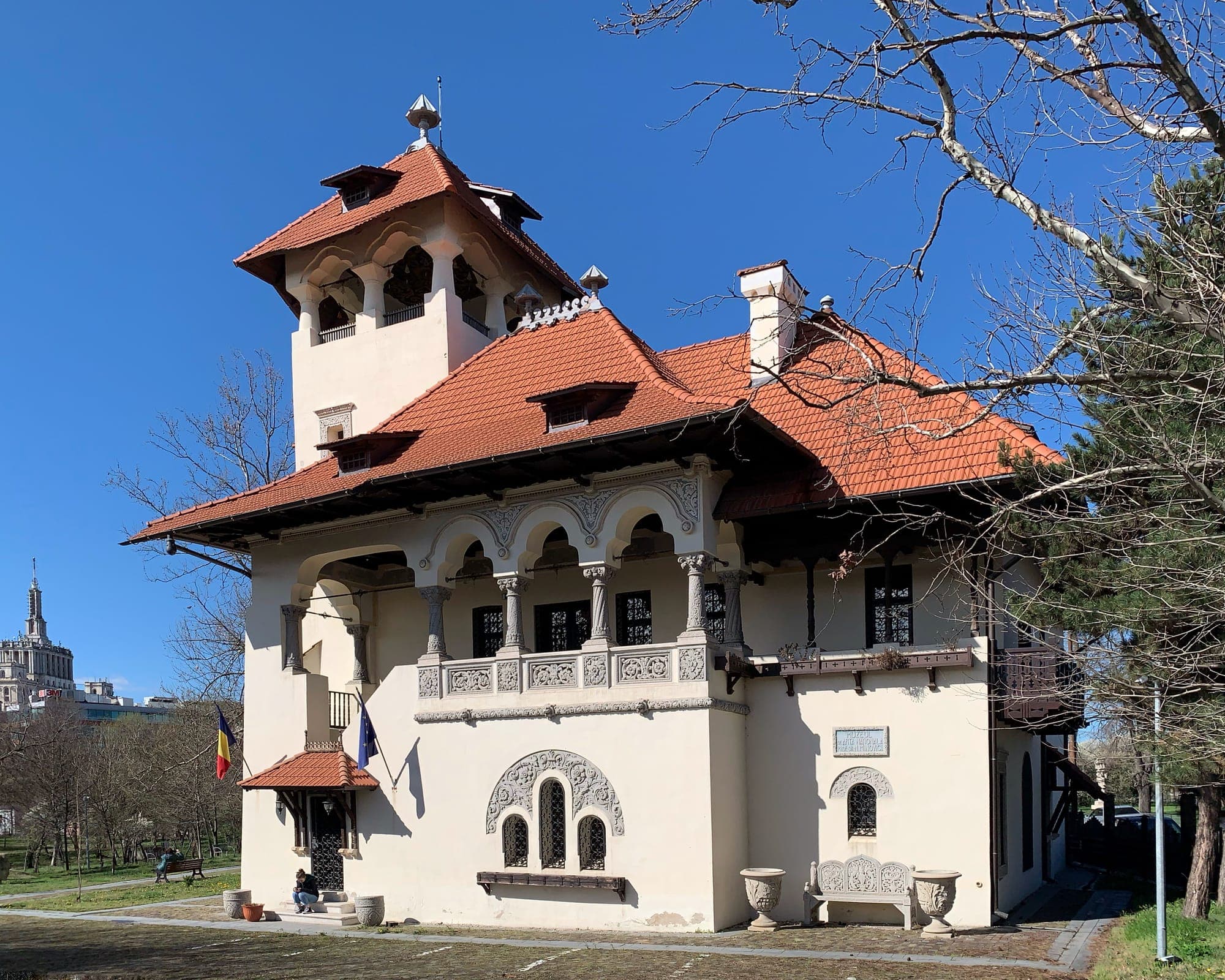
On Kiseleff, to the north, ~2.5 km from Victoriei Square, is the Arch of Triumph, 27 m high: you climb 292 steps to the terrace (15 lei). Next to it, on the lakeshore, is the Dimitrie Gusti National Village Museum: farmsteads, wooden churches and mills brought from all over the country since 1936. The houses open only Wednesday–Sunday; on Mondays and Tuesdays you see only the paths, at half price (the full ticket is 40 lei). The Nicolae Minovici Folk Art Museum, ~1.7 km from it (~22 minutes on foot), the Neo-Romanian villa from 1905 with Dr Minovici's folk art collection, is open Wednesday–Sunday 10:00–18:00 (20 lei).
King Michael I Park (Herăstrău) is the largest in the city, at ~190 ha, with the Caryatid Alley and the Japanese Garden; in 2026 the lake is drained for works, so there are no boats. About 1 km from Charles de Gaulle Square, the Primăverii Palace, the Ceaușescu family home, can only be seen on guided tours with an online ticket for a set hour (85 lei).



Cotroceni: the palace and the Botanical Garden
In the west, ~4 km from Unirii Square (metro Eroilor or Politehnica), the Cotroceni Palace is the former residence of King Ferdinand and Queen Marie, today the seat of the Presidency and a museum: the king's library, Queen Marie's rooms and Șerban Cantacuzino's church. Tuesday–Friday you choose a self-guided tour (50 lei) or a guided one, by appointment (70 lei); at weekends the self-guided tour also includes the Presidency's halls (70 lei).
Opposite, the university's “Dimitrie Brândză” Botanical Garden, Bucharest covers ~18 ha, with a rose garden, a lake with an island and greenhouses with palm trees. Between 16 October and 15 March it is open 9:00–16:00, with an 8 lei ticket.


What to see in Bucharest in one day or in 2 days
One day: in the morning, the Palace of the Parliament tour, booked in advance. Then Metropolitan Hill and the Patriarchal Cathedral, down to Unirii Square and into the Old Town: Manuc's Inn, Stavropoleos, Lipscani. In the afternoon, walk up Calea Victoriei, past the History Museum and the CEC Palace, to the Royal Palace, the Athenaeum and Kretzulescu Church; in the evening, Cișmigiu is a few minutes away. All of it is on foot, ~4 km.
The second day is for the north: the Peasant Museum or the Antipa Museum at opening time, the metro to Aviatorilor, the Village Museum (~2 hours 30 minutes), the Arch of Triumph and a walk through Herăstrău. If you want historic interiors, take Cotroceni Palace and the Botanical Garden instead or, with a booked ticket, Primăverii Palace.
If you can, choose a day from Wednesday to Sunday: on Mondays and Tuesdays the national museums of art, history and the Peasant are closed, and on Mondays so are Antipa, the Arch and Cotroceni. On Mondays the Palace of the Parliament, the churches, the parks and the paths of the Village Museum stay open.
Bucharest in winter, during the Christmas markets
In December, the biggest market is in Constitution Square (Piața Constituției), in front of the Palace of the Parliament; the dates, the hours and the other markets in the city are in the guide to the Christmas markets in Bucharest. What changes in the city in winter:
- Arch of Triumph: 1 November – 31 March, Tuesday–Sunday 9:00–17:00.
- Village Museum: daily 9:00–17:00, with the houses open only Wednesday–Sunday; closed on 25–26 December and 1–2 January.
- Zoo: Tuesday–Sunday 10:00–17:00; closed on 25 and 31 December and on 1 January.
- Royal Palace (MNAR): closed on 30 November and on 25–26 December, free entry on 1 December.
- Antipa Museum: on 30 November and 1 December 2026, special hours 10:00–18:00, Mondays included.
- Technical Museum: November–March, 9:30–17:00.
- Cișmigiu Gardens: an ice rink is usually set up on the lake in winter; the hours and prices for 2026–2027 are not confirmed.
The People's Salvation Cathedral opened for the holidays in 2025, between 24 December and 8 January; a new opening will be announced on catedrala-nationala.ro.
What to do in Bucharest with kids
- Bucharest Zoo in Băneasa Forest: tigers, lions, bears and more than 150 species, plus a reptile pavilion; 20 lei for adults, 10 lei for children from 3 years, free under 3.
- Antipa Museum: dioramas, skeletons and the insect hall; preschoolers get in free.
- Dimitrie Leonida National Technical Museum, in Carol I Park: Aurel Persu's car, steam engines, the “flying backpack”; 7 lei for children over 5, free under 5.
- Village Museum: houses, mills and wide paths; children aged 0–6 get in free.
- The parks Herăstrău, Cișmigiu and Carol I have playgrounds and wide paths, with free entry.
- Therme București, on the edge of the city: children under 14 are admitted only to the Galaxy zone, with water slides.
With little ones, the Palace of the Parliament tour means hundreds of steps, with no lift, and at Primăverii Palace the pushchair cannot go on the route; the Arch of Triumph has 292 steps, on a narrow staircase.


What to do in Bucharest when it rains
When it rains, Bucharest has the most large museums in the country, many near the metro: the Royal Palace (National Museum of Art) for half a day, the Antipa Museum and the Peasant Museum at Victoriei Square, the Treasury at the History Museum, the Technical Museum. The Palace of the Parliament tour and Cotroceni Palace are indoors too. On Mondays and Tuesdays, when most museums are closed, the Palace of the Parliament, the churches and Therme stay open, with Therme open daily and its pools under a dome.
The Village Museum, Herăstrău and the Botanical Garden are outdoors: keep them for a day with good weather.
Bucharest attractions and surroundings, 15–40 km away
- Mogoșoaia Palace, ~15 km to the north-west: the palace of Constantin Brâncoveanu from 1702, with a stone loggia, the church from 1688 and a park on the lakeshore. Between October and April it is open Tuesday–Sunday 9:00–17:00; the ticket costs 15 lei, and the park is free. You can also get there by train from Gara de Nord to the Parc Mogoșoaia halt.
- Cernica Monastery, ~15 km to the east: the lavra on two islands in Lake Cernica, with two churches, a museum and the cemetery of several notable figures; buses 406 and 407 leave from Republica metro station.
- Therme București, in Balotești, ~19 km from Victoriei Square and ~4 km from the airport: thermal pools under a dome with palm trees, open daily, all year; the 3-hour ticket in the Galaxy zone starts at ~71 lei (Monday–Thursday). Bus 442 leaves from Presei Libere Square.
- Lake Snagov, ~40 km to the north: a ~16 km liman among forests, with a promenade in Snagov village. On an island is Snagov Monastery, with Neagoe Basarab's church from 1521 and the tomb that tradition attributes to Vlad the Impaler, linked to the shore by a footbridge from Siliștea Snagovului; the hours are not published, and the morning is your best chance of finding it open.


Getting around Bucharest: metro, station, airport
The simplest way is the metro: Unirii Square (M1, M2, M3) for the Old Town and Metropolitan Hill, Izvor (M1, M3) for the Palace of the Parliament, Universitate (M2) for Calea Victoriei, Victoriei Square (M1, M2) for the museums on Kiseleff, Aviatorilor (M2) for Herăstrău and the Village Museum, Eroilor for Cotroceni. In the centre the streets have paid parking, by parking meter or app, with few spaces, taken in the evening and at weekends; the Old Town is pedestrian.
Gara de Nord is ~3 km from the Old Town, linked by metro. Henri Coandă Airport (Otopeni) is ~17 km from the centre (~30–40 minutes by car, depending on traffic); you get into the city by train to Gara de Nord or by bus.
Frequently asked questions
- What are the main attractions in Bucharest?
- The Old Town with Stavropoleos Monastery and Manuc's Inn, the Palace of the Parliament, Calea Victoriei with the Royal Palace and the Romanian Athenaeum, the Patriarchal Cathedral, the museums on Șoseaua Kiseleff (Peasant, Antipa), the Arch of Triumph, the Village Museum and Herăstrău Park, plus Cotroceni Palace.
- What to see in Bucharest in one day?
- The Palace of the Parliament tour in the morning (booked in advance), the Patriarchal Cathedral, the Old Town with Stavropoleos and Manuc's Inn, then Calea Victoriei to the Royal Palace and the Athenaeum. All of it is on foot, ~4 km.
- How to visit the Palace of the Parliament?
- Only on guided tours, daily 9:00–17:00, with a phone booking made at least 24 hours in advance. The standard tour costs 85 lei for adults; tickets are sold only at the ticket office at the Strada Izvor entrance.
- What can you visit for free in Bucharest?
- The Old Town, Stavropoleos Monastery, the Patriarchal Cathedral, Kretzulescu Church, the courtyard of Manuc's Inn and the Cișmigiu, Herăstrău and Carol I parks. The Royal Palace (National Museum of Art) has free entry on the first Wednesday of the month and on 1 December.
- What to do in Bucharest with kids?
- Bucharest Zoo in Băneasa (20 lei for adults, 10 lei for children from 3 years), the Antipa Museum, the Technical Museum in Carol I Park, the Village Museum, the Herăstrău and Cișmigiu parks and, on the edge of the city, the Galaxy zone at Therme.
- Which museums are open on Mondays in Bucharest?
- On Mondays the National Museum of Art, the History Museum, the Peasant Museum, the Technical Museum, Antipa, the Arch of Triumph, Cotroceni and the zoo are closed. The Palace of the Parliament (by booking), the Village Museum (paths only, at half price), the churches and the parks stay open.
- What to do in Bucharest in winter?
- The Christmas market in Constitution Square and the other markets, the big museums (Royal Palace, Antipa, Peasant), the Palace of the Parliament tour and, outside the city, Therme, open daily all year. The Village Museum is open in winter daily 9:00–17:00.
- How much is the entrance to the Romanian Athenaeum?
- The visiting ticket costs 15 lei and is payable in cash only. Visits take place in short windows, published monthly by the “George Enescu” Philharmonic; concert tickets are separate.
- What is there to see around Bucharest?
- Mogoșoaia Palace (~15 km), Cernica Monastery (~15 km), Therme București in Balotești (~19 km) and Lake Snagov with the monastery on its island (~40 km).
Sources
- Chamber of Deputies: visiting the Palace of the Parliament
- National Museum of Art of Romania
- “George Enescu” Philharmonic: visiting the Romanian Athenaeum
- Dimitrie Gusti National Village Museum
- Bucharest Zoo
- Grigore Antipa National Museum of Natural History
- Brâncoveanu Palaces Cultural Centre: Arch of Triumph and Mogoșoaia Palace
All guides
- Things to do in Brașov: what to see in 1–2 days, in the city and nearby
- Things to do in Cluj-Napoca: what to see in 1–2 days, in the city and nearby
- Things to do in Oradea: what to see in 1–2 days, in the city and nearby
- Things to do in Timișoara: what to see in 1–2 days, in the city and nearby
- Things to do in Iași: what to see in 1–2 days, in the city and nearby
- Things to do in Craiova: what to see in one day, in the centre and in the parks
- Things to do in Sibiu: what to see in 1–2 days, in the city and nearby
- Thermal baths in Romania: the resorts with thermal and mineral waters by region, with a map
- Thermal baths open in winter in Romania: where to bathe outdoors in warm water and what is indoors
- Spa resorts in Romania: the list, by type of mineral water and by the conditions they are recommended for
- The nearest thermal baths to Bucharest, Cluj, Brașov, Oradea, Timișoara, Sibiu and Arad: distances and what is open
- Thermal pools and water parks in Romania: where to go in summer, with children, for warm water and slides
- Mofettes in Romania: what a mofette is, how a session works and where to find them, from Covasna to Tușnad
- Christmas markets in Romania 2026: the list by city, dates and what you will find
- Craiova Christmas Market: opening hours, dates and what to find in 2026
- Sibiu Christmas Market 2026: opening hours, dates and what you will find in the Grand Square
- Christmas markets in Bucharest 2026: which ones, where and when
- Christmas in Romania: where to go, cities and regions to visit in December
- Ski slopes in Romania: the ski resorts and ski areas by region, with a map
- When the ski slopes open and where the snow comes first: the ski season in Romania
- Sledging, alpine coasters and tubing in Romania: where to go with a sledge
- The longest ski slope in Romania and the other records: the largest ski area, the highest, the hardest
- The nearest ski slopes to Bucharest, Cluj, Brașov, Sibiu, Iași, Timișoara and Oradea: distances for a day of skiing
- Beginner and kids' ski slopes in Romania: where to learn to ski, ski schools and slope colours
- Caves in Romania: the ones you can visit, by area, with a map
- Ice caves and underground glaciers in Romania: Scărișoara, Focul Viu, Vârtop, Borsec
- Apuseni caves: a 2–3 day route through Bihor and Alba
- The largest cave in Romania and the other records: the longest, the deepest, the oldest show cave
- The nearest cave to Bucharest, Brașov, Cluj, Sibiu, Oradea and Timișoara: distances for a day trip
- Famous caves in Romania you cannot visit: Movile, Topolnița, Vântului, Coliboaia, Peștera cu Oase (and what to see instead)
- Stalactites and stalagmites: what they are, how a cave forms and where to see them in Romania
- The Danube Delta: map, what it is, the villages and what to see
- Danube Delta trip: one, two or three days, where to start and how to get to Sulina and Sfântu Gheorghe
- Things to do in Tulcea: what to see in the city and around it
- Birds and wildlife of the Danube Delta: pelicans, where and when to see them
- Visiting the Danube Delta for the first time: the access permit, mosquitoes and when to go
- Fishing in the Danube Delta: the fishing permit, the 2026 closed season and where you may fish
- Sulina or Sfântu Gheorghe? The beaches of the Danube Delta (and Gura Portiței)
- Deltas near Bucharest: Văcărești, Comana (the Neajlov Delta) and Balta Mică a Brăilei
- The Romanian Black Sea coast: the resorts in order, north to south, with a map
- The best beaches in Romania (and the Blue Flag ones)
- The Black Sea season in Romania: when it opens, how long it lasts and when the water is warmest
- Wild beaches on the Romanian coast: Corbu, Vadu, Tuzla and the south
- Which Romanian seaside resort to choose: for young people, families, quiet, budget
- The Romanian seaside with kids: resorts, shallow beaches and what to do off the beach
- Things to do in Constanța: what to see in the city, on the seafront and nearby
- Jellyfish, sharks and lifeguard flags in the Black Sea
- Salt mines in Romania: the complete guide to the salt mines you can visit
- The largest, the deepest and the oldest salt mine in Romania
- The nearest salt mine to Bucharest, Cluj, Brașov, Sibiu, Iași, Timișoara, Oradea, Constanța and other cities
- Salt mines with children and babies: from what age, which one suits, what to bring
- Turda or Slănic Prahova? Which salt mine to choose
- Visiting a salt mine for the first time: temperature, clothing, how long, lift or bus, dogs
- Salt lakes and salt baths in Romania: where to swim, season and prices
- Salt mine therapy in Romania: what the operators say, how long to stay, which mines have a treatment base