Lake Tarnița
Gilău, CJ · 158 km from Sibiu
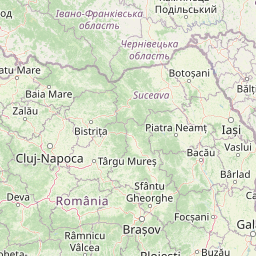
A reservoir almost 9 km long on the Someșul Cald, about 30 km from Cluj-Napoca, with wooded slopes, a 97 m arch dam and sailing or kayaking on the water.
Lakes
Open nowFree
204 results
A reservoir almost 9 km long on the Someșul Cald, about 30 km from Cluj-Napoca, with wooded slopes, a 97 m arch dam and sailing or kayaking on the water.

A Romanesque brick basilica built in the 13th century by Benedictine monks, with three aisles and two west towers, on a hill above the village.

A fortified medieval ensemble in the village centre: a Gothic church left in ruins, a 16th-century bell tower, and an enclosure wall with a gateway.

The ruin of a Renaissance residence in Vințu de Jos, built by Cardinal Martinuzzi on the site of a Dominican monastery and remade as a fortress by Gabriel Bethlen; it is now fenced off and awaiting restoration.

A Gothic Saxon church from the 14th century, fortified in 1495, in a quiet village among hills, with an enclosure wall, two towers and a gallery painted in 1765.

A 17th-century manor given its present look in 1903, set in a park and home to the Mikes Kelemen museum: four memorial rooms for notable people born in Zagon.

A 17th-century Renaissance castle in the centre of Miercurea Ciuc, rebuilt by the Habsburgs as a fortification and now home to the Szekler Museum of Ciuc.
A Classicist castle of 1827 with 19th-century wall paintings, restored with European funds and reopened in September 2026 as the Székely Equestrian Museum.

One of the largest Gothic hall churches in the Târnava valley, with a massive bell tower and a walled enclosure with towers; part of the wall collapsed in June 2026.

The wooded 960 m mountain that rises straight out of central Brașov: the “BRAȘOV” letters, views over the old town, a nature reserve, marked trails and a cable car from its foot.

The hilltop monastery near Gherla that keeps the icon of the Virgin painted in 1681, which wept in 1699; home to the largest pilgrimage in Transylvania, on the Feast of the Dormition.

A Reformed church from the second half of the 18th century, with a tall tower topped by a tin-clad onion dome, a pulpit of 1761 and an organ of 1847, in a village of Gornești commune.

Romania's longest and highest limestone ridge, 25 km long, with La Om Peak at 2,238 m, the Zărnești Gorge, Curmătura Chalet and trails for every level.

An 18 m waterfall spilling down a limestone wall in the Țara Moților region, near the village of Nemeși in Vidra commune; a landscape reserve 500 m from the road to Avram Iancu.

Romania's best-known ski resort, above 1,000 m beneath Postăvaru: 12 slopes, cable cars almost to the summit and, in summer, forest trails and views over Brașov.